Finish meal
When am I done? It is not always a feeling but a guess, especially when fullness arrives late and the plate looks messy. The visual support below makes the endpoint as visible as the start of the meal.
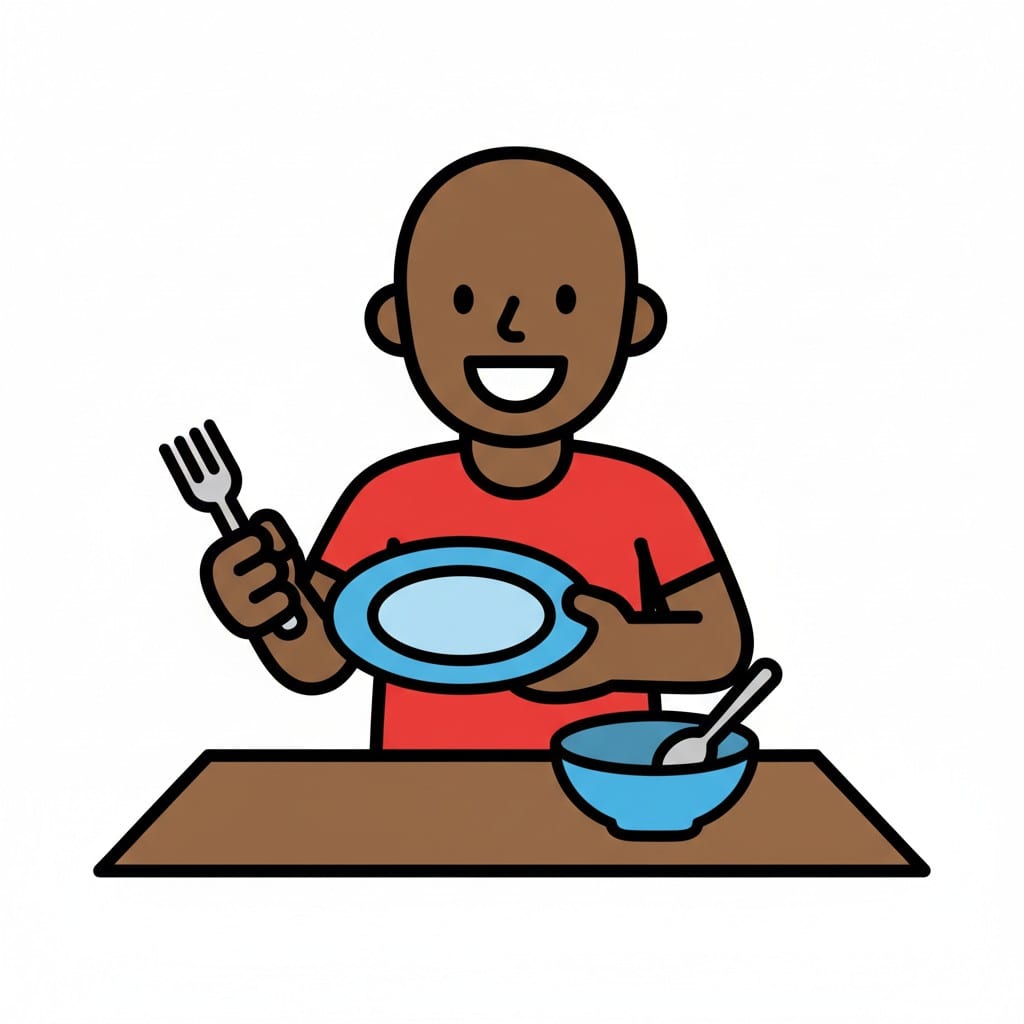 ♂
♂Finish meal
A happy boy sits at a table, holding an empty plate and a fork, with an empty bowl next to him.
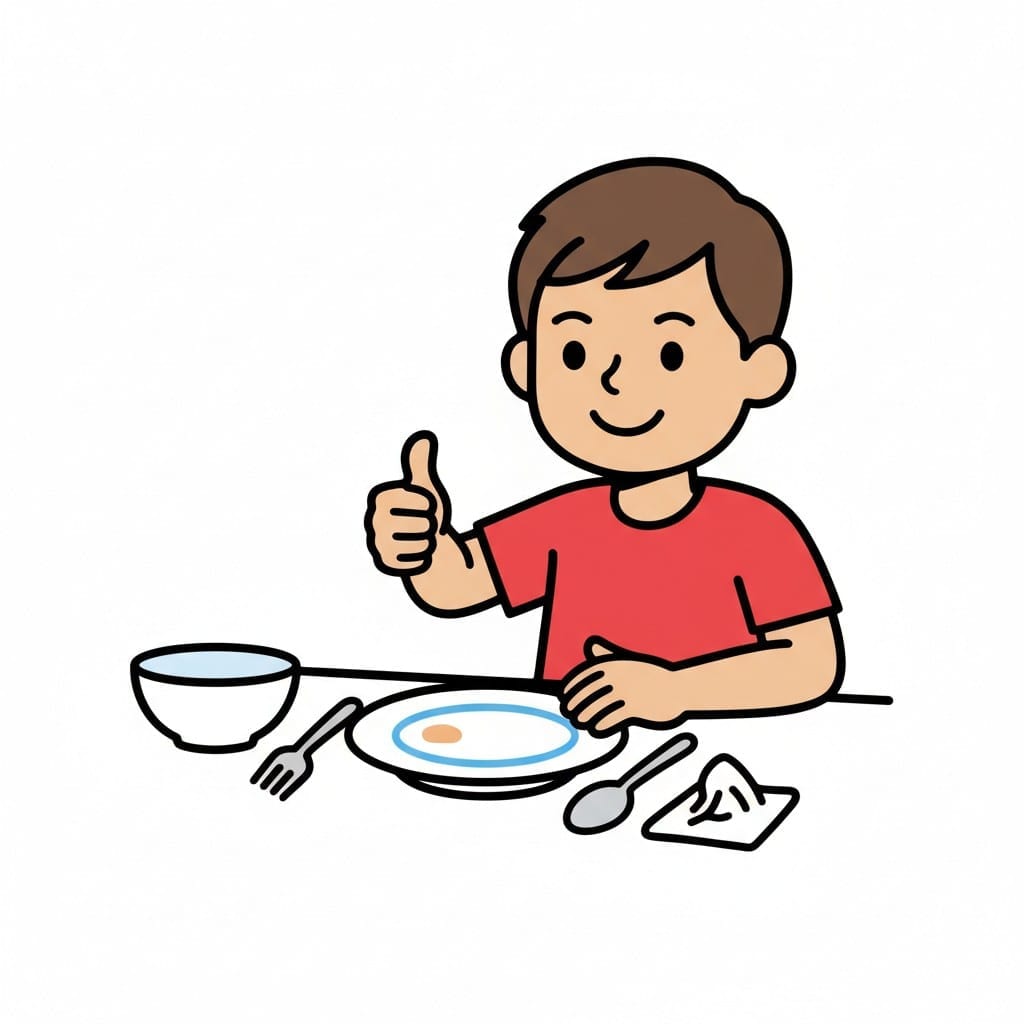 ♂
♂Finish meal
A satisfied boy sits at a table with an almost empty plate and gives a thumbs up.
About this visual support
The end of a meal is often less clear than the beginning. Food sits in piles and sauce, fullness signals come five to twenty minutes late, and a glance at the plate gives no obvious marker. The result is either stopping too early and getting hungry again half an hour later, or pushing on too long and feeling sick.
Visual support replaces the unclear inner signal with a clear outer one. A picture showing an empty plate, a glass tipped over, or a specific portion that is today’s target gives something concrete to compare against while eating. It becomes a mechanism alongside the feeling rather than instead of it.
Divide the plate visually into two or three sections, each with a matching picture. When one section is gone, the child can see that a third is done, which gives a sense of progress that is usually missing mid-meal. In Routined you can add gauges and steps to a visual meal routine and try the whole app for 14 days to see if it makes the endpoint easier to find.
Use this image in a schedule
Build your own visual schedule with this image and download it as a print-ready PDF. Completely free.

More similar visual supports
Dinner
A child sits at a table eating from a plate, with a bowl and a red cup beside th...
Dinner in car
A person sits in a car, eating from a red bowl with a yellow spoon.
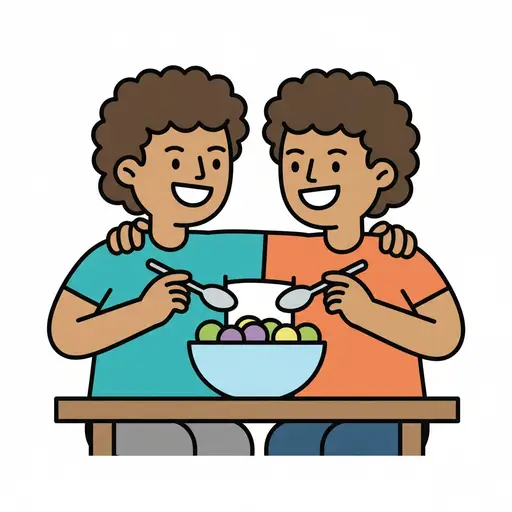
Eat
Two children share a bowl of fruit at the table.
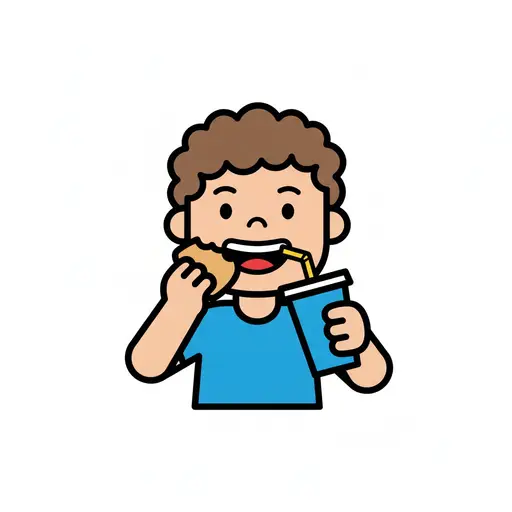
Eat and drink
A child takes a bite of a bun and drinks from a cup with a straw.
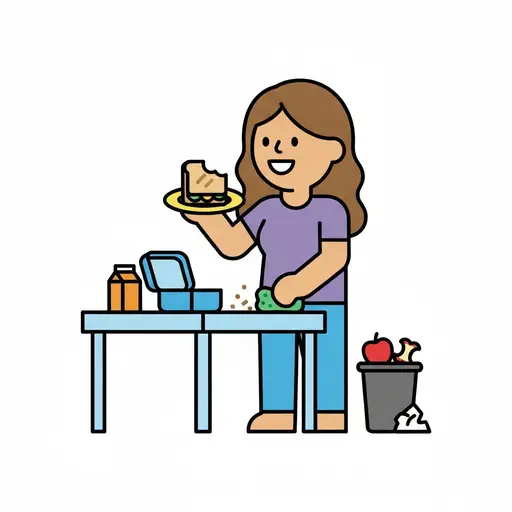
Eat lunch
A smiling person holds up a plate with a half-eaten sandwich and wipes the table...
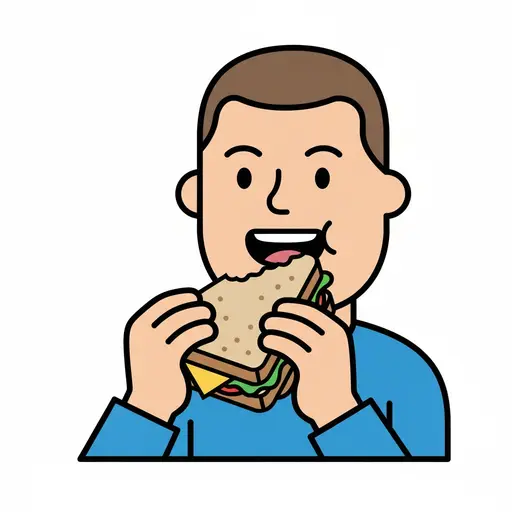
Eat sandwich
A person eating a sandwich with a bite taken out.

Eat something
A cartoon boy eating from a blue bowl with a spoon.
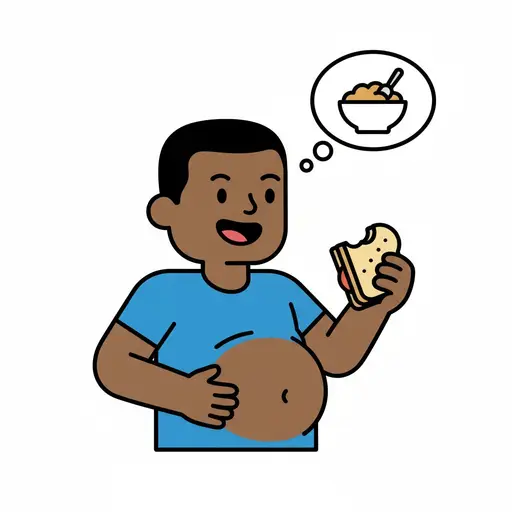
Eat until full
A happy boy eating a sandwich and holding his rounded stomach, with a thought bu...
Take the visual supports with you
In Routined you build schedules from these pictures, add timers and voice instructions, and your child follows the day on their own.


* 14-day free trial, then $2.39 a month or $20.99 a year (US pricing). Cancel anytime.