Peel egg
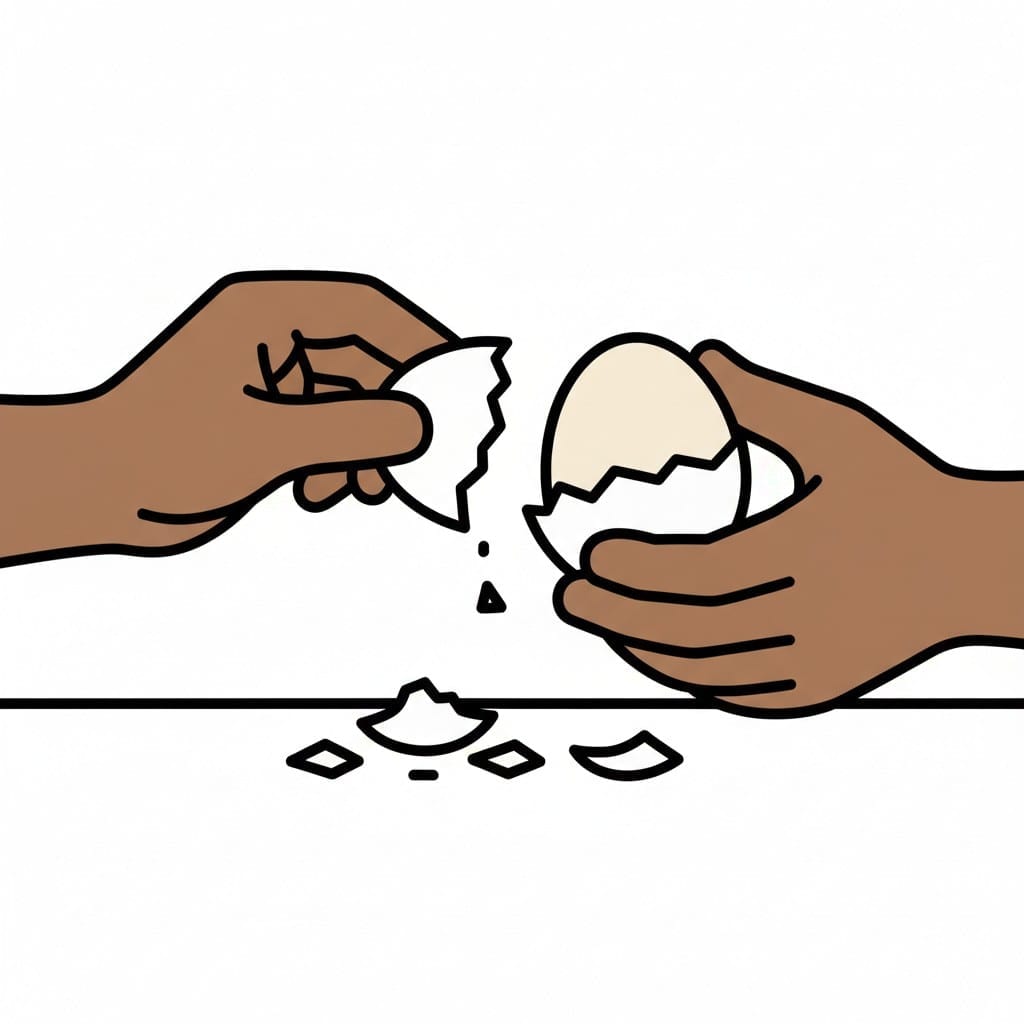
Peeling an egg looks simple until the shell sticks and bits of white come away with it. For a child whose fine motor skills are still developing, the small task can feel like a failure. The visual support below breaks it down with room for a second try.
 ♂
♂Peel egg
Two hands peeling an egg, with shell pieces falling off.
About this visual support
A boiled egg is deceptively simple. An adult eye sees a quick three-finger move, but a child's hand meets resistance: the shell is harder than it looks, the membrane is tough, and when bits of white come away the failure is very visible. The mix of fine motor demand and a clearly visible result keeps the frustration threshold low.
When the steps live as pictures, the child can follow them without constantly asking what comes next. Tap against the counter, roll under the palm, lift one flake at a time, rinse under cold water – each step is its own little task with its own small result, and slips become less dramatic because they sit inside a clear context.
One tip that often helps: add a picture of the eggs sitting in cold water right after boiling, before the peeling card. That short cool-down makes the membrane release more easily, lowering the frustration risk from the start. If you want to build the cooking steps as a sequence the child can follow alone, you can try Routined for fourteen days at no cost.
Use this image in a schedule
Build your own visual schedule with this image and download it as a print-ready PDF. Completely free.
More similar visual supports
Prepare Meal
A girl cuts vegetables on a counter with a pot and a whisk nearby.
Cook
A girl in a chef hat and apron holds a ladle and a wooden spoon over a steaming ...
Help Mom Cook
A girl holds a bowl of vegetables while mom stirs a pot on the stove.
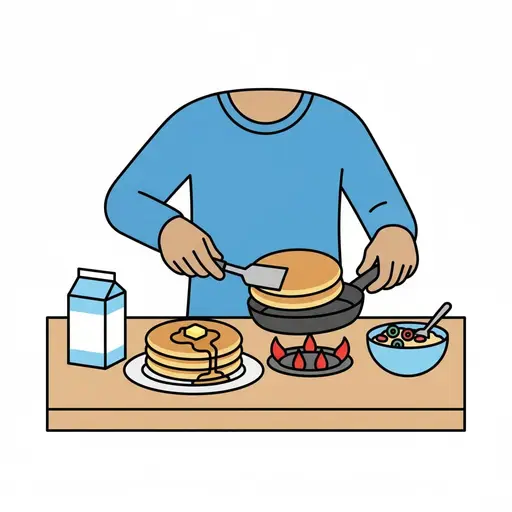
Make breakfast
A person in a blue top fries pancakes in a pan, with milk, a plate of pancakes a...
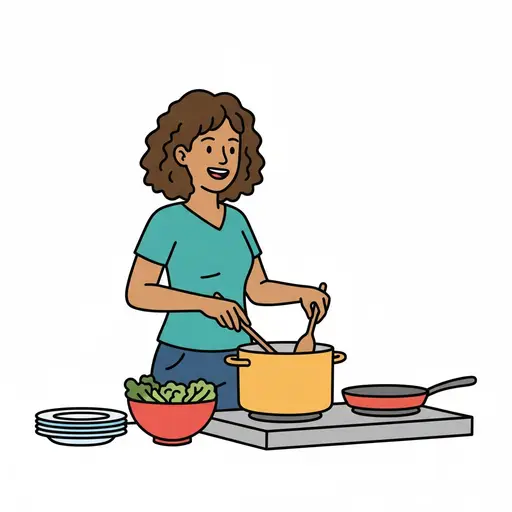
Cook dinner
A person stirs a yellow pot with a salad bowl, a frying pan and plates on the co...
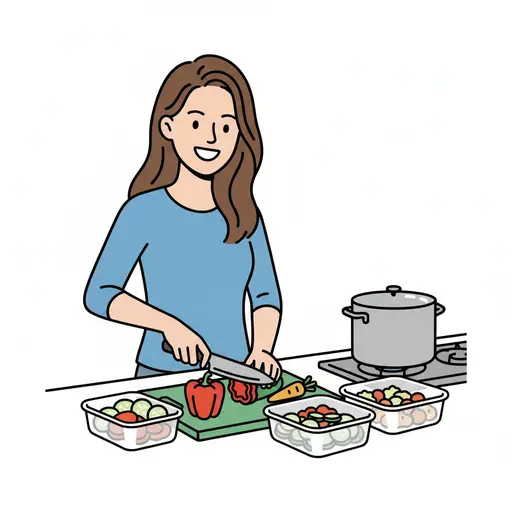
Meal Prep
A woman chopping vegetables on a cutting board with meal containers and a pot on...
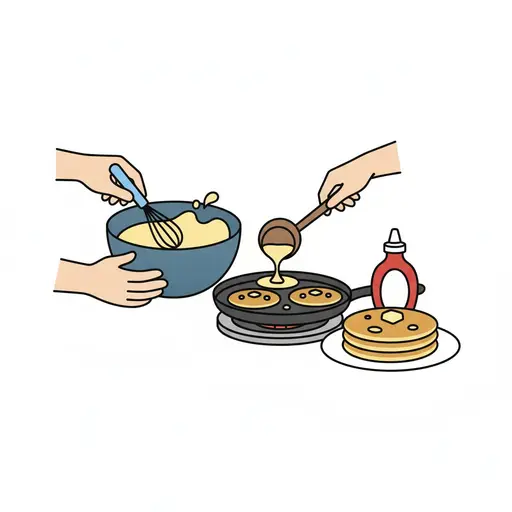
Make pancakes
Hands whisk batter and pour it into a pan, with pancakes and syrup nearby.
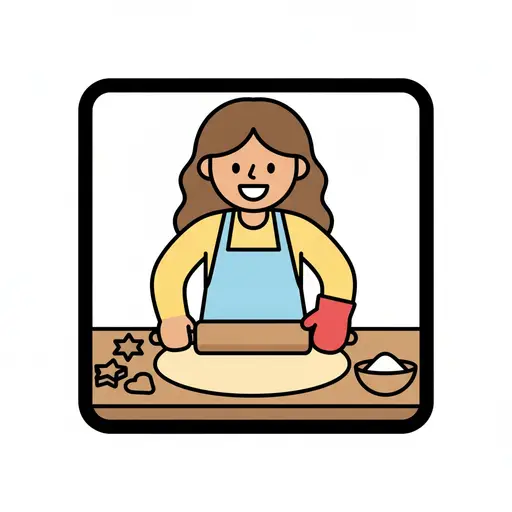
Bake
A child wearing an apron rolling out dough with a rolling pin, with cookie cutte...
This visual support in other languages
Take the visual supports with you
In Routined you build schedules from these pictures, add timers and voice instructions, and your child follows the day on their own.


* 14-day free trial, then $2.39 a month or $20.99 a year (US pricing). Cancel anytime.