Settle into chair
Finding a posture that lasts is hard when the duration is invisible. The body wants to shift every ten seconds, and without a frame it lands nowhere. The visual support below gives both posture and time a visible shape.
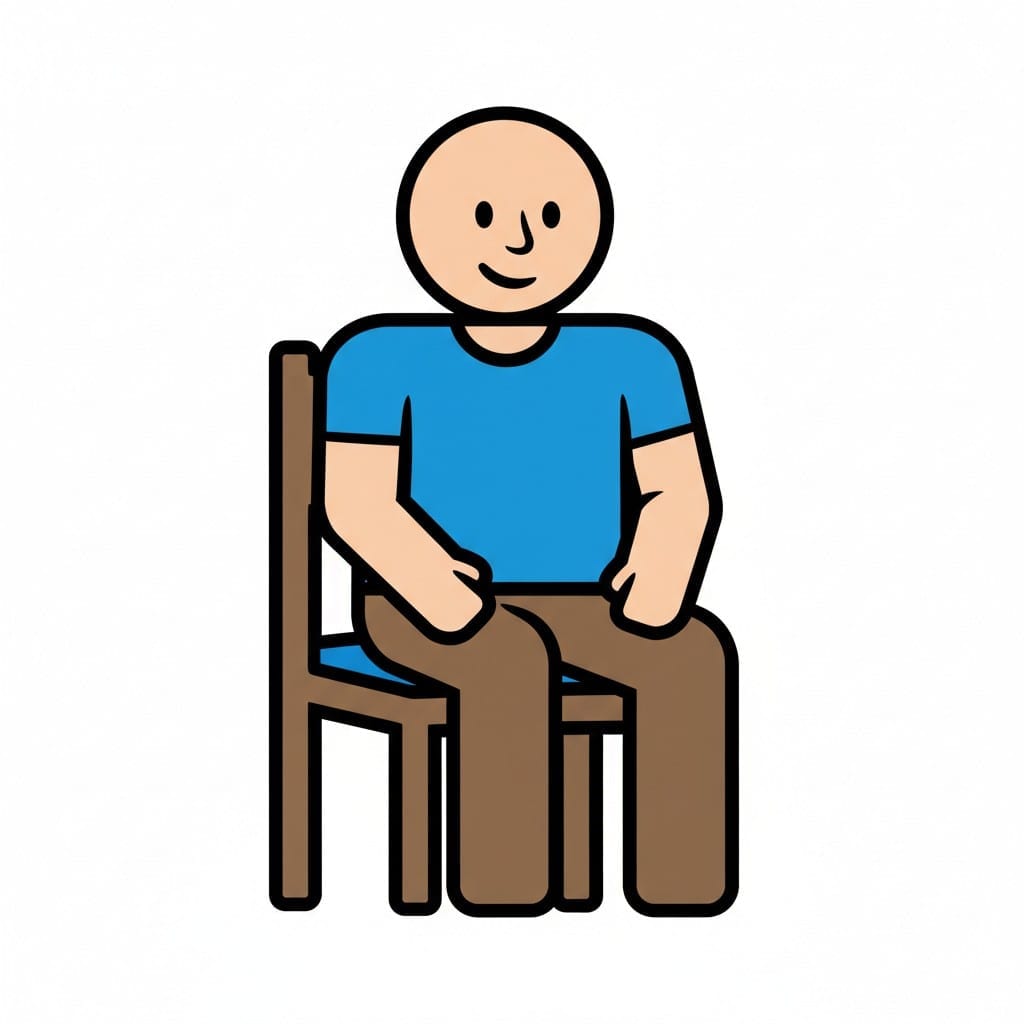 ♂
♂Sit on chair
A person sits upright on a wooden chair, facing forward with a smile.
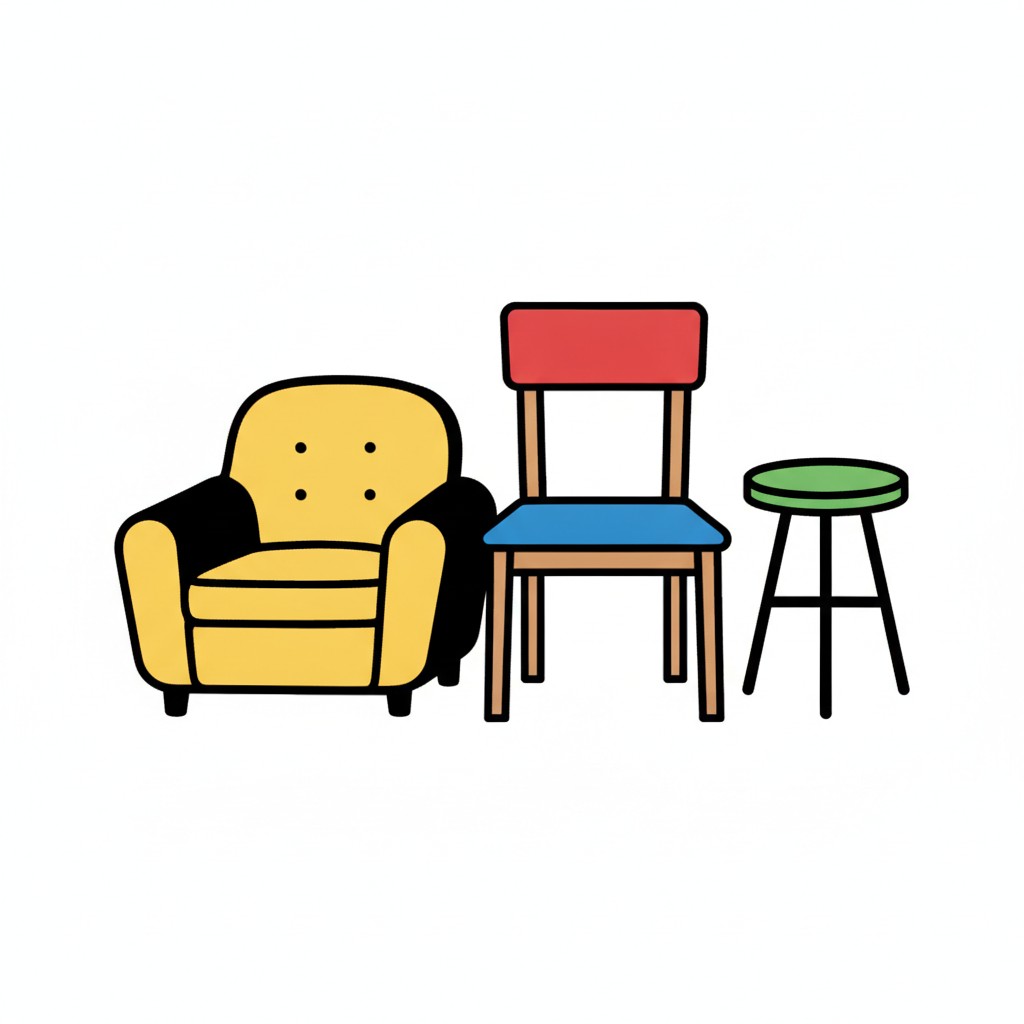
Chairs
An armchair, a chair and a stool.
About this visual support
The real question behind this visual support is not how the child should sit, but for how long and with what margin. When time is fuzzy, the body tries to read it through micro-movements – feet that swing, fingers that pick, knees pulled up – and a posture never settles, only a stream of attempts.
When the picture shows where the bottom goes, where the feet can land and how long it lasts, the body gets two fixed points to rest on: position and time. A small timer or an image of the next activity is often enough to switch from searching to sitting. The need for repetition drops too, because you no longer have to loop the sit-still words.
A concrete tip for this activity: place a card with allowed micro-movements next to it – rocking lightly back and forth, crossing the feet, leaning against the backrest. It is the allowed movements that let the main activity begin.
Save the sequence in Routined and bring it up at breakfast, in class or at homework time without rebuilding it each round.
Use this image in a schedule
Build your own visual schedule with this image and download it as a print-ready PDF. Completely free.

More similar visual supports
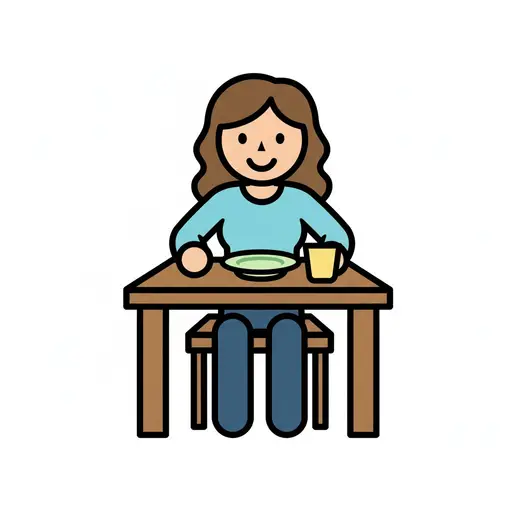
Sit at table
A woman sits at a table with a bowl and a cup.
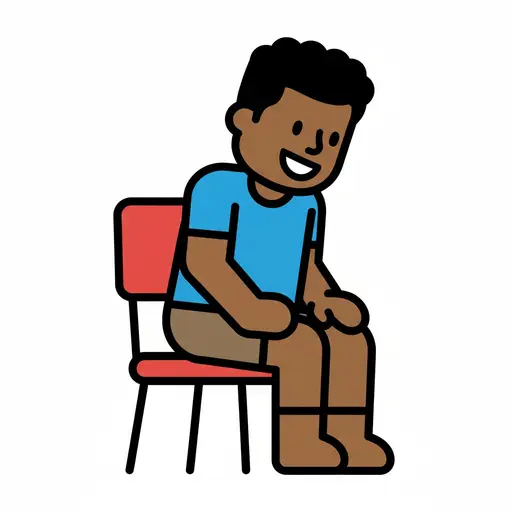
Sit down
A smiling boy in a blue shirt and brown shorts sits on a red chair, looking forw...
Sit on chair
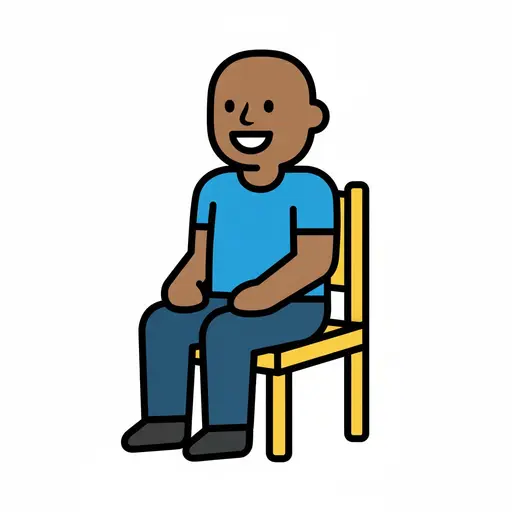
A person sits on a yellow chair, smiling.
Kindergarten
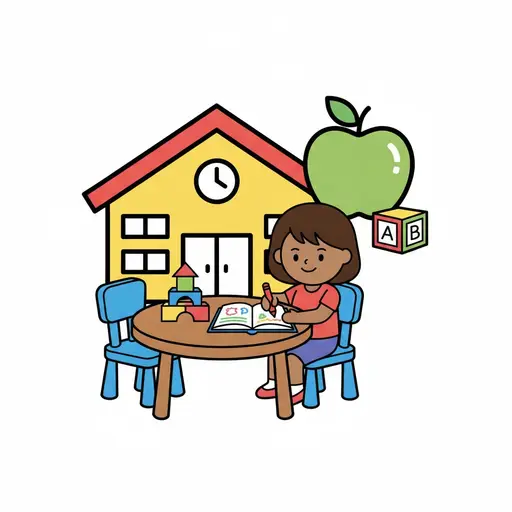
Three stacked building bricks in red, blue and yellow.

School activities
A boy stands holding an open book surrounded by symbols of a pencil, a globe, a ...

Weekly events
An icon showing a calendar with symbols for various activities like music, art, ...
Sit in seat
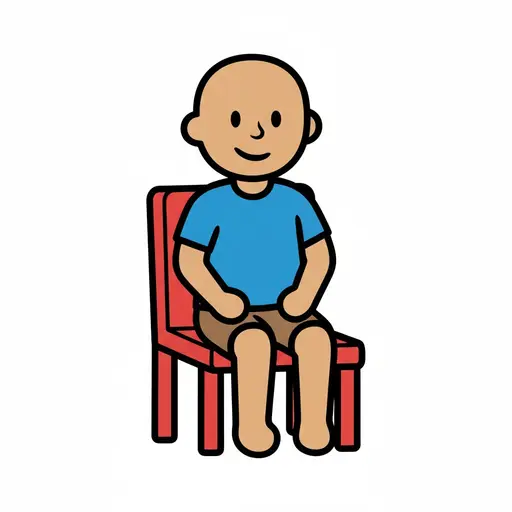
A cartoon illustration of a boy sitting calmly on a red chair and smiling.
Break time play
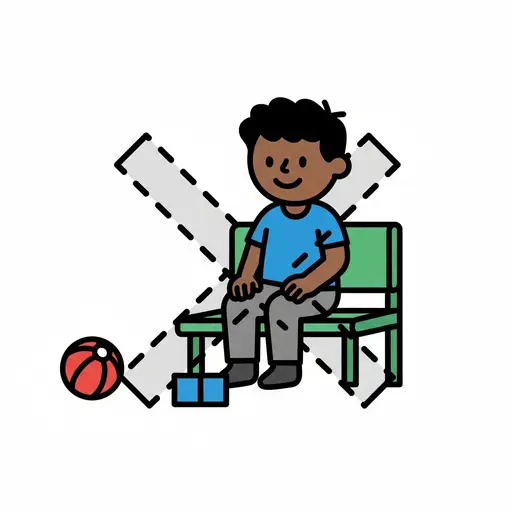
A boy sits on a bench next to a ball, with a crossed-out mark showing that play ...
Take the visual supports with you
In Routined you build schedules from these pictures, add timers and voice instructions, and your child follows the day on their own.


* 14-day free trial, then $2.39 a month or $20.99 a year (US pricing). Cancel anytime.