Sit down
Pausing mid-movement is not slowness or defiance – it is a track change in the brain. The visual support below shows that change in three concrete steps so the child can land before the next thing starts.
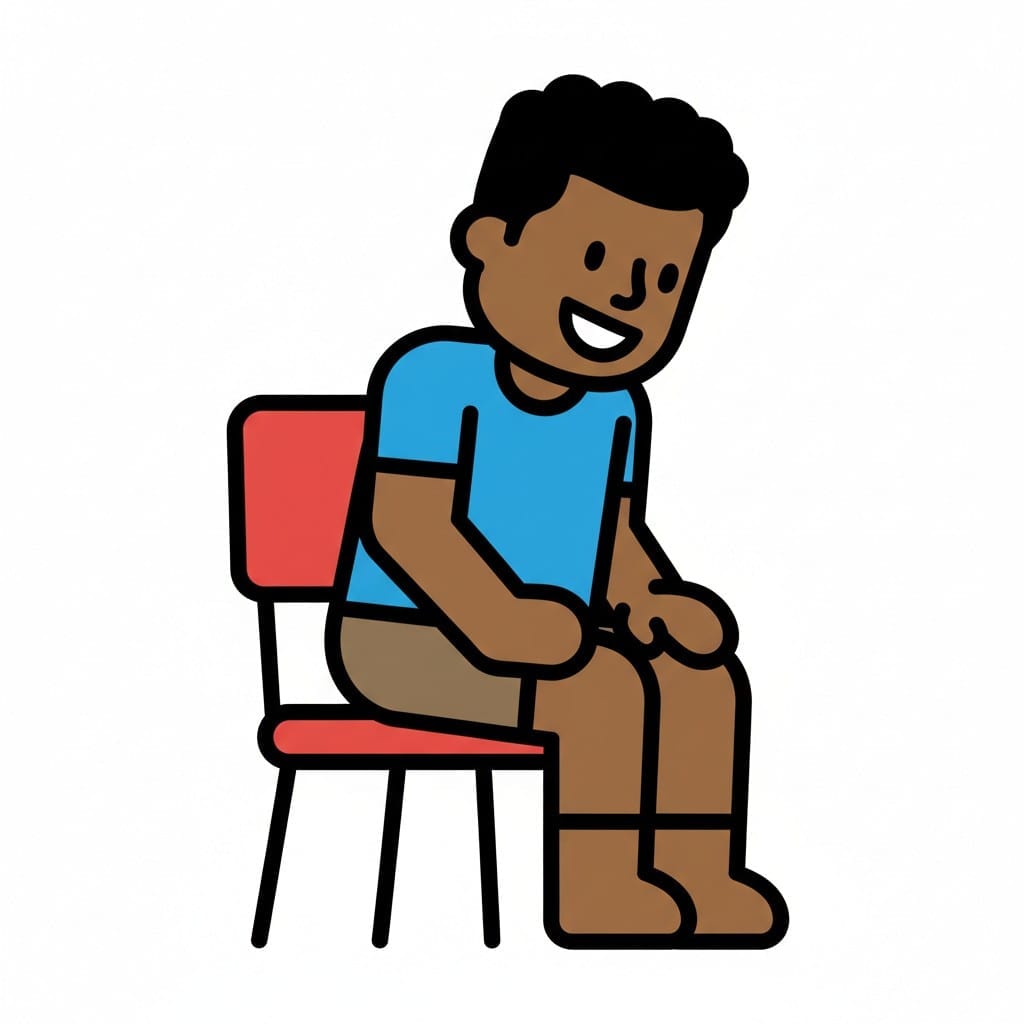 ♂
♂Sit down
A smiling boy in a blue shirt and brown shorts sits on a red chair, looking forward.
About this visual support
Sitting down sounds trivial, but for a brain in the middle of play or motion it is an active track change. The pace has to drop, the gaze has to shift, the body has to find a new shape – all at once. That is where it stalls, not in the chair itself.
Visual support makes the track change visible and breaks it into pieces the child can keep up with. One picture shows that the play is paused and where the things go, another shows the path to the chair, and a third shows the actual sitting-down movement. When transitions have a visible form they become predictable even when the room around is loud.
A concrete tip: add a middle picture that shows a deep breath or pressing the hands together before sitting. That micro-pause gives the nervous system a second to switch, and it is often that second that is missing.
If the same transition repeats – before meals, before homework, before circle time – save the sequence in Routined and let the child tap through it step by step.
Use this image in a schedule
Build your own visual schedule with this image and download it as a print-ready PDF. Completely free.

More similar visual supports
Settle into chair
An armchair, a chair and a stool.
Sit at table
A woman sits at a table with a bowl and a cup.
Sit on chair
A person sits on a yellow chair, smiling.
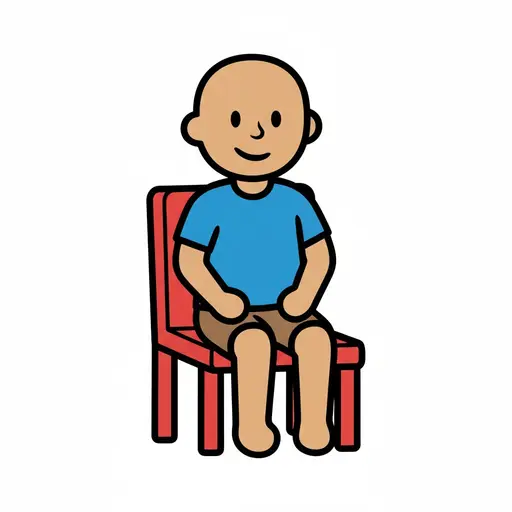
Sit in seat
A cartoon illustration of a boy sitting calmly on a red chair and smiling.
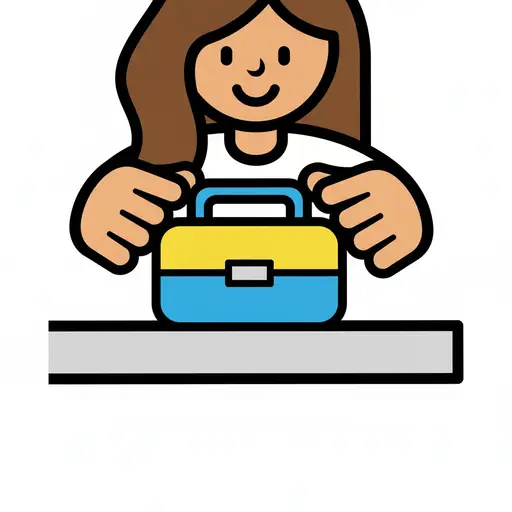
Place lunchbox
A cartoon girl placing a lunchbox.
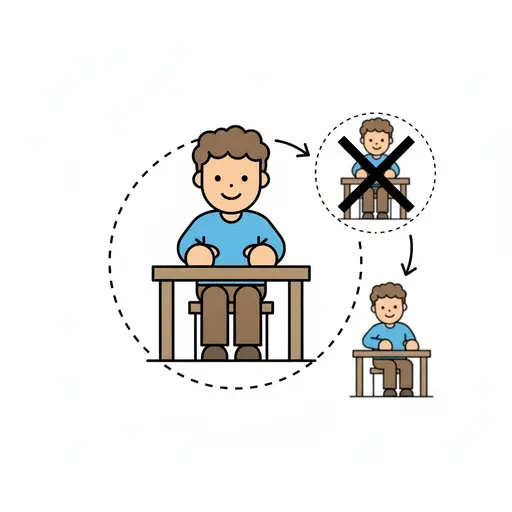
Sit still at the table
A boy sits with his hands on the table, while a crossed-out picture shows that l...
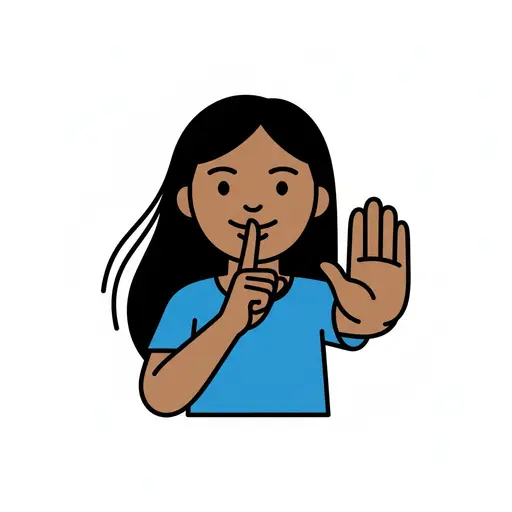
Be quiet
An illustration of a person holding a finger to their lips to signal to be quiet...

Bible
A closed book with a brown cover and a gold cross on the front.
Take the visual supports with you
In Routined you build schedules from these pictures, add timers and voice instructions, and your child follows the day on their own.


* 14-day free trial, then $2.39 a month or $20.99 a year (US pricing). Cancel anytime.