Thank for the meal
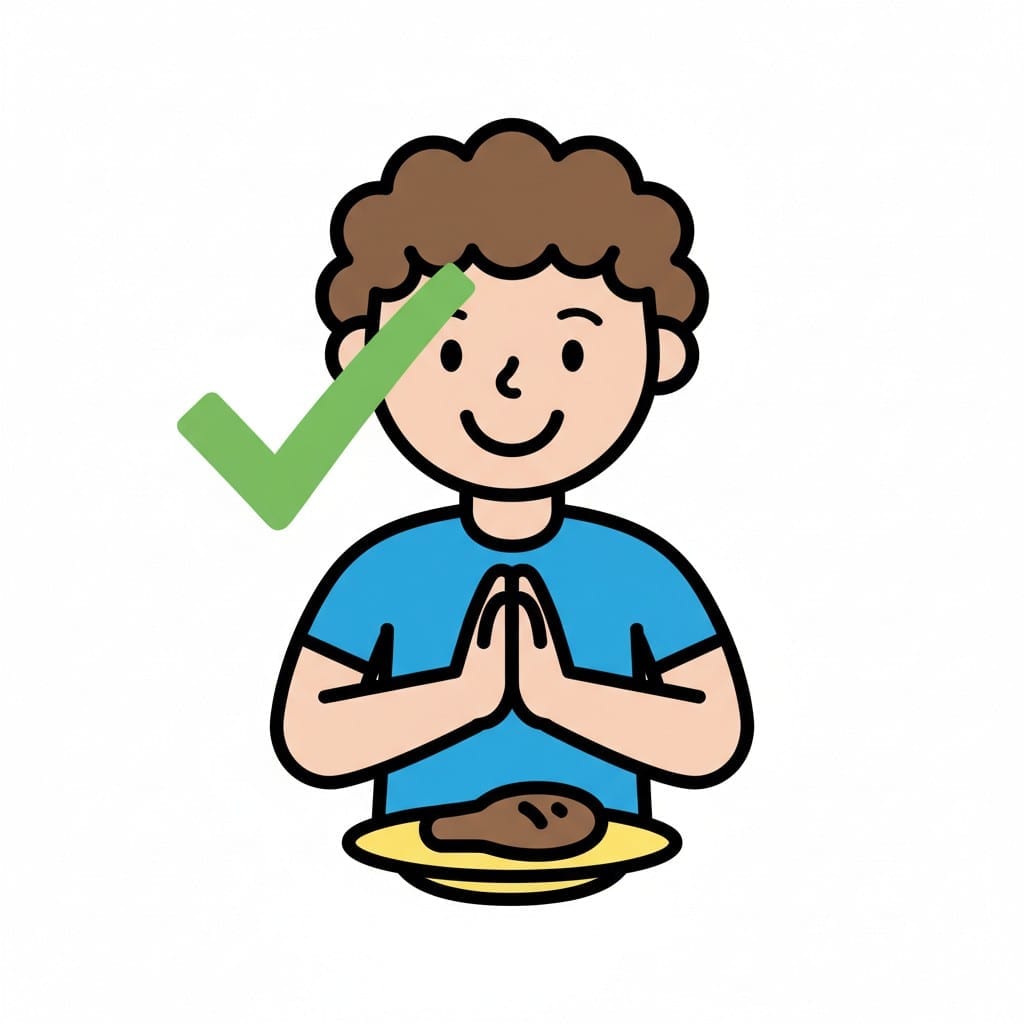
Saying thanks after a meal is not just politeness; it is a signal that the meal is over and something new begins. The visual support below shows both the phrase and the step that follows, so the transition softens.
 ♂
♂Thank for the meal
A boy with brown curly hair, wearing a blue shirt, has his hands pressed together in a gesture of thanks. A plate with a piece of food is in front of him, and a green checkmark is above his head, indicating completion or approval.
About this visual support
Many children do not get stuck on the phrase itself, but on the switch that follows. The plate is empty, the body wants to leave the chair, but a small social routine sits in between: say thanks, ask to leave, wait for an answer. When three things need to happen at once, the words often slip away, and the moment turns silent or suddenly loud.
Visual support makes the transition visible. First a picture of putting the cutlery together, then the word thanks, then the question, then the next activity. The child can follow the row with their eyes instead of holding it all in memory, and the adult does not have to interrupt mid-bite. It softens the small friction that tends to appear right when the meal is ending.
A concrete tip: place the cards at the child's seat, not on the wall behind. Then they are in the line of sight exactly when needed. For families who want to tie the routine to a gentle cue when the table is ready to leave, Routined lets you reuse the same pictures every day. Try it for 14 days at no cost.
Use this image in a schedule
Build your own visual schedule with this image and download it as a print-ready PDF. Completely free.

More similar visual supports
After dinner
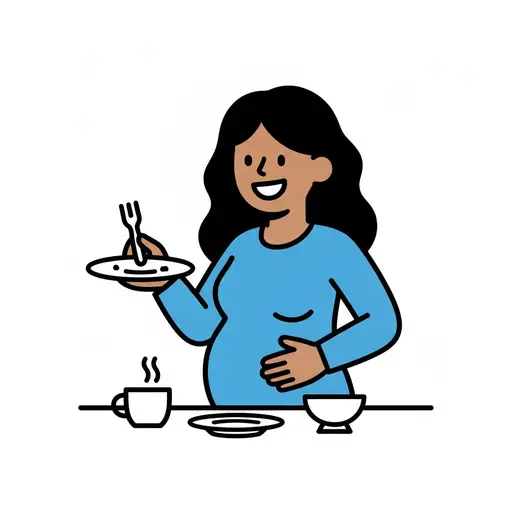
A woman holds a plate with a fork and rests a hand on her stomach, with a cup an...
Eat until full
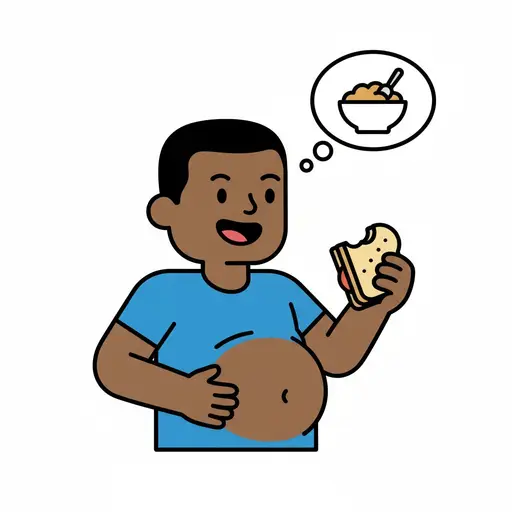
A happy boy eating a sandwich and holding his rounded stomach, with a thought bu...
Finish meal
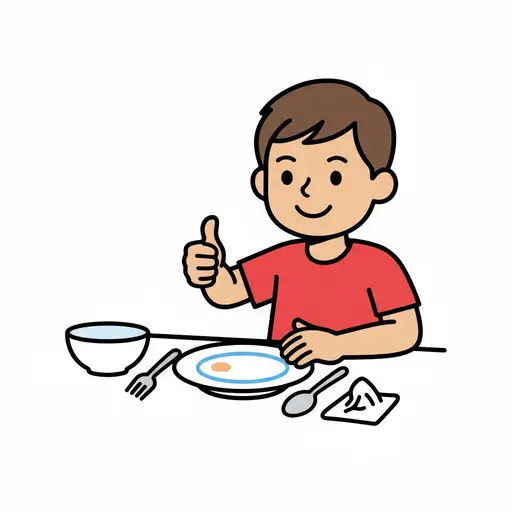
A satisfied boy sits at a table with an almost empty plate and gives a thumbs up...
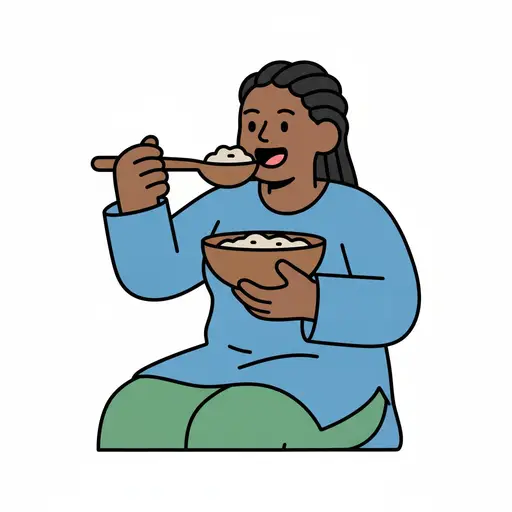
Baby cereal
A woman eats porridge from a bowl with a spoon.
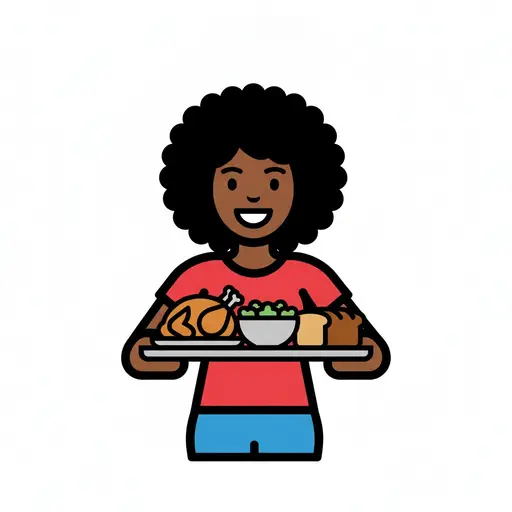
Bring food
A girl carries a tray of food including chicken, a bowl and bread.
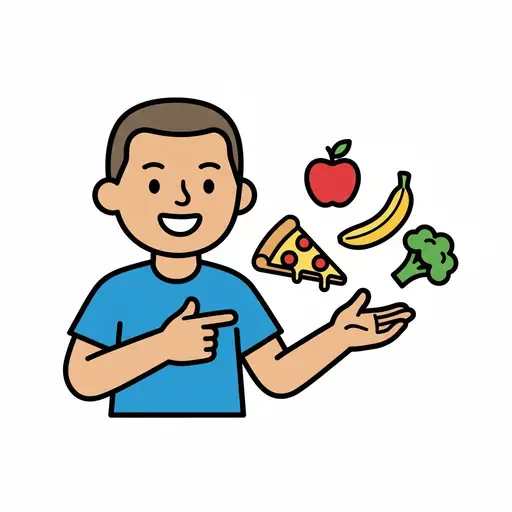
Choose food
A boy points with one hand while various food items like an apple, a banana, bro...
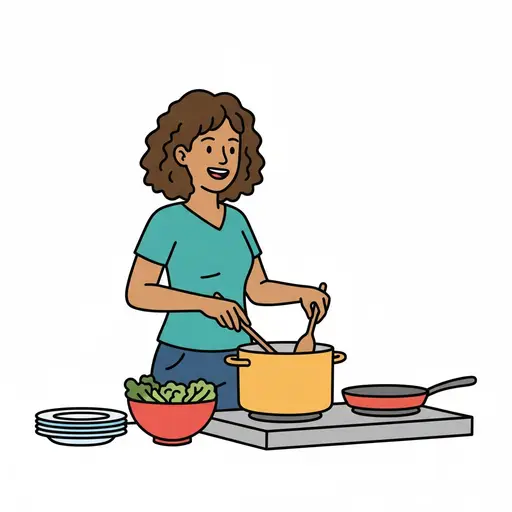
Cook dinner
A person stirs a yellow pot with a salad bowl, a frying pan and plates on the co...
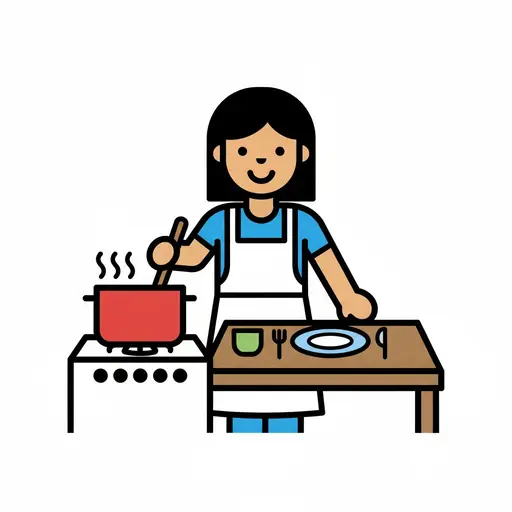
Cook & Set Table
A girl cooks in a pot while setting the table.
Take the visual supports with you
In Routined you build schedules from these pictures, add timers and voice instructions, and your child follows the day on their own.


* 14-day free trial, then $2.39 a month or $20.99 a year (US pricing). Cancel anytime.