Wash molluscs
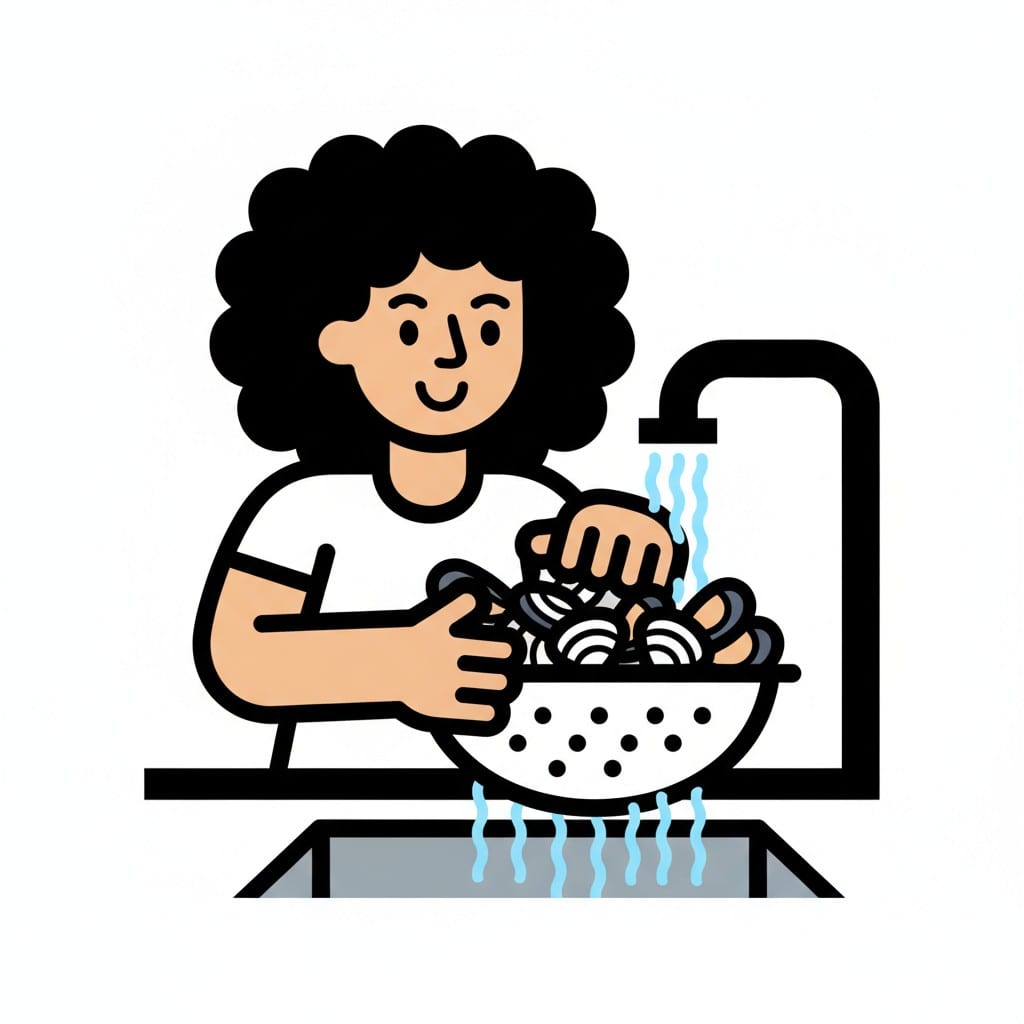
The shells are slick, the water is cold, and the mussel moves faintly between small fingers. For many children it is the first time skin meets something so close to the sea, and it shows. The visual support below previews every move before the hand has to make it.
 ♀
♀Wash molluscs
An illustration of a person washing molluscs in a colander under running water.
About this visual support
Mussels are unusual guests at the kitchen sink. Their shells are slippery, the water running over them is close to icy, and the inside of the hand registers that this is something alive that also smells of the sea. For a child with sensitive perception the combination can be too much at once, and the usual response is to put the mussel down and step back.
Visual support makes each move predictable before the hand touches anything. The child sees a picture of pouring the mussels into a colander, then rinsing under cold water, then brushing the shells lightly, then discarding any that stay open. The warning of what is coming softens the reaction, because the brain has time to prepare.
An activity-specific tip: let the child keep a kitchen towel draped over one forearm so there is a dry zone to lean against between steps. It breaks the wet-cold-slimy chain of input. From there you can build the rest of the cooking as a sequence in Routined, with the washing step sitting as its own clear block before the cooking begins.
Use this image in a schedule
Build your own visual schedule with this image and download it as a print-ready PDF. Completely free.

More similar visual supports
Bake
A child wearing an apron rolling out dough with a rolling pin, with cookie cutte...
Cook
A girl in a chef hat and apron holds a ladle and a wooden spoon over a steaming ...
Cook dinner
A person stirs a yellow pot with a salad bowl, a frying pan and plates on the co...
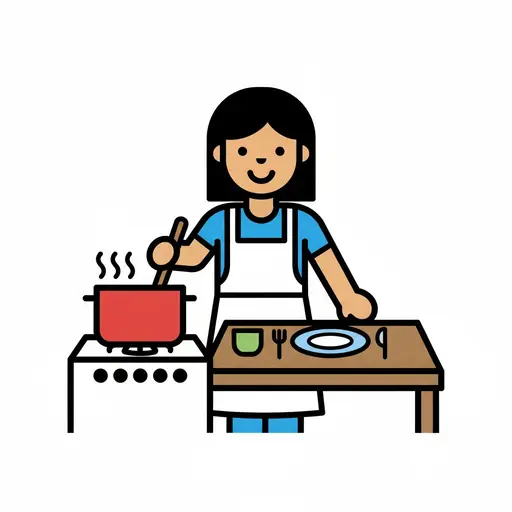
Cook & Set Table
A girl cooks in a pot while setting the table.
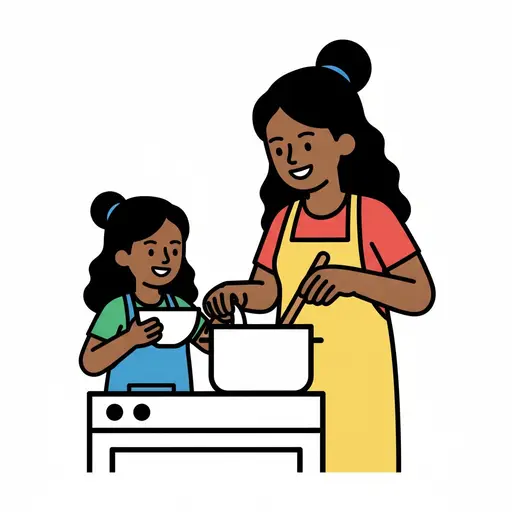
Cook With Mom
A girl helps her mother cook in a pot on the stove.
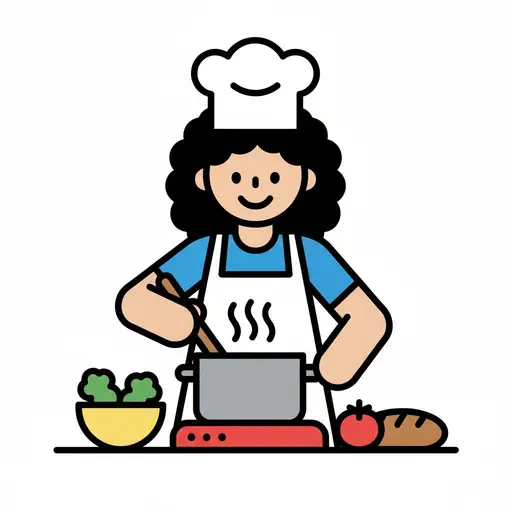
get food ready
Wearing a chef hat and apron, a girl stirs a steaming pot on the stove next to a...
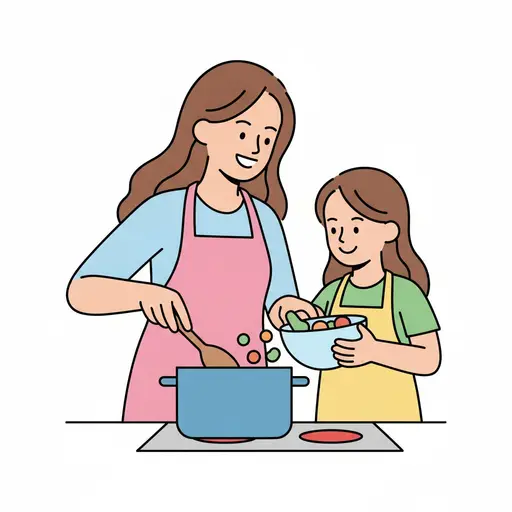
Help Mom Cook
A girl holds a bowl of vegetables while mom stirs a pot on the stove.
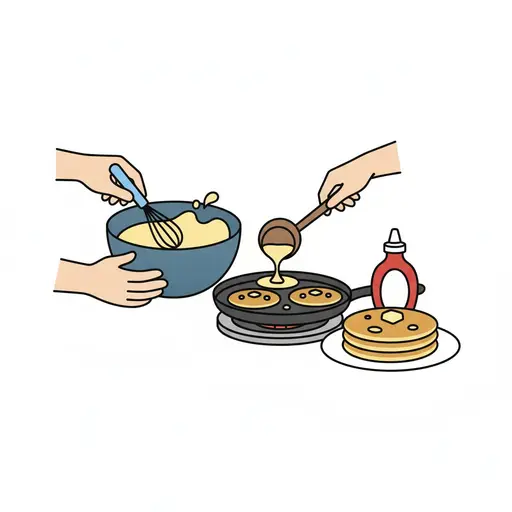
Make pancakes
Hands whisk batter and pour it into a pan, with pancakes and syrup nearby.
Take the visual supports with you
In Routined you build schedules from these pictures, add timers and voice instructions, and your child follows the day on their own.


* 14-day free trial, then $2.39 a month or $20.99 a year (US pricing). Cancel anytime.