At home
At home there's no bell calling the next thing. It sounds like freedom, but for many children open time weighs heavier than a school day. The visual support below helps build a loose rhythm that still holds.
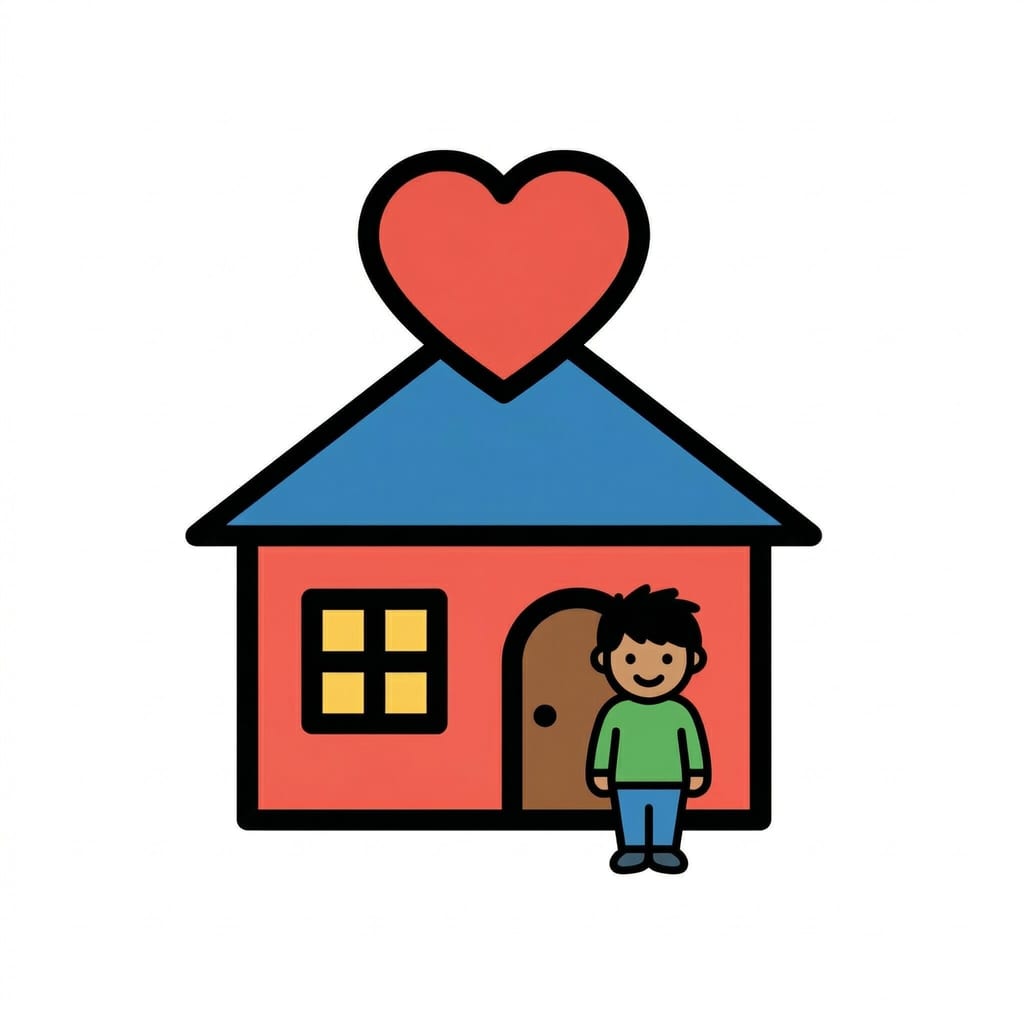
At home
A cartoon boy stands next to a red house with a blue roof and a red heart on top.
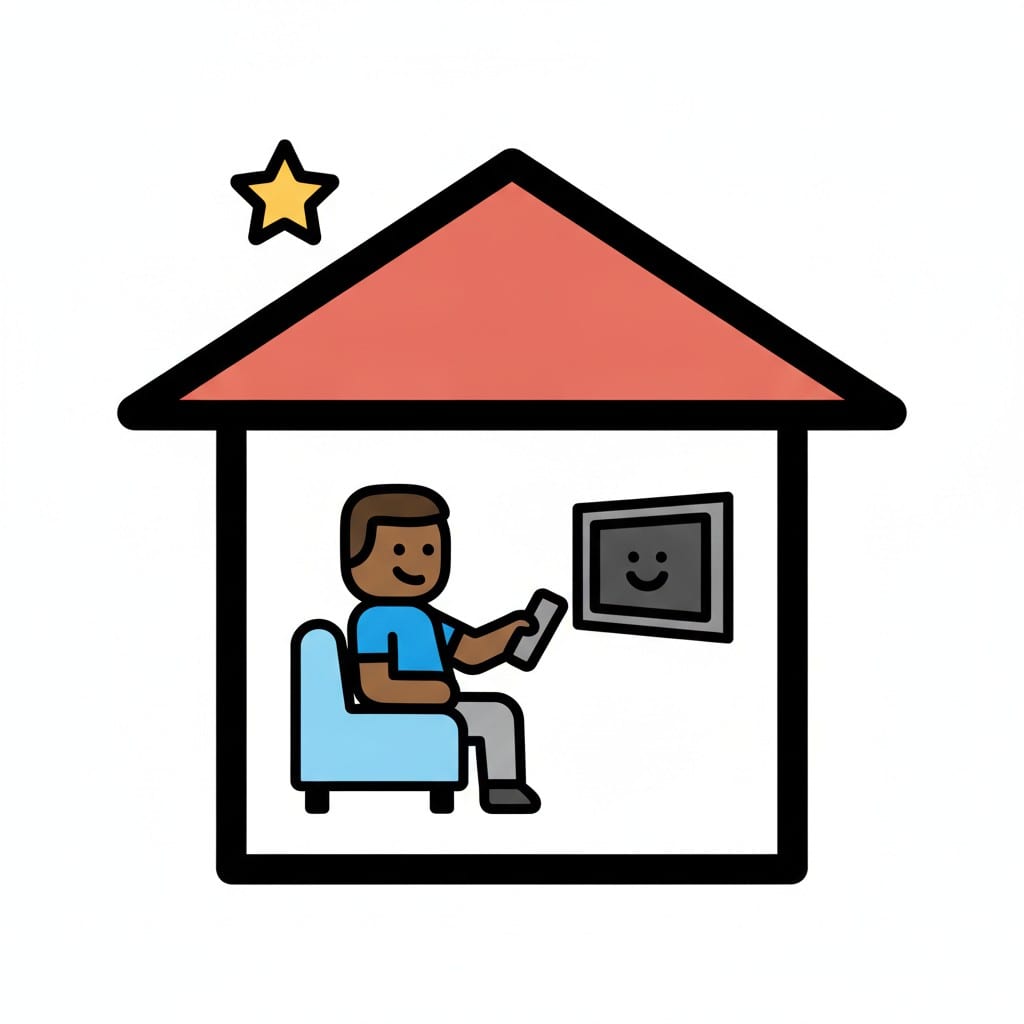 ♂
♂Boy watching TV at home
In a cutaway house with a red roof, a boy in a blue t-shirt sits in a light blue armchair and points a remote at a wall-mounted TV showing a smiling face.

House with a heart
A simple house with a red roof and a large heart in the middle of the wall.
About this visual support
School builds in checkpoints: break, lesson, lunch, break. At home that scaffolding disappears completely. Many children can't fill an evening or a weekend morning with nothing to lean on, and what looks like laziness is often anxiety about too many open choices.
Visual support at home isn't about copying a school timetable. It's about letting the day have three or four anchors – a snack, some movement, a stretch at the table, a calm bit before bed – shown as cards the child can rearrange. That turns a plan into a map the child reads rather than rules imposed from above.
A practical tip: lay out morning and afternoon as separate sequences, not one long ribbon. Seeing 'we're in the afternoon block now' is easier to hold than staring at seven steps from breakfast to bedtime. In Routined you can save blocks by day of week, so weekdays and weekends get different rhythms without redrawing the whole thing each time.
Use this image in a schedule
Build your own visual schedule with this image and download it as a print-ready PDF. Completely free.

More similar visual supports
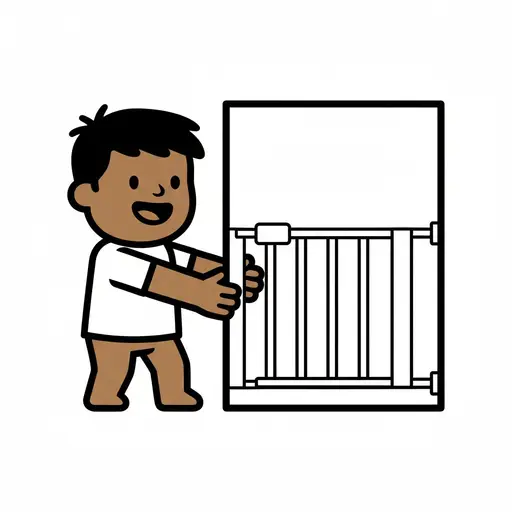
Remove gate
A boy is removing a safety gate.
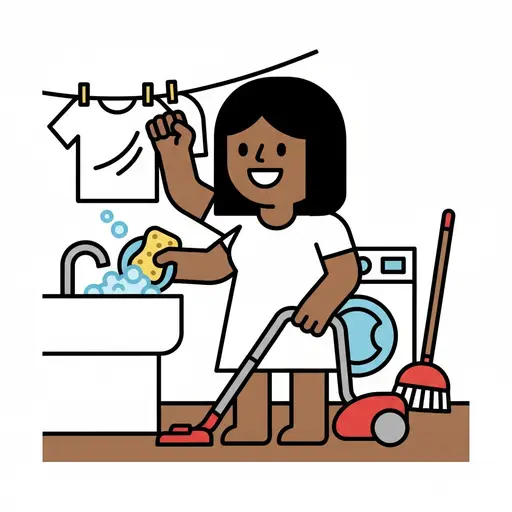
Chores
Close view of a girl who is hanging up washing, rinsing a sponge in the sink and...
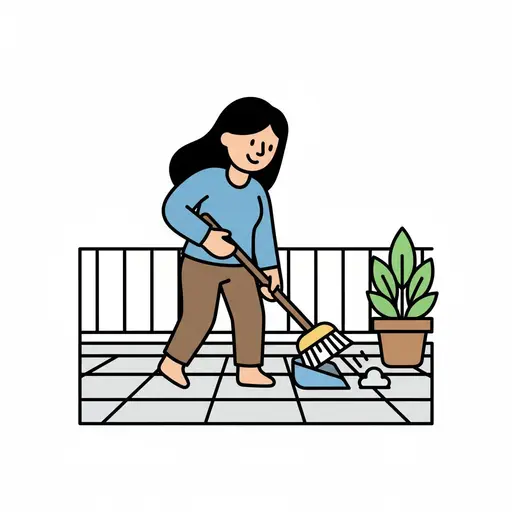
Clean the balcony
A child sweeping the balcony floor with a broom and dustpan, with a potted plant...

Clean the bathroom
A white toilet sparkles with yellow stars next to a mop standing in a blue bucke...
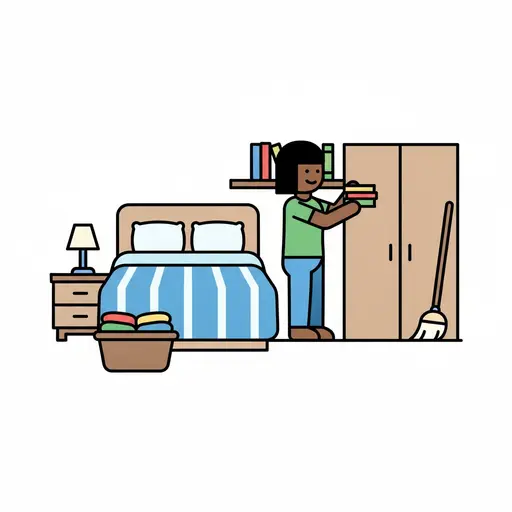
Clean the bedroom
A girl in a green top places books on a shelf in a bedroom with a made bed, a ni...
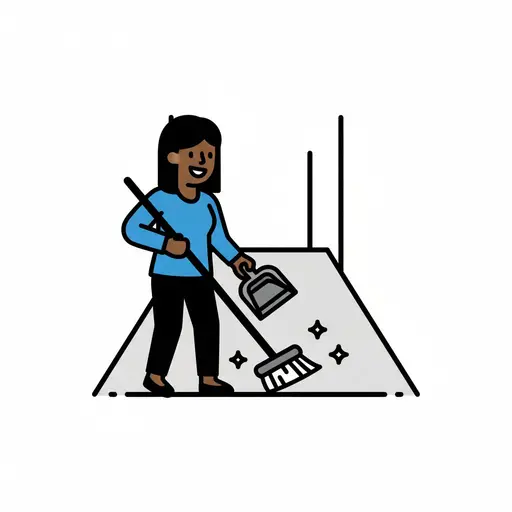
Clean the hallway
A child sweeping the hallway floor with a broom while holding a dustpan, with sp...
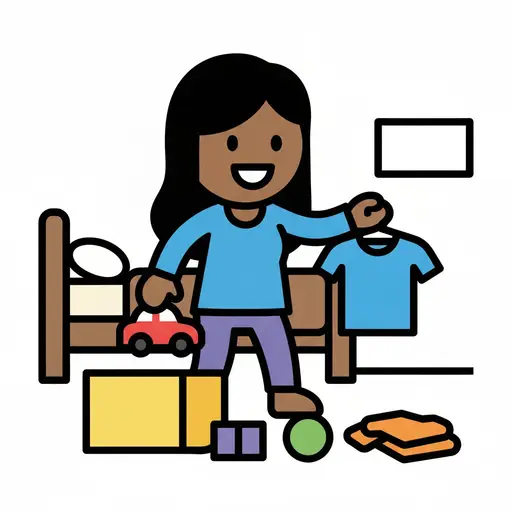
Clean your room
A child tidies their room, holding up a shirt among toys and boxes.
Do the chores
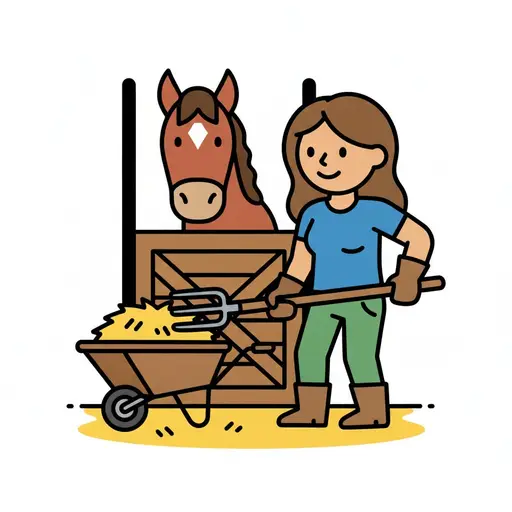
A person pushes a wheelbarrow of hay in a stable where a horse looks out of the ...
Take the visual supports with you
In Routined you build schedules from these pictures, add timers and voice instructions, and your child follows the day on their own.


* 14-day free trial included for new users.