Bring in the horses
A horse is big and reacts to stress, so the order of things in the paddock matters. When the child knows exactly what comes next, their movements calm down and the horse follows. The steps are shown below.
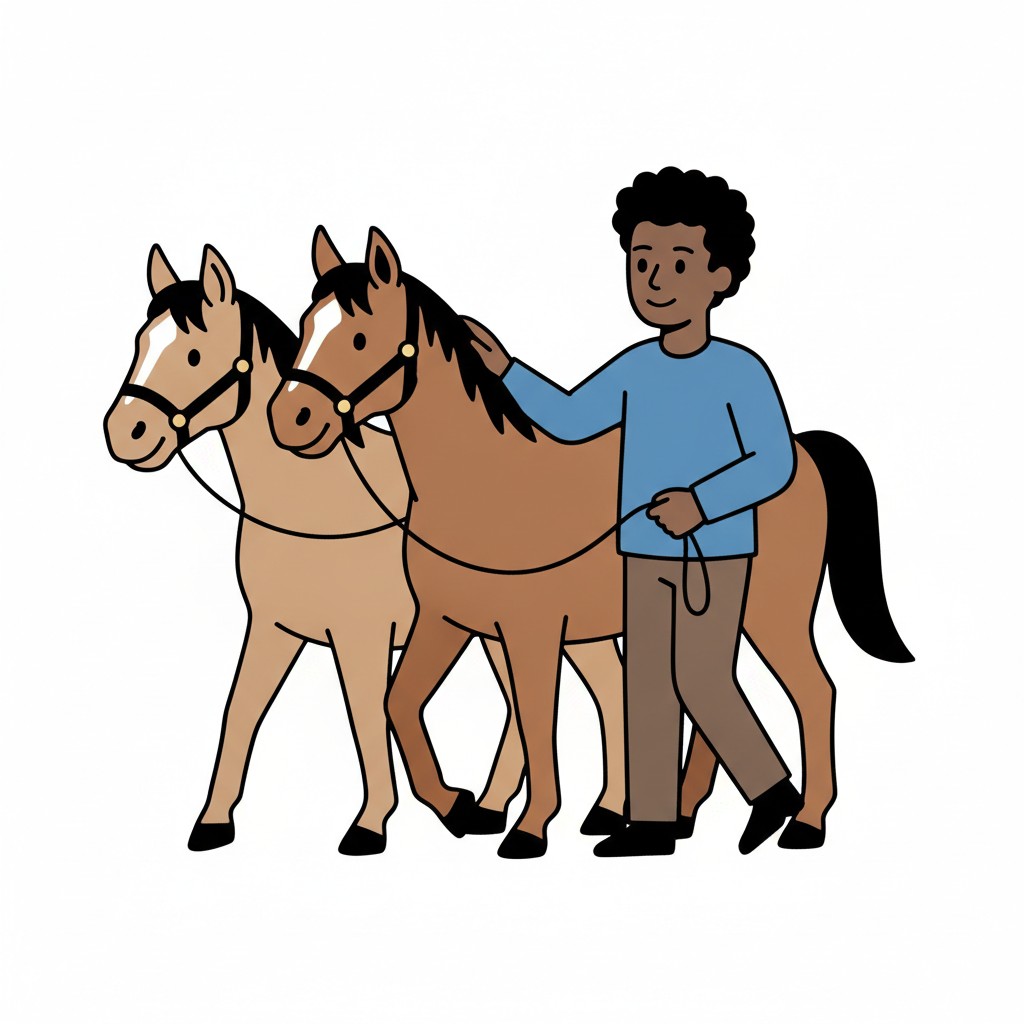 ♂
♂Bringing in the horses
A boy leads two horses by their halters.
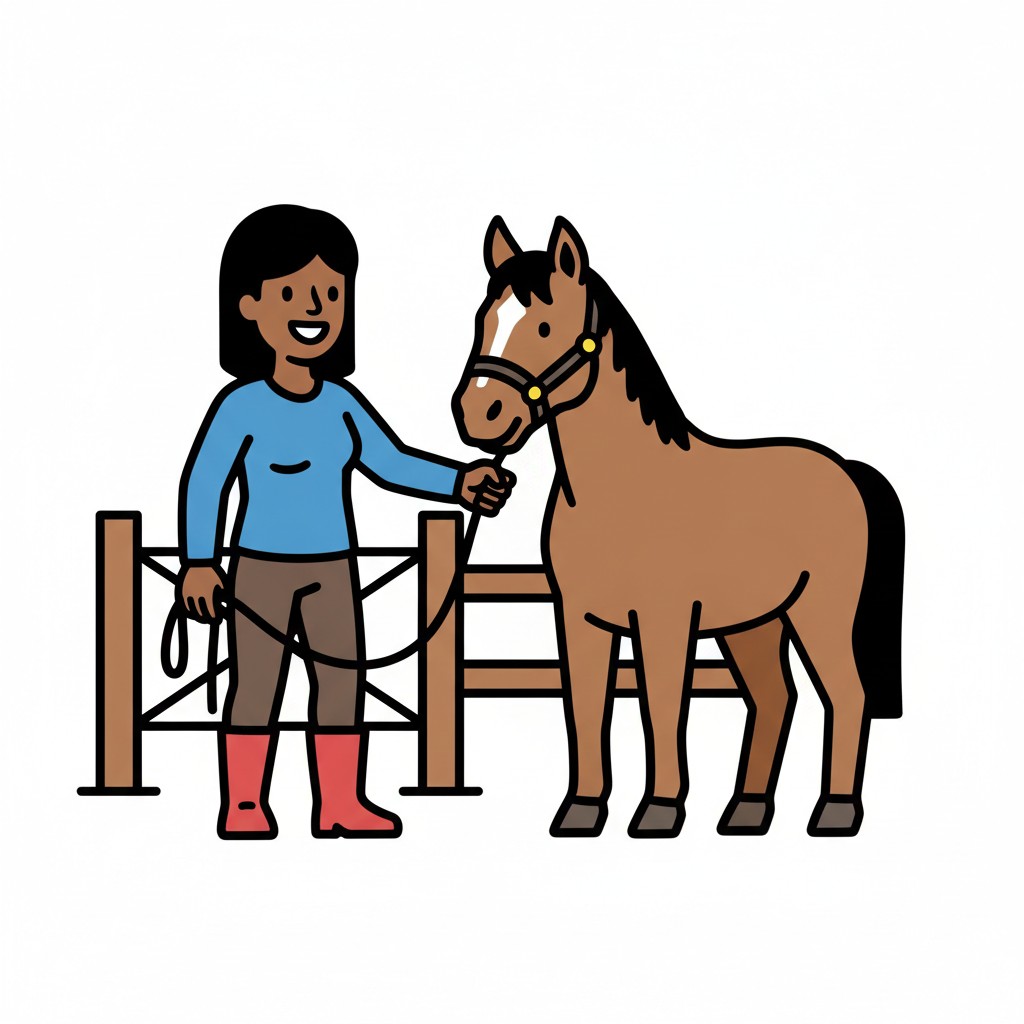 ♀
♀Fetching the horse from the paddock
A woman in boots leads a horse from the paddock.
About this visual support
Bringing the horses in at the end of the day is a task where the order really does mean safety. The halter goes on before the gate opens, the horse is led with a calm voice and the gate is closed before the next horse is fetched. A child who forgets a step because she is thinking about something else can send the horse the wrong signal, and suddenly everything feels big and tense.
Visual support makes the order visible even when the child is tired after a long day. Four pictures go a long way: fetch the halter, open the gate, lead the horse into the stall and close it behind you. The child can stop at the picture in the aisle and check where she is in the sequence, instead of asking an adult or guessing.
A practical tip is to put the pictures at the child's eye level right by the gate, and laminate them so they survive rain and dust. Let the child point at each step out loud for the first weeks. If stable chores need to fit into a bigger weekly plan with training and school, you can set them up in Routined and try the app for 14 days at no cost.
Use this image in a schedule
Build your own visual schedule with this image and download it as a print-ready PDF. Completely free.

More similar visual supports

Muck out
A pile of manure with a shovel.
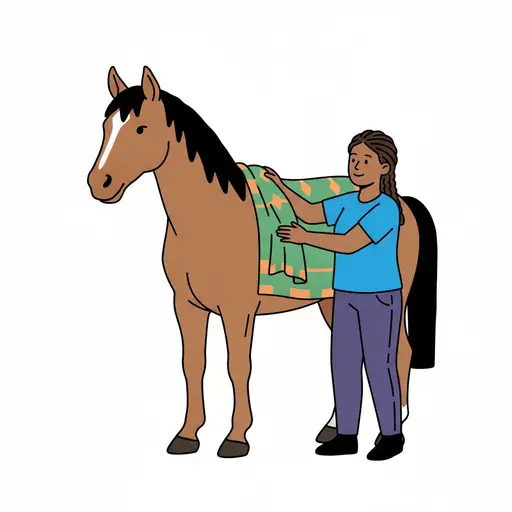
Put on the horse blanket
A woman puts a checked blanket over a horse.
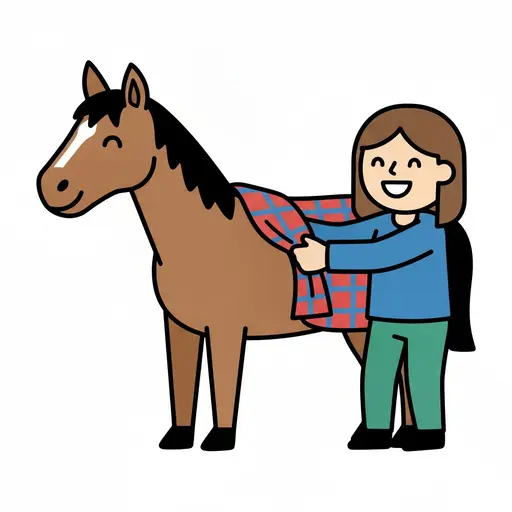
Take off the horse blanket
A happy girl takes a checked blanket off a horse.
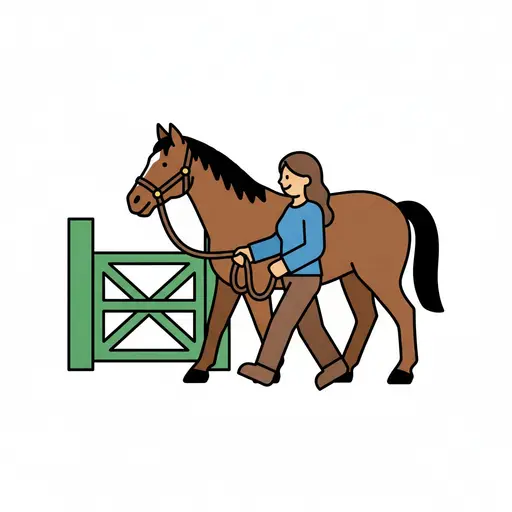
Turn out the horses
A woman leads a horse through a gate.
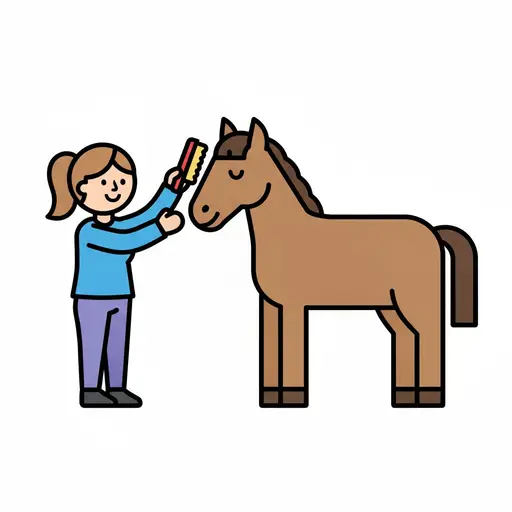
Brush the horse
A girl brushes a horse with a brush.
Cats and guinea pigs
A simple symbol picture of a cat sitting beside a guinea pig.
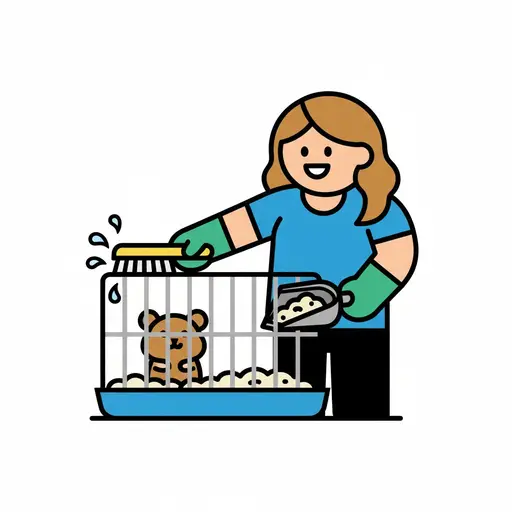
Clean cage
A woman with brown hair, wearing a blue t-shirt and green gloves, cleans a hamst...
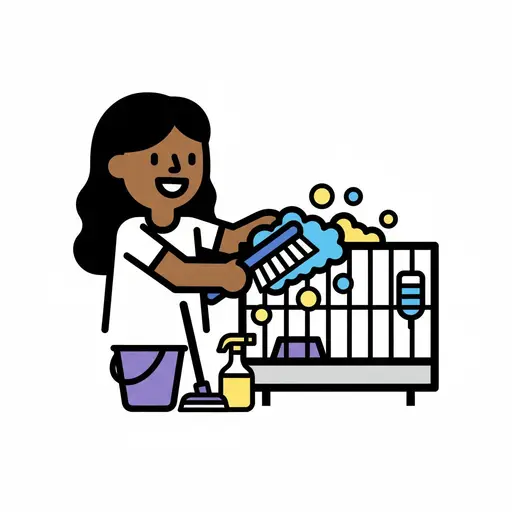
Deep clean cage
A person is scrubbing a pet cage with a brush and soapy water. A bucket and a sp...
Take the visual supports with you
In Routined you build schedules from these pictures, add timers and voice instructions, and your child follows the day on their own.


* 14-day free trial included for new users.