Dust
Dusting is a thankless job because the dust barely shows and the surface looks the same afterwards. The visuals below give the child something to lean on when the result alone is not reward enough.
 ♂
♂Sweep
A broom and dustpan are used to sweep up dust and dirt.
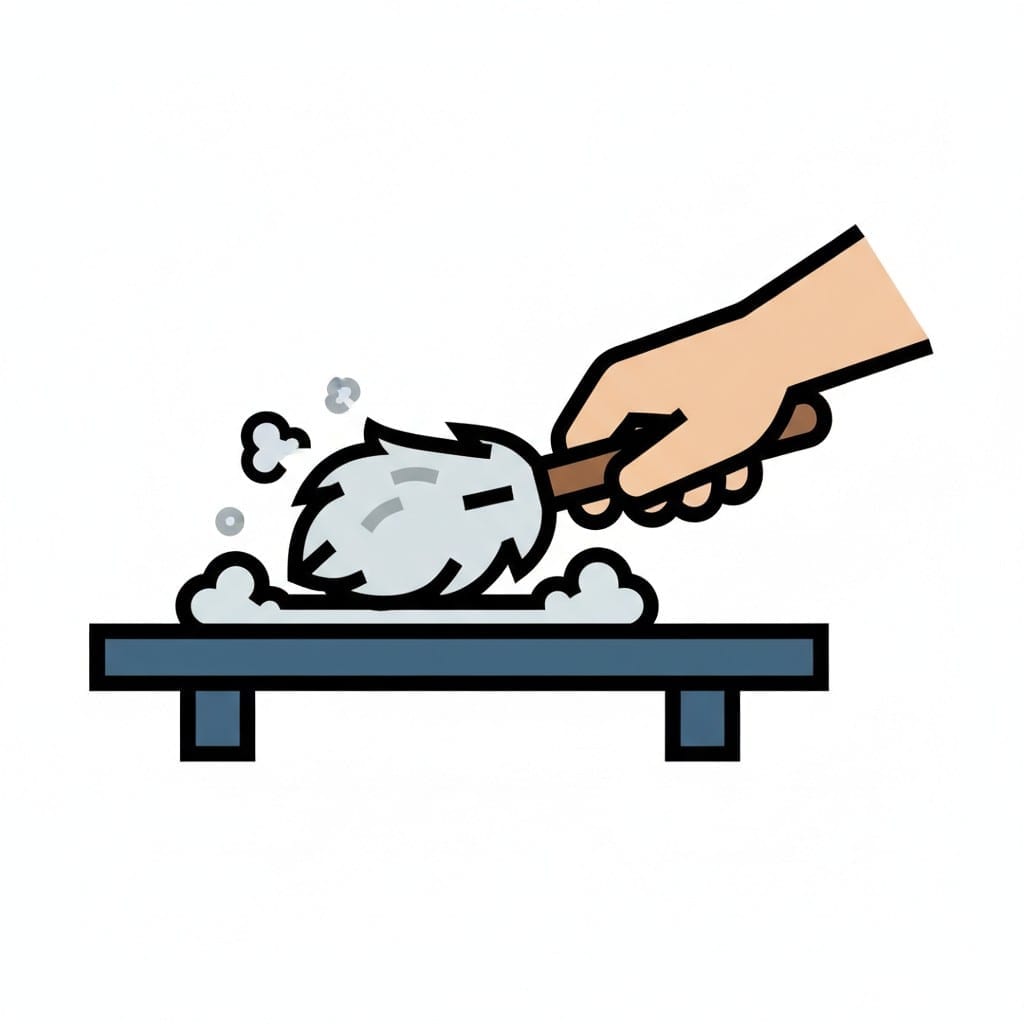 ♂
♂Dust
A hand holds a feather duster, wiping dust from a surface.
 ♂
♂Hand with a feather duster
A hand holds up a pale feather duster with a blue handle while specks of dust float around it.
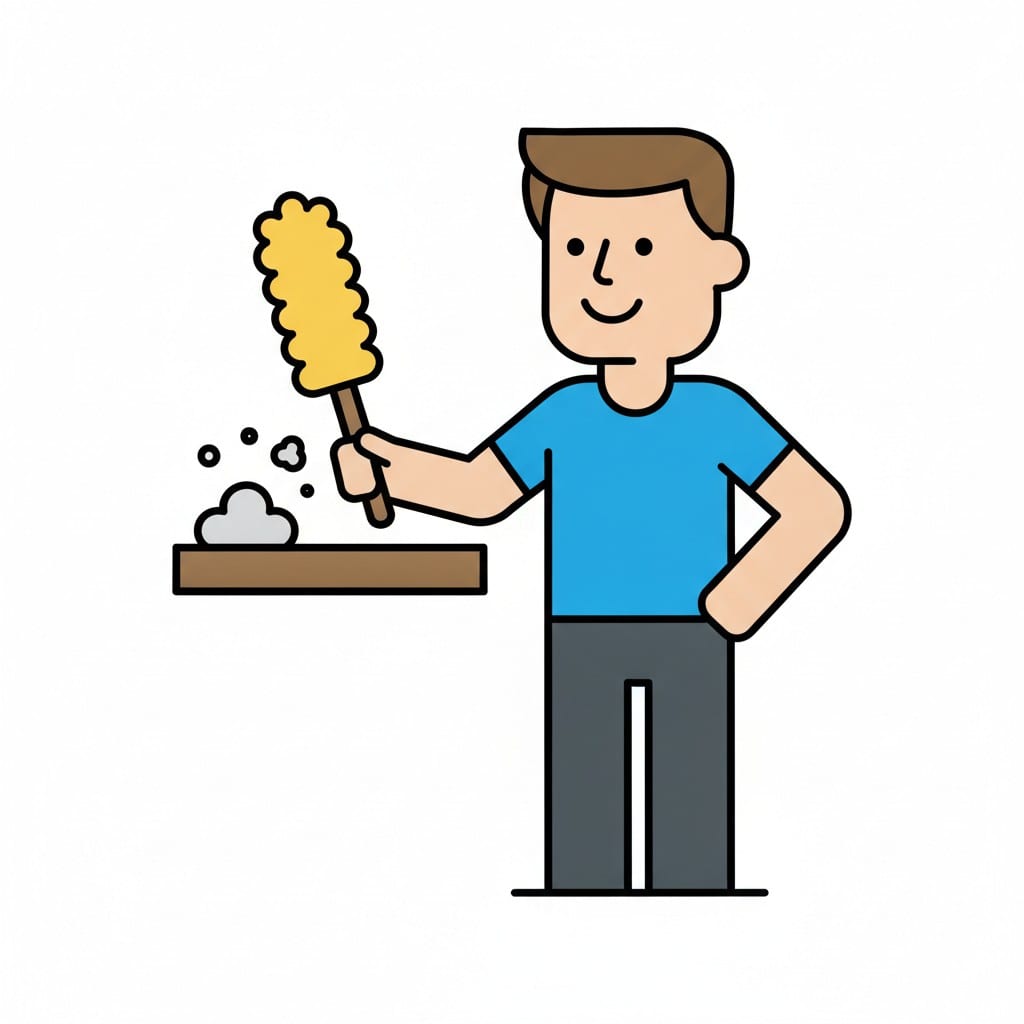 ♂
♂Dusting
A man dusts a shelf with a feather duster.
 ♂
♂Dusting the computer
A man dusts a computer with a cloth.
 ♀
♀Dusting
A person is dusting with a yellow duster, with a cloud of dust around them.

Brush sweeping dust
A brush with a yellow handle sweeps through a grey pile of dust and stirs it up.

Cloud of dust
A grey cloud of dust with tiny sparkling specks and a small brown clump of dirt in the middle.

Feather duster on a shelf
A white feather duster with a wooden handle sweeps along a blue shelf so that puffs of dust rise up.
About this visual support
The problem with dusting is not the technique, it is the motivation. Vacuuming leaves a visibly cleaner rug, wiping the table erases the juice stain. But dust is invisible to begin with, so the child is working towards a result nobody can see. That is where most children stall.
Visual support compensates for the missing payoff by making the process itself measurable. When each surface is its own picture — the top shelf, the TV bench, the windowsill — something gets checked off for every step, even if the dust itself stays invisible. The sequence becomes the reward, not the clean surface.
A small concrete trick: lay a dark cloth on the table before you start and let the child shake the duster over it from time to time. Suddenly the dust is visible and the abstract task gets a tangible pile of proof. If you want to slot dusting into a Saturday cleaning routine alongside other steps, you can build the whole morning in Routined and try the app free for 14 days.
Use this image in a schedule
Build your own visual schedule with this image and download it as a print-ready PDF. Completely free.
More similar visual supports

Dust baseboards
A person dusts a baseboard with a duster.
Sunday chores
A woman dusts with a feather duster and carries a laundry basket beside a calend...

Chores
A boy holds a toothbrush and wipes with a sponge, with towels and a grocery bag.

Clean the kitchen
A woman in a blue apron wipes the kitchen counter with a yellow sponge, with was...
Do the chores
A person pushes a wheelbarrow of hay in a stable where a horse looks out of the ...
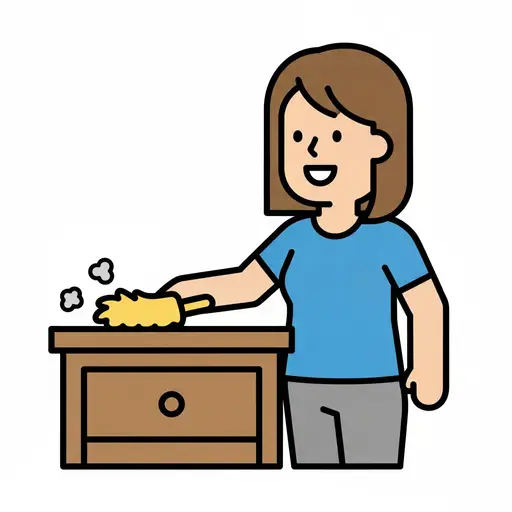
Dust furniture
A girl in a blue shirt dusts a wooden nightstand with a yellow feather duster.
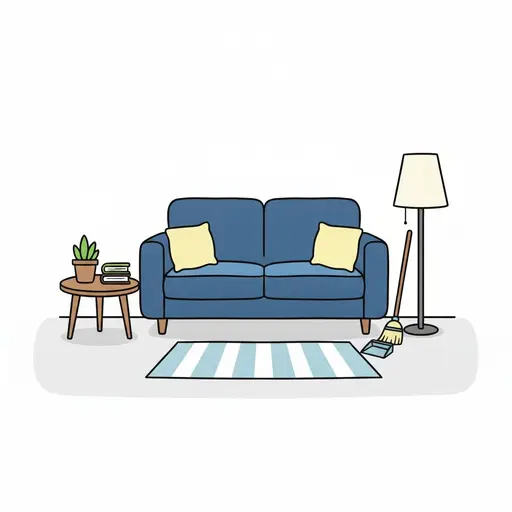
Clean the living room
A living room with a blue sofa, floor lamp and side table, with a broom leaning ...
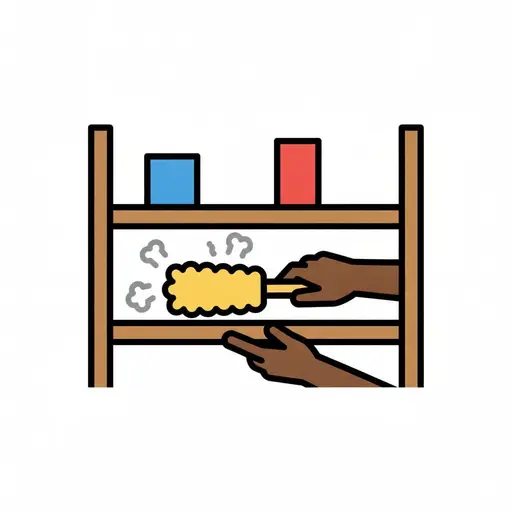
Dust the shelves
A hand sweeps a yellow duster along a wooden shelf, sending up puffs of dust, wi...
This visual support in other languages
Take the visual supports with you
In Routined you build schedules from these pictures, add timers and voice instructions, and your child follows the day on their own.


* 14-day free trial, then $2.39 a month or $20.99 a year (US pricing). Cancel anytime.