Pack things
Pack your things sounds simple but hides three unanswered questions: which things, how many, and where do they go. The visual schedule below answers all three before the child has to ask.
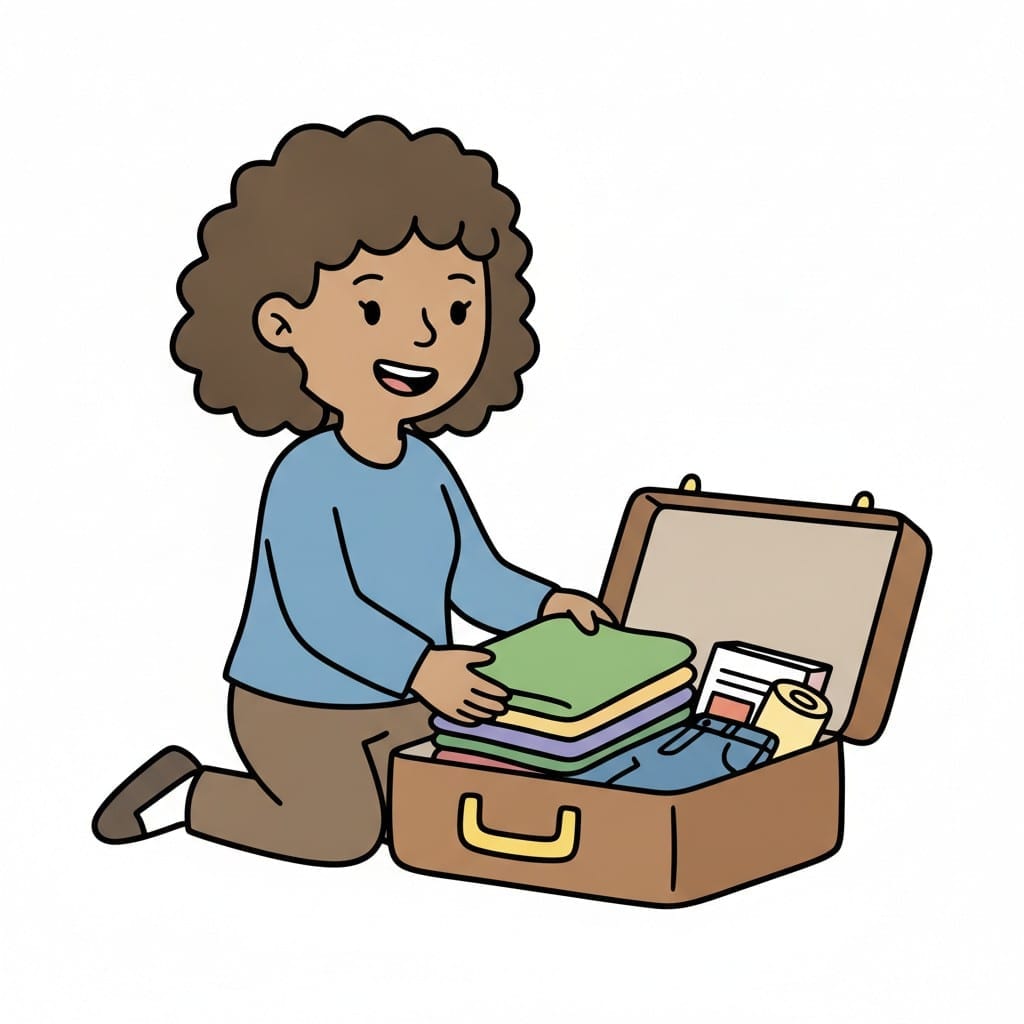 ♀
♀Placing clothes in the case
A girl kneels down and stacks folded clothes inside a brown suitcase.
About this visual support
A task without edges is hard to begin. Pack your things says nothing about what counts as things, how many of each are needed, or whether the rucksack or the suitcase is meant, and someone who cannot see where the task ends will struggle to see where it starts. The silence that follows often gets read as unwillingness, when really the task has no shape.
Pictures give the task those edges. A row of seven squares means seven items, no more and no fewer, and when the last square is ticked the packing genuinely is finished. That also provides a clear ending, which matters as much as a clear beginning.
One tip is to place the open bag beside the pictures and pack in the same order as the row. A gap shows up immediately if something is skipped, and there is no need to tip everything onto the floor to check. When packing looks the same every time, it gets faster to do alone. The row can also be built as a picture routine in Routined, where it can be reused, and the app can be tried for fourteen days at no cost.
Use this image in a schedule
Build your own visual schedule with this image and download it as a print-ready PDF. Completely free.

More similar visual supports
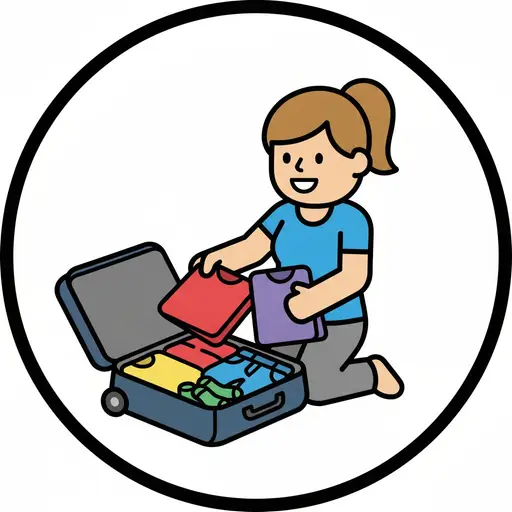
Pack clothes
A girl kneels and places colourful shirts into an open suitcase.
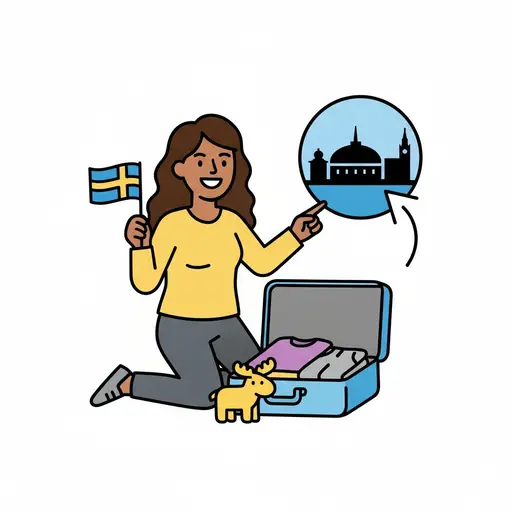
Pack for Stockholm
The girl holds a Swedish flag and points towards the Stockholm skyline beside he...
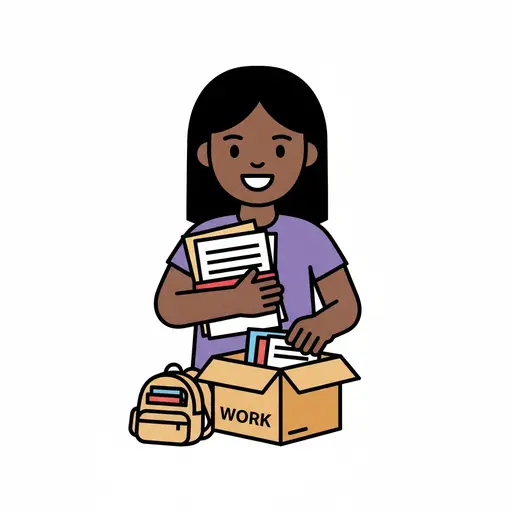
Pack work things
A woman holds a stack of papers and lowers them into a cardboard box for work, w...
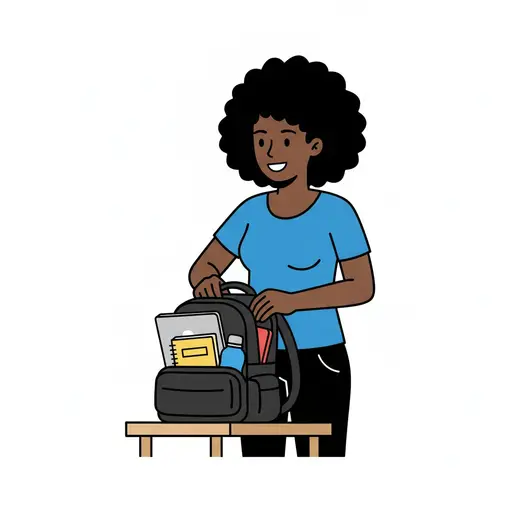
Pack for work
The woman fills her backpack on a table with a laptop, notebook and water bottle...
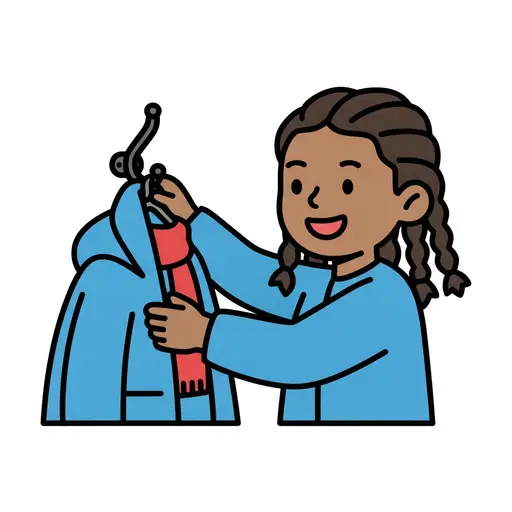
Hang up outerwear
A girl with braids hangs a blue hooded jacket and a red scarf on a hook.
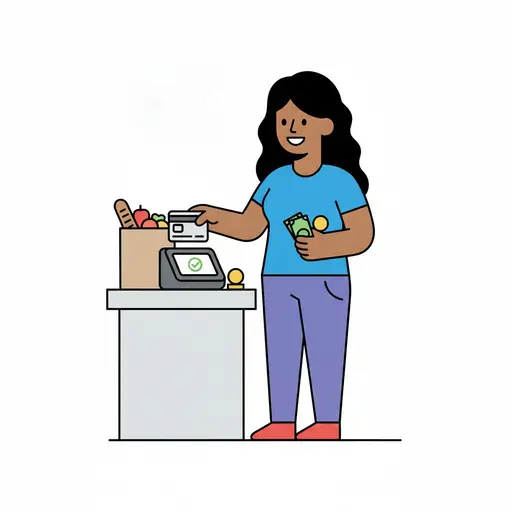
Pay
A person pays with a card at a card reader while holding banknotes, with a bag o...
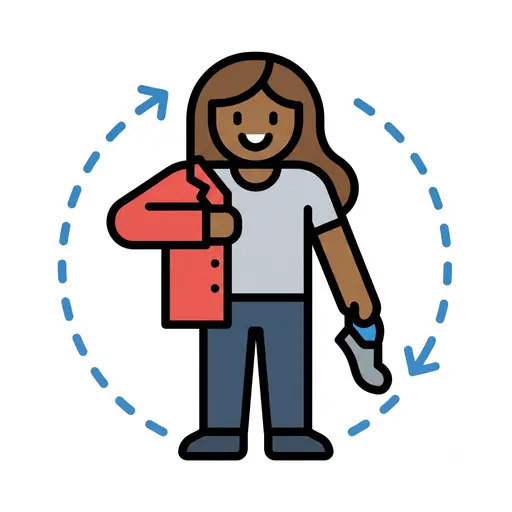
Remove Shoes and Jacket
A girl takes off her red jacket and a shoe, with arrows showing the motion.
Shop for mom
A smiling person points to a thought bubble of mom while holding a bag of grocer...
Take the visual supports with you
In Routined you build schedules from these pictures, add timers and voice instructions, and your child follows the day on their own.


* 14-day free trial included for new users.