To do
A list without order tends to become a list of things that didn't happen. The visual support below lets you build a short sequence where each task has a place, a priority and a clear endpoint.
 ♂
♂Person holding up a to-do list
A smiling person holds up a large white board with a calendar symbol and three ticked lines.
 ♀
♀To do
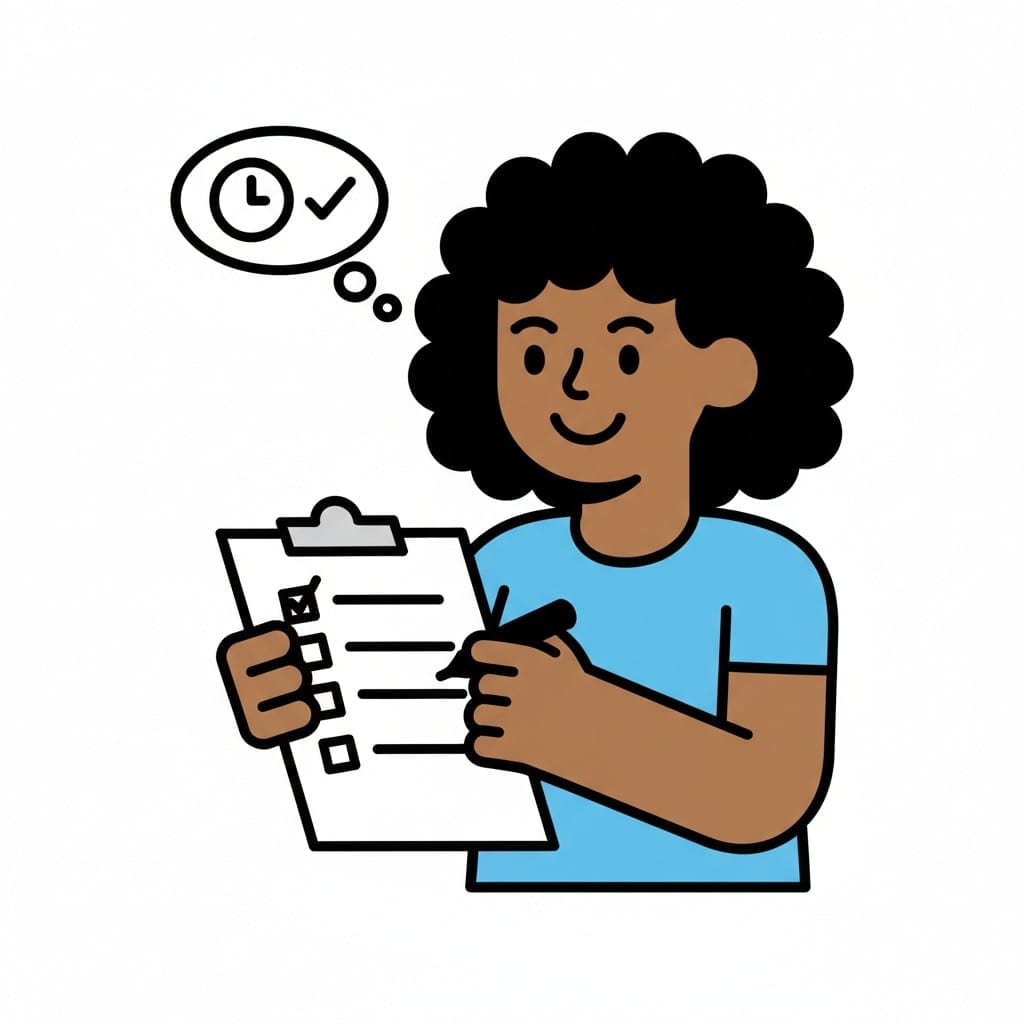
A person with curly hair writes on a checklist. A thought bubble with a clock and a checkmark symbolizes completing tasks on time.
About this visual support
An ordinary to-do list puts everything on the same line. Take out the bin sits at the same weight as call the dentist, and since nothing is visibly first in line, the eye drifts to the easiest or the most fun item. For children practising executive function, the result is often that the list feels like a failure before the day has even started.
With a visual schedule, the list becomes a short sequence instead of a pile. Three or four pictures, a first one, a last one, a clear end. When the child sees that task two is do the dishes and task three is walk the dog, the priority is already settled and the energy can go into doing. A practical tip for to-do lists: keep the count below five pictures, and never put two cognitively heavy tasks back to back. Slot something light in between, so the brain gets recovery before the next sharp start.
Routined lets you save different to-do sequences for different days and pull one in with a single tap when things start to scatter.
Use this image in a schedule
Build your own visual schedule with this image and download it as a print-ready PDF. Completely free.

More similar visual supports

Dad week
A dad with a girl and a boy holding hands under a banner with calendar days symb...

Dad's week
A stylized person with a blue heart on their shirt. Above their head is a calend...

Get bags
A woman with short dark curly hair and a blue t-shirt leans forward and picks up...
Monday Dad Week
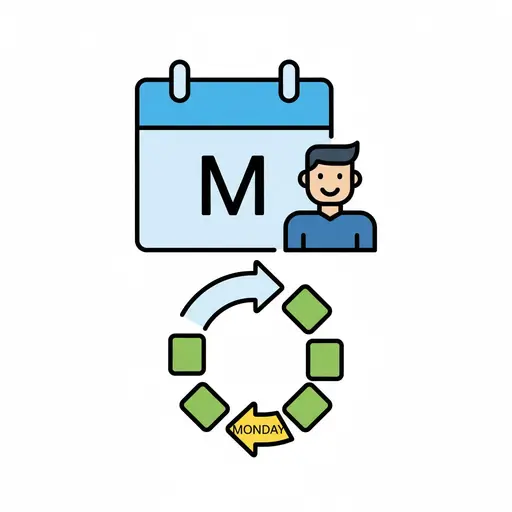
A calendar icon showing the letter M for Monday, an image of a man and a circula...

Plan move
A man holds a board with arrows, and a thought bubble shows a house, a moving tr...

See schedule
Two hands hold a tablet showing a schedule with a tick and a clock.

Shopping list
A sheet of paper with a checkmark and three lines next to a pencil.
Tuesday dad's week
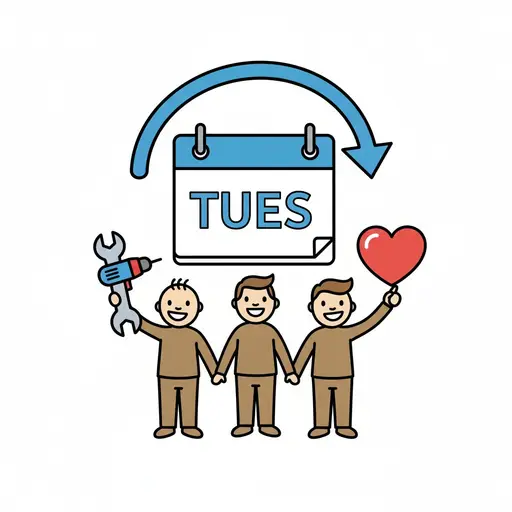
A calendar showing 'TUES' with a cyclical arrow above three male figures holding...
Take the visual supports with you
In Routined you build schedules from these pictures, add timers and voice instructions, and your child follows the day on their own.


* 14-day free trial included for new users.