Wash windows
Streaks show up the moment the light hits the glass, and that visible flaw can make a child feel the whole job was wasted. The visual schedule below splits the task into pressure, motion and drying.
 ♂
♂Man washing windows
A man sprays cleaning solution on a window and uses a squeegee to clean it.
About this visual support
Few household chores give a child as instant a verdict as washing windows. The light hits the glass and every missed spot is right there. For a child who finds it hard to combine steady pressure with controlled movement, the result almost never looks the way they hoped, and motivation drops fast.
A visual schedule shifts the goal from a perfect pane to a finished sequence. Each card carries one job – spray, wipe down, dry in one direction, check the edges. Streaks then belong to the last step instead of being proof that the whole effort was wrong. The child can fix one part without redoing everything.
One thing that helps: agree on a single drying direction, top to bottom or side to side, and make that the biggest card in the row. Predictable movement makes leftover streaks easier to spot and fix. If you want window cleaning as part of a wider chore routine with a timer, you can build it inside Routined.
Use this image in a schedule
Build your own visual schedule with this image and download it as a print-ready PDF. Completely free.
More similar visual supports

Clean up dirty clothes
A boy puts dirty clothes into a laundry basket.

Do the chores
A person pushes a wheelbarrow of hay in a stable where a horse looks out of the ...

Dust the apartment
A child dusts a bookshelf with a feather duster.

Clean the living room
A living room with a blue sofa, floor lamp and side table, with a broom leaning ...
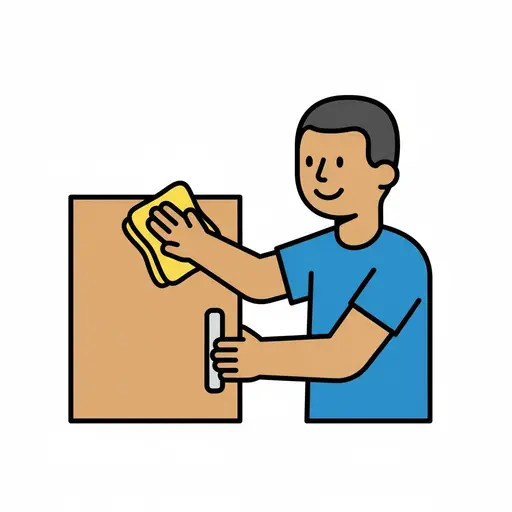
Wipe cabinets
A person wiping a cabinet with a yellow cloth.
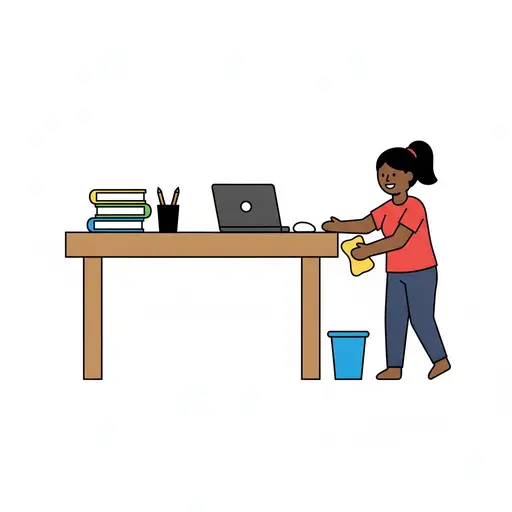
Clean desk
A girl wipes a desk holding books, pens and a laptop.

Straighten up
A child puts toys into a yellow tub, with a car, a teddy and a block on the floo...

Chores
A boy holds a toothbrush and wipes with a sponge, with towels and a grocery bag.
This visual support in other languages
Take the visual supports with you
In Routined you build schedules from these pictures, add timers and voice instructions, and your child follows the day on their own.


* 14-day free trial, then $2.39 a month or $20.99 a year (US pricing). Cancel anytime.