Bath
The bathroom is one of the most sensory-loud places in the house: the tap roars, the floor is slippery, water reaches the ears. For a child who registers all this at high volume, a bath is rarely just a bath. The visual support below takes that in.
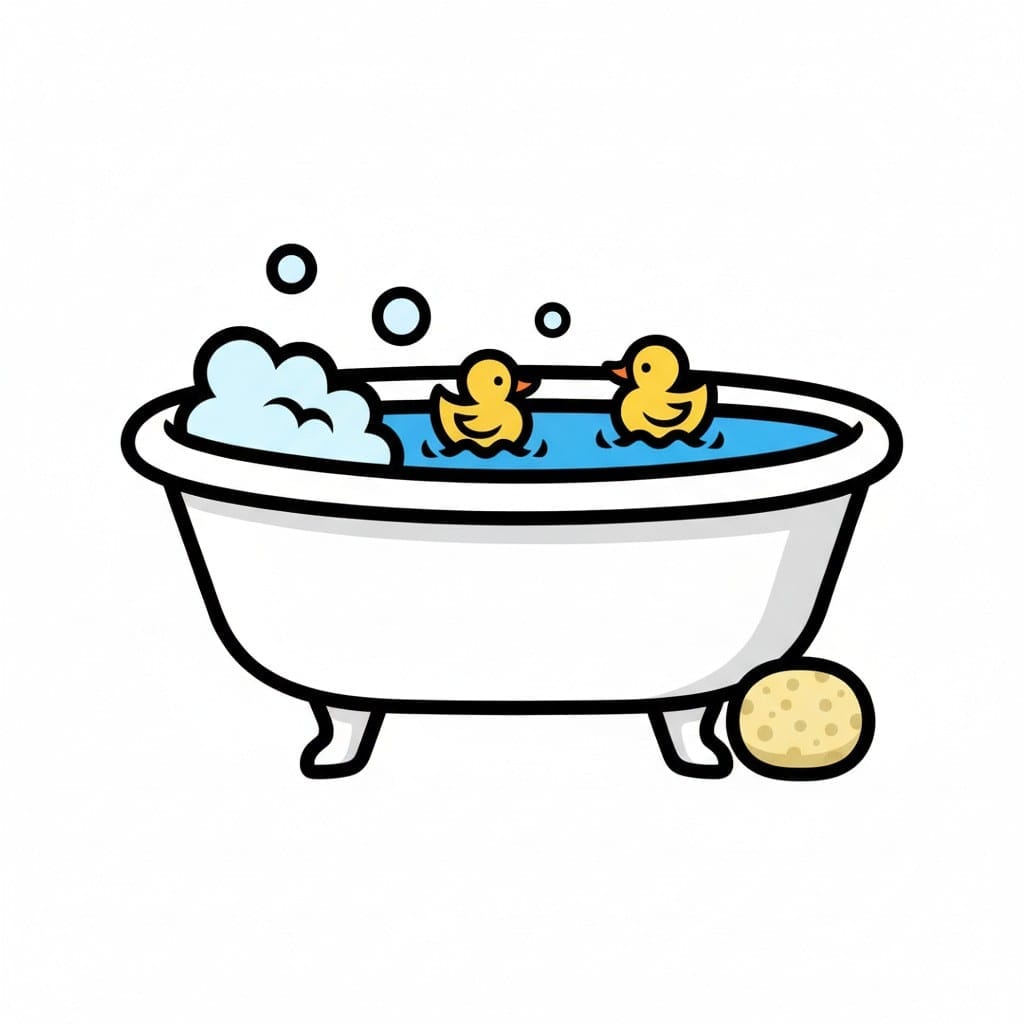
Bathtub
A white bathtub filled with water, bubbles, two yellow rubber ducks, and a sponge next to it.
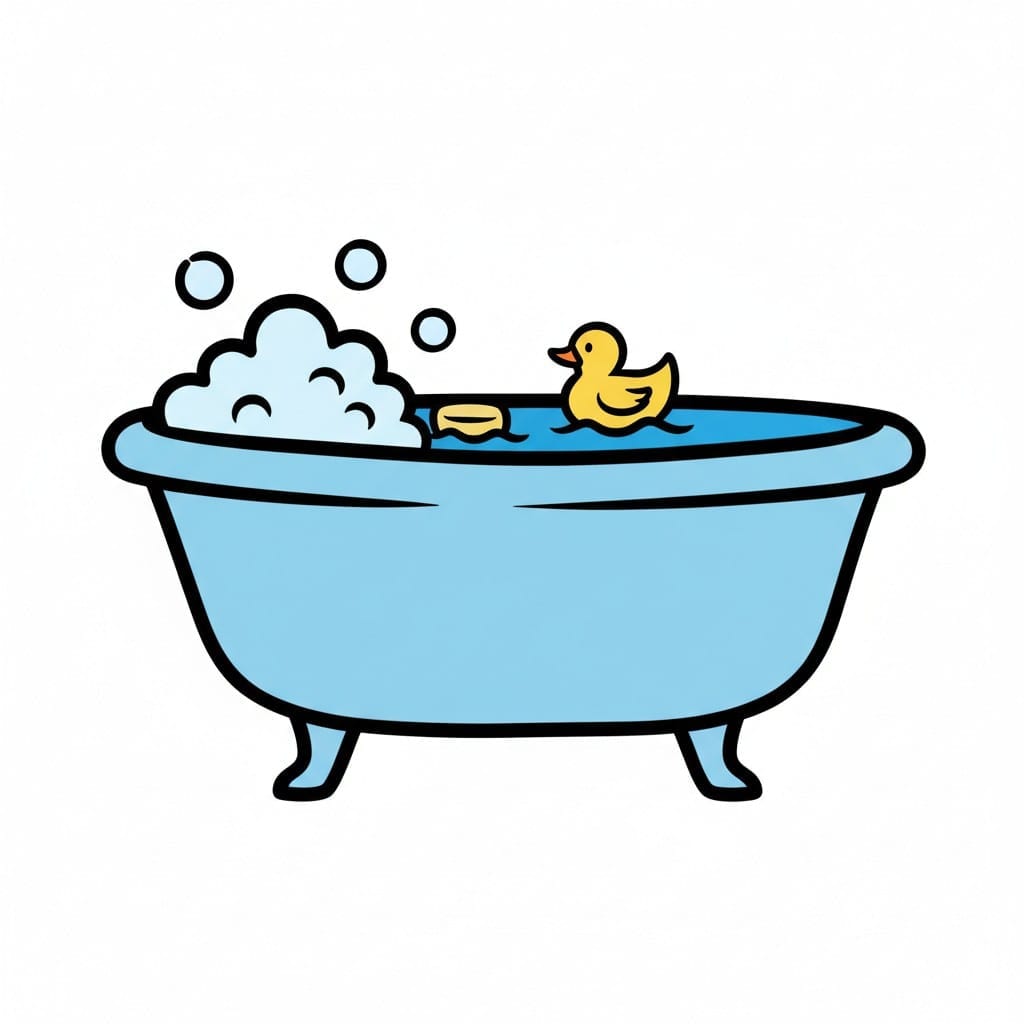
Bathtub
A blue bathtub filled with water, bubbles, and a yellow rubber duck.
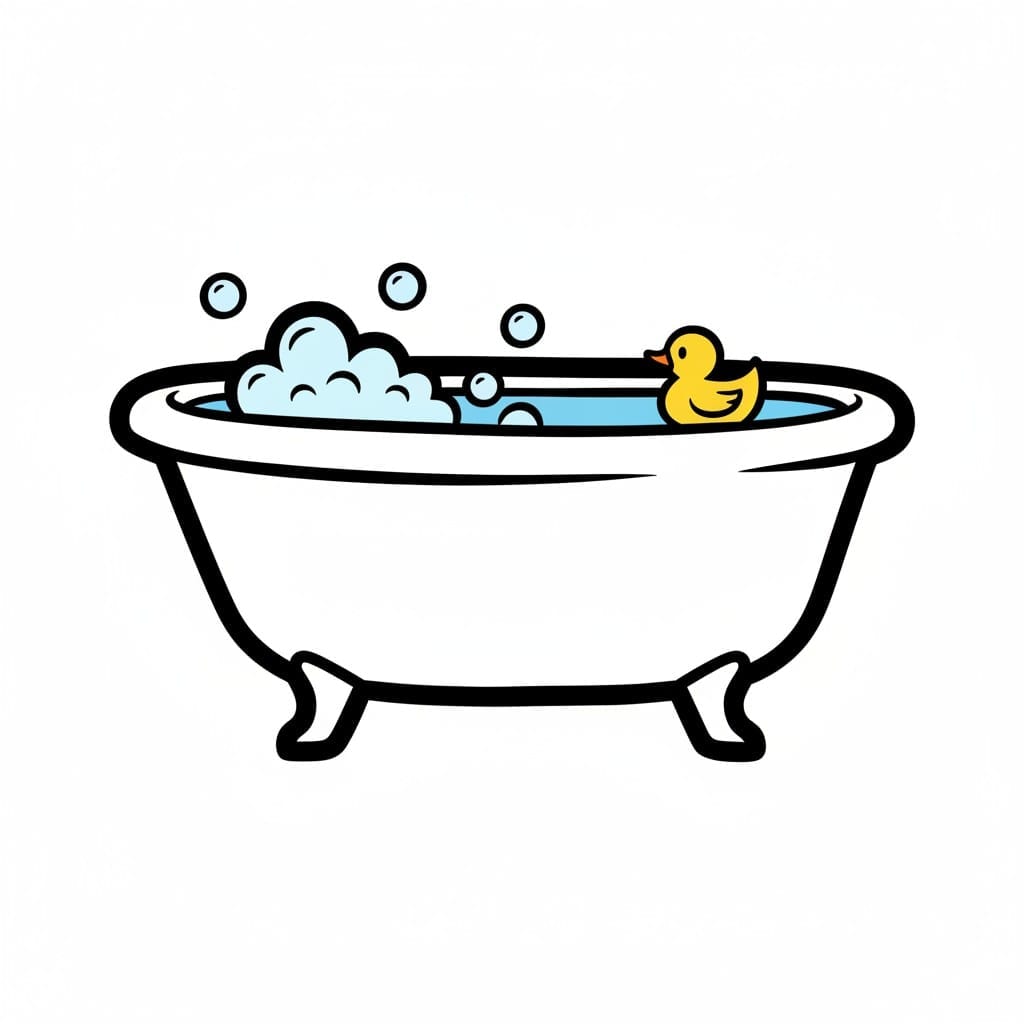
Bathtub
A white bathtub filled with water, bubbles, and a yellow rubber duck.
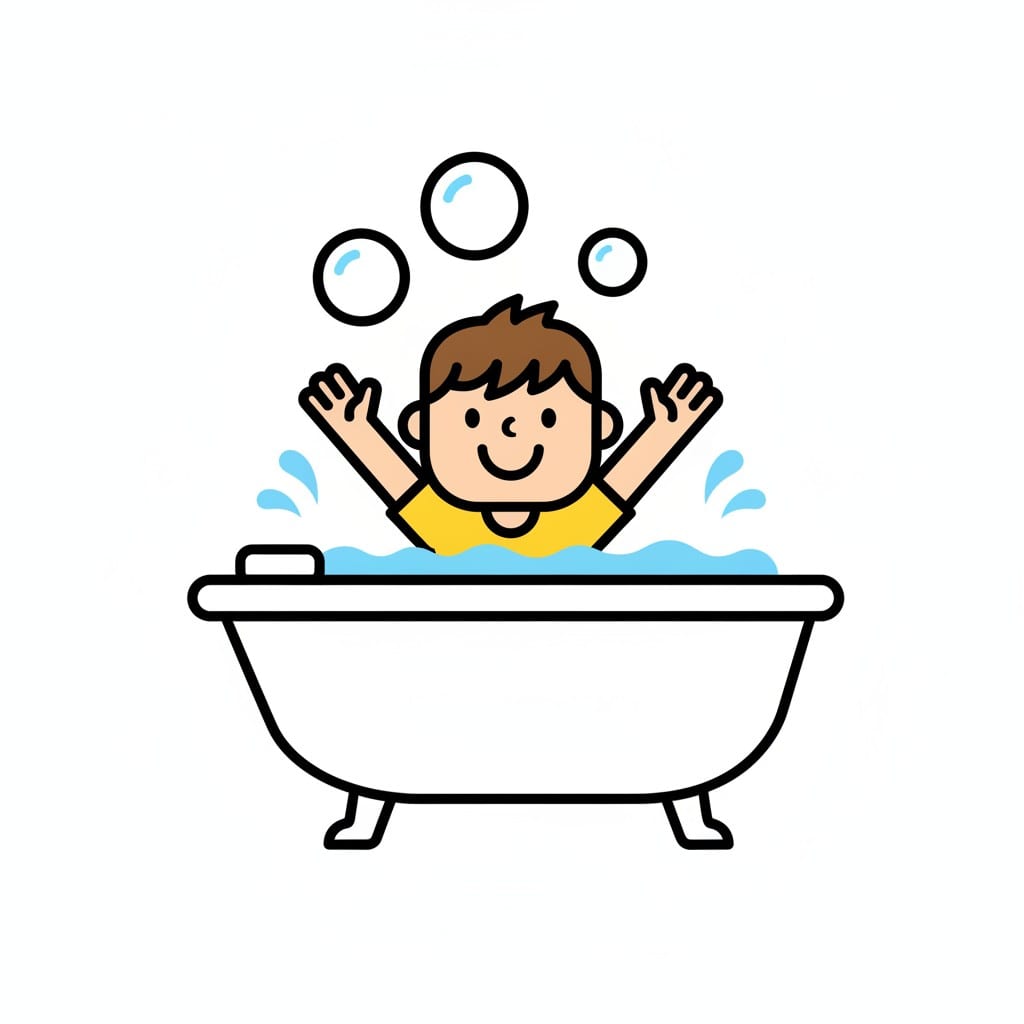 ♂
♂Bath
A child sits in a bath with arms raised and soap bubbles above.
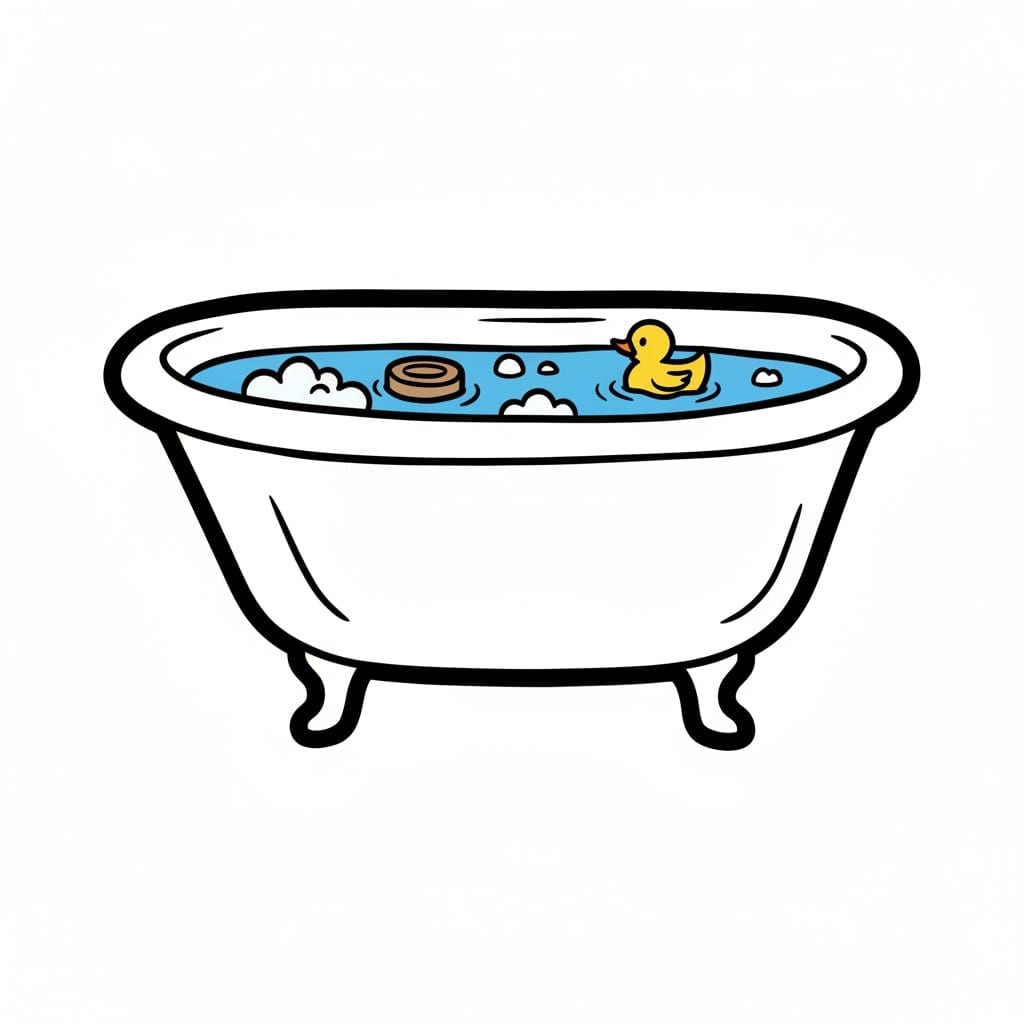
Bathtub
A bathtub filled with water and bubbles. A yellow rubber duck and a brown toy are floating in the water.
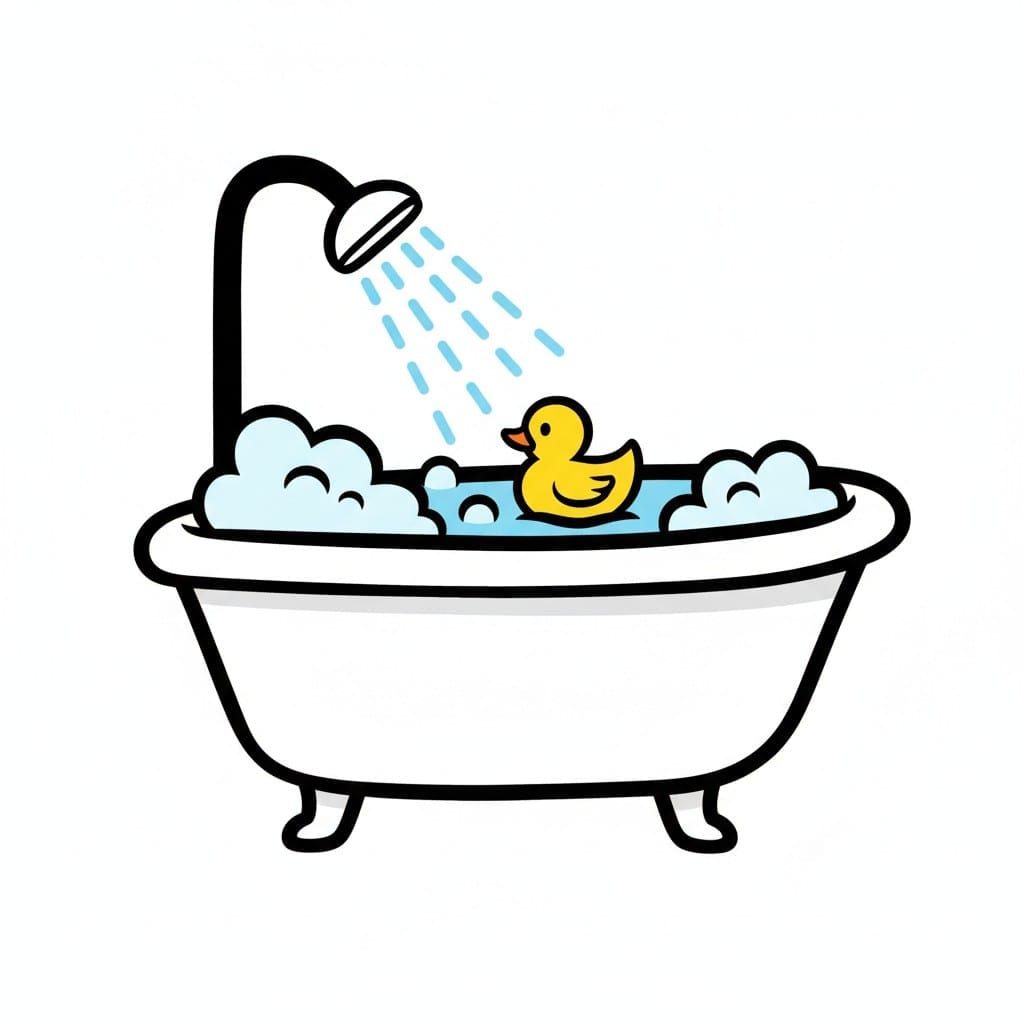
Bathtub with the shower running
A white bathtub on feet fills with water and foam while a shower head sprays from above, and a yellow rubber duck floats in the water.
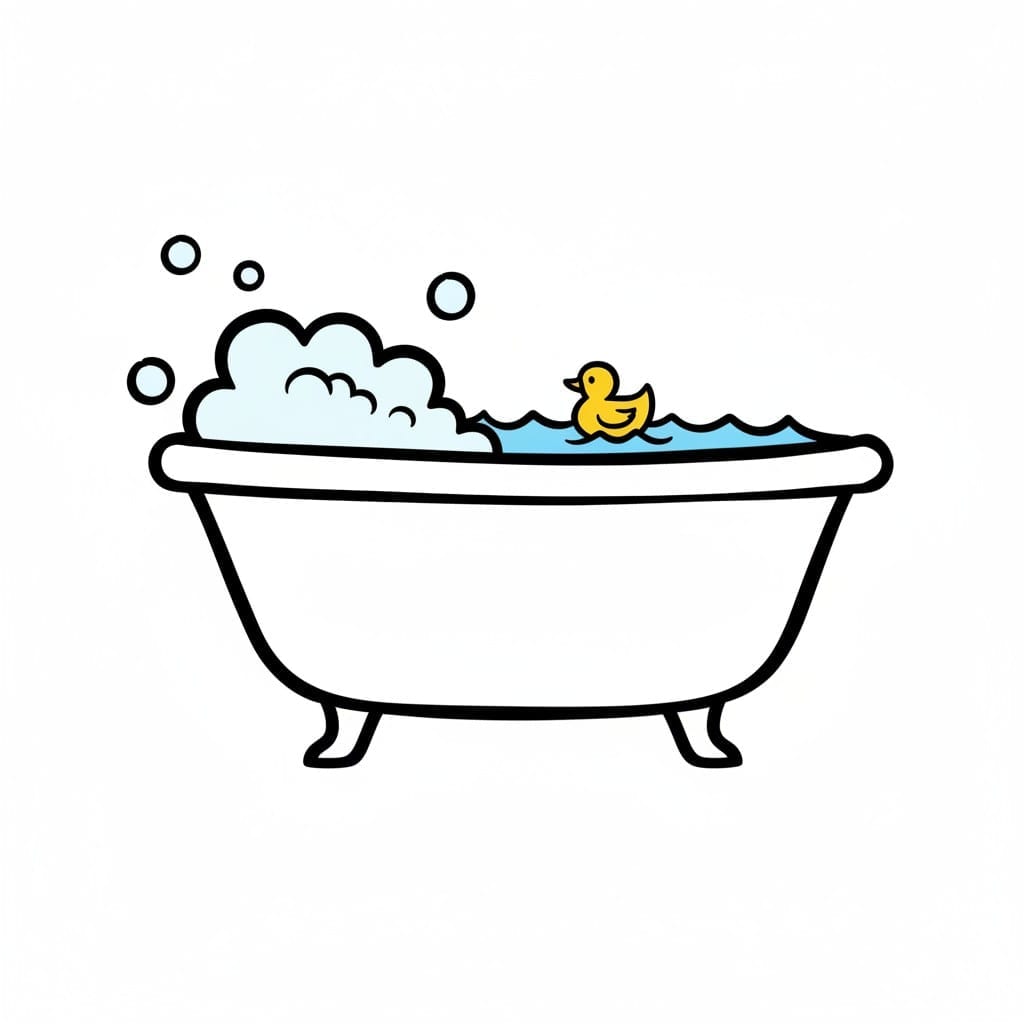
Bathtub with foam and soap bubbles
A white bathtub holds blue water and a big mound of foam, with a small yellow duck floating and a few soap bubbles drifting above.
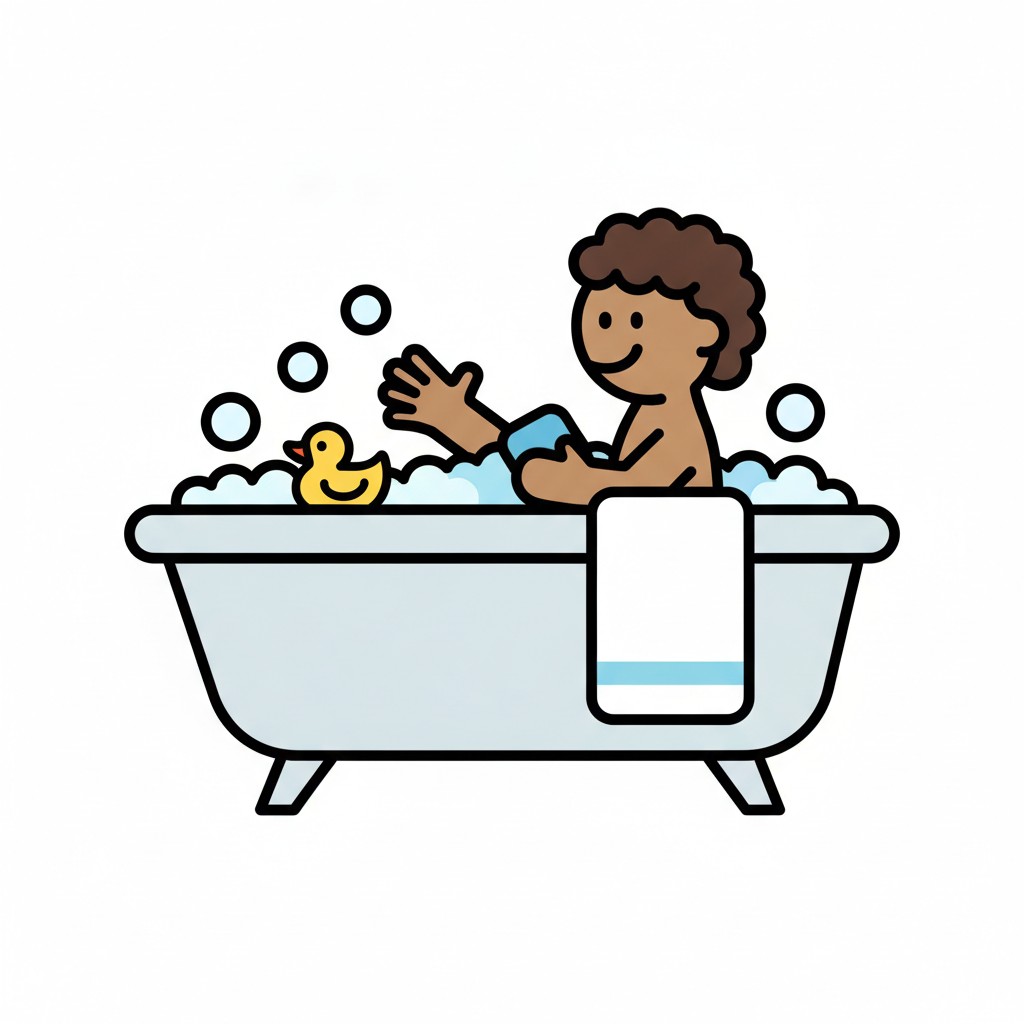 ⚲
⚲Child taking a bath
A happy child sits in a bathtub with bubbles and a rubber duck.
About this visual support
Slippery tiles underfoot, a tap that sounds like a river, then suddenly water in one ear — for a child with high sensory alertness, a bath isn't a relaxing pause but a parade of small discomforts arriving in close succession. The reaction, from a darting body to outright refusal, is a response to those specific inputs.
Visual support can't turn the tap down, but it can make the order clear and lower the guard. When the child sees in advance that the tap is closed before sitting down, that the water is already lukewarm at entry, and that the hair wash comes once and only once, the number of unknown moments shrinks.
Concrete help: decide together which step feels worst — usually the hair rinse or the temperature check — and place a comforting image beside that step. A favourite towel, a doll, a song. The hard step stays hard, but it gets company. In the Routined app the bath sequence can be saved so the same order returns evening after evening without needing to be explained again.
This image is part of these ready-made schedules
Use this image in a schedule
Build your own visual schedule with this image and download it as a print-ready PDF. Completely free.

More similar visual supports
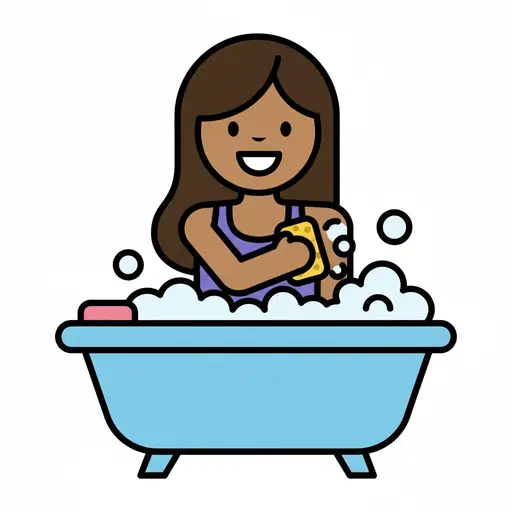
Bathe
A smiling girl sits in a bathtub full of foam and washes her arm with a yellow s...
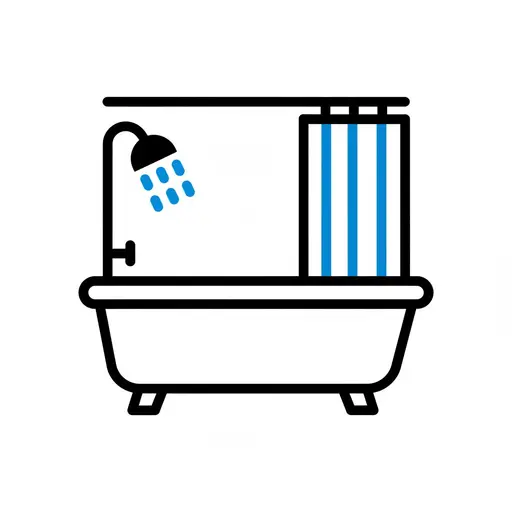
Bath or shower
An illustration of a bathtub with a shower head spraying water and a blue shower...
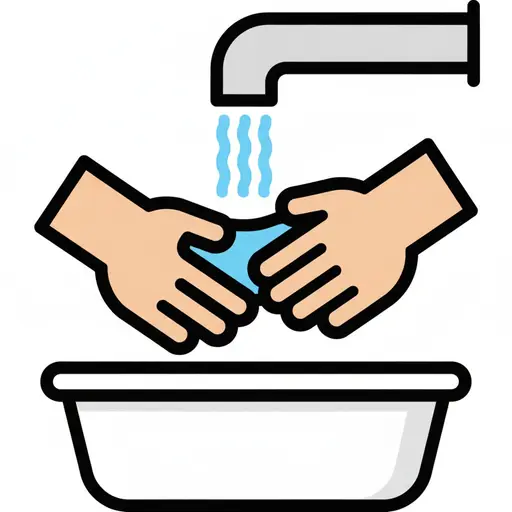
Get clean
Two hands are washed under a tap above a basin.
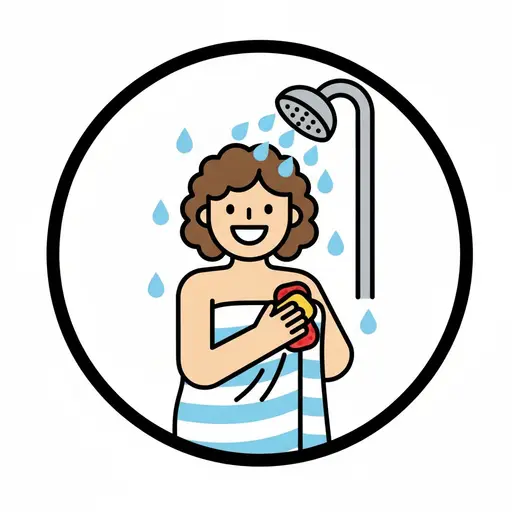
have a shower
A circular icon with a smiling person wrapped in a striped towel washing their a...
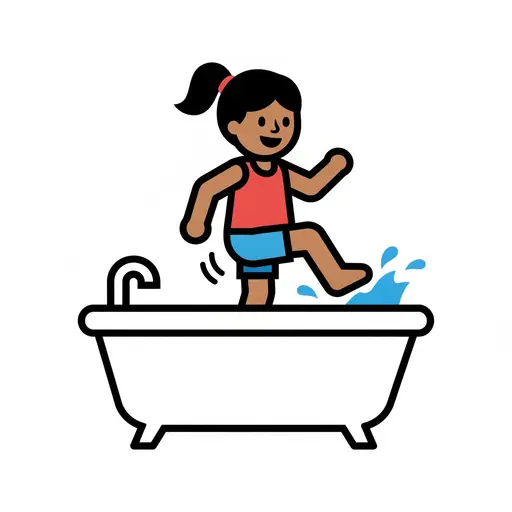
Hop in the bathtub
A girl happily steps into a bathtub and the water splashes.
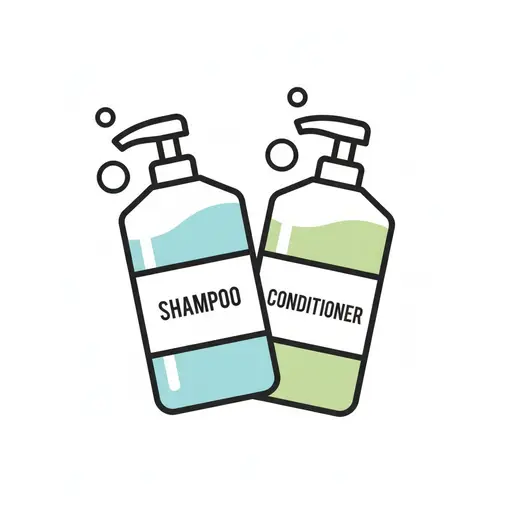
Shampoo
A bottle of shampoo and a bottle of conditioner.
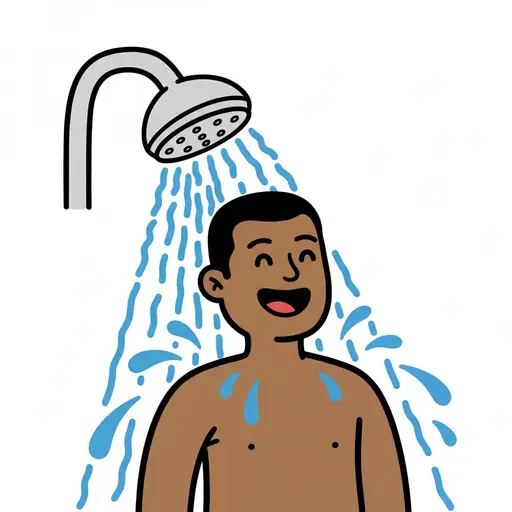
Shower child
An illustration of a boy with soap on his body, holding a sponge and a towel, st...
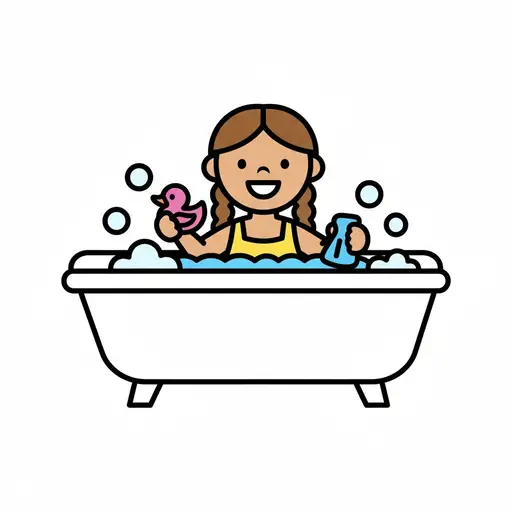
Take a bath
A girl sits in a bubble bath with a pink rubber duck and a blue sponge.
Take the visual supports with you
In Routined you build schedules from these pictures, add timers and voice instructions, and your child follows the day on their own.


* 14-day free trial, then $2.39 a month or $20.99 a year (US pricing). Cancel anytime.