Brush and wash
The taste of toothpaste, the temperature of the water — two strong inputs that collide just when the child is most tired. That is why the bathroom morning often takes longer than it should. The visual support below splits the moments so the bridge between them gets shorter.
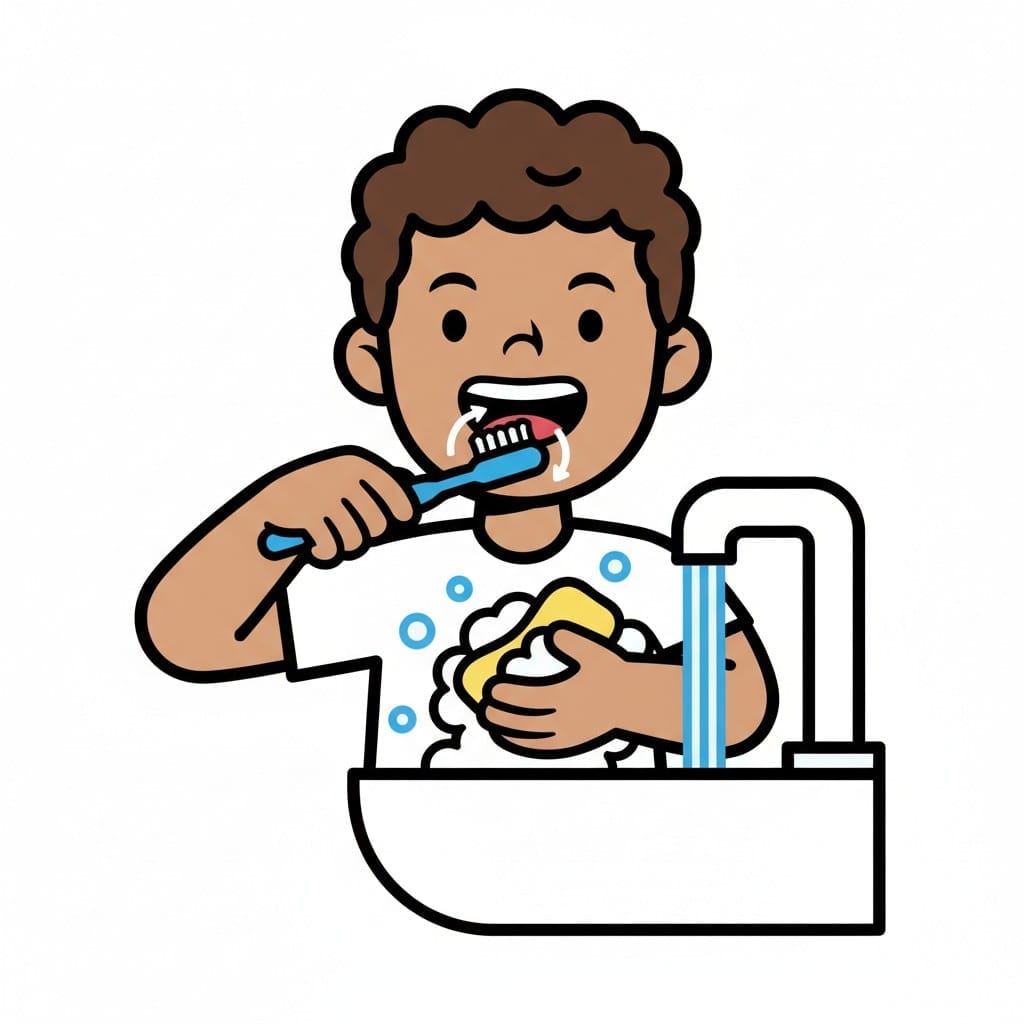 ♂
♂Brush teeth and wash face
A boy stands at a sink, actively brushing his teeth with a blue toothbrush and holding a yellow sponge with foam, indicating he is also washing.
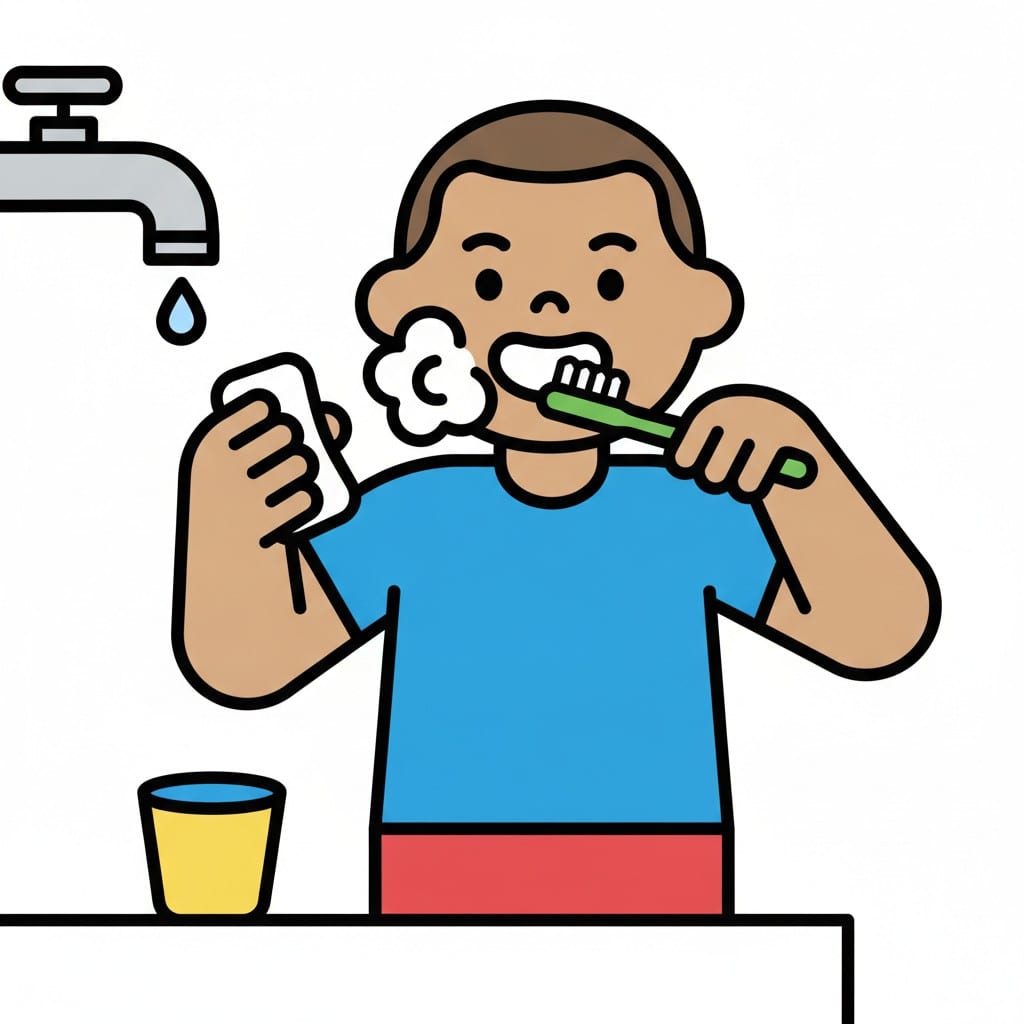 ♂
♂Brushing teeth and washing
A boy at the sink brushes his teeth with a green toothbrush and holds a washcloth in his other hand, with a cup of water beside him.
About this visual support
Brushing and washing belong together as a routine but are really two different sensory experiences stacked on top of each other. First strong tastes and vibrations in the mouth, then cool or warm water across the face. The combination is what often makes children get stuck in the middle — once the first is over and the second is about to start, motivation drops sharply. For children with sensory sensitivities, the gap between the moments can become the actual problem, not the moments themselves.
Visual support separates the two steps and at the same time makes the transition visible. When the child sees the toothbrush on one card and the washcloth on the next, the experience reads as two bounded things, not one long uncomfortable event. Moving on is easier when the end of the first moment is clear and the next already has an image.
One concrete tip: place a third card between them showing something neutral, like rinsing the mouth or looking in the mirror. That micro-pause gives the nervous system a second to reset before the water meets the face. To tie the whole bathroom visit together, the cards can run as a mini sequence in Routined, so the bridge between steps becomes automatic every morning.
Use this image in a schedule
Build your own visual schedule with this image and download it as a print-ready PDF. Completely free.
More similar visual supports
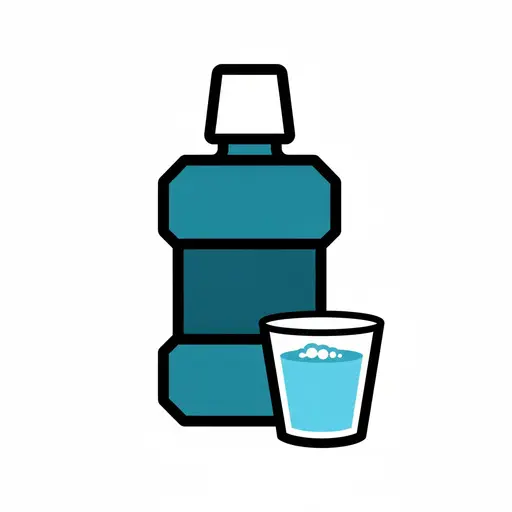
Mouthwash
A bottle of mouthwash and a cup of mouthwash.
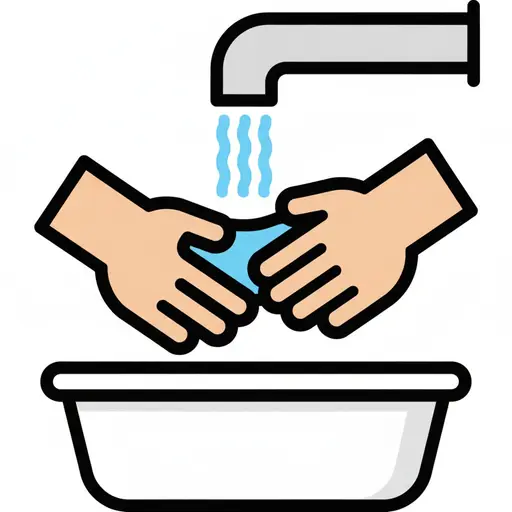
Get clean
Two hands are washed under a tap above a basin.
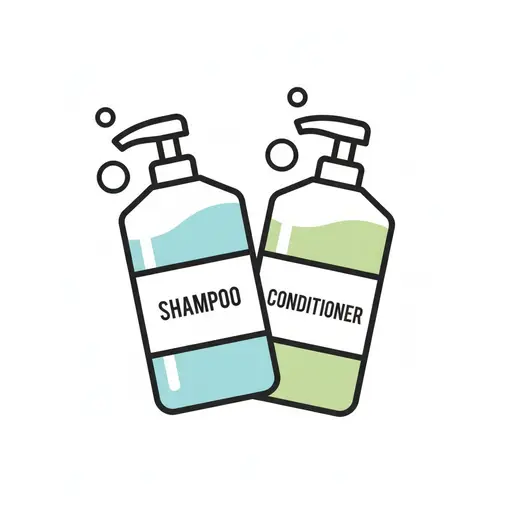
Shampoo
A bottle of shampoo and a bottle of conditioner.
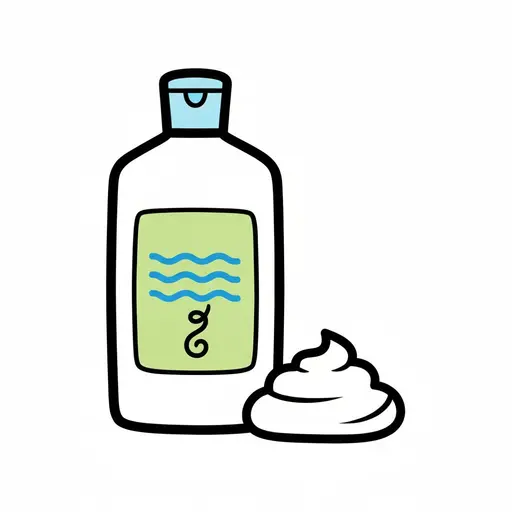
Conditioner
A bottle of conditioner with a dollop of white conditioner beside it.
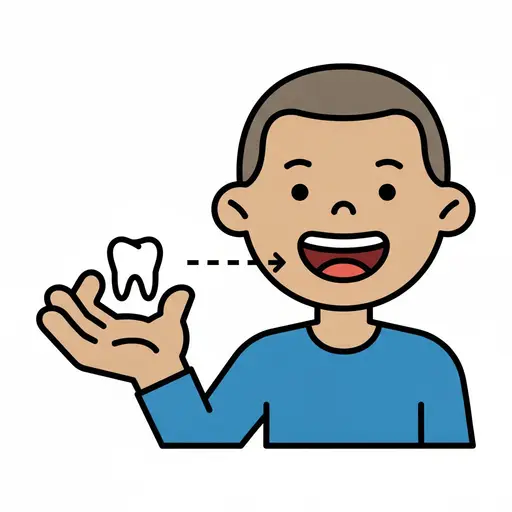
Lose a tooth
A smiling boy shows the gap in his teeth and holds up the baby tooth that just f...
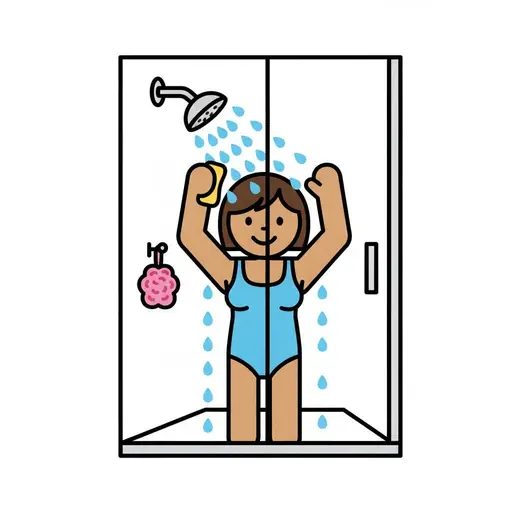
have a shower
A girl in a swimsuit stands in a shower cubicle with her arms raised and a spong...
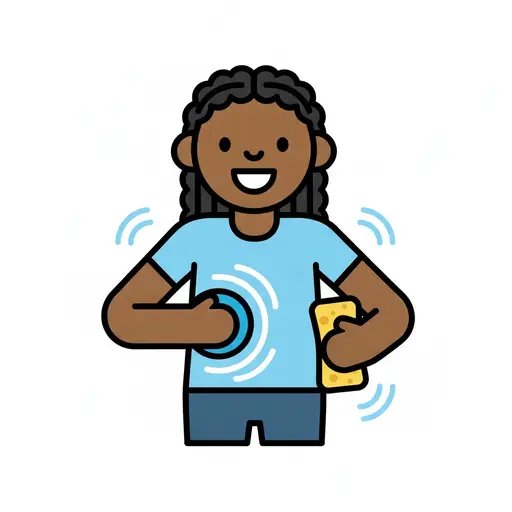
Wash front and back
A girl washes her front with one hand and holds a sponge behind her with the oth...
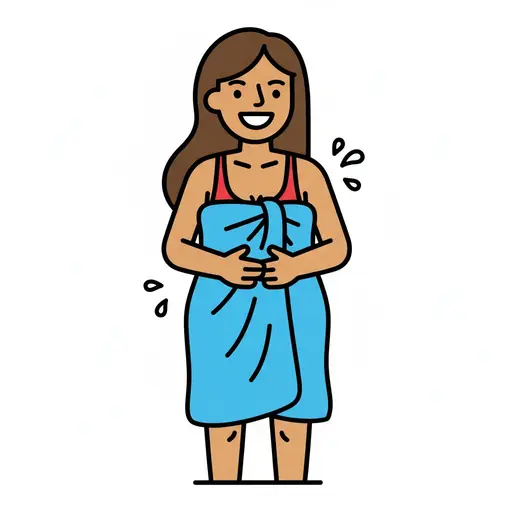
Dry your body
A woman has a towel wrapped around her body after a shower.
This visual support in other languages
Take the visual supports with you
In Routined you build schedules from these pictures, add timers and voice instructions, and your child follows the day on their own.


* 14-day free trial, then $2.39 a month or $20.99 a year (US pricing). Cancel anytime.