Brush hair
The brush snags a tangle, your child flinches, and the morning tips sideways. The pictures below break brushing into smaller steps so the scalp knows what is coming next.
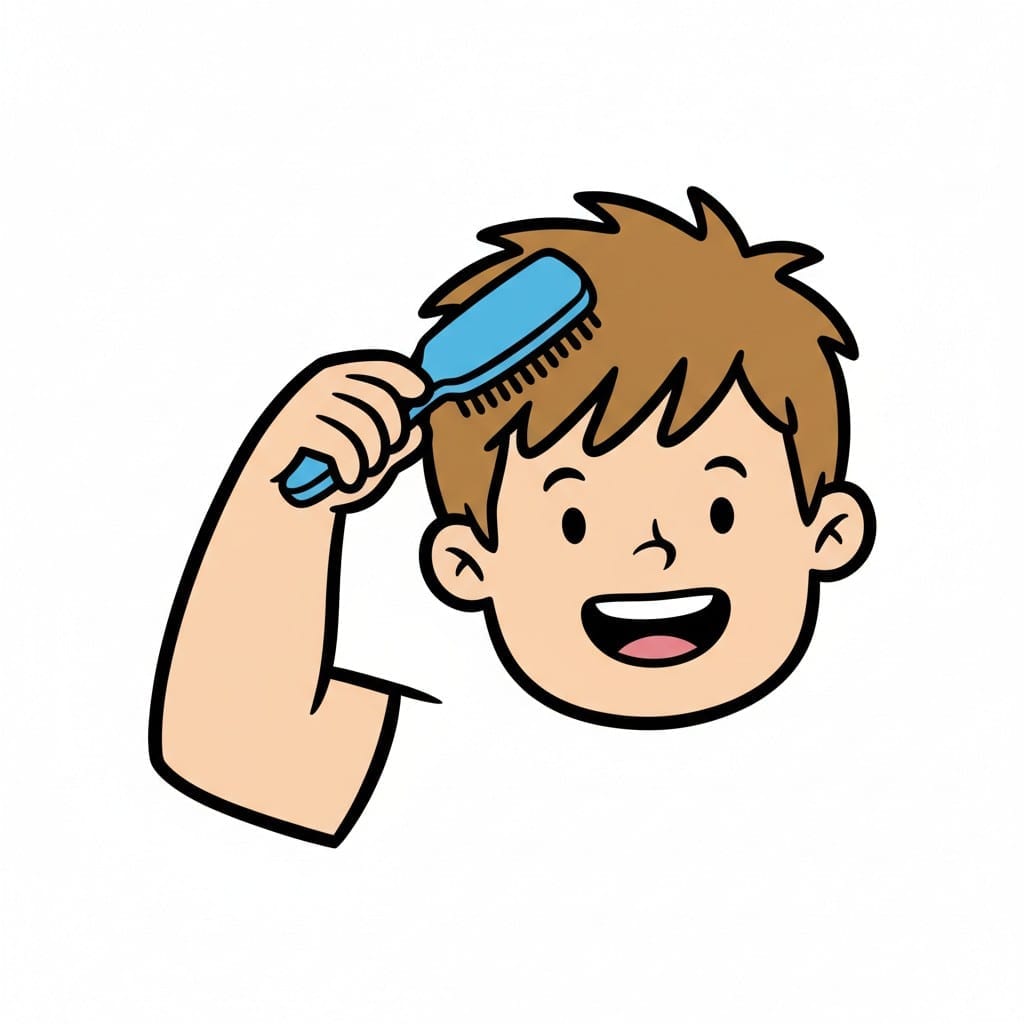 ♂
♂Brush hair
A boy brushes his hair with a brush.
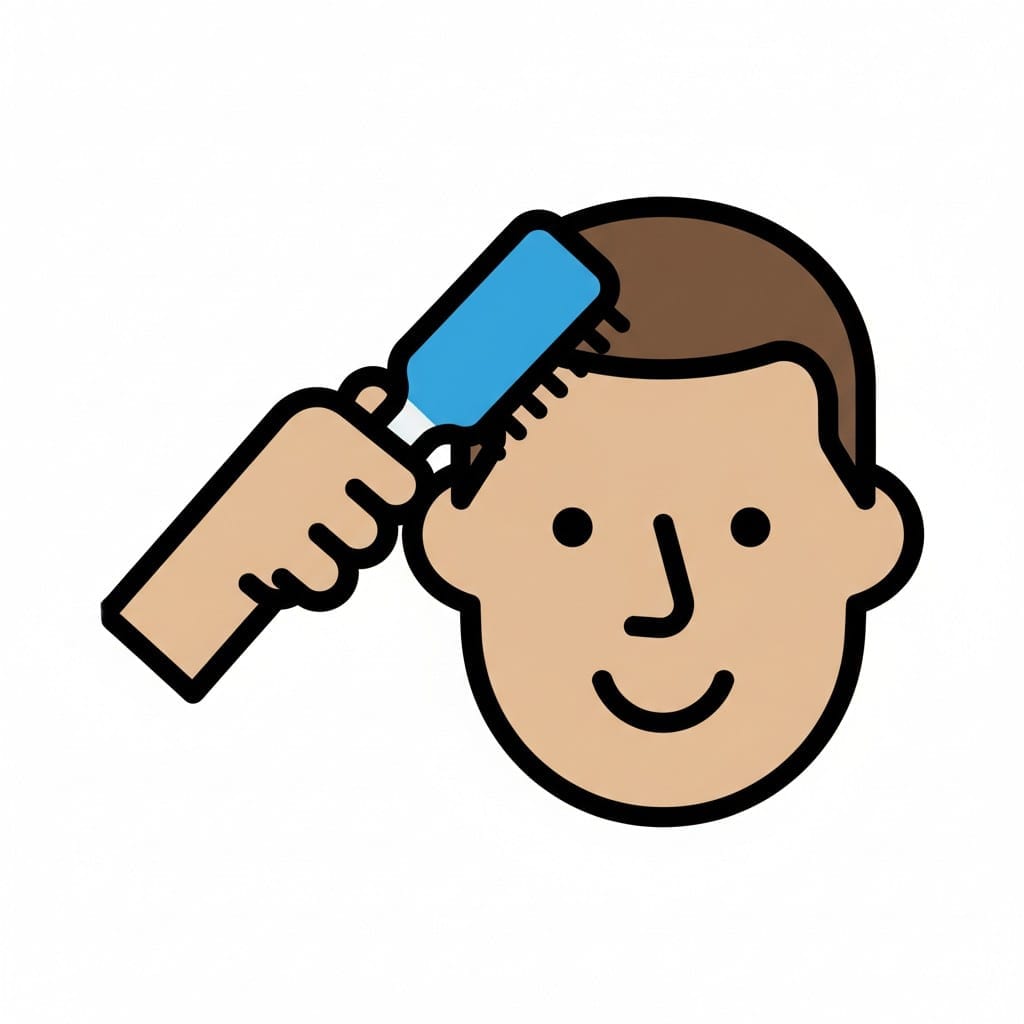 ♂
♂Brush hair
A person brushes their hair with a brush.
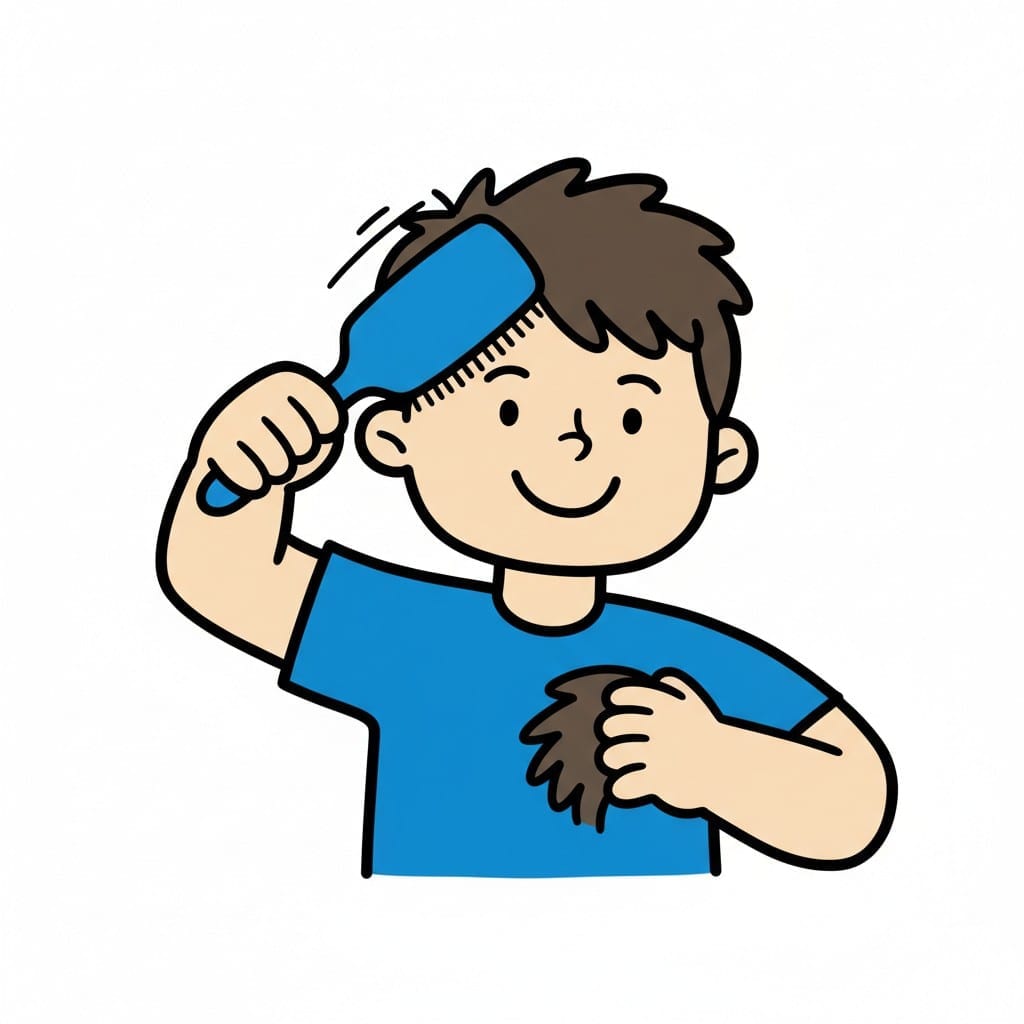 ♂
♂Brushing hair with a blue brush
A smiling boy in a blue t-shirt runs a blue hairbrush through his hair.
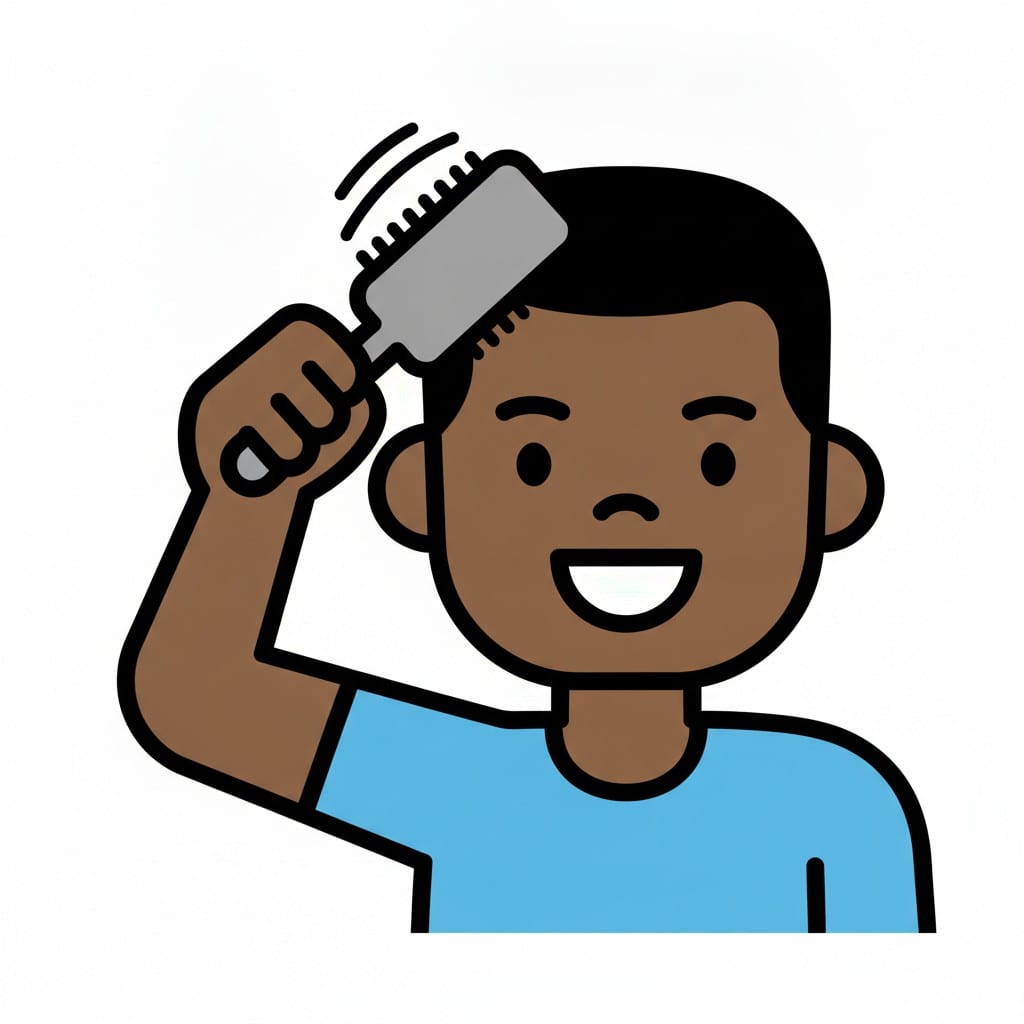 ♂
♂Brushing short hair with a grey brush
A grinning boy in a light blue shirt brushes his short hair with a grey hairbrush.
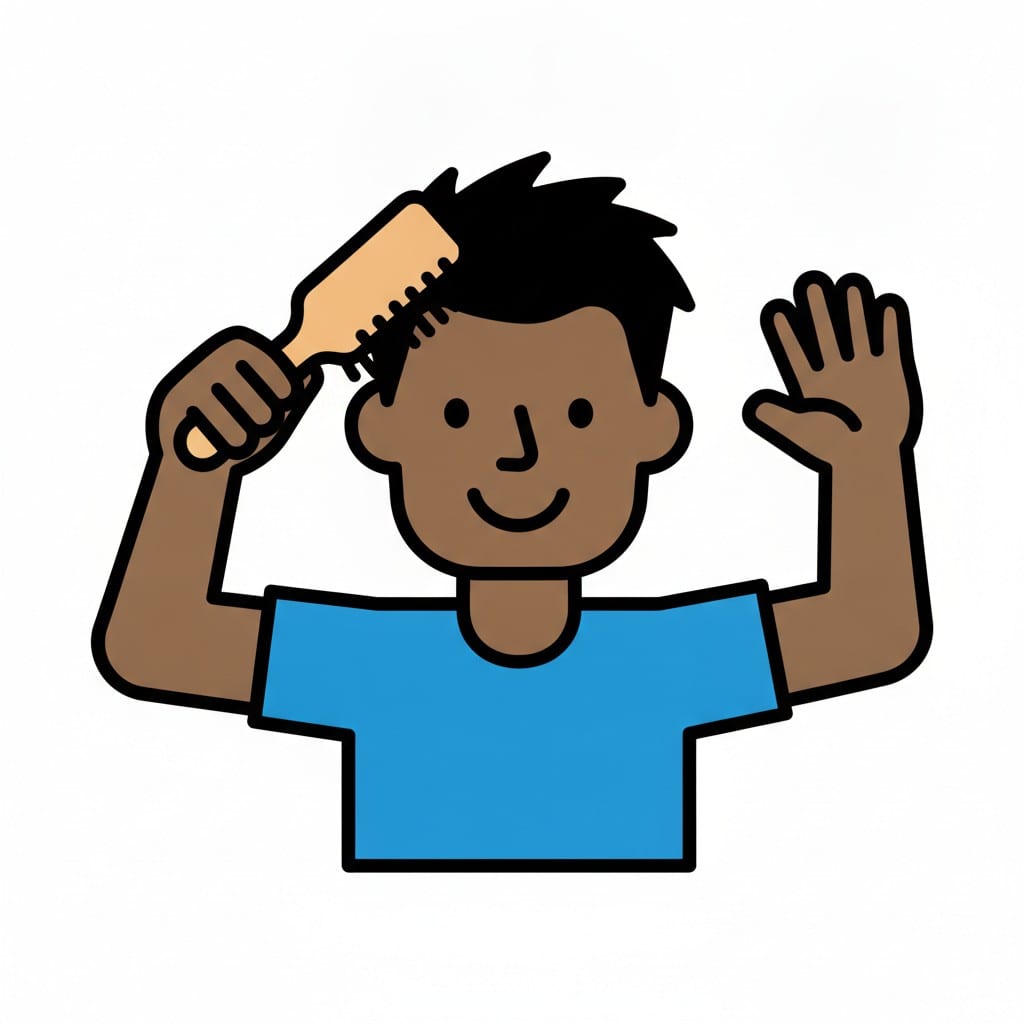 ♂
♂Brushing hair
A smiling boy with short black hair brushes his hair with a hairbrush and waves with his other hand.
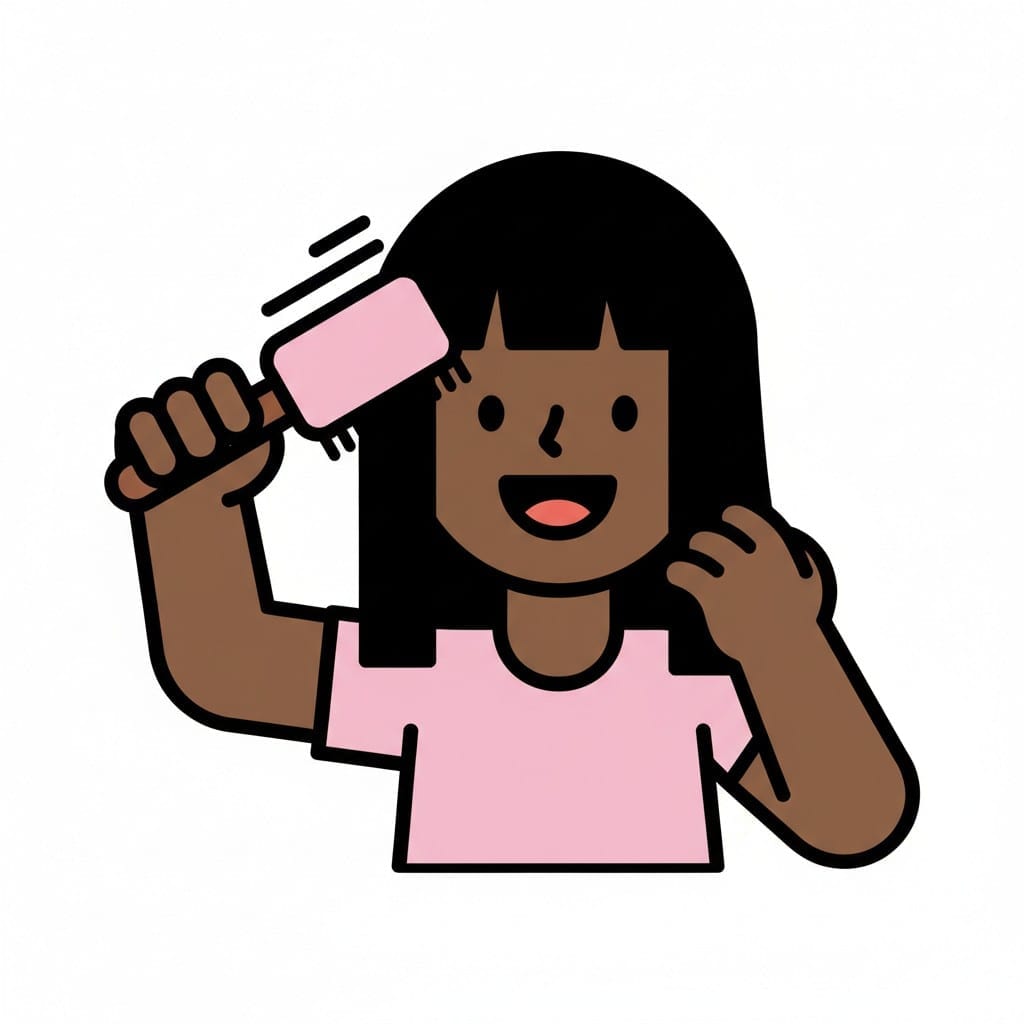 ♀
♀Brush hair
A girl brushes her straight hair with a pink brush.
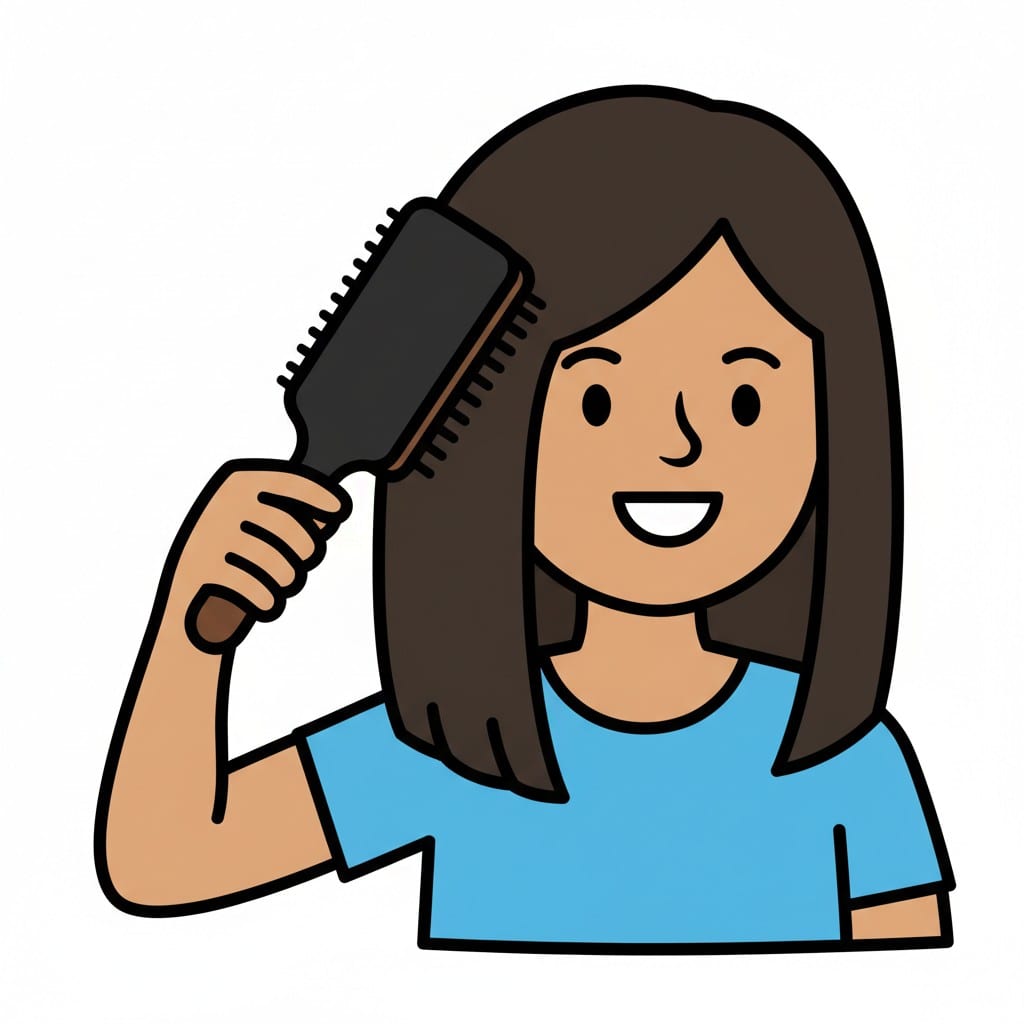 ♀
♀Brush hair
A girl brushes her straight hair with a black brush.
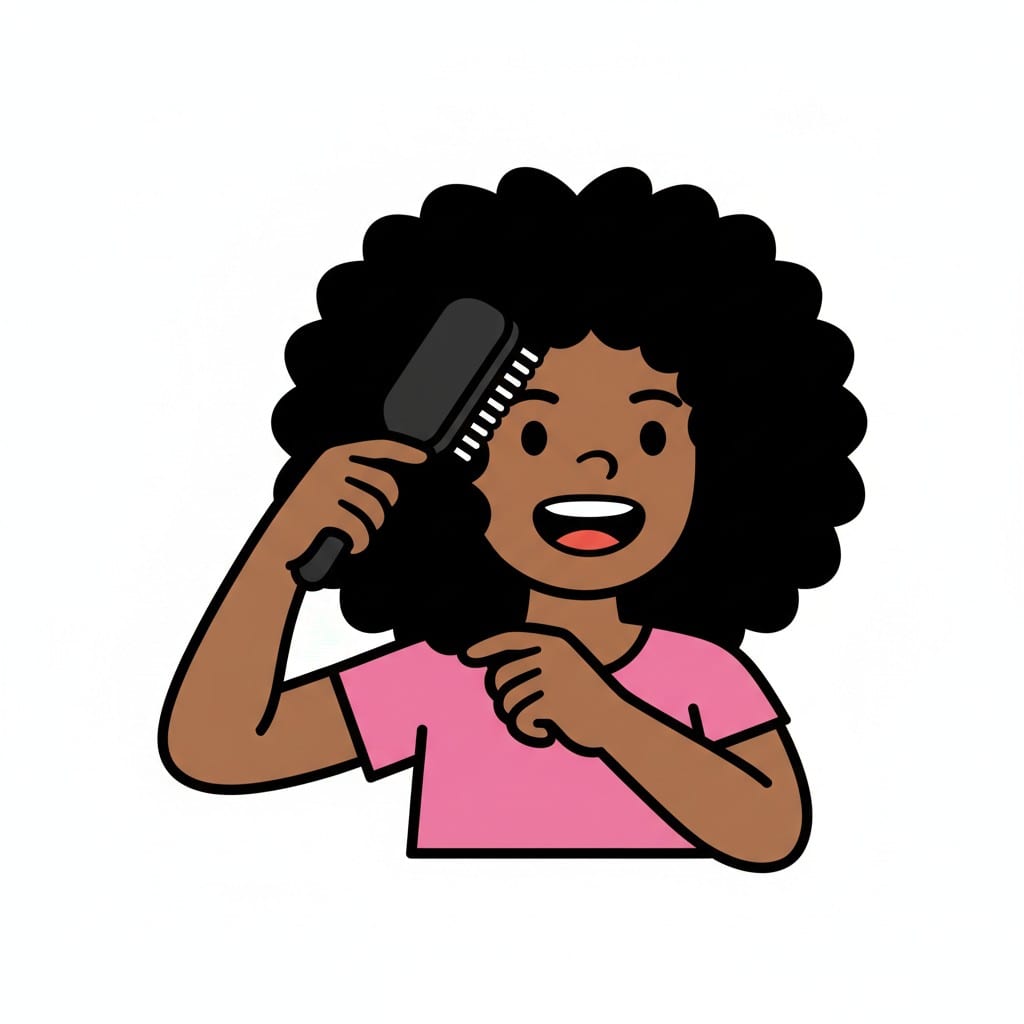 ♀
♀Brush hair
A girl brushes her curly hair with a brush.
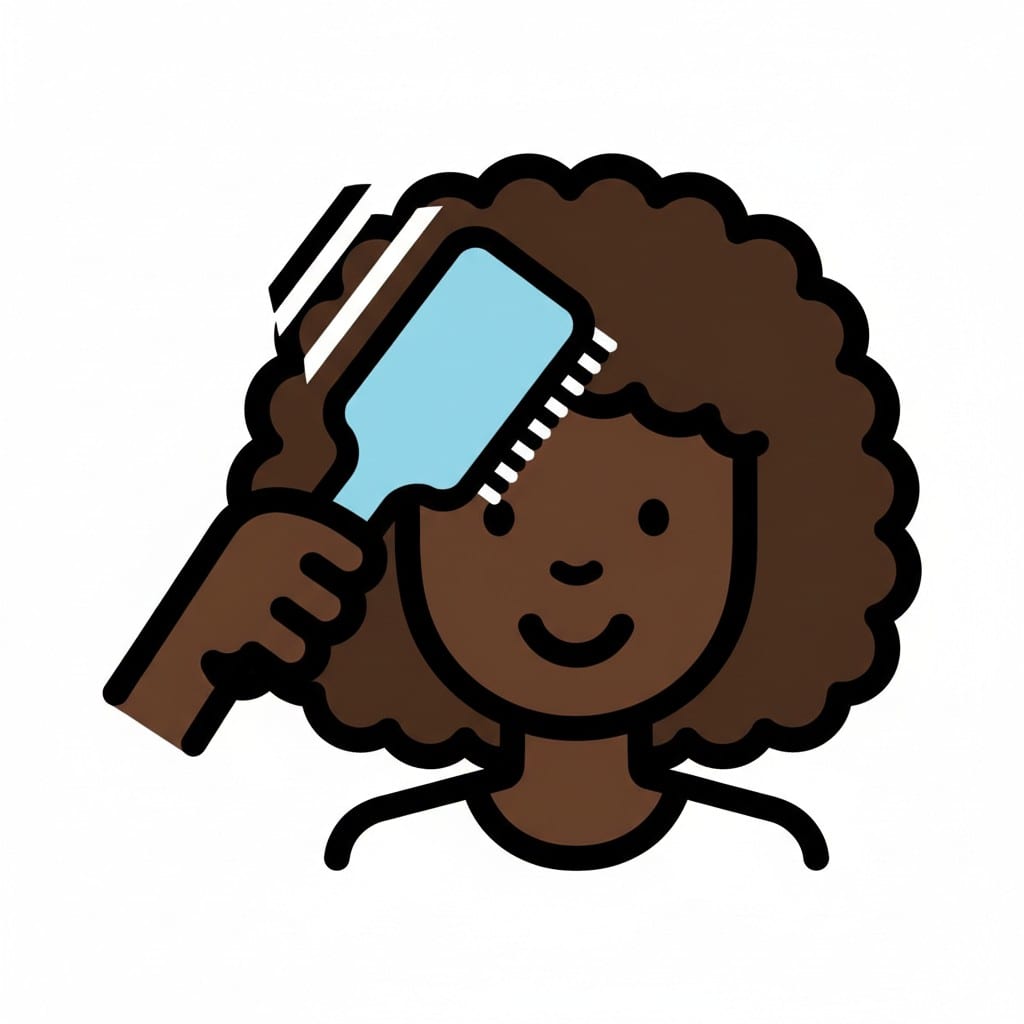 ♀
♀Brush hair
An image of a girl brushing her hair.
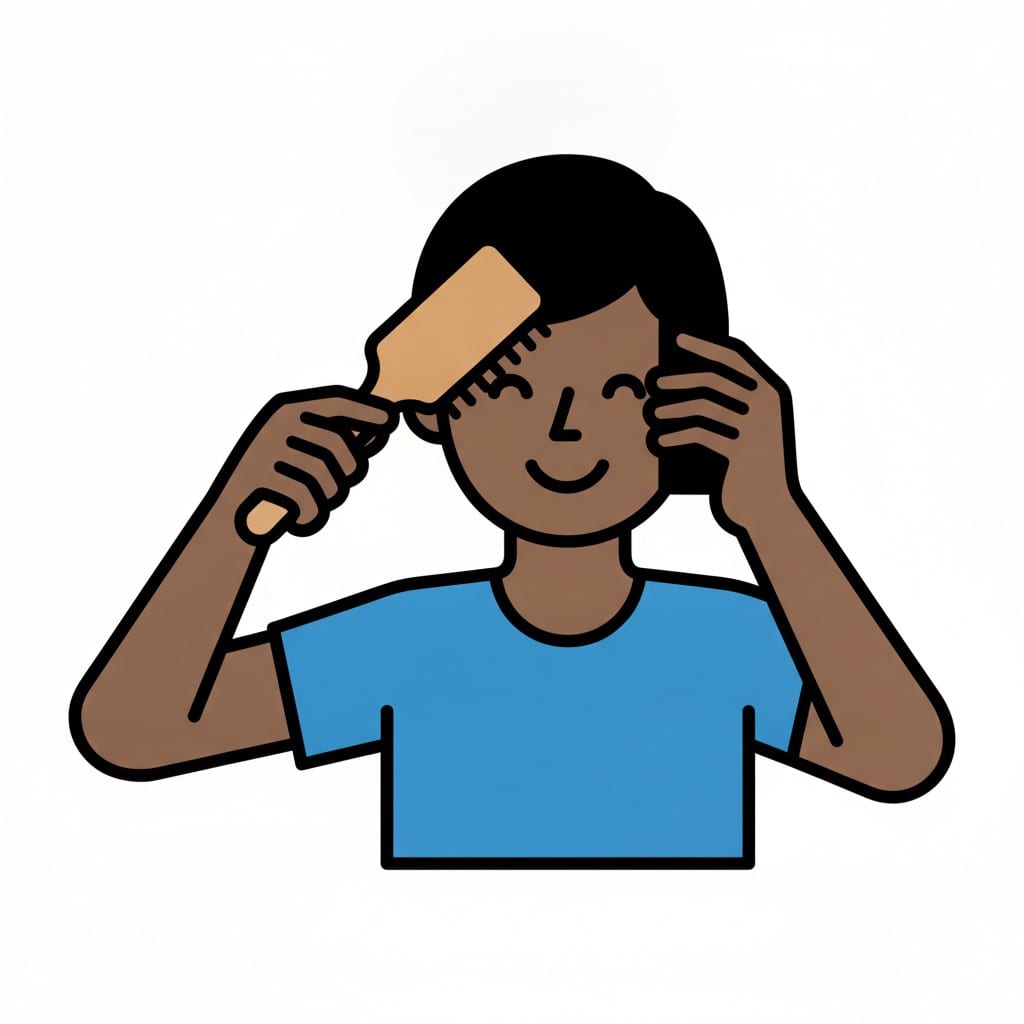 ⚲
⚲Brushing hair
A smiling person with short dark hair brushes their hair with a wooden hairbrush.
About this visual support
The scalp has more nerve endings than it looks, and a single brush stroke can register as something much stronger. For a child who finds brushing painful, the worst part is often the surprise: a hidden tangle that suddenly tugs the whole head.
The visual support above lets the child see that the moment has parts. First a picture of holding the hair near the ends so the pull stays in the hand instead of the scalp. Then short strokes, starting at the bottom and working upward. Knowing the order lowers the tension, even when the sensation itself does not go away.
One thing that helps specifically with brushing: have your child rest a hand on their own head, just above where you are brushing. The gentle counter-pressure softens any tug and gives them a sense of being part of the moment rather than something happening to them. If you want to build the whole morning routine with timers and check-offs, you can try Routined free for 14 days.
Use this image in a schedule
Build your own visual schedule with this image and download it as a print-ready PDF. Completely free.
More similar visual supports
Personal care
A happy child combs their hair with a blue comb.
Comb hair
Seen in profile, a woman has a grey comb drawn down through her long brown hair.
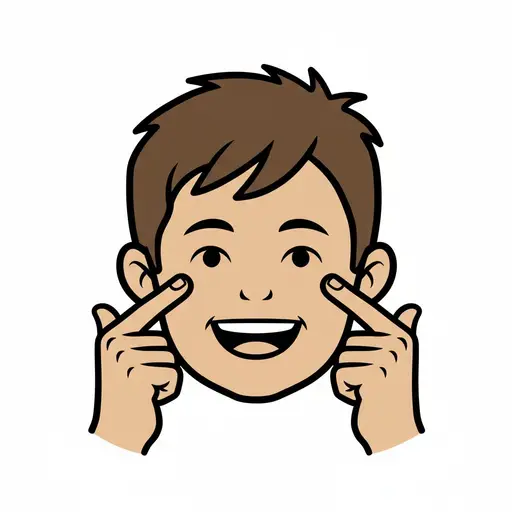
Fix face
A smiling boy points to his cheeks with his index fingers.
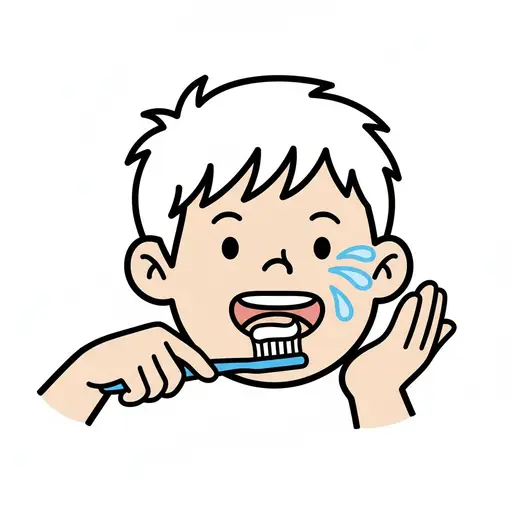
Brush teeth and wash face
A boy brushing his teeth with a blue toothbrush while wiping water droplets from...
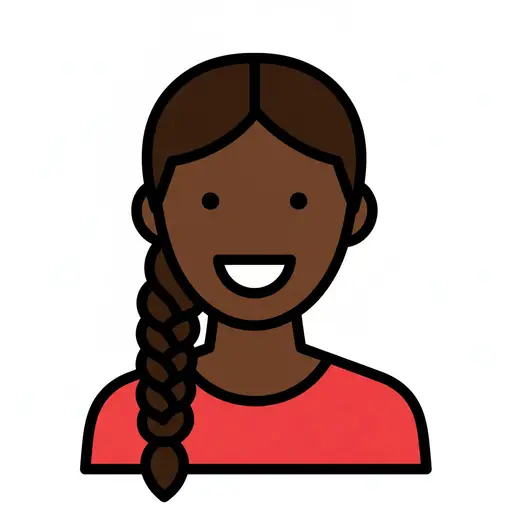
Braid your hair
Smiling person with a braid in their hair
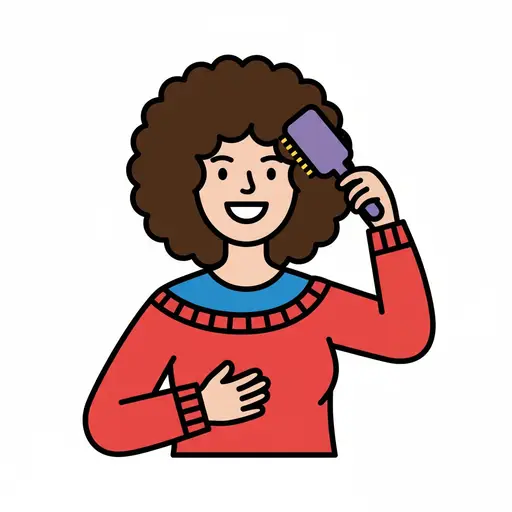
Get dressed and brush hair
A person brushes their curly hair with a purple hairbrush.
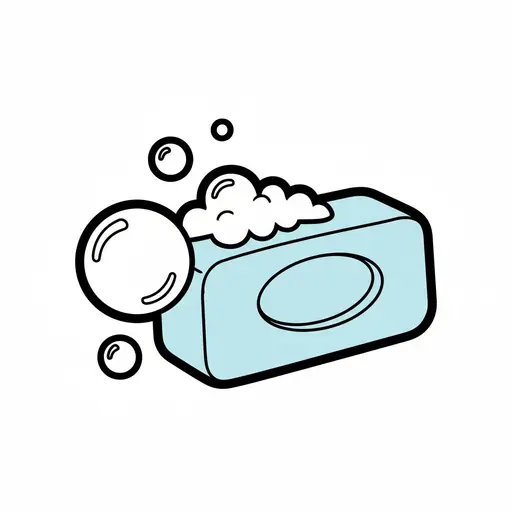
Soap
A blue bar of soap with lather and bubbles around it
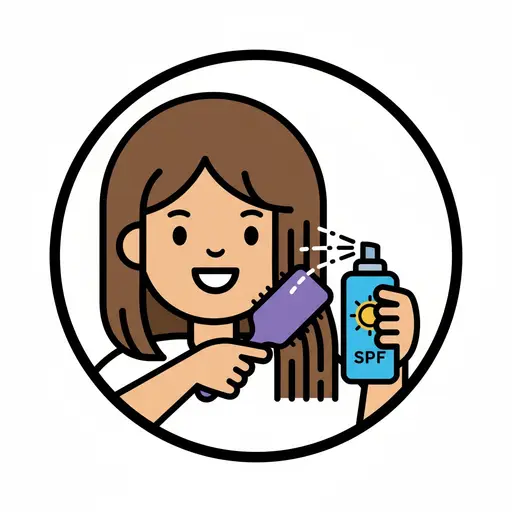
Brush hair and apply sunscreen
A girl brushes her long hair while holding an SPF spray.
This visual support in other languages
Take the visual supports with you
In Routined you build schedules from these pictures, add timers and voice instructions, and your child follows the day on their own.


* 14-day free trial, then $2.39 a month or $20.99 a year (US pricing). Cancel anytime.