Do hair
The brush tugs at the scalp, hands come close to the eyes and the morning is already half gone. Many children push back not against hair itself but against the combination. The visual support below splits the task into calm steps.
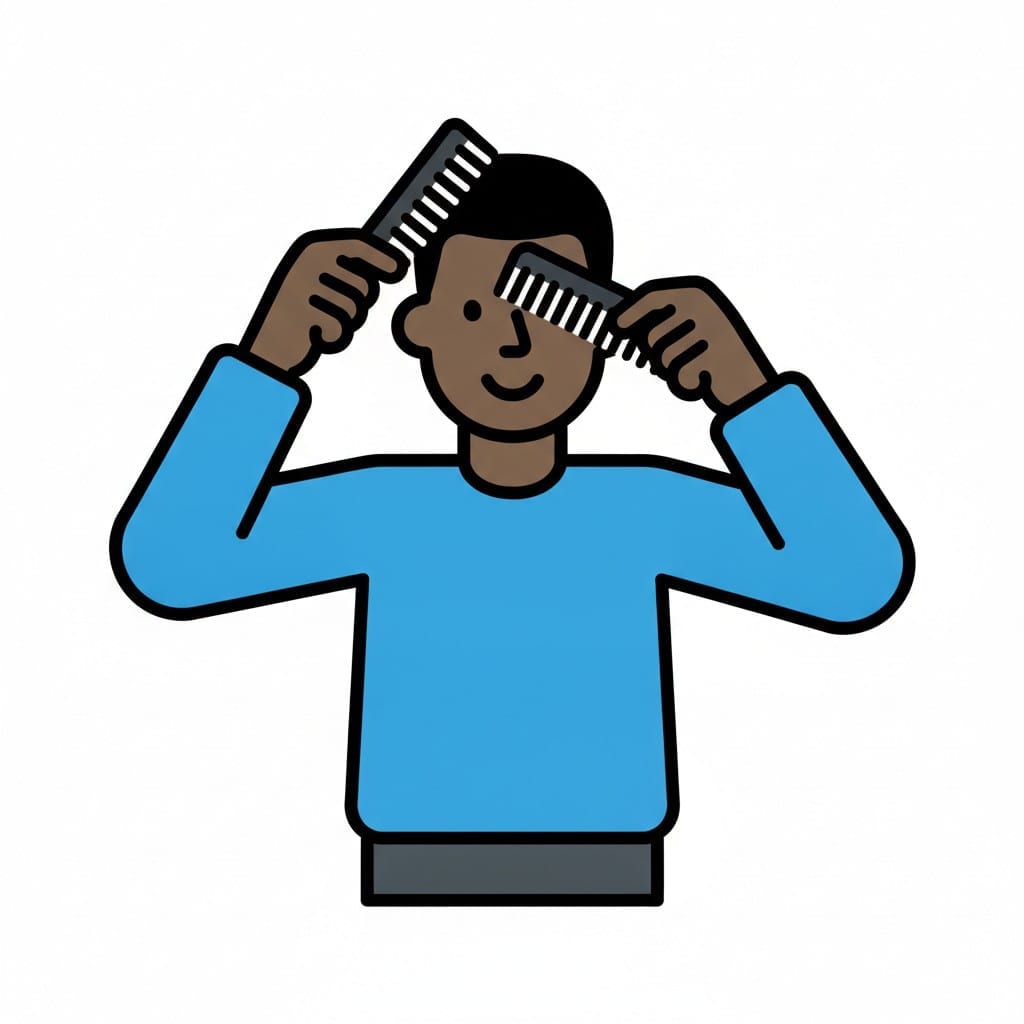 ♂
♂Person combing their hair
A person in a blue top holds up two combs to their hair and combs it back from the forehead.
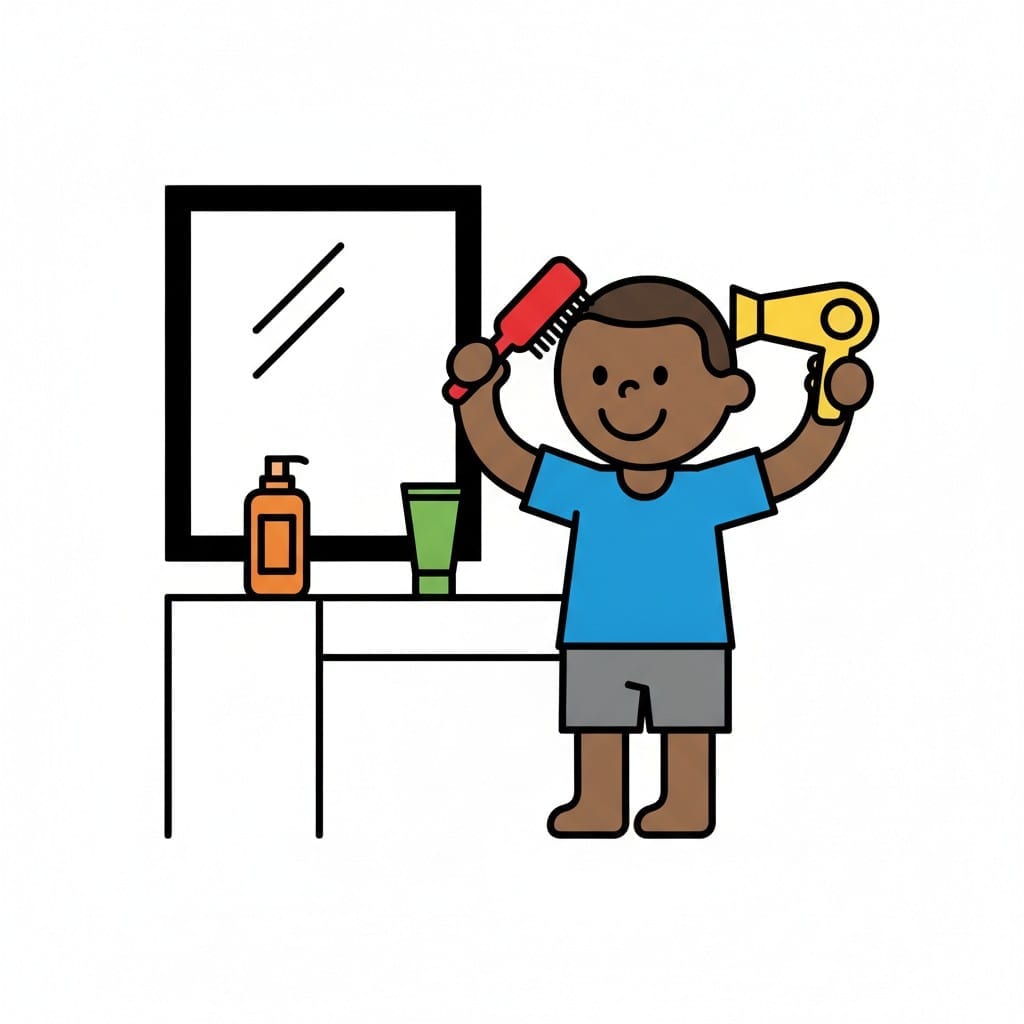 ♂
♂Boy brushing his hair at the mirror
A smiling boy brushes his hair with a red brush and holds a yellow hairdryer in the other hand in front of a mirror with a pump bottle and a tube on the shelf.
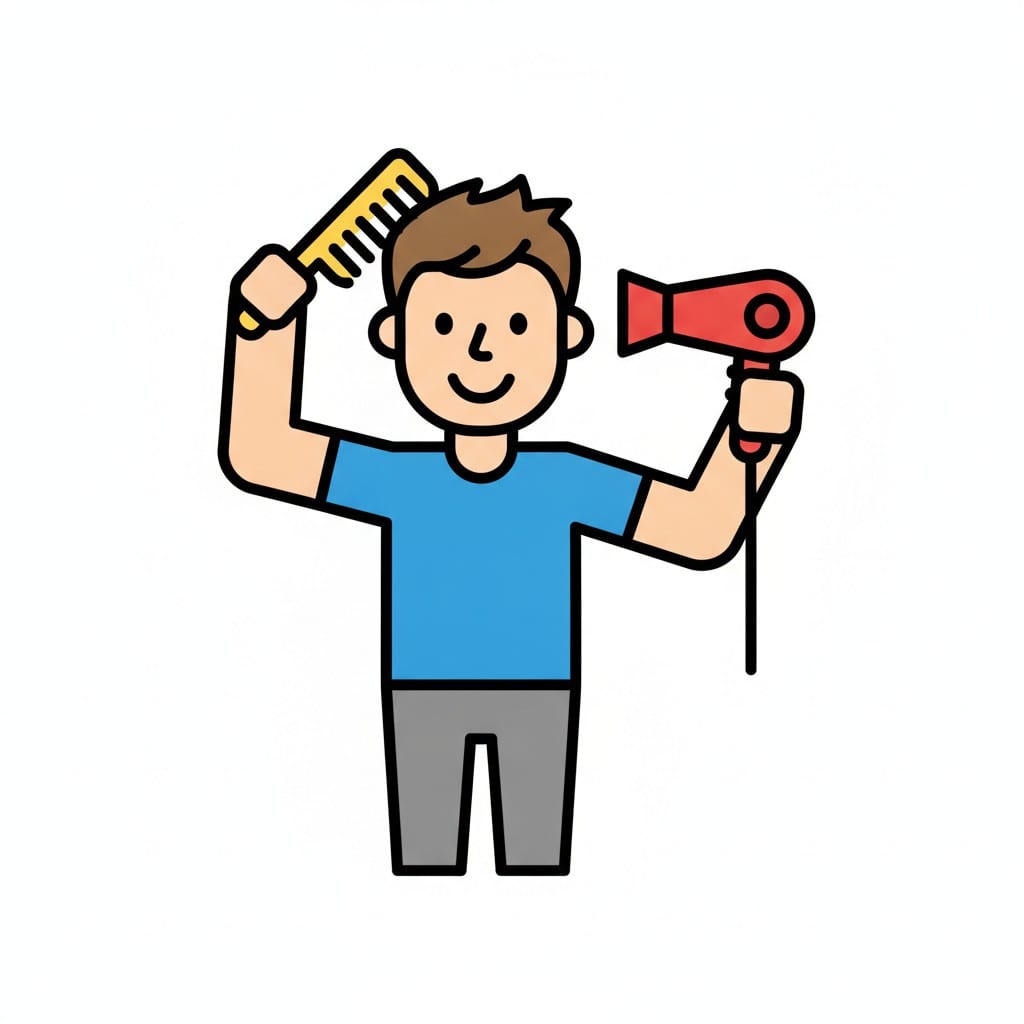 ♂
♂Do hair
A person combs their hair with a yellow comb while holding a red hairdryer.
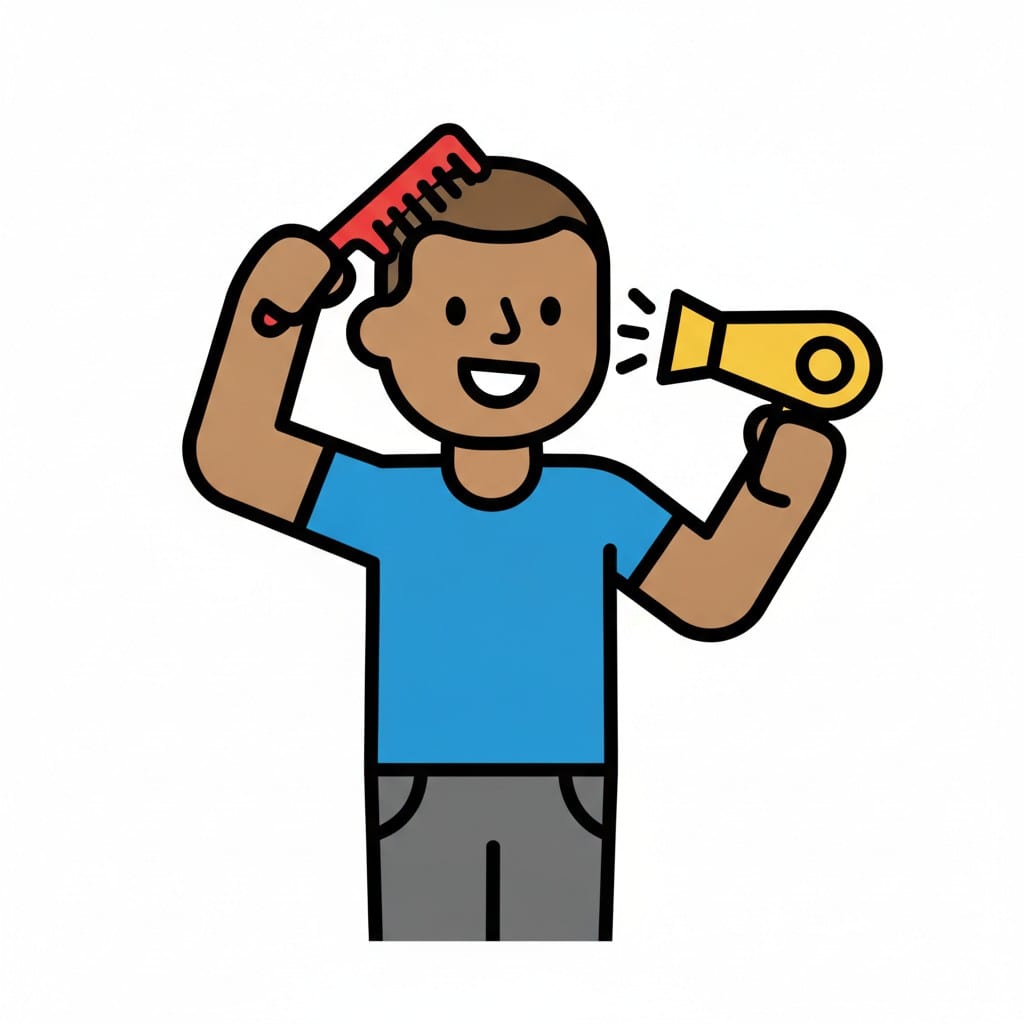 ♂
♂Boy styling his hair
A boy combs his hair while blow-drying it.
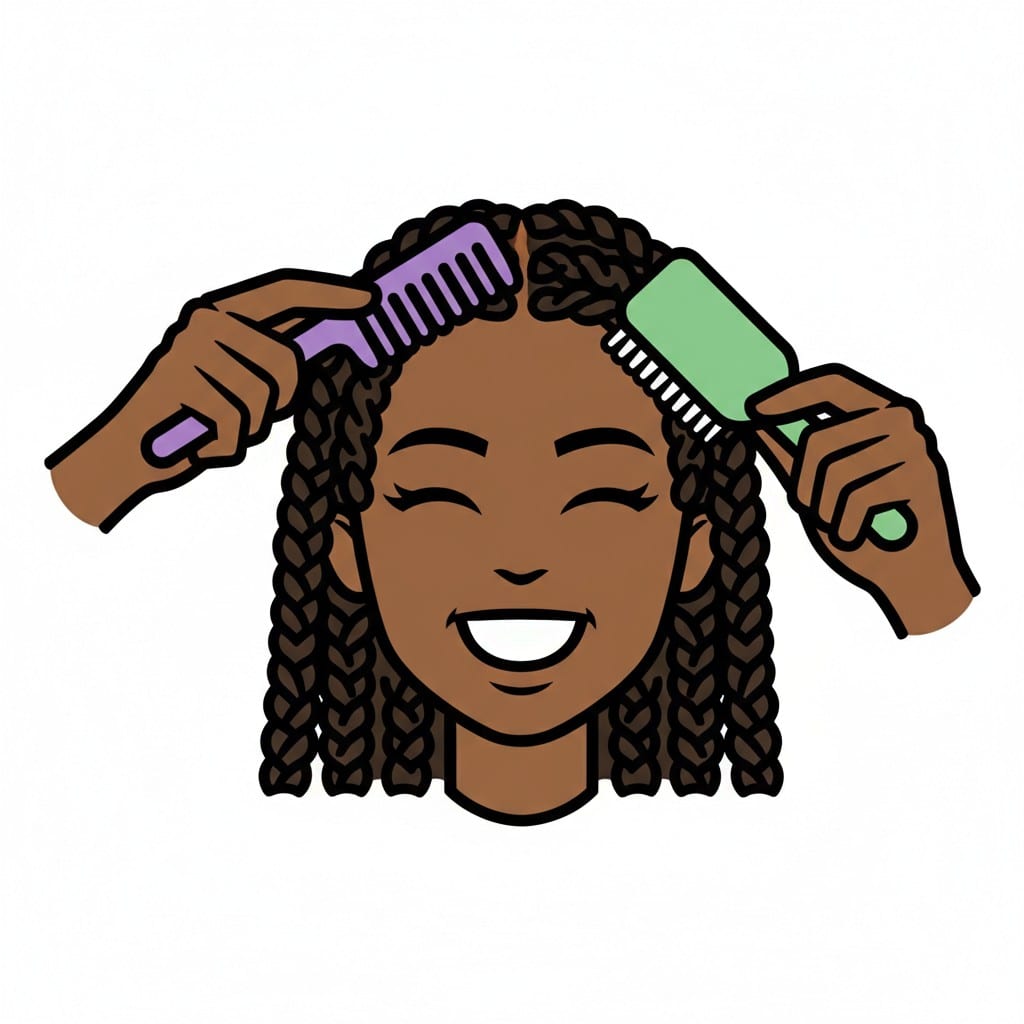 ♀
♀Comb hair
A happy person with braided hair getting their hair combed and brushed by two hands with a purple comb and a green brush.
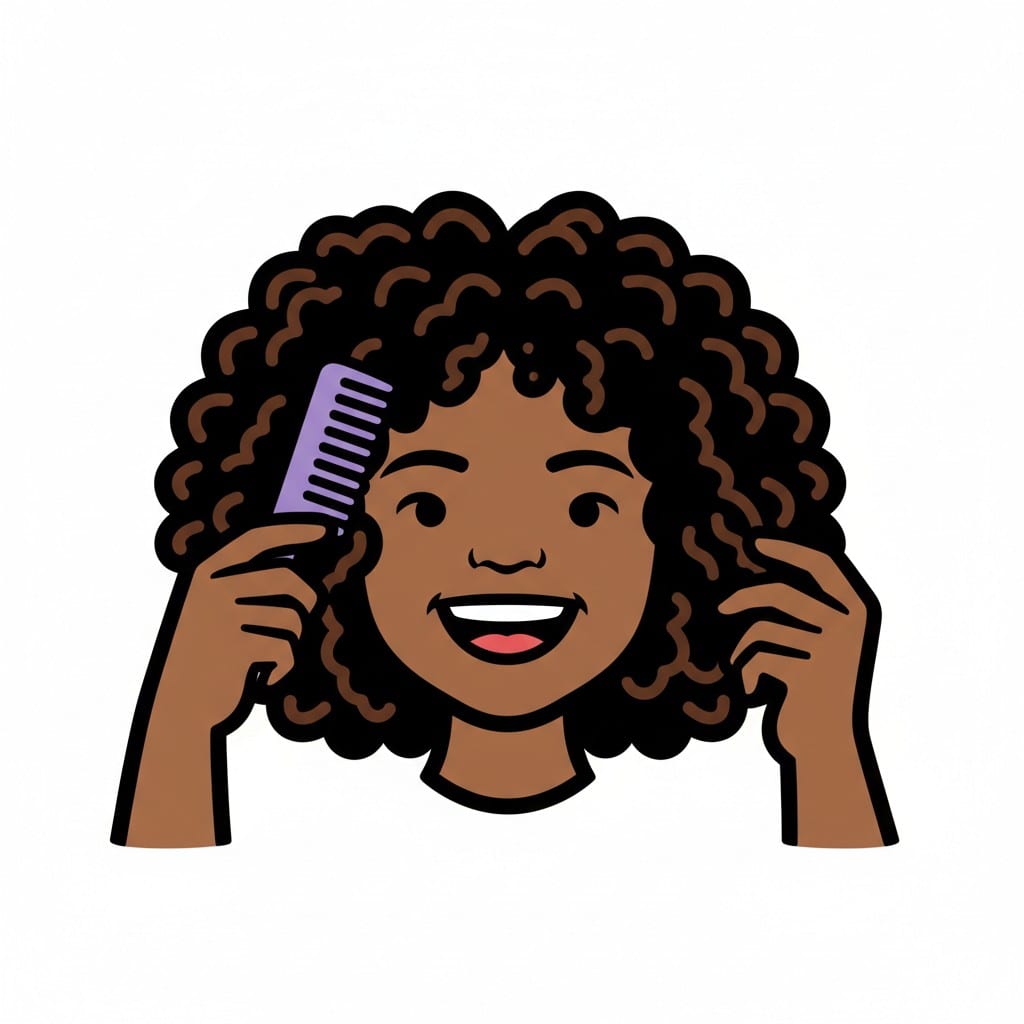 ♀
♀Do hair
A girl combing her curly hair.
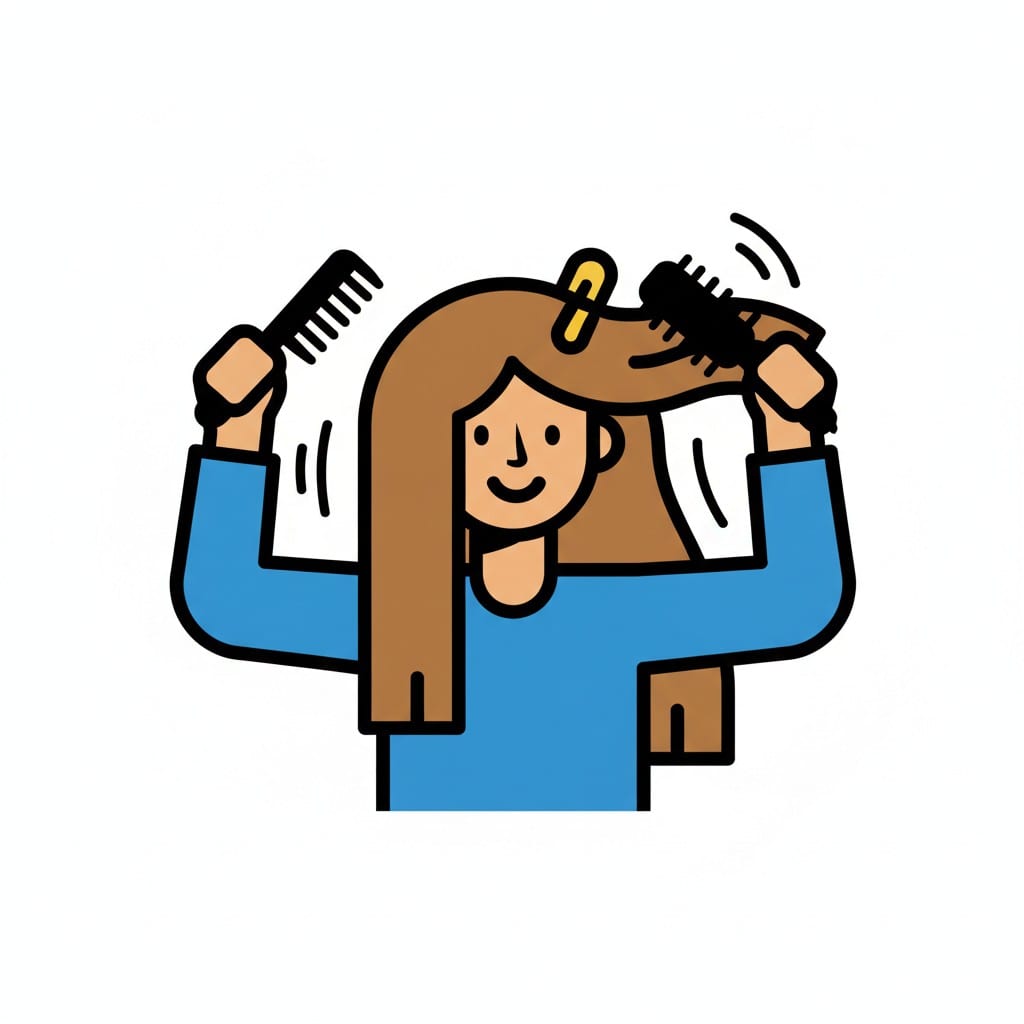 ♀
♀Girl brushing her hair
A girl with long hair and a yellow clip holds a comb in one hand and a hairbrush in the other while doing her hair.
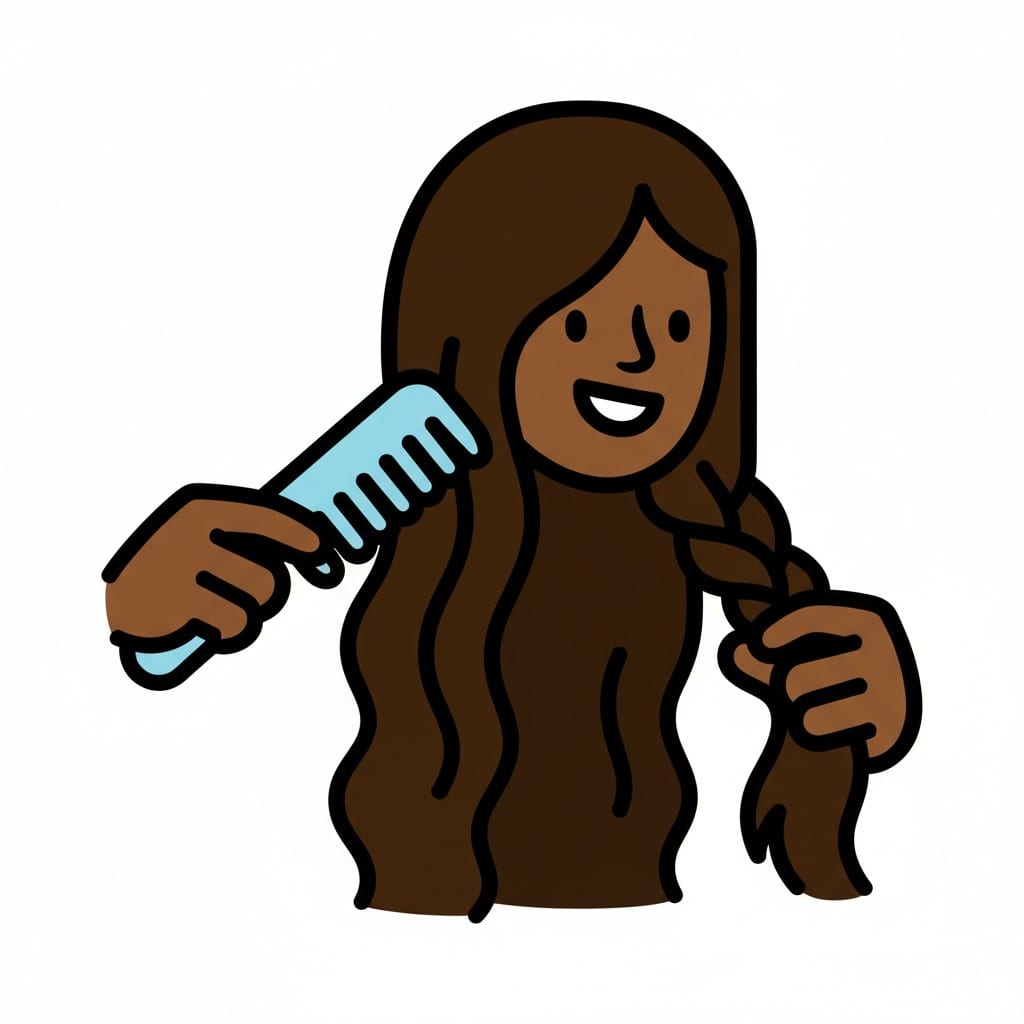 ♀
♀Girl combing long hair
Smiling as she works, a girl combs her long wavy hair with a light blue comb while holding a braid in her other hand.
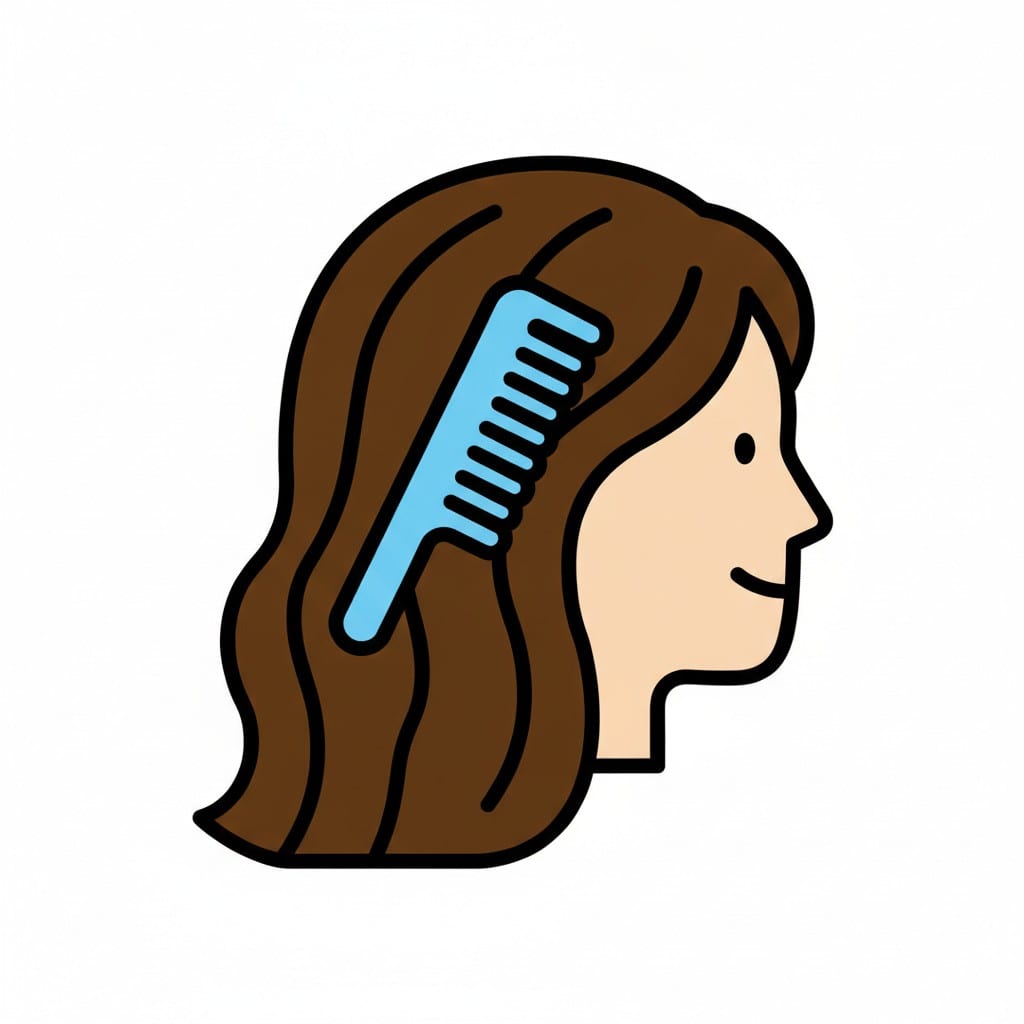
Combing hair
A comb in long brown hair, seen from the side.
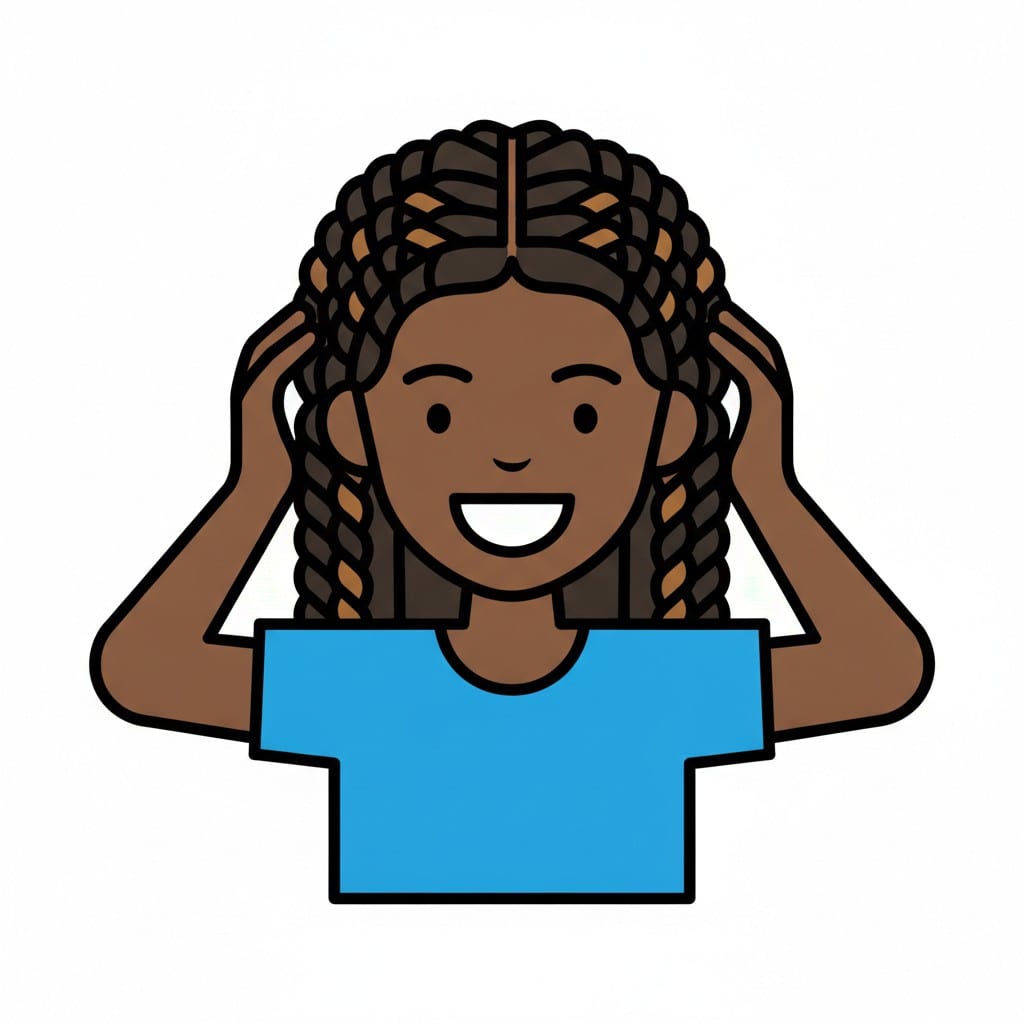 ♀
♀Fixing braids
A happy girl holds her braids.
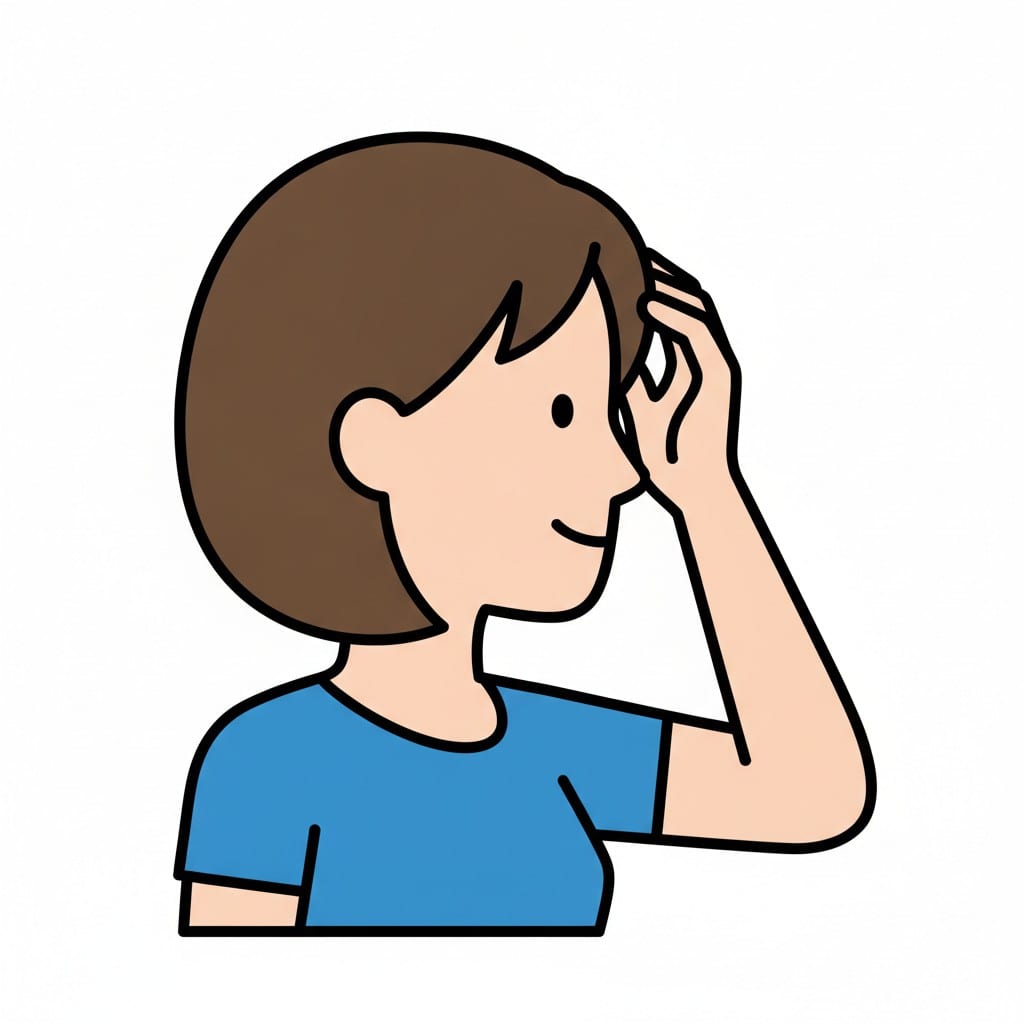 ♀
♀Tidying hair
A woman runs her hand through her hair.
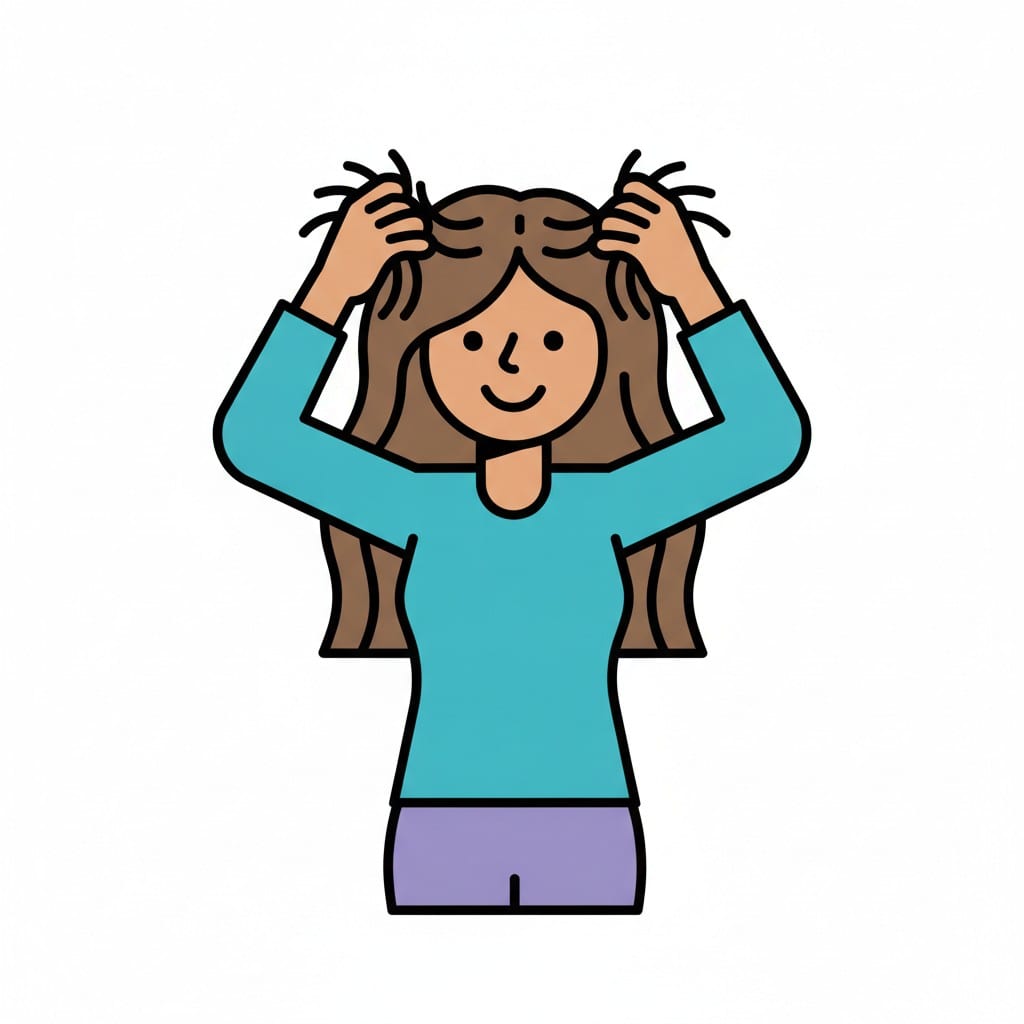 ♀
♀Fixing hair
A smiling woman with long brown hair tidies her messy hair with both hands.
About this visual support
The scalp has some of the most reactive nerves on the head, and the bristles send small jolts with every stroke. Add hands close to the face and a mirror image that moves at the same time, and hair quickly becomes the hardest part of the morning. Being in a rush on top of that practically invites resistance.
With the steps out as picture cards, the guesswork about what comes next disappears. Detangle the ends, brush from the neck up, dampen the fringe, clip in place, done. The child sees how few steps actually remain, and it is fewer than it feels in the middle of a battle at the mirror. For sensory-sensitive children the predictability often matters as much as the technique.
A concrete tip: hold the hair a few centimetres above where you brush so the pull does not reach the scalp directly. In the Routined app you can place the hair step inside the morning routine with a short timer, so the child knows the step has a far edge even when it feels long.
Use this image in a schedule
Build your own visual schedule with this image and download it as a print-ready PDF. Completely free.
More similar visual supports

Straighten hair
A woman is straightening her hair with a flat iron.
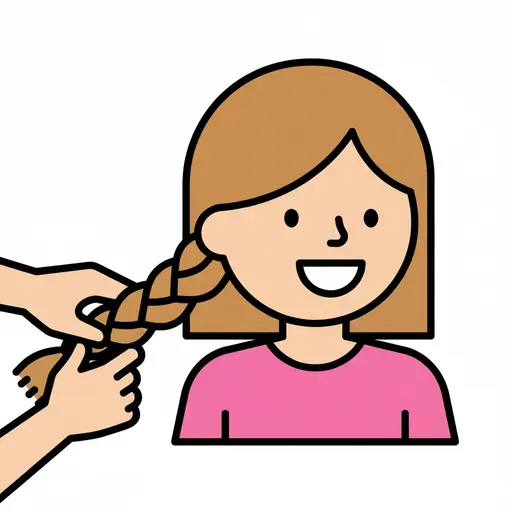
Braid hair
Two hands braid the hair of a smiling girl wearing a pink shirt.
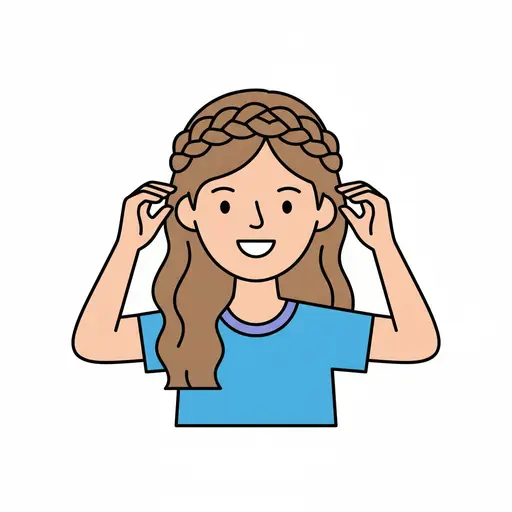
Style my hair
A girl with a braided crown holds her hair.
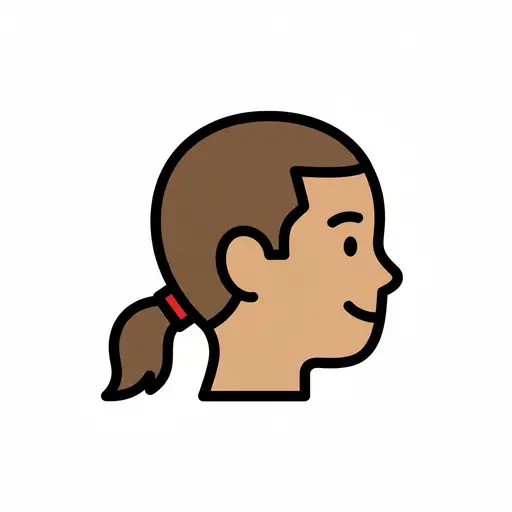
Ponytail
A cartoon illustration of a head in profile with a ponytail.
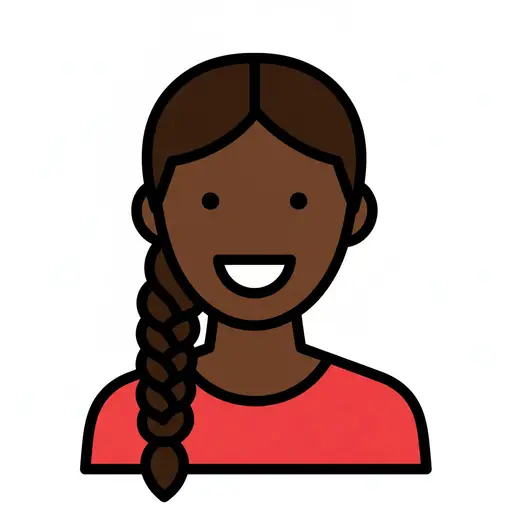
Braid your hair
Smiling person with a braid in their hair
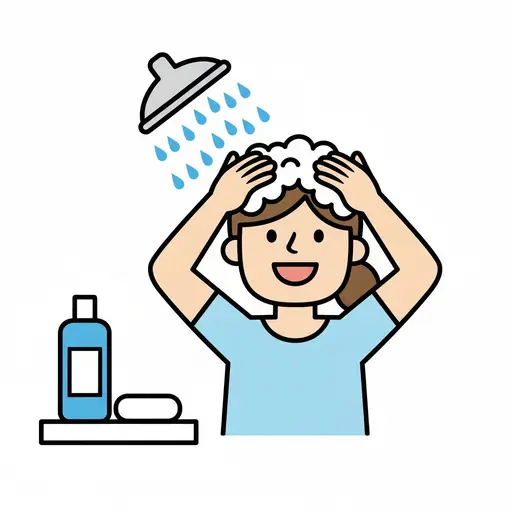
Wash hair
A girl shampoos her hair under the shower.
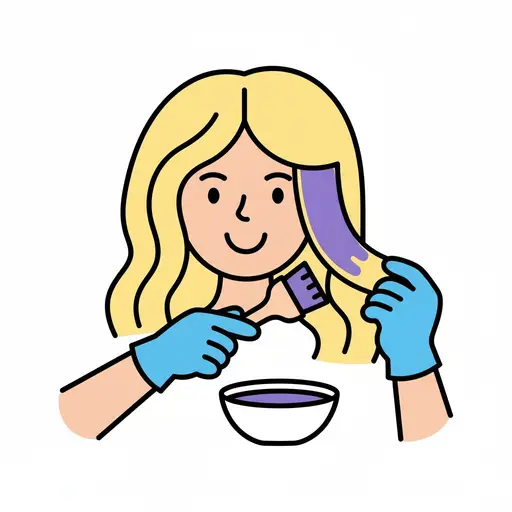
Dye hair
A person with blonde hair applying purple hair dye to a section of their hair wi...
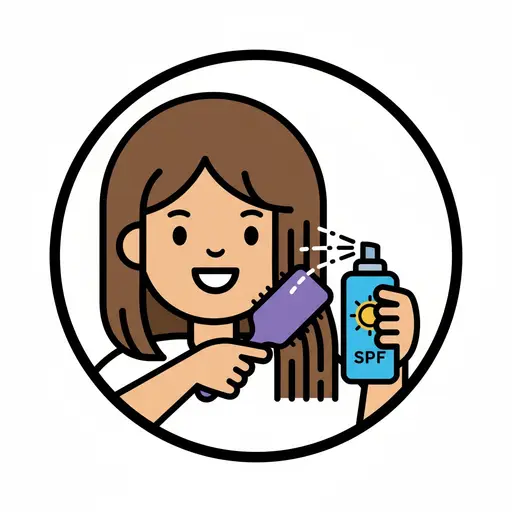
Brush hair and apply sunscreen
A girl brushes her long hair while holding an SPF spray.
This visual support in other languages
Take the visual supports with you
In Routined you build schedules from these pictures, add timers and voice instructions, and your child follows the day on their own.


* 14-day free trial, then $2.39 a month or $20.99 a year (US pricing). Cancel anytime.