Dry hands
A wet hand meeting a rough towel, or hot air from a hand dryer, is not always comfortable. The steps in the visual support below frame the whole drying so it stays short, predictable and actually finished.
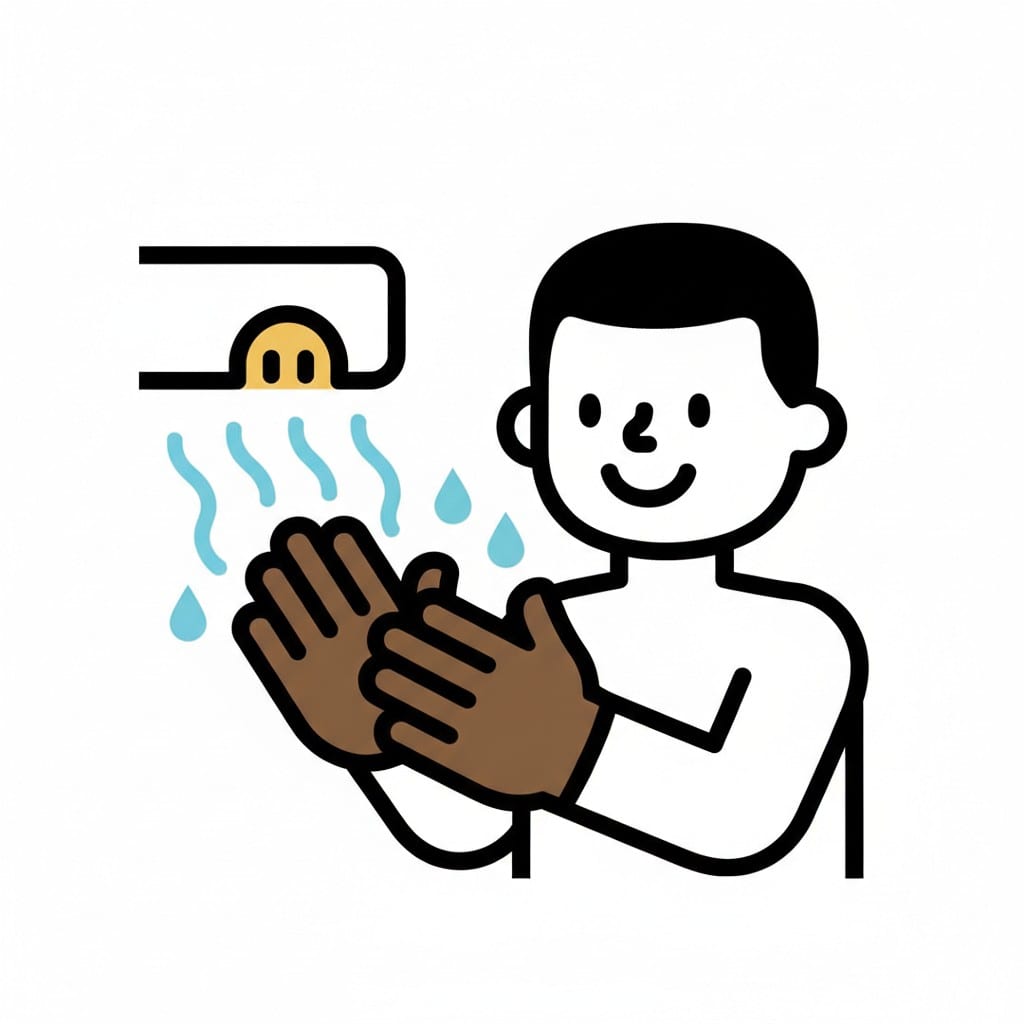 ♂
♂Drying hands with hand dryer
A person drying hands under a hand dryer blowing air and water droplets
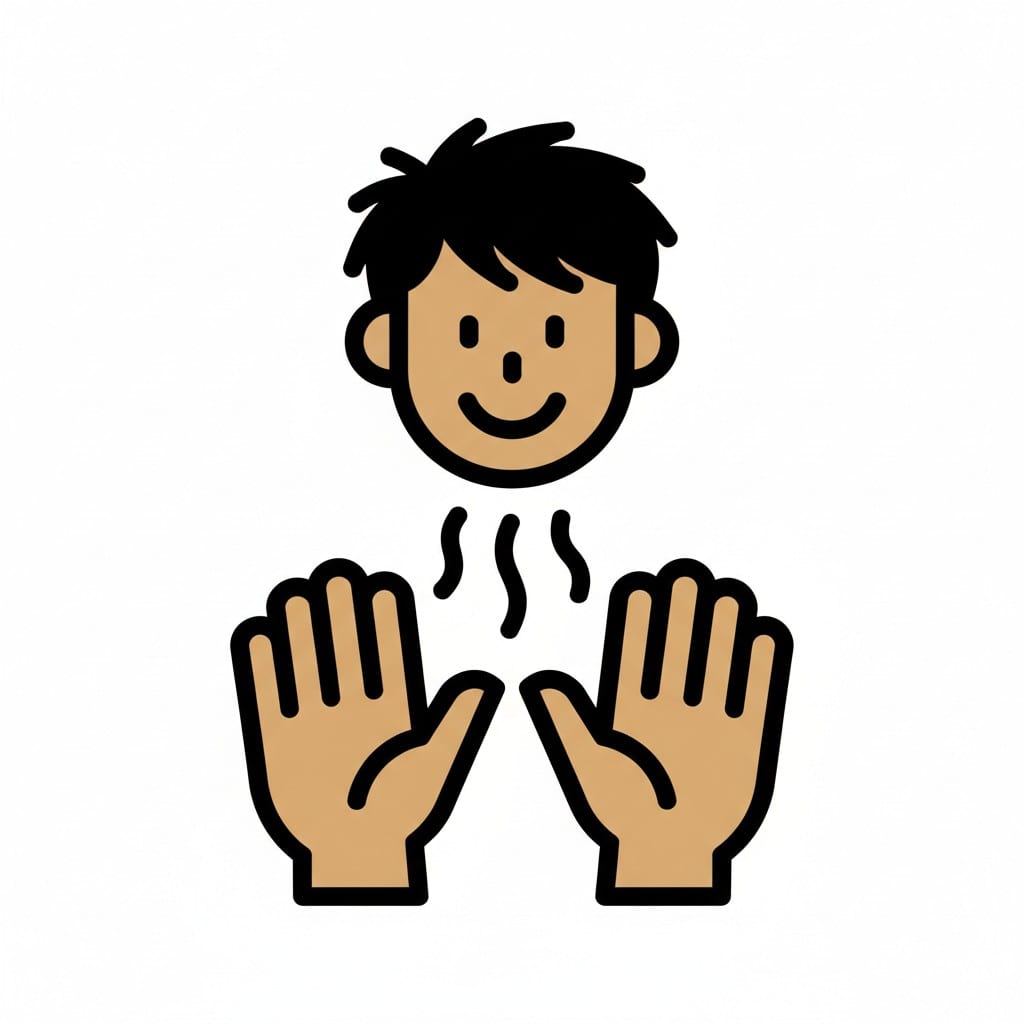 ♂
♂Drying hands in the air
A smiling person with open hands drying hands in the air, with steam symbols rising
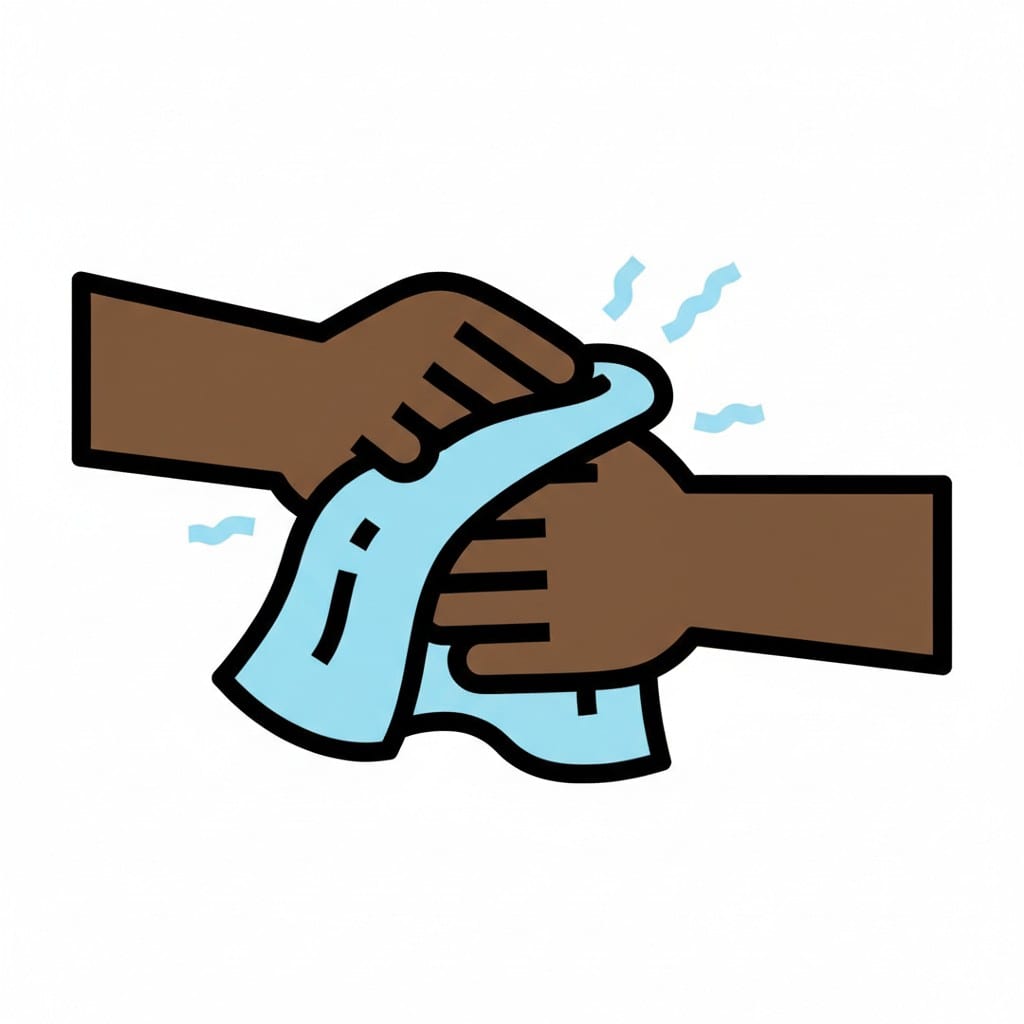 ♂
♂Drying hands with towel
A pair of hands wiping water from hands with a blue towel
 ♂
♂Drying hands
A man dries his hands on a yellow towel.
About this visual support
Hand washing is often taught carefully, while the drying is left as a self-evident final piece. For many children, however, drying is exactly where things stall: the towel feels scratchy, the air dryer is loud, the paper towel feels too dry. The result is wet hands wiped on clothes, or a hand wash cut short before the soap has even been rinsed off properly.
A visual support separates the moment out: close the tap, pat water off into the sink, take a towel or paper, dry the back and palm of each hand, throw away or hang back. With every step visible, drying becomes a short sequence in its own right rather than a vague finishing phase. The child also knows when the moment is over, which cuts down both half-hearted drying and stretched-out repeats at the same tap.
One concrete tip: keep one softer towel reserved for the child and include a picture of it in the visual support. The step is then tied to a specific, comfortable towel rather than whichever one is on the hook. In families where sensory discomfort is common, that link can be the difference between a routine that gets done and one that gets abandoned. The whole hand-hygiene flow can be built as one schedule in Routined, 14 days free to try.
Use this image in a schedule
Build your own visual schedule with this image and download it as a print-ready PDF. Completely free.

More similar visual supports
Freshen up
A woman washes plates at the sink with a dish rack beside her.
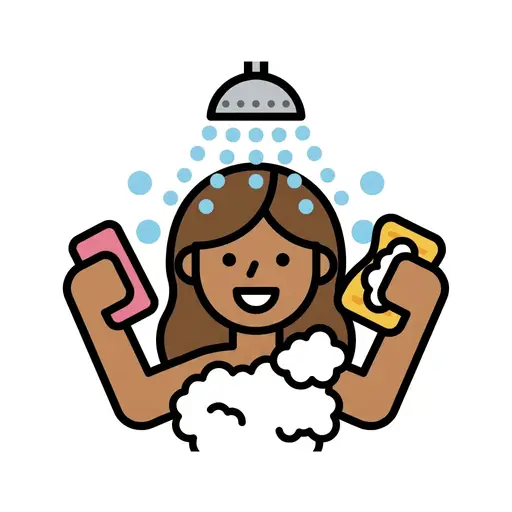
Wash
A woman taking a shower. She holds a bar of soap in one hand and a sponge with s...
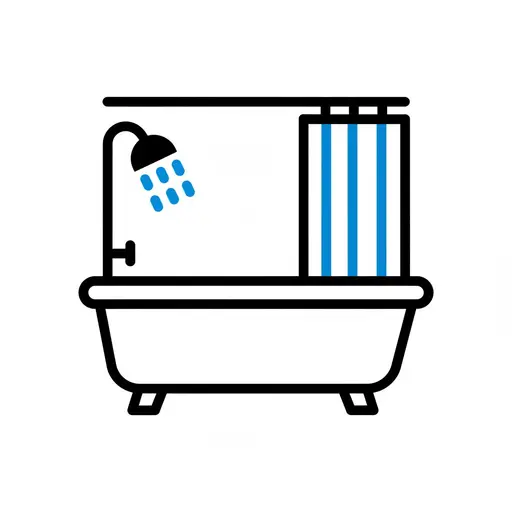
Bath or shower
An illustration of a bathtub with a shower head spraying water and a blue shower...

Bath towel
A rolled-up blue bath towel.
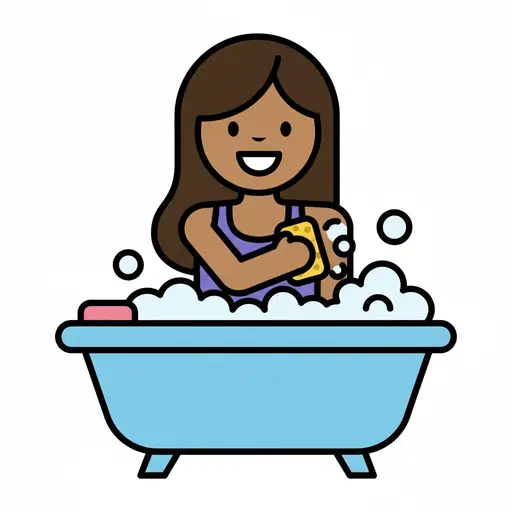
Bathe
A smiling girl sits in a bathtub full of foam and washes her arm with a yellow s...
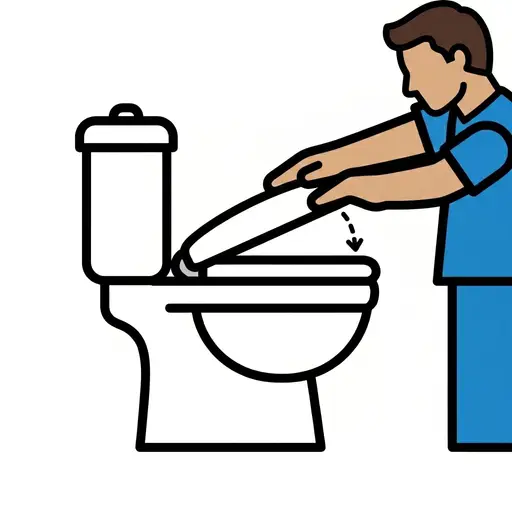
Close toilet lid
A person is closing the toilet lid on a white toilet.
Conditioner
A bottle of conditioner with a dollop of white conditioner beside it.
Dry off
A blue towel hangs on a towel rack with water drops around it.
Take the visual supports with you
In Routined you build schedules from these pictures, add timers and voice instructions, and your child follows the day on their own.


* 14-day free trial, then $2.39 a month or $20.99 a year (US pricing). Cancel anytime.