Eye drops and rinse
Head tilted back, eyes looking up, bottle held above – and the body instinctively wants to close. That clash between instruction and reflex is the whole challenge. The visual support below breaks the moment apart so the reflex has less room.
 ♀
♀Pouring eye rinse into hand
A smiling woman with long dark hair tilting a white and blue bottle toward one eye so a stream of liquid runs down into her cupped hand.
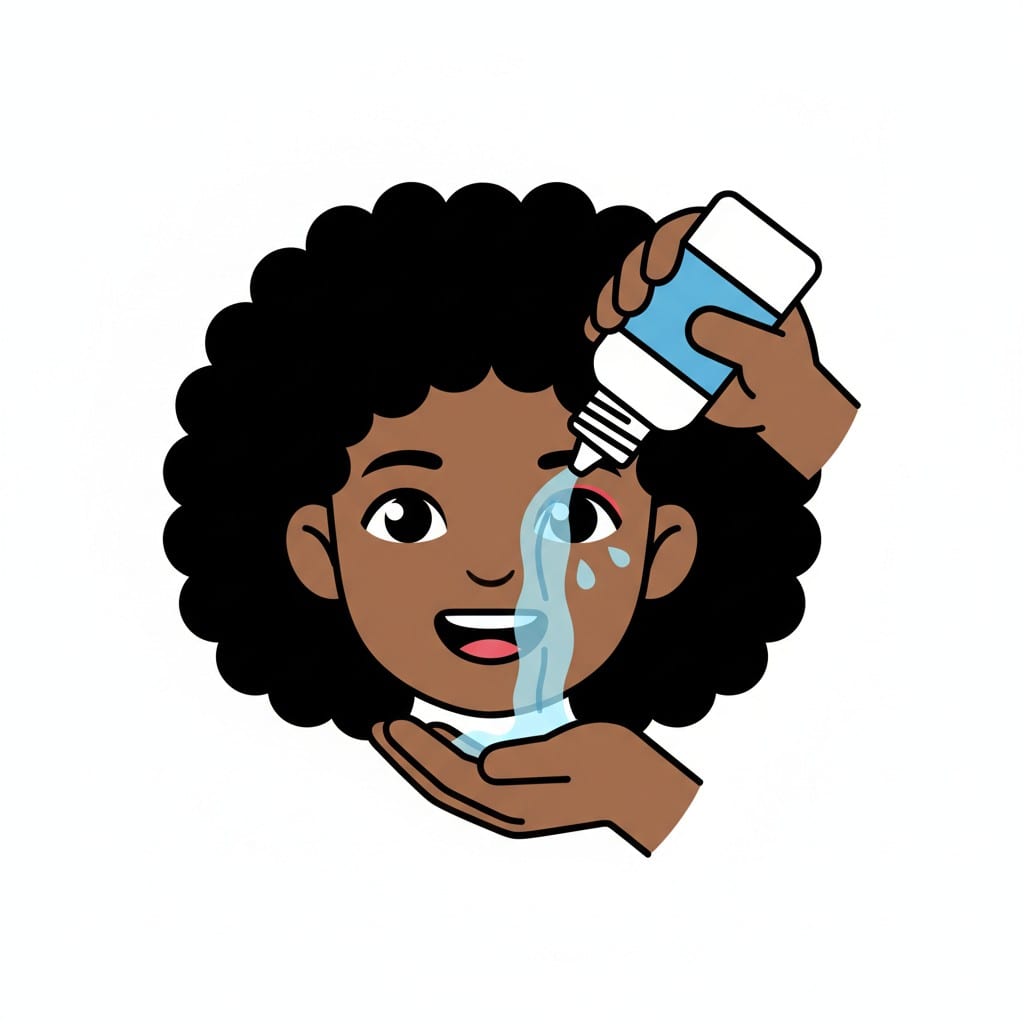 ♀
♀Receiving eye drops
A smiling girl with voluminous curly hair receiving a stream of eye drops from a blue and white bottle into one eye, with her other hand cupped under her chin.
 ♀
♀Applying eye drops
A smiling girl with voluminous curly hair applying eye drops from a small white bottle into one eye, holding her other hand under her chin.
 ♀
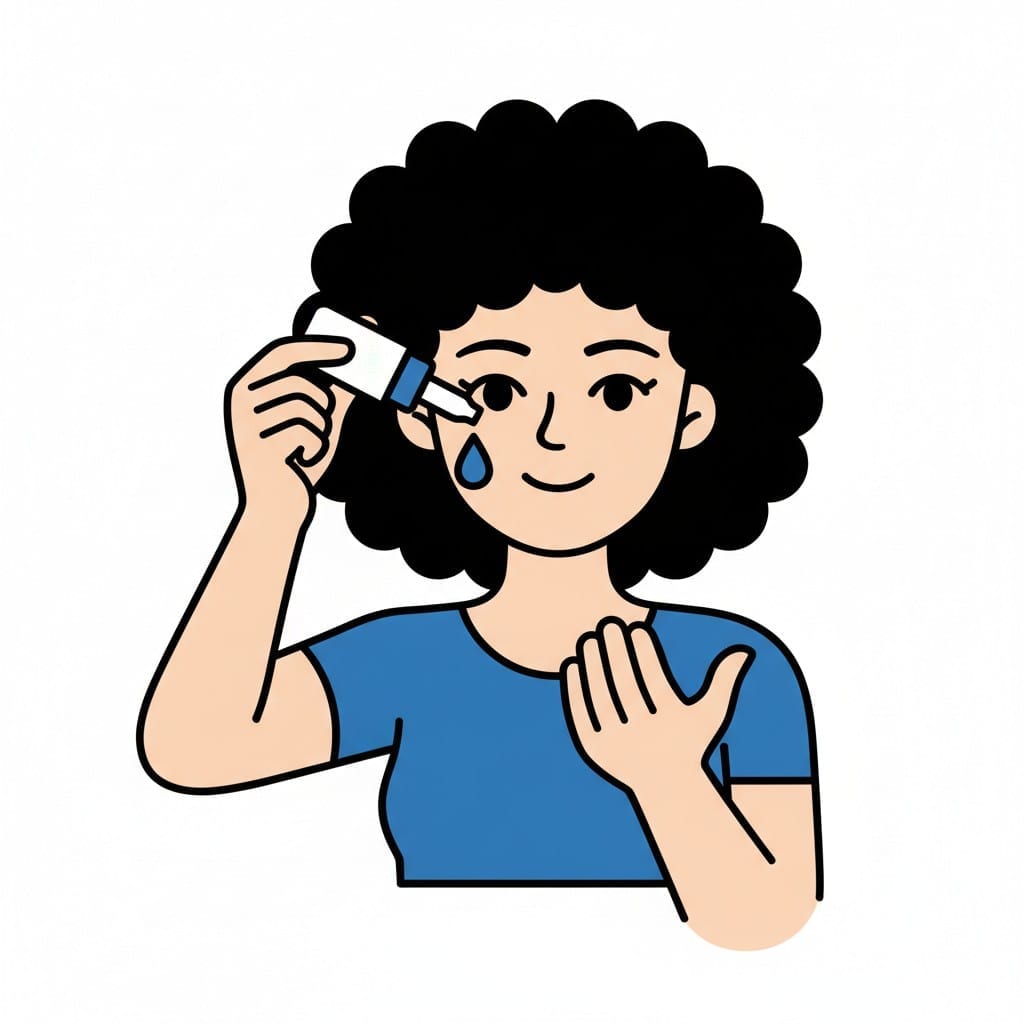
♀Person putting a drop in their eye
A smiling person holds a small bottle above their eye while a blue drop falls towards the open eye.
 ♀
♀Person holding a dropper above the eye
A smiling person holds a small dropper bottle above their eye as a blue drop falls, with the other hand open in front of them.
About this visual support
No instruction can fully outtalk a blink reflex. You can say look up, but the eye does not know what that means when a drop is approaching from above. That is why positioning the body matters as much as the drops themselves – tilt the head, fix on the ceiling, breathe out, so the bottle enters from an angle the eye can prepare for.
With visual support, each sub-step gets its own card: head back, gaze up, drop, two blinks, wipe the corner. When every part is shown separately, your child can hold a position longer than a second, because the position is a goal in itself, not just a setup for the drop.
One concrete tip: use a small mark on the ceiling – a sticker, a crack, a lamp – for your child to fix on during the drop. It gives the eye a job other than searching for the bottle, and the gaze stays up almost by itself. If you want to reuse the same sequence each morning, you can save it in Routined and start it when it is time.
Use this image in a schedule
Build your own visual schedule with this image and download it as a print-ready PDF. Completely free.

More similar visual supports
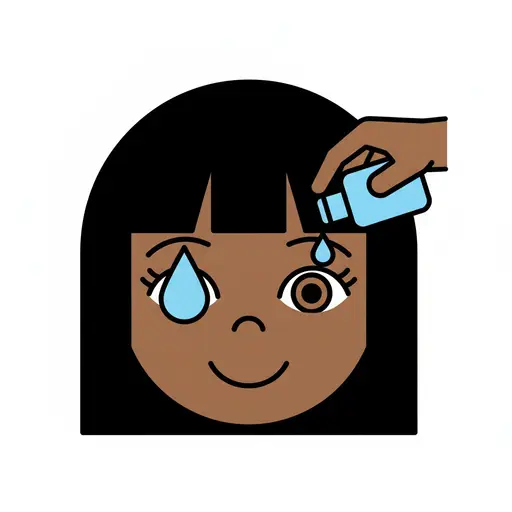
Wash the eye and drops
Close view of a girl with long dark hair and a fringe as a hand squeezes a blue ...

Eye patch
A smiling man wears a black eye patch over one eye.

Medication
A medicine bottle with a cross, a dropper bottle and some tablets.
Wash feet and treat warts
A woman treats a wart on her hand with a plaster nearby.

Allergy medicine
Medicine bottle with a red cross next to a capsule, a leaf, and a cloud.
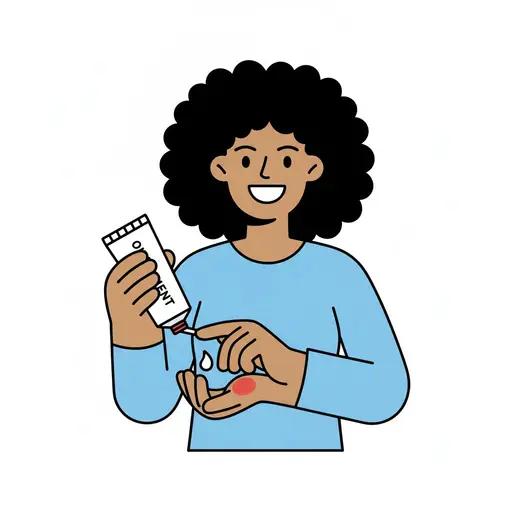
Apply ointment
A woman rubs ointment from a tube onto her hand.
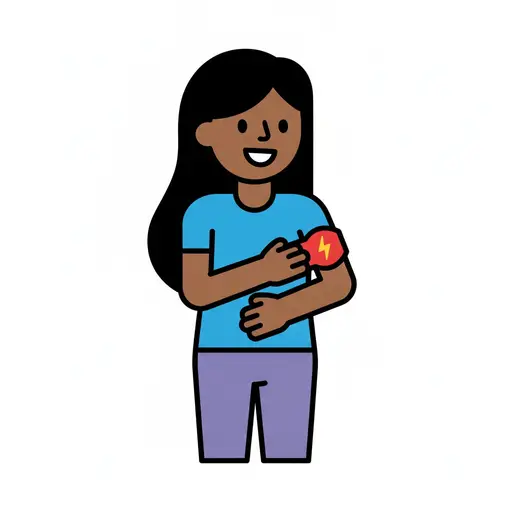
Armband
A person wears a red armband on their upper arm and points at it.

Bring glasses down
A smiling girl adjusts her glasses with both hands.
Take the visual supports with you
In Routined you build schedules from these pictures, add timers and voice instructions, and your child follows the day on their own.


* 14-day free trial, then $2.39 a month or $20.99 a year (US pricing). Cancel anytime.