go to the bathroom
For some children the signal that they need to pee arrives late or barely at all, and the game in progress feels far more important than a small discomfort. The pictures below help catch the toilet trip before it becomes urgent.
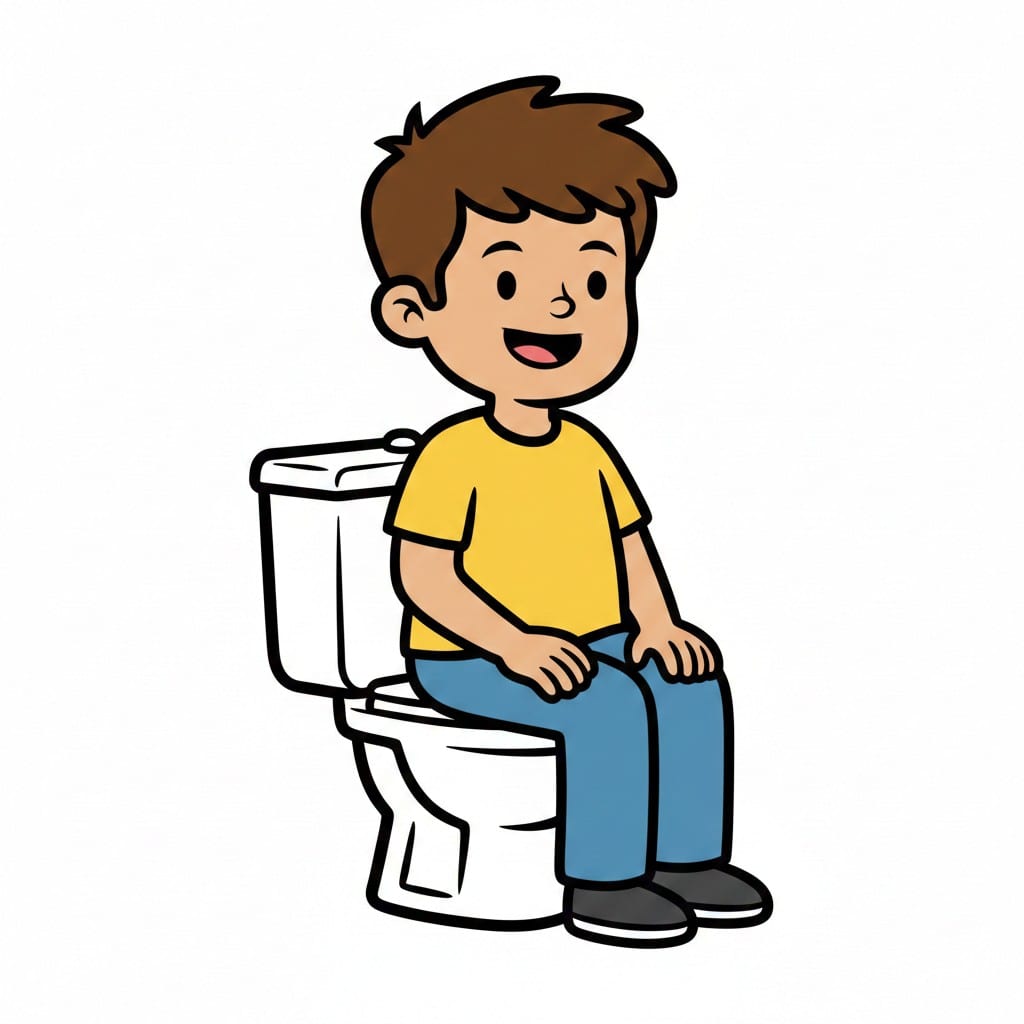 ♂
♂Boy sitting on toilet
A happy boy is sitting on the toilet.
 ♂
♂Boy on the toilet
A boy is sitting on the toilet.
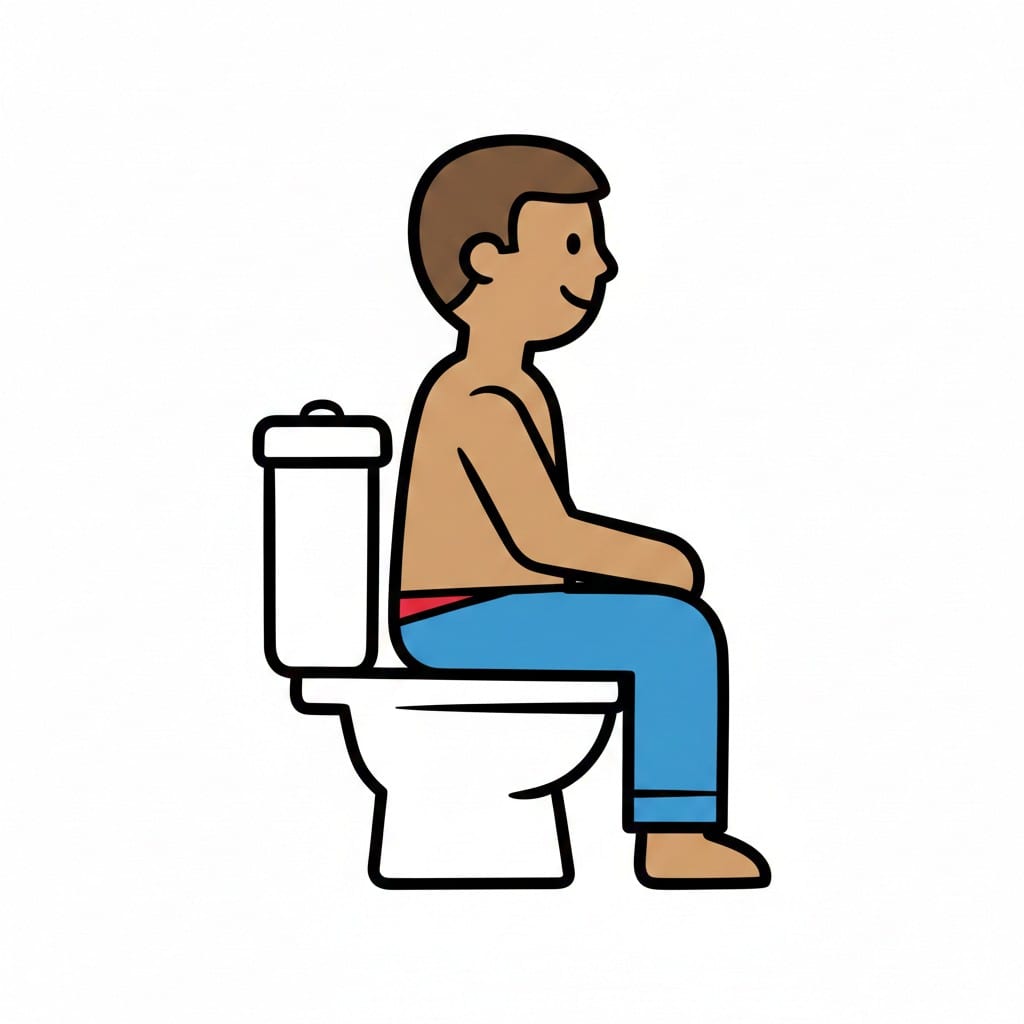 ♂
♂Boy peeing
A boy is sitting on the toilet, seen from the side.
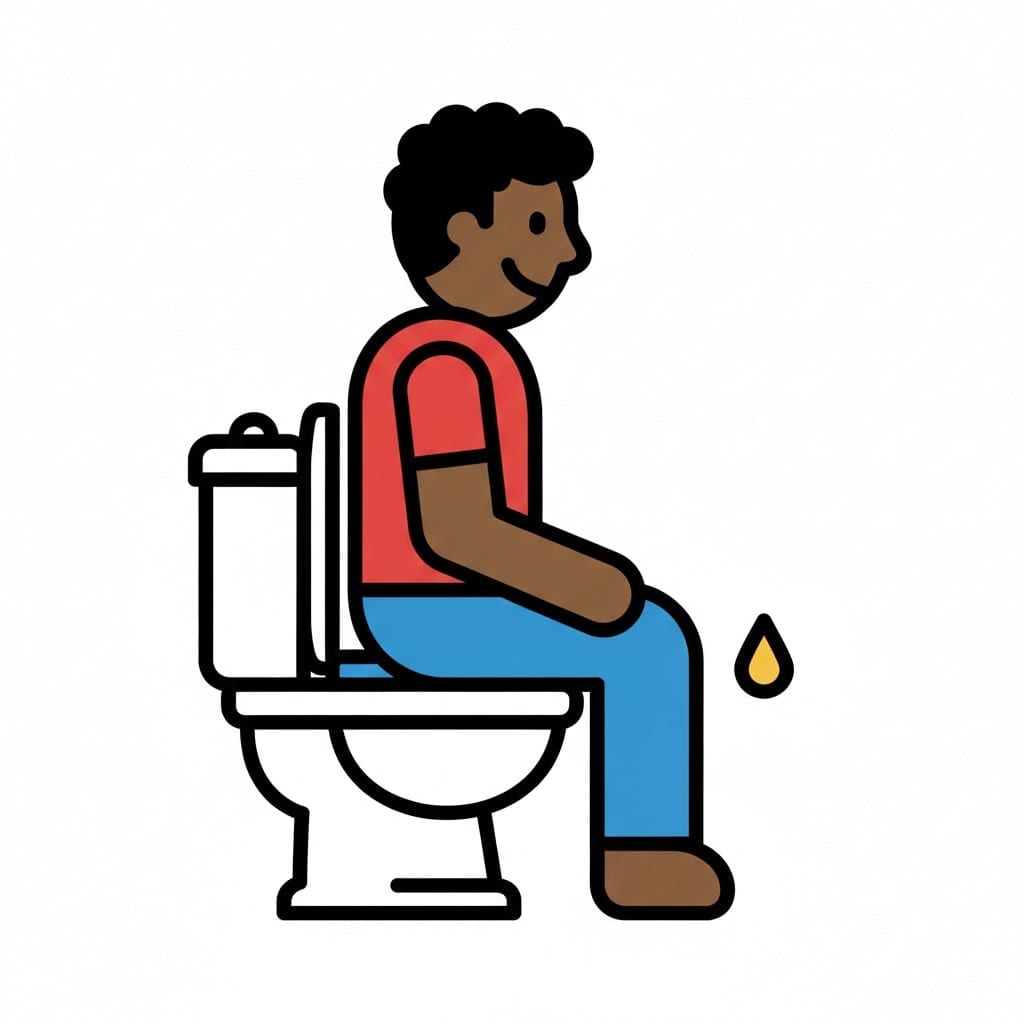 ♂
♂Pee
An illustration of a person sitting on a toilet and peeing.
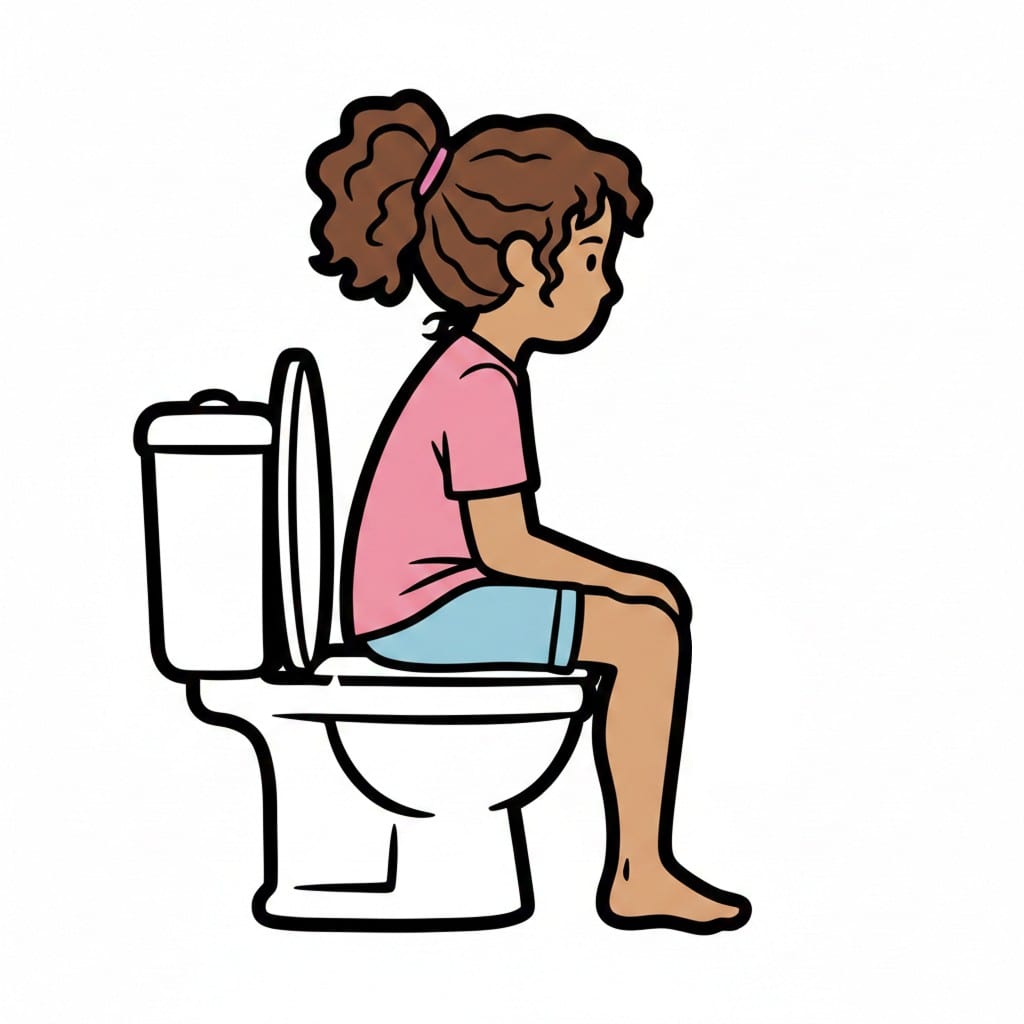 ♀
♀Girl sitting on toilet
A girl is sitting on the toilet, seen from the side.
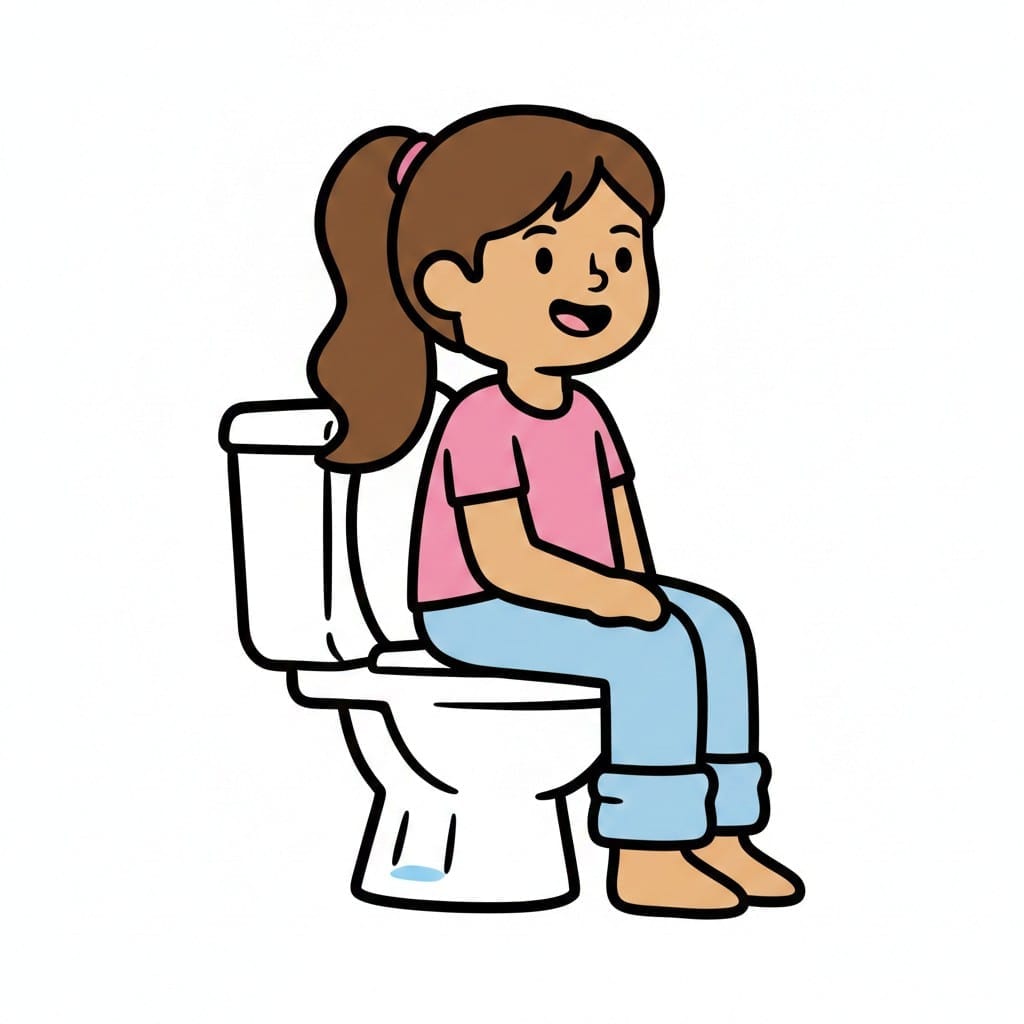 ♀
♀Girl peeing on toilet
A happy girl is peeing on the toilet.
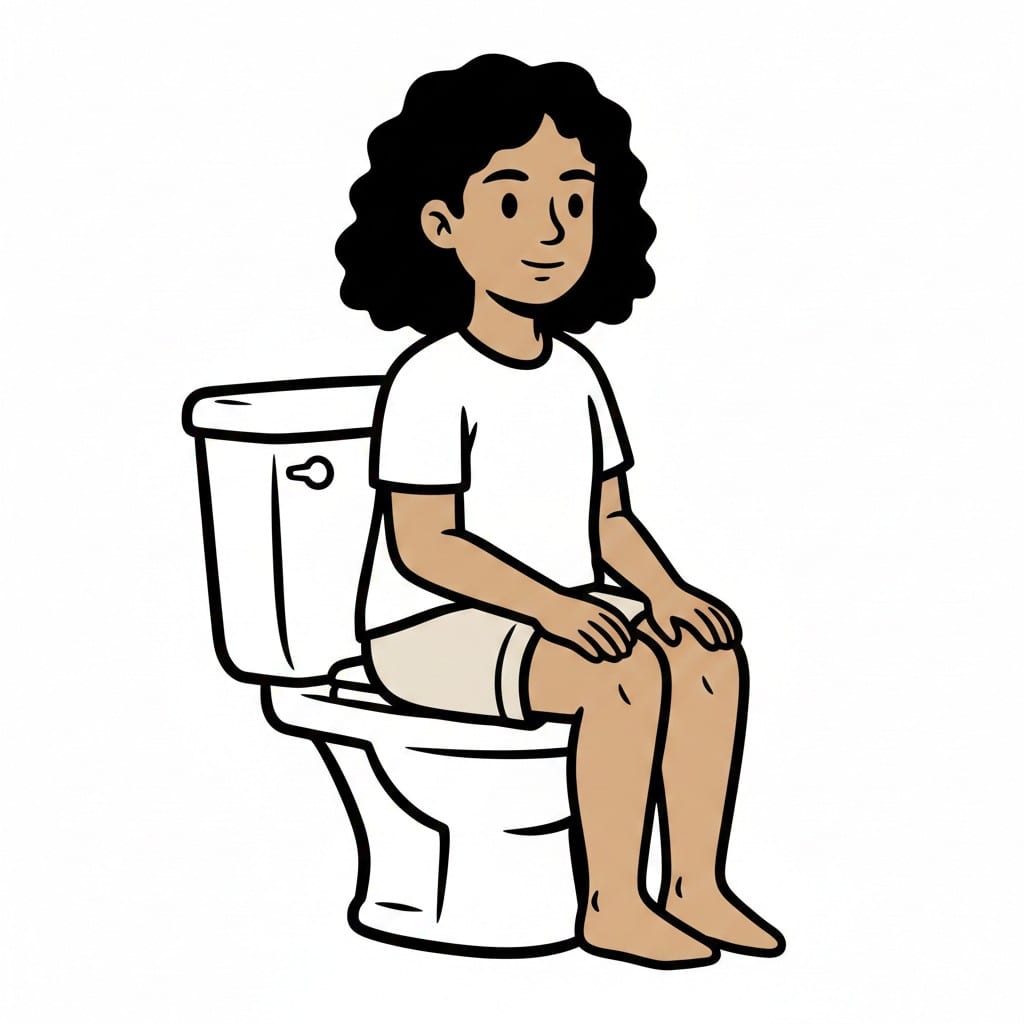 ♀
♀Girl on the toilet
A girl with curly hair is sitting on the toilet.
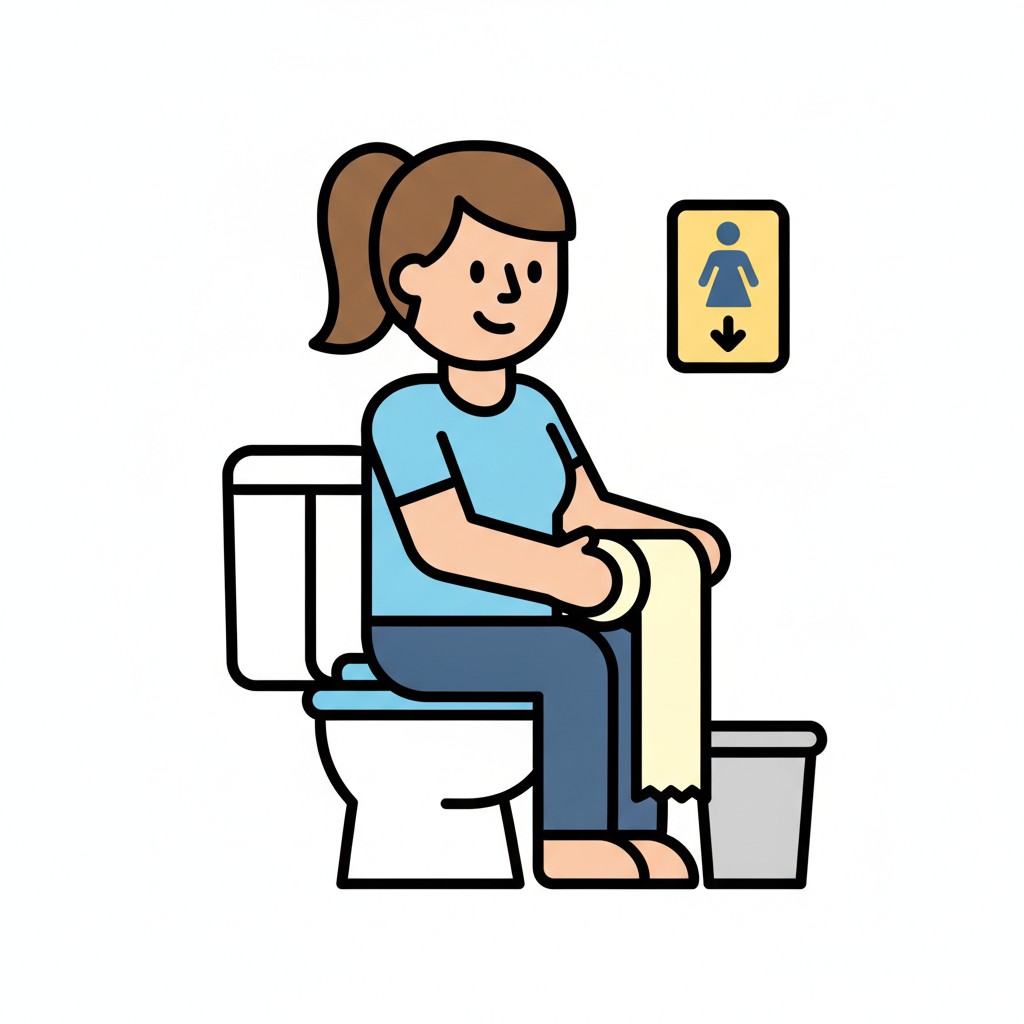 ♀
♀Sit on the toilet
A person sits on a toilet with a toilet sign on the wall and a bin beside them.
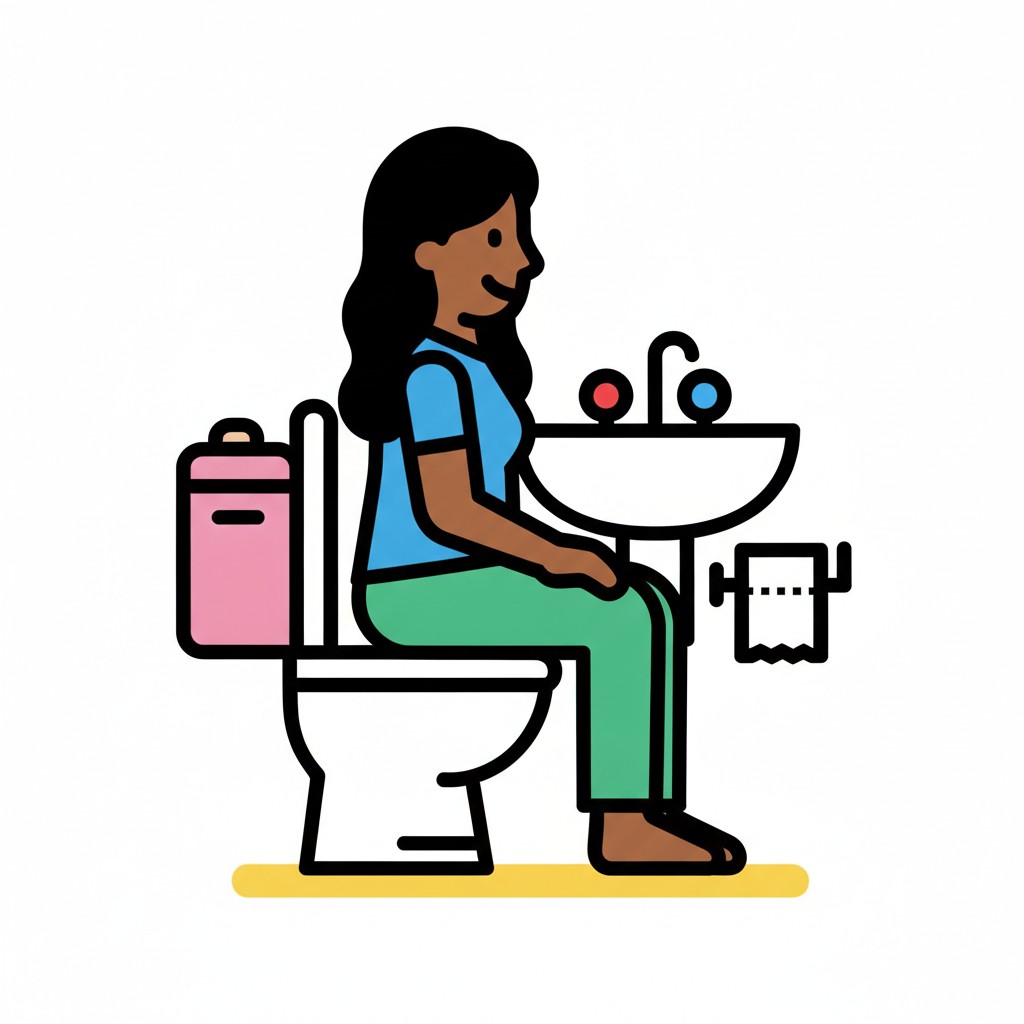 ♀
♀On the toilet
A person sits on the toilet in a bathroom with a sink and toilet paper.
About this visual support
Going to the bathroom is not mainly a motor task, it is a body-awareness task. Some children notice the need late, others mix the signal with other feelings, and almost all of them choose play if it feels important enough. The result is that the trip happens too late and the moment turns tense.
A visual support gives the child an outside cue that does not depend on the body signal arriving on time. Regular pauses become easier to add without sounding like a reprimand – the steps simply show what is happening right now, from walking in, pulling pants down, sitting still, wiping, flushing and washing hands.
One detail that often makes a difference: add a card showing the child counting calmly or looking at something on the ceiling while still seated. Many children stand up the moment they think they are done, because play is calling, and the rest of the pee arrives halfway up. A small pause picture lets the body actually finish. If you want to link the visual support to a gentle reminder after a set number of minutes, you can build it inside Routined during a fourteen-day trial at no cost.
Use this image in a schedule
Build your own visual schedule with this image and download it as a print-ready PDF. Completely free.

More similar visual supports
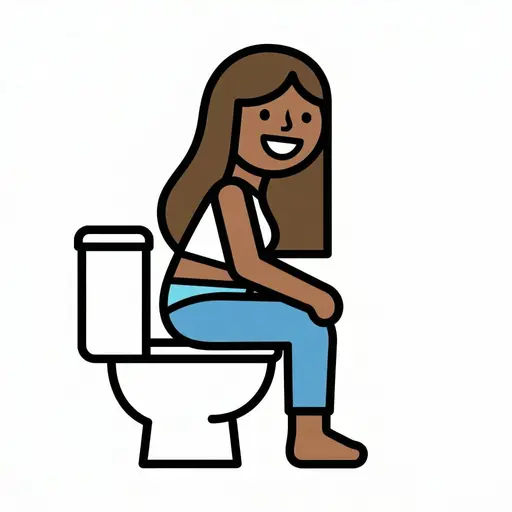
Go pee
A woman is sitting on the toilet and peeing.
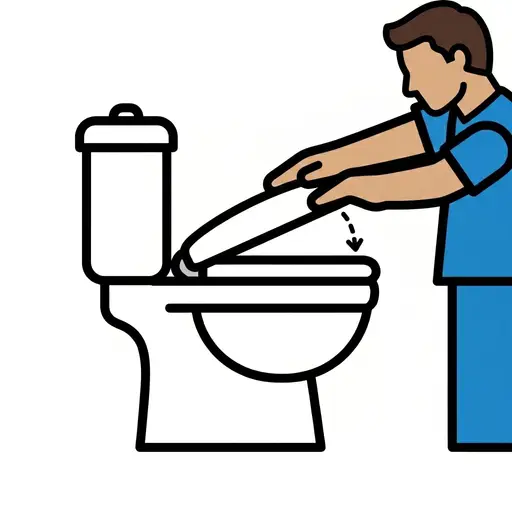
Close toilet lid
A person is closing the toilet lid on a white toilet.
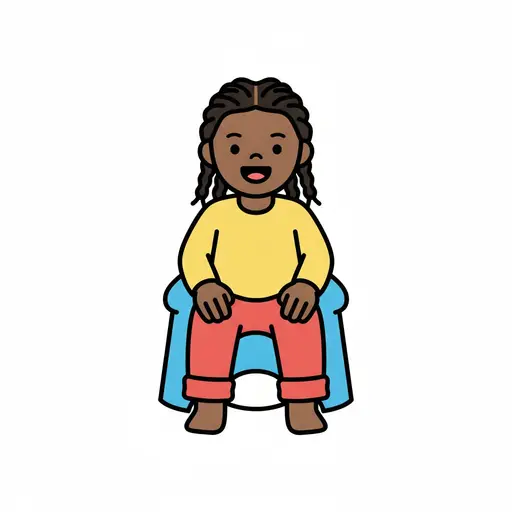
Use potty
A girl sits on a blue potty.
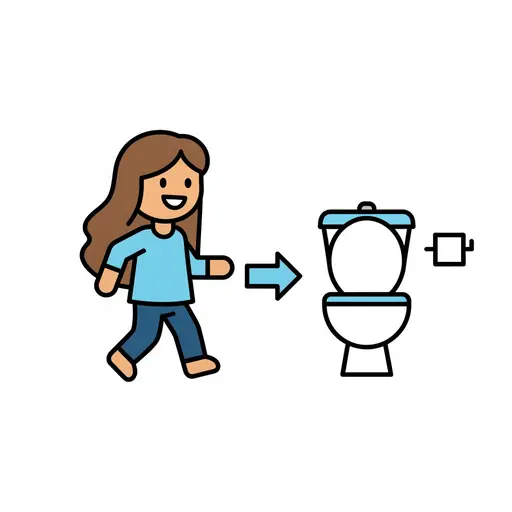
Use toilet
A girl walks towards a toilet with an arrow.
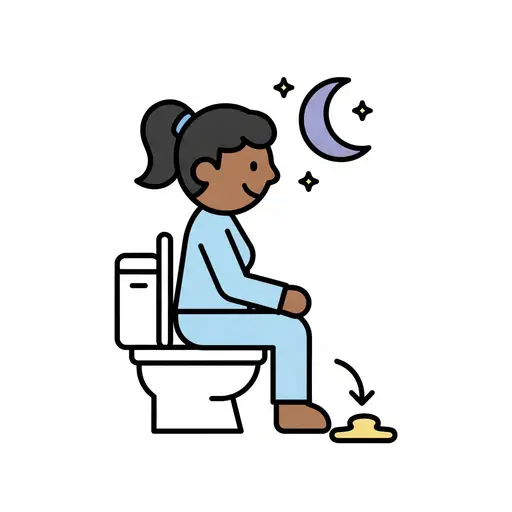
Evening Pee
A girl in pajamas sits on the toilet in the evening with a moon in the sky.
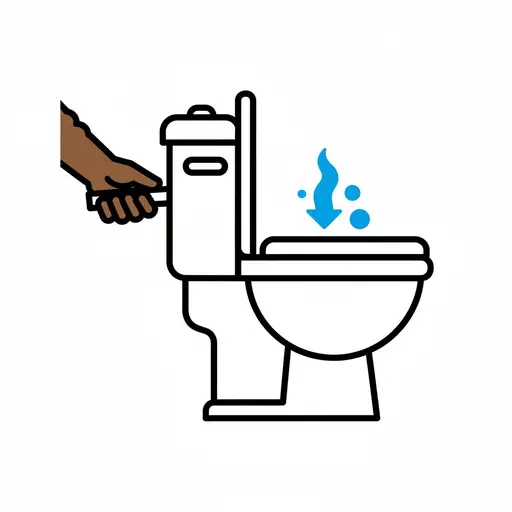
Flush toilet
A hand flushes the toilet.

Poop
Poop in a toilet bowl.

Toilet
A white toilet with a blue seat.
Take the visual supports with you
In Routined you build schedules from these pictures, add timers and voice instructions, and your child follows the day on their own.


* 14-day free trial, then $2.39 a month or $20.99 a year (US pricing). Cancel anytime.