Go to therapy
A therapy room is built for the kind of talk that often feels heavy, with someone the child doesn't meet day to day. The cards below lower the threshold to walk in.
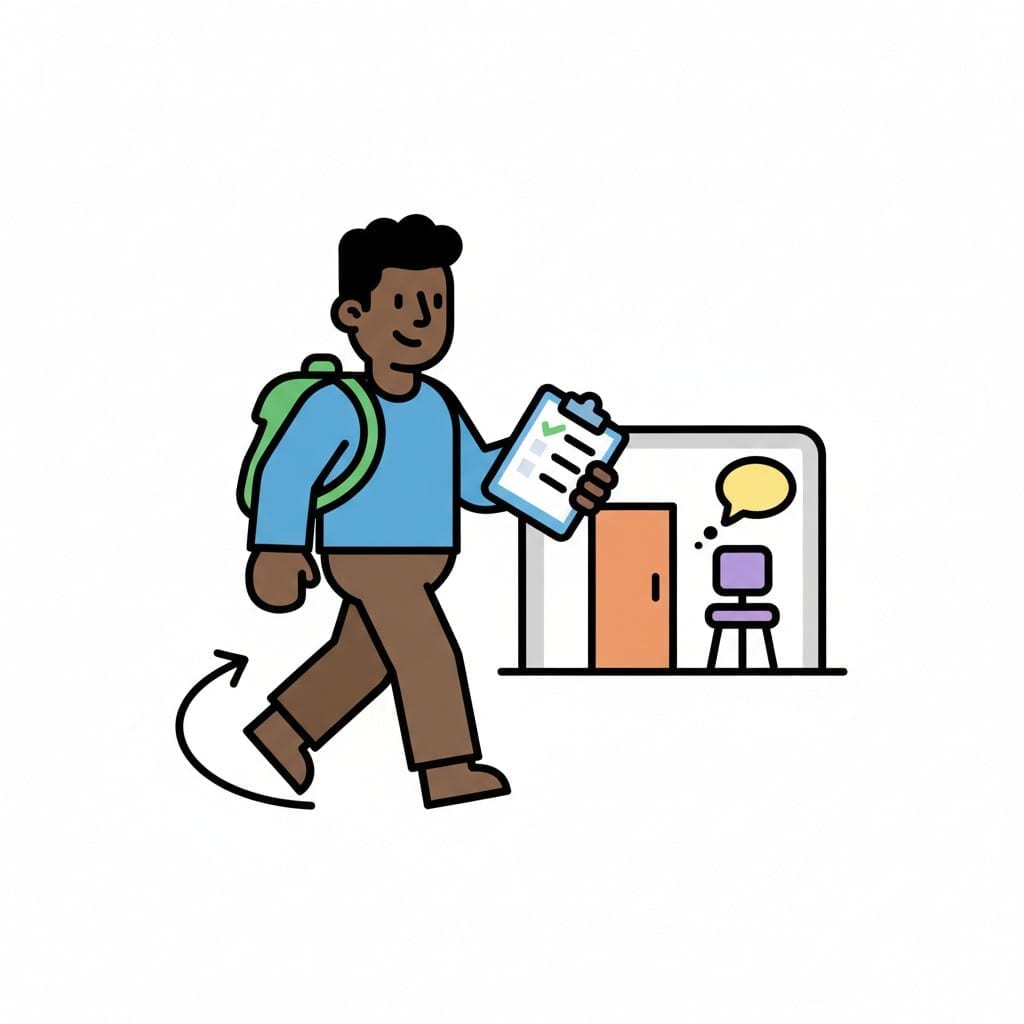 ♂
♂Go to therapy appointment
A boy with a backpack walks towards a door, holding a clipboard with a checklist. A speech bubble and a chair are visible next to the door.
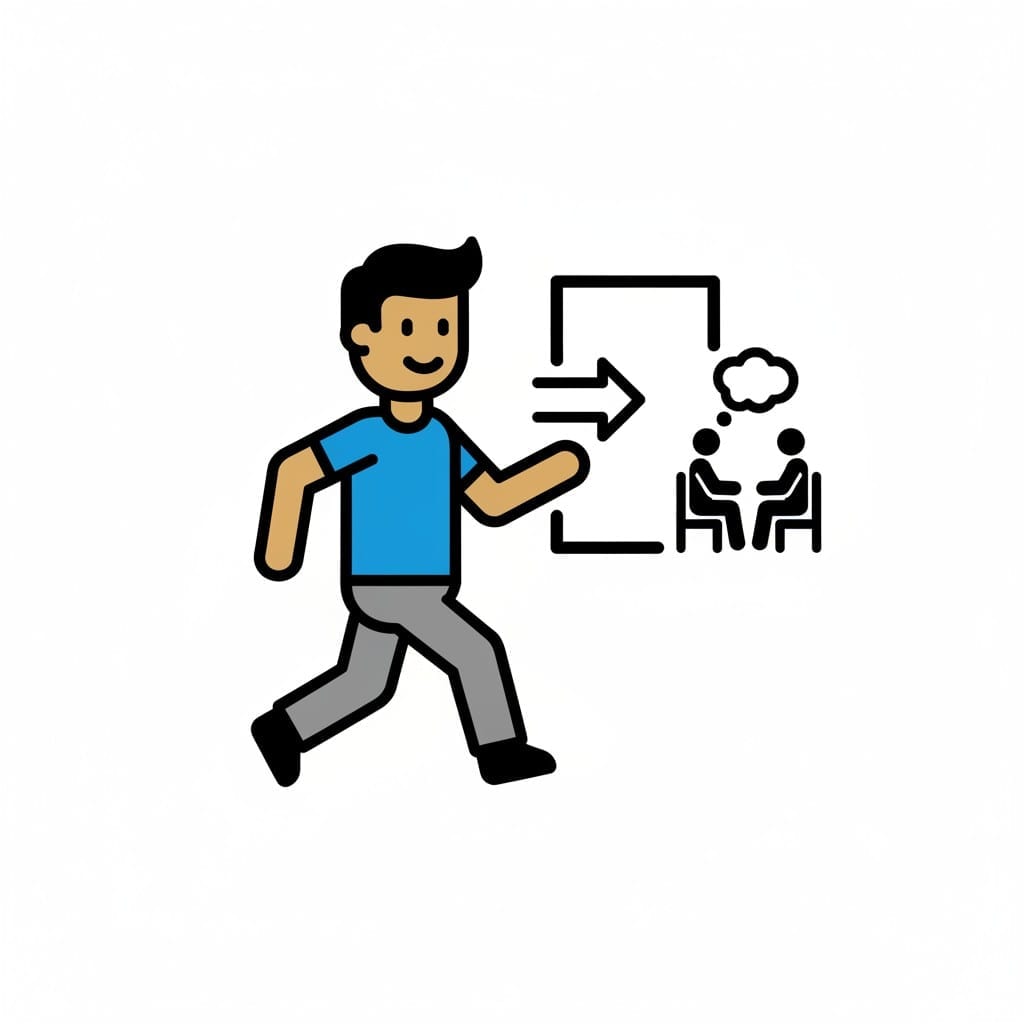 ♂
♂Enter therapy session
A boy walks towards an arrow pointing to an outlined box showing two figures sitting and talking, with a thought bubble above them.
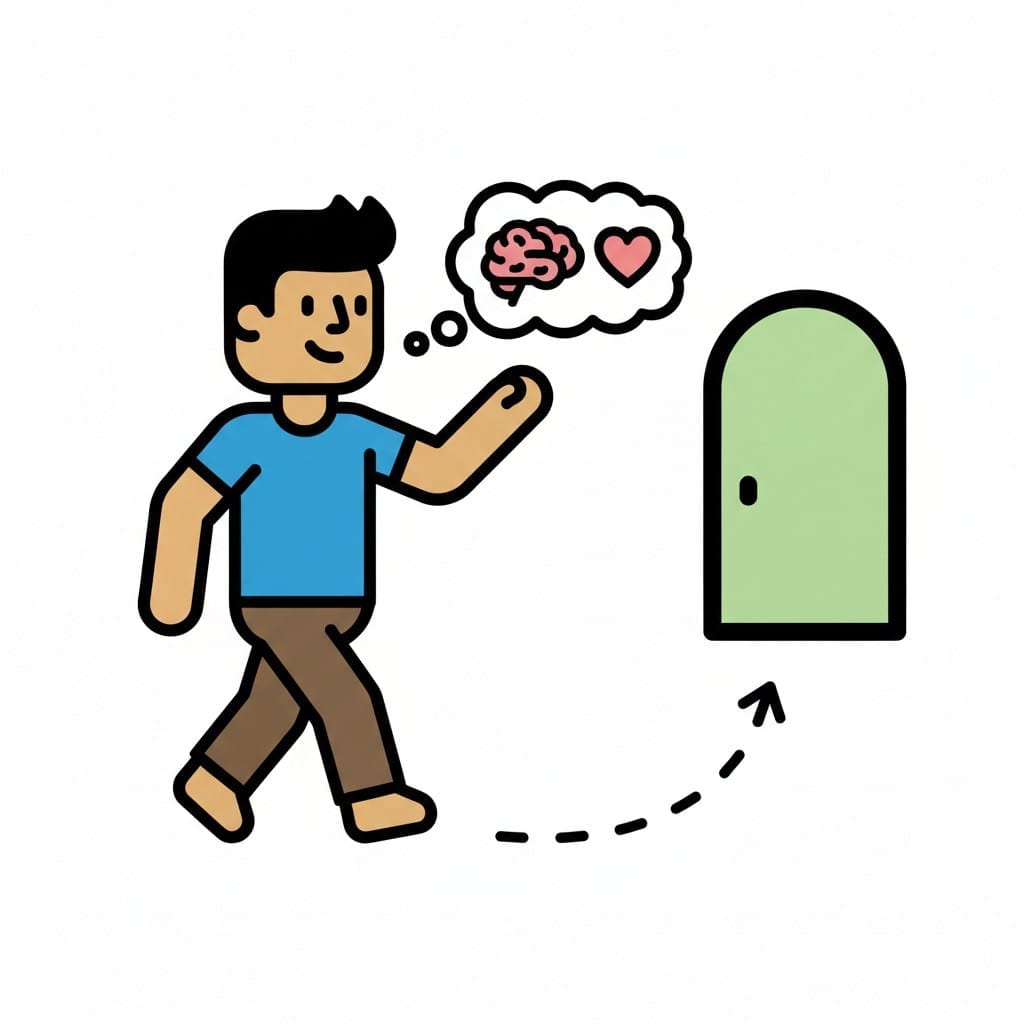 ♂
♂Go to therapy for wellbeing
A boy walks towards a green door. A thought bubble above his head contains a brain and a heart icon.
About this visual support
Going to therapy is different from other appointments. The person in the room is friendly but not family, and the subjects that need words are often the very ones the child wants to avoid. That makes the journey into the room worth keeping as predictable as possible, so the energy lasts for the conversation itself.
The visual schedule shows the whole arc: travel, wait, say hello, sit down in the room, talk or draw, say goodbye, travel home. Practical tip: walk through the cards in the car or on the bus on the way there, not first on arrival, so the child's nervous system is already settled when the door opens. Many therapists also welcome the child bringing their cards into the room.
The same structure can be saved between visits in the Routined app, which you can try for 14 days at no cost.
Use this image in a schedule
Build your own visual schedule with this image and download it as a print-ready PDF. Completely free.

More similar visual supports
Go to hospital
A cartoon illustration of a boy walking towards a hospital, with arrows indicati...
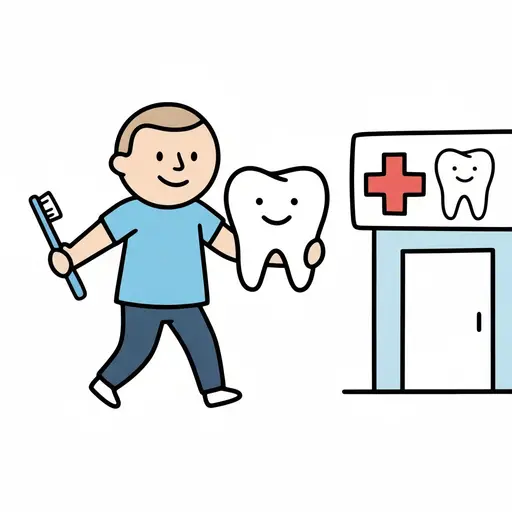
Go to the dentist
A child with a toothbrush walks towards a dental clinic beside a smiling tooth.
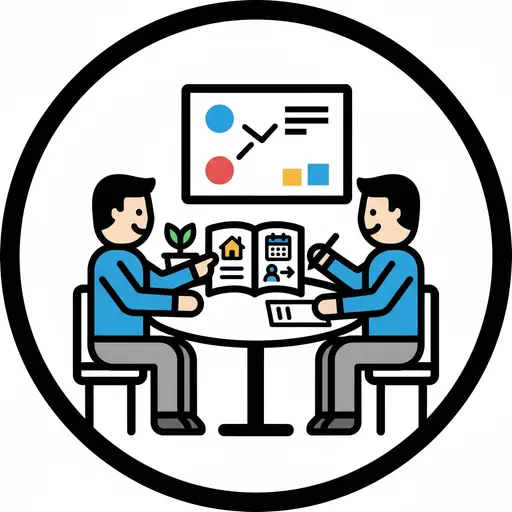
Habilitation
Two people plan at a table with a board and papers.
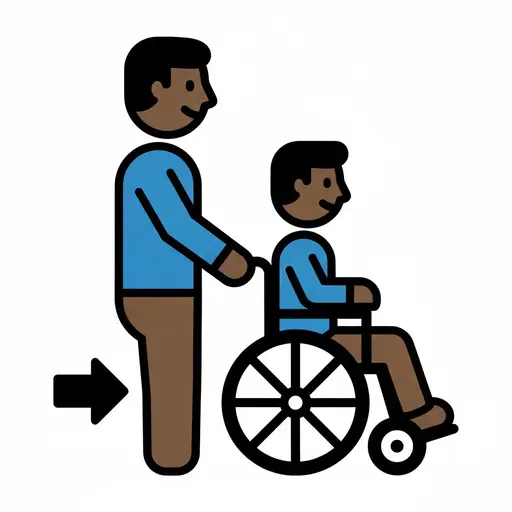
Personal assistance
A person pushes a child sitting in a wheelchair forward.
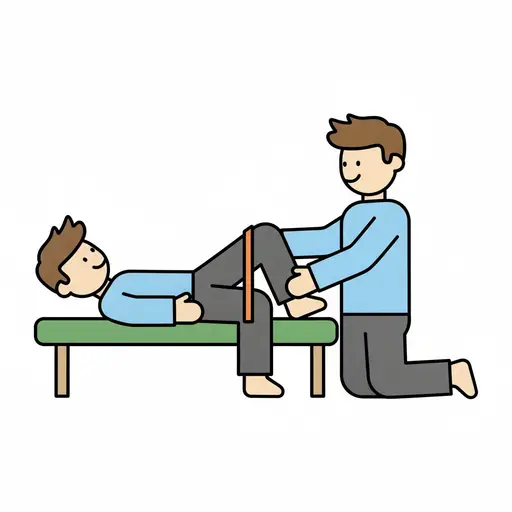
Therapy
A physiotherapist bends the leg of a person lying on a treatment bench.
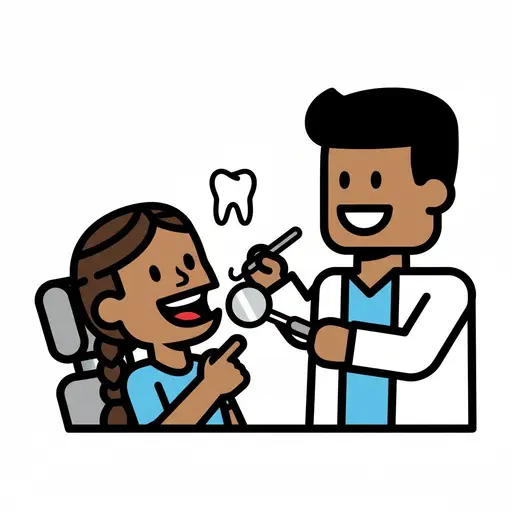
Visit dentist
A child sits in a dentist's chair with an open mouth, pointing to their teeth. A...

Allergy medicine
Medicine bottle with a red cross next to a capsule, a leaf, and a cloud.

Antibiotics
A medicine bottle with capsules and a person taking their medicine.
Take the visual supports with you
In Routined you build schedules from these pictures, add timers and voice instructions, and your child follows the day on their own.


* 14-day free trial, then $2.39 a month or $20.99 a year (US pricing). Cancel anytime.