Hairbrush
A hairbrush tugs at tangles, scrapes the scalp and lasts longer than a child can sit still for. The visual support below splits brushing into clear steps so your child can see exactly where you are.
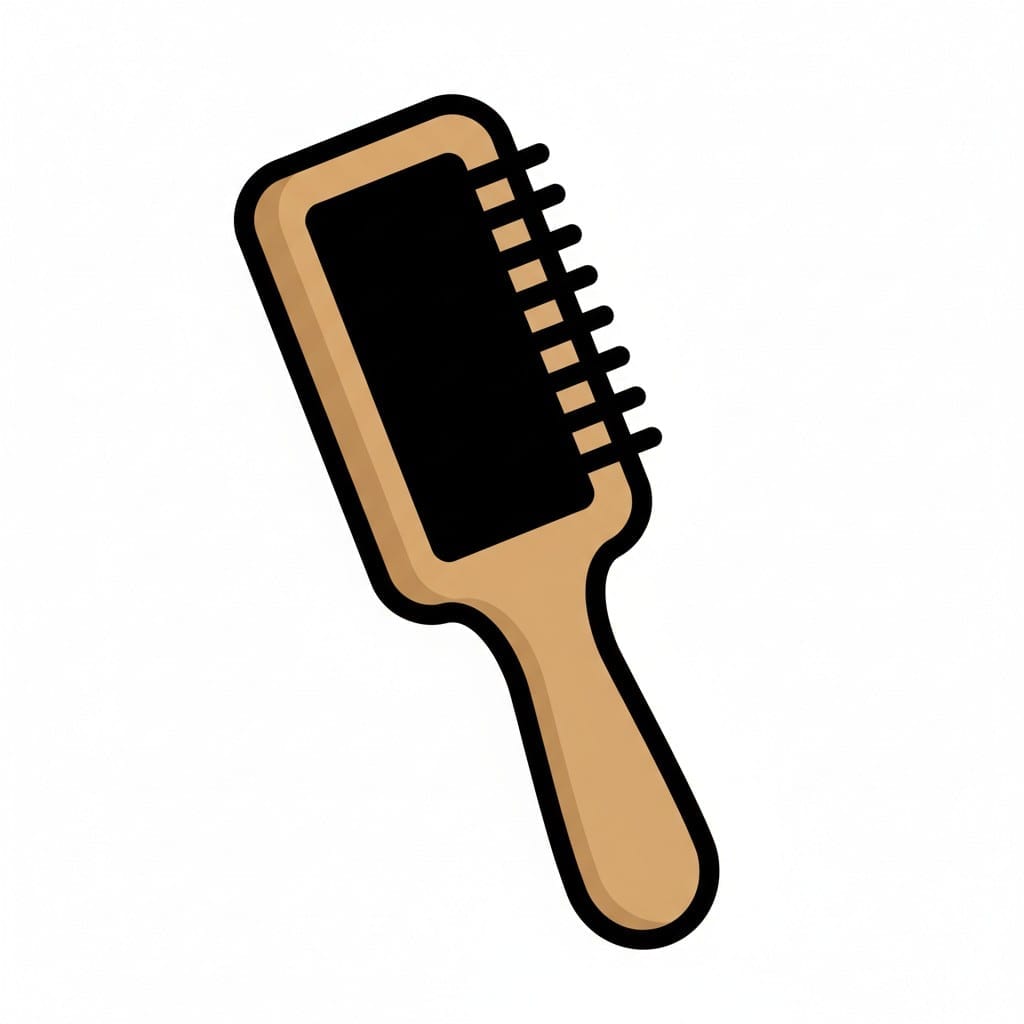
Hairbrush
A hairbrush with a beige handle and a black brush head.
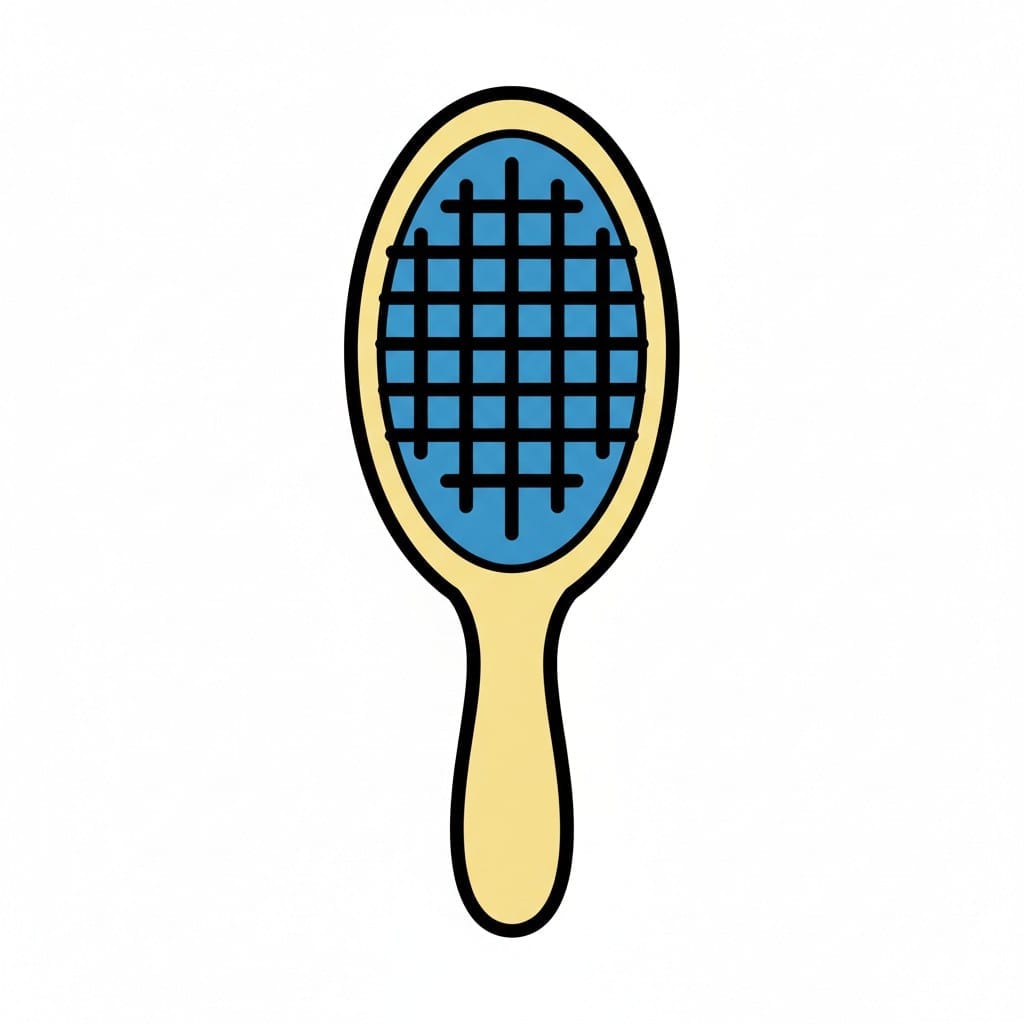
Hairbrush
An illustration of a hairbrush with a yellow handle and a blue head.
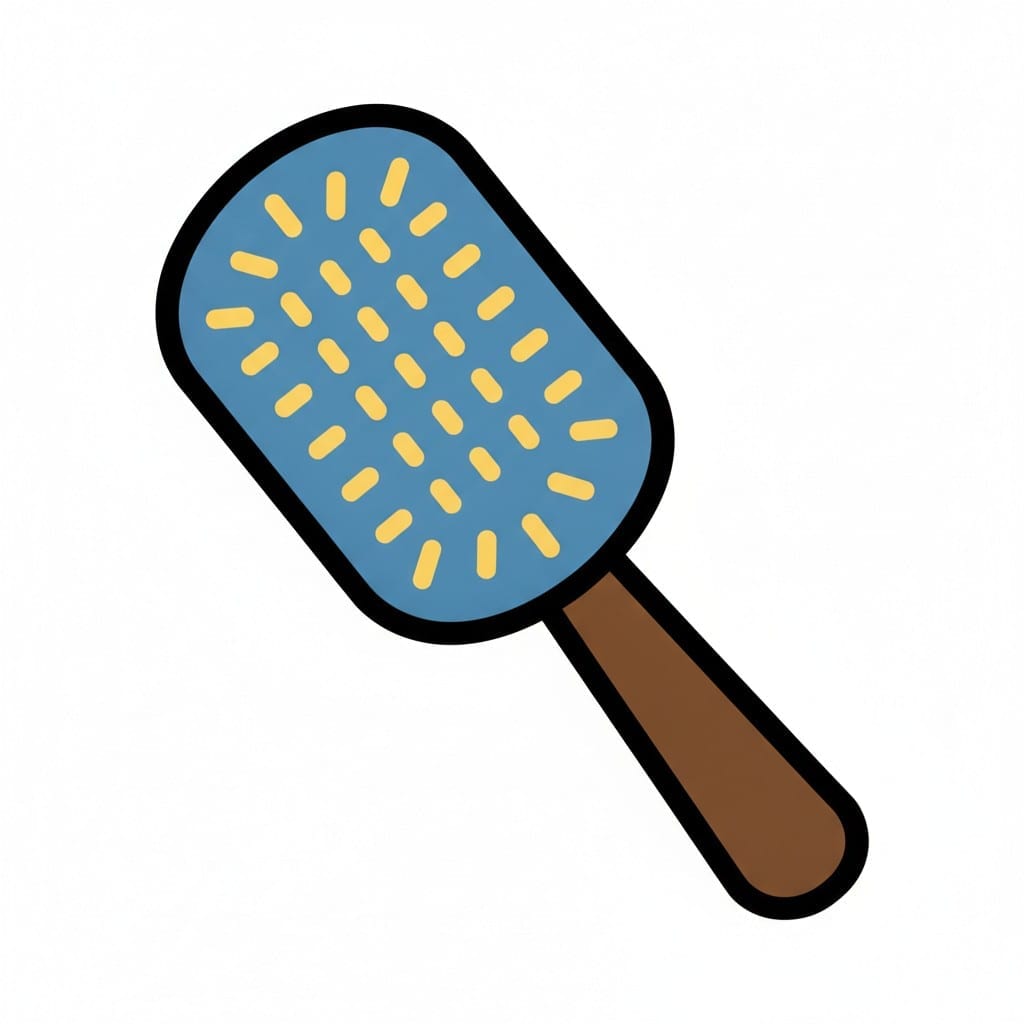
Blue hairbrush with wooden handle
Lying diagonally across the picture is a hairbrush with a blue head, yellow bristles and a brown wooden handle.
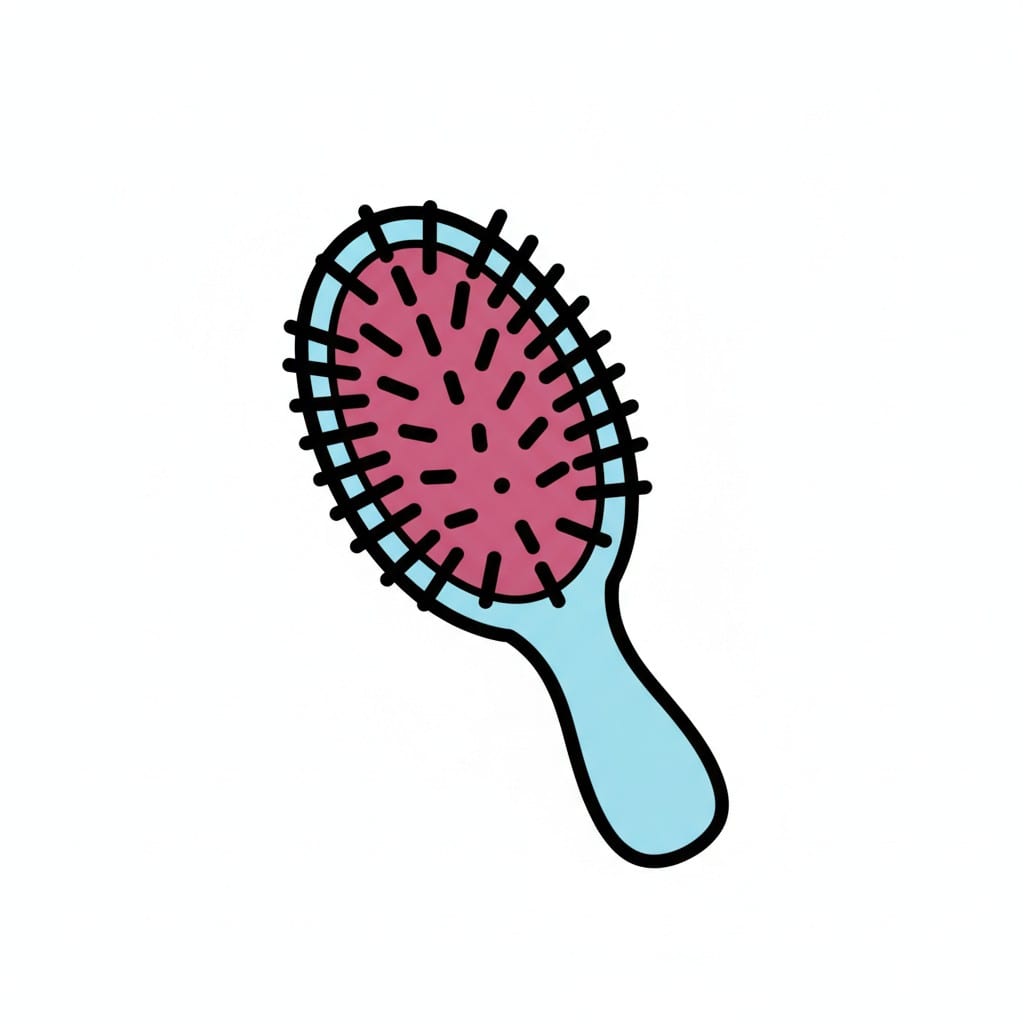
Hairbrush
A hairbrush with a pink brush pad and a light blue handle.
About this visual support
What an adult sees as a quick brush is for the child a string of tugs on the scalp with no visible end. Tangles being pulled apart, a brush catching mid-stroke, and no way of knowing how much is left make even short sessions feel endless.
A visual schedule breaks brushing into concrete moments: part the hair, one side, pause, other side, done. Your child can follow along with their eyes, point to the card you are on, and see what comes next. Brushing becomes measurable instead of vague.
One practical tip: start at the ends and work upward. Show that as separate images so the child knows the hardest part (the roots) comes last and only lasts a few seconds. If you want to pair the visuals with a timer and check-off, you can try Routined free for fourteen days.
Use this image in a schedule
Build your own visual schedule with this image and download it as a print-ready PDF. Completely free.
More similar visual supports
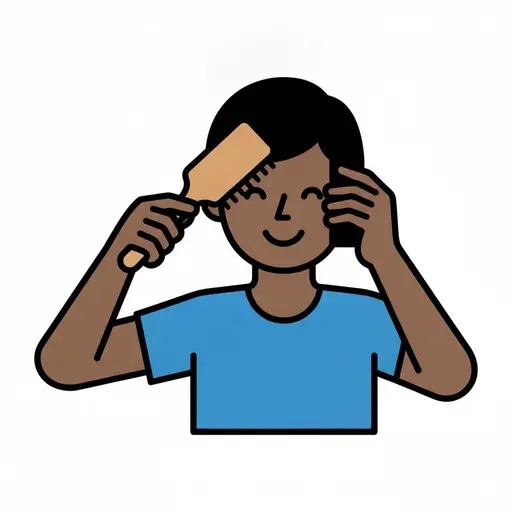
Brush hair
A smiling person with short dark hair brushes their hair with a wooden hairbrush...
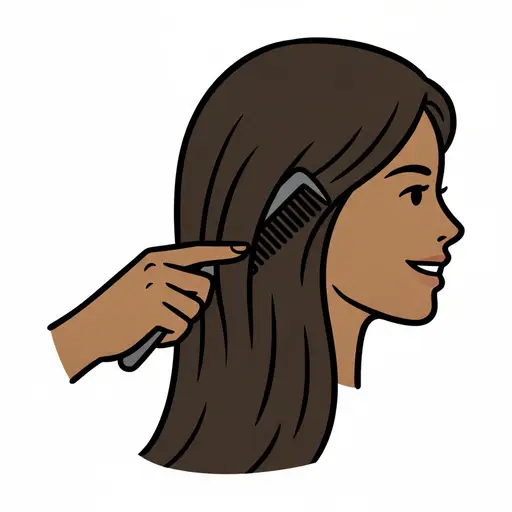
Comb hair
Seen in profile, a woman has a grey comb drawn down through her long brown hair.
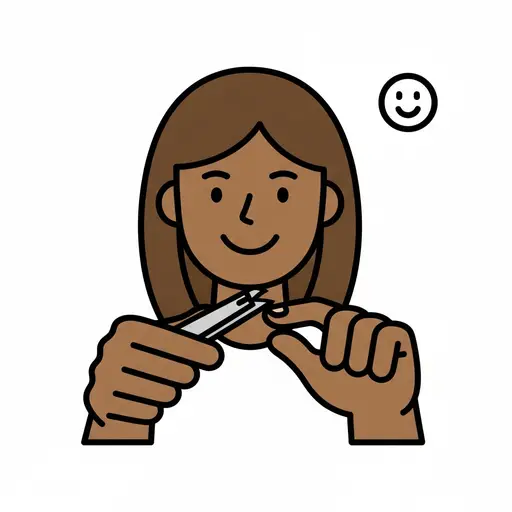
Cut nails
A smiling woman trims a fingernail with a nail clipper, with a small happy face ...
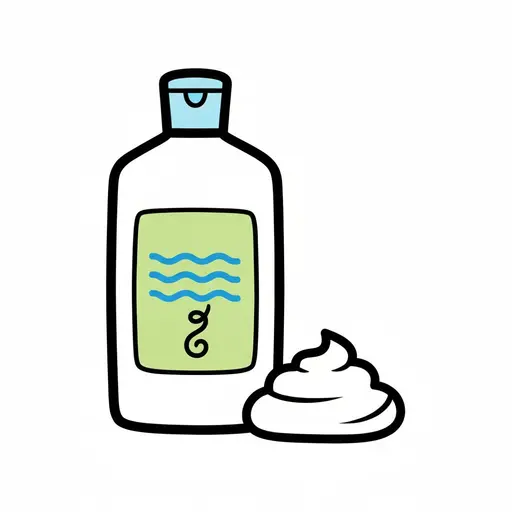
Conditioner
A bottle of conditioner with a dollop of white conditioner beside it.
Ponytail
A cartoon illustration of a head in profile with a ponytail.

Personal care
A happy child combs their hair with a blue comb.
Put on underwear
A girl pulls up a pair of purple knickers.

Fix face
A smiling boy points to his cheeks with his index fingers.
This visual support in other languages
Take the visual supports with you
In Routined you build schedules from these pictures, add timers and voice instructions, and your child follows the day on their own.


* 14-day free trial, then $2.39 a month or $20.99 a year (US pricing). Cancel anytime.