Mom picks up
Being lifted up happens in a second: the floor disappears, someone holds tight, and the body loses control of its own position. The visual support below breaks the lift into warning, grip and landing so the child can keep up.
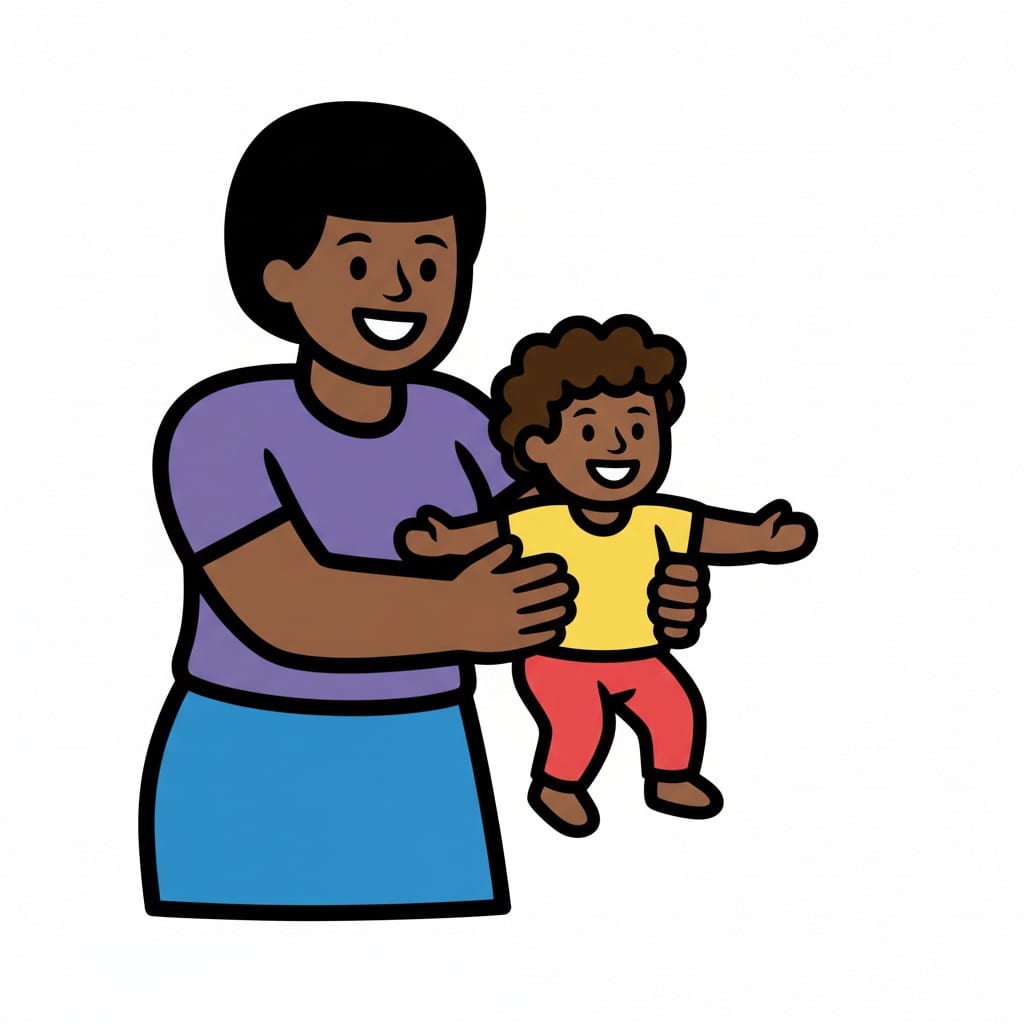 ♂
♂Mom lifts the boy up
A smiling mother lifts a small boy in a yellow shirt and red trousers, and he stretches his arms out.
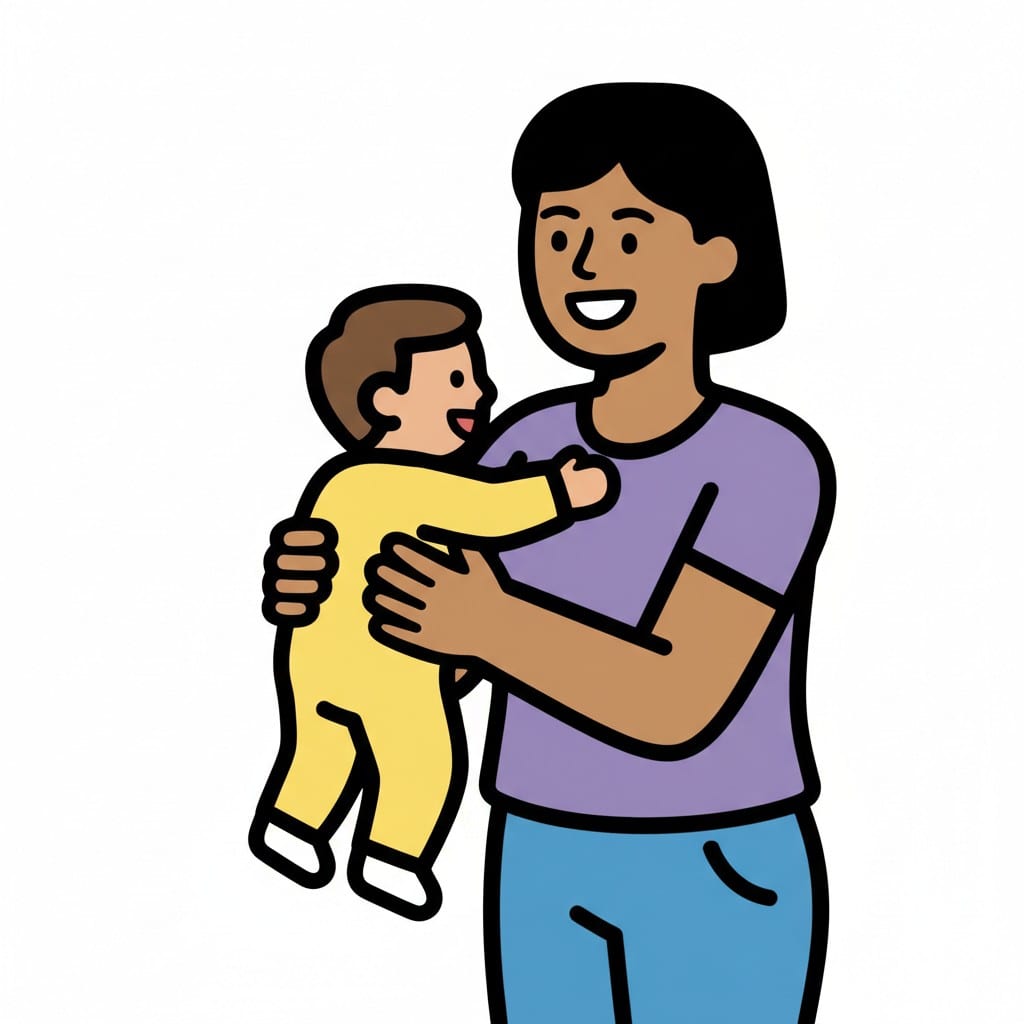 ♂
♂Mom holds the little boy up
Seen from the side, a mother holds a toddler boy in yellow pyjamas up in front of her while they look at each other.
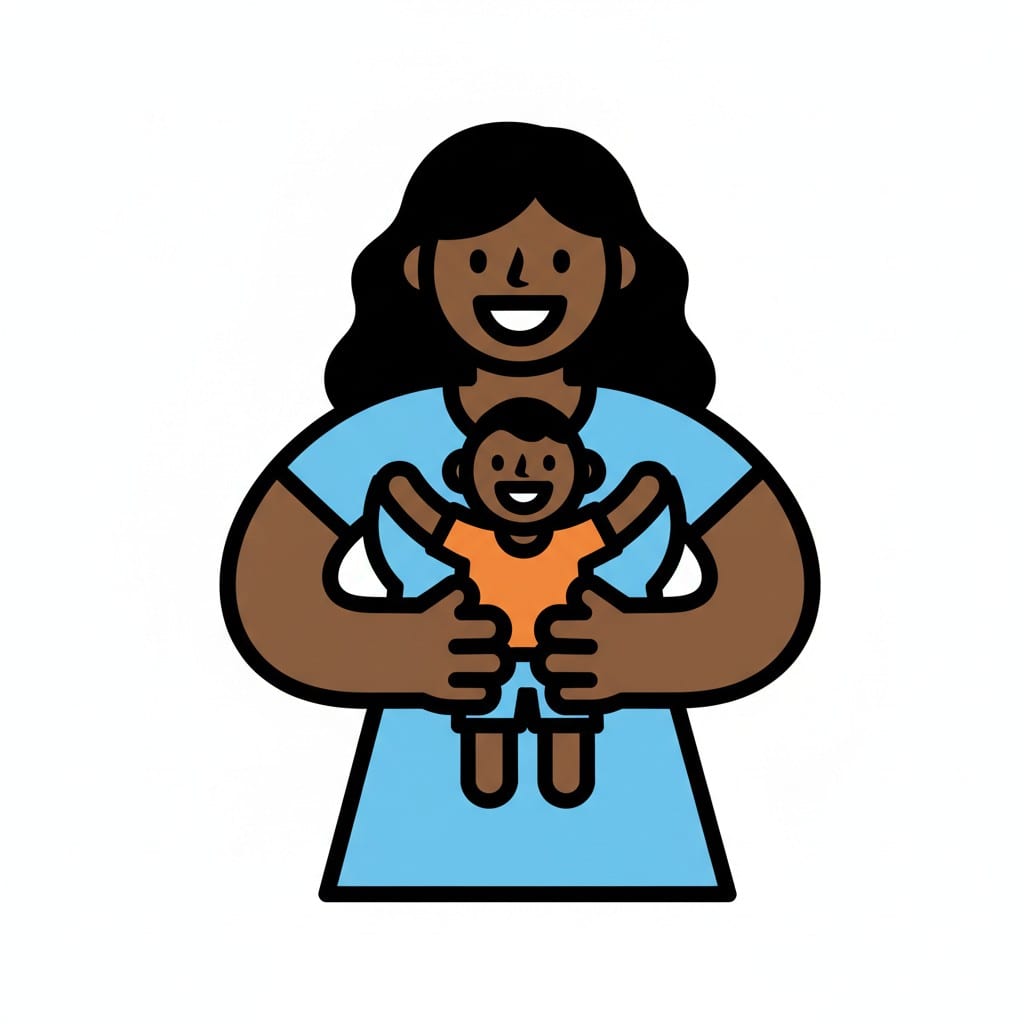 ♀
♀Mom holds child
A mom holds a child who has their arms outstretched.
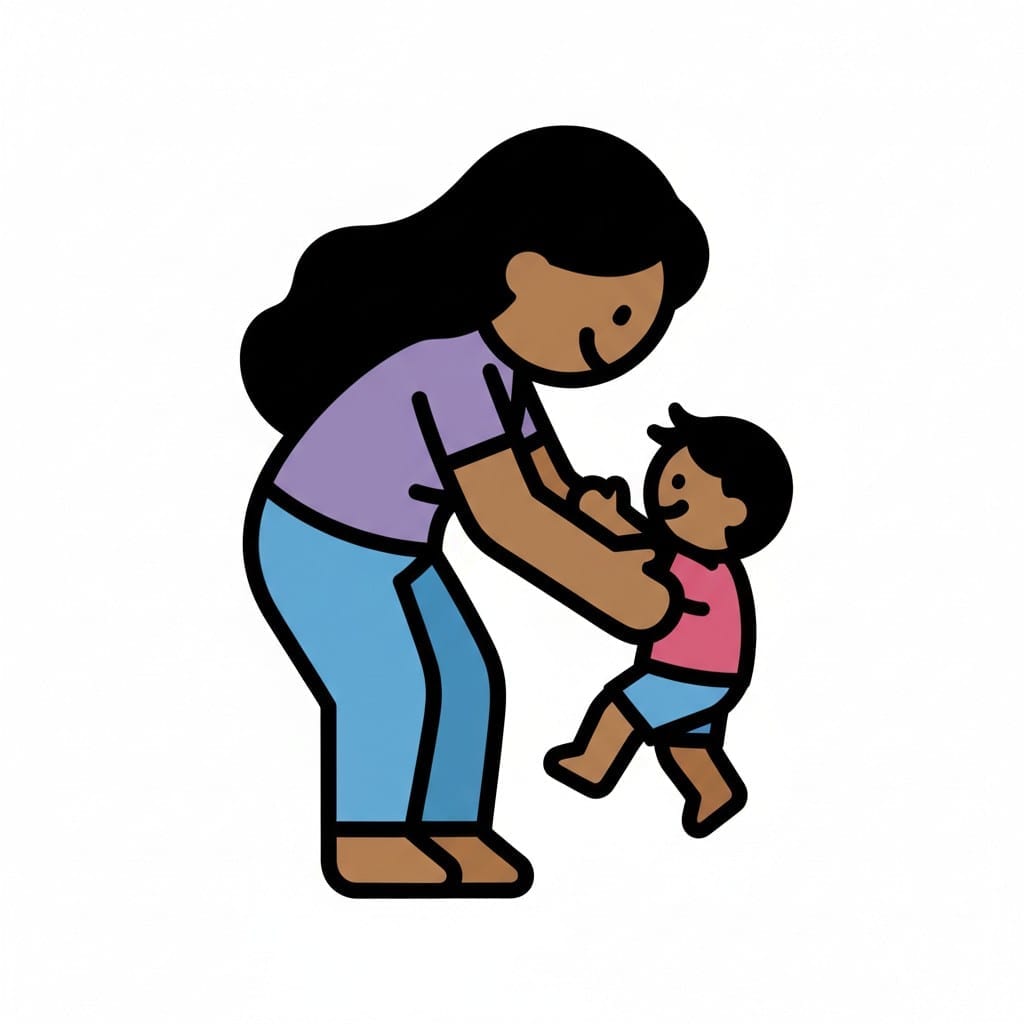 ♀
♀Mom lifts child
A mom bends down to lift a child up from the floor.
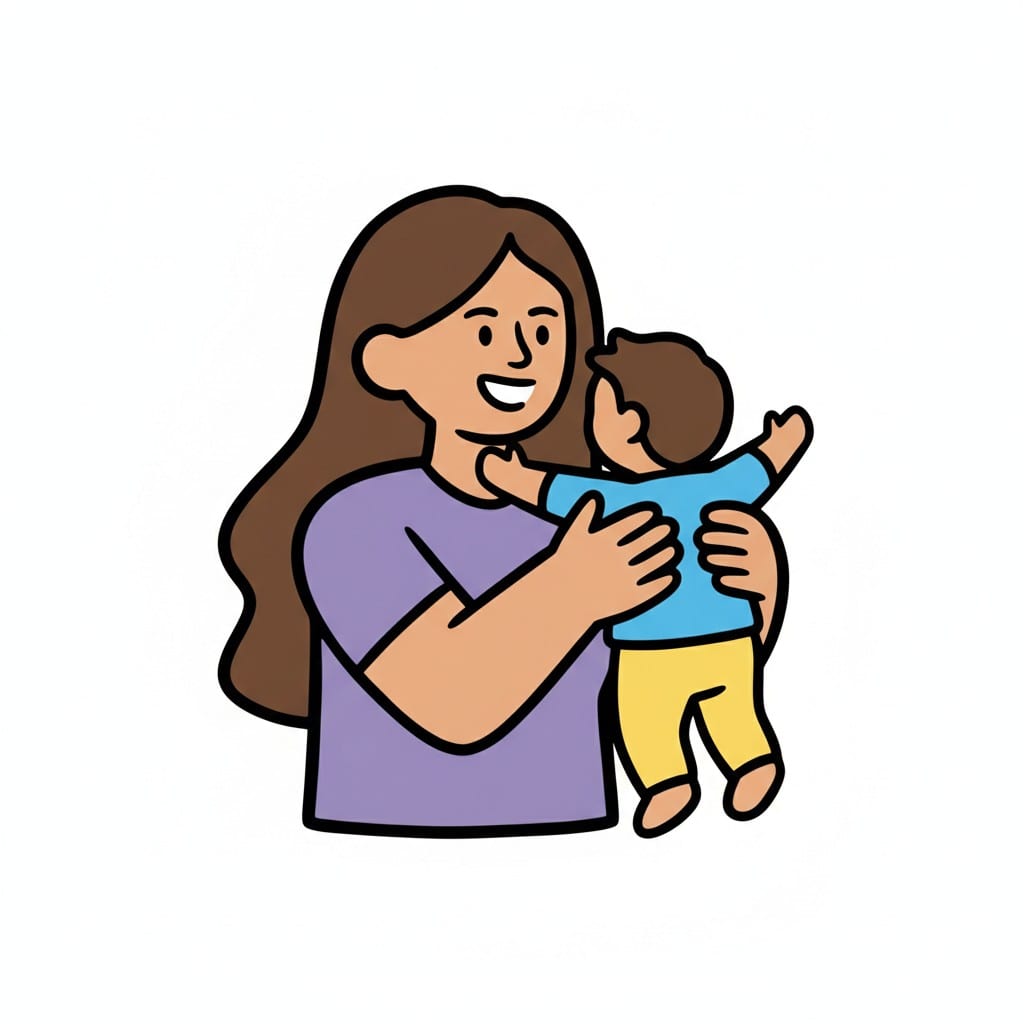 ♀
♀Mom hugs child
A mom holds and hugs a child from the side.
About this visual support
The lift itself is short, but several things happen at once. The hips leave the floor, two hands clamp around the waist or under the arms, and the gaze suddenly sits a meter higher. For a child who needs a warning before body contact, that is a lot to take in at once, even when it is a parent doing the lifting.
The visual schedule lets you slow the sequence down before it happens. A first card shows mom reaching out her arms, a second the child placing their hands on her shoulders, a third the actual lift, and a fourth the landing onto her hip or into a hug. Knowing where their own hands go gives the child a small job during the lift, instead of just being carried.
A concrete tip: use the same count every time, for example three clear words before the feet leave the floor, so the lift stays predictable even when it is quick. If you want to keep the sequence for bedtime, bath time or lifting into a car seat, you can build it in Routined and try the app for 14 days at no cost.
Use this image in a schedule
Build your own visual schedule with this image and download it as a print-ready PDF. Completely free.

More similar visual supports
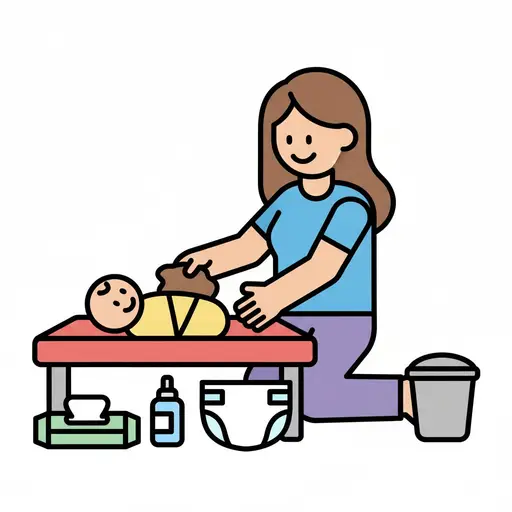
Change diaper
A woman kneels at a changing table with a baby, diapers, wipes and a bin below.
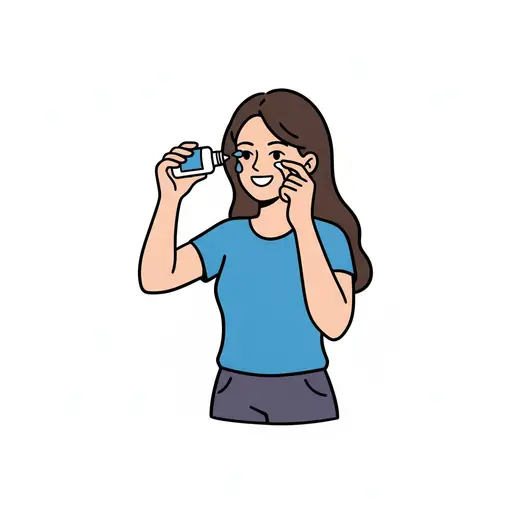
Eye drops
A smiling person holds a small bottle of eye drops above their eye and pulls dow...
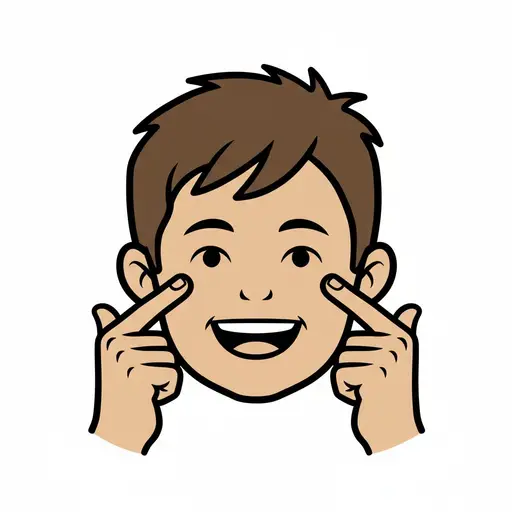
Fix face
A smiling boy points to his cheeks with his index fingers.
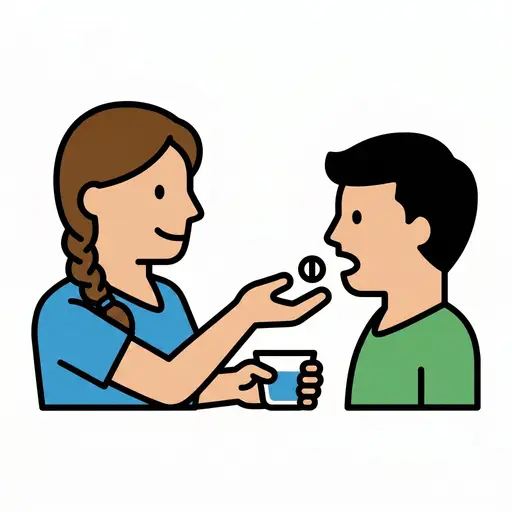
Give medicine
An adult holds out a pill and a glass of water to a child who is opening their m...
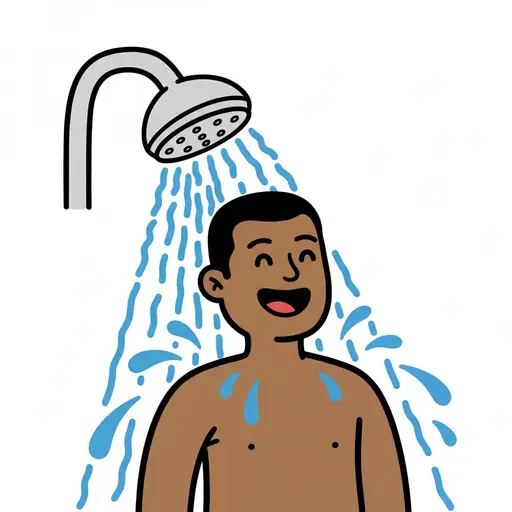
Shower child
An illustration of a boy with soap on his body, holding a sponge and a towel, st...
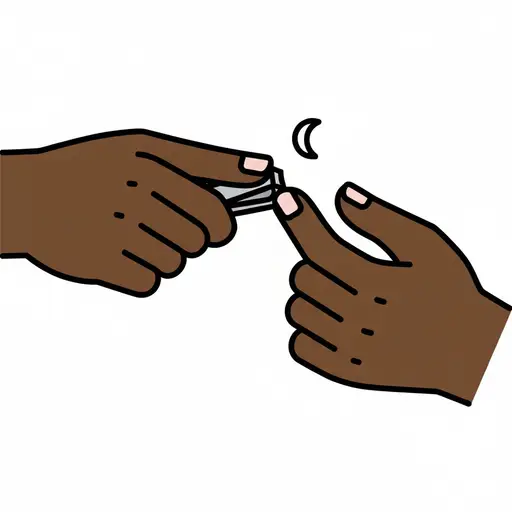
Trim nails
Two hands clip the nail on a finger using a nail clipper.
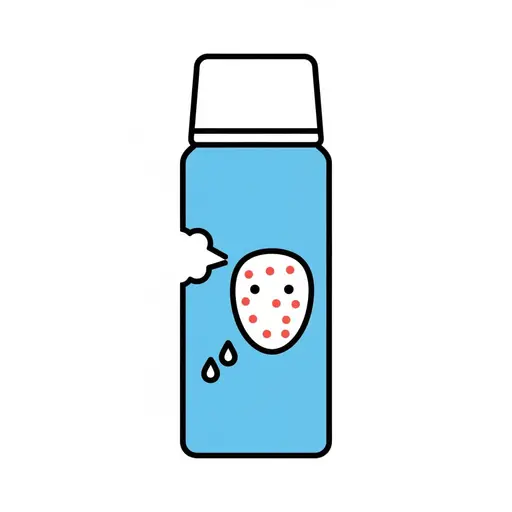
Acne spray
A blue spray bottle spraying towards a face with red spots.
Allergy medicine
Medicine bottle with a red cross next to a capsule, a leaf, and a cloud.
Take the visual supports with you
In Routined you build schedules from these pictures, add timers and voice instructions, and your child follows the day on their own.


* 14-day free trial, then $2.39 a month or $20.99 a year (US pricing). Cancel anytime.