Shower
Water pressure on the skin, sound bouncing off tiles and the swing from cold to hot can feel like an attack rather than washing. The visual support below prepares the body for each part before the spray starts.
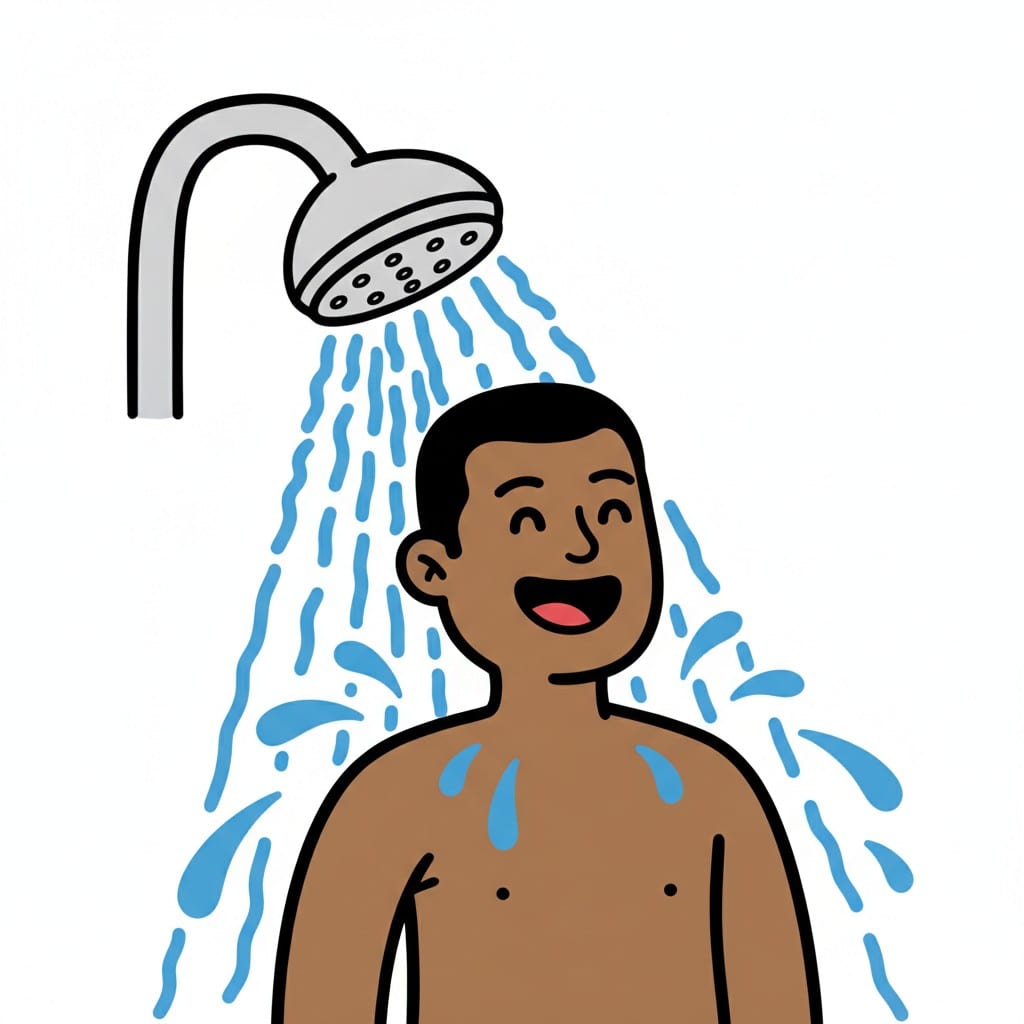 ♂
♂Shower
A happy person taking a shower, with water flowing from the showerhead.
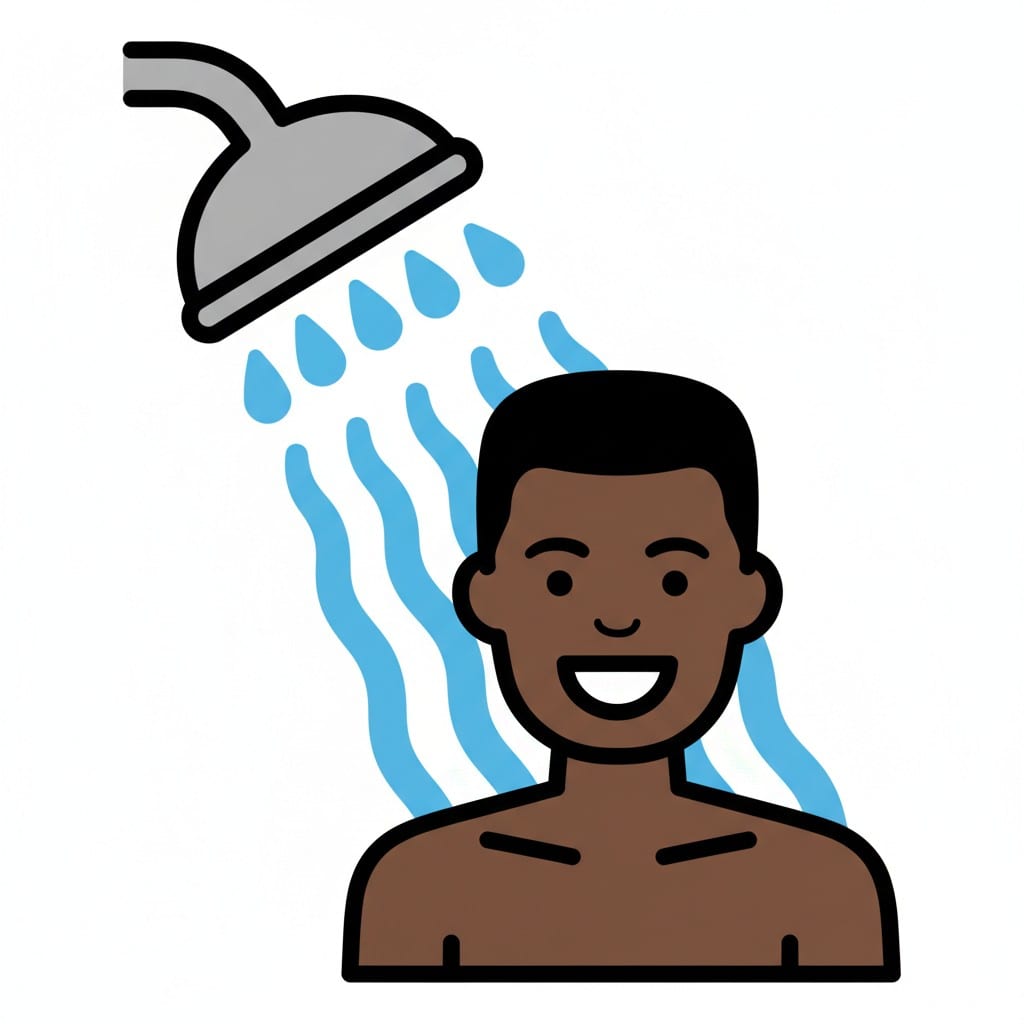 ♂
♂Shower
A person taking a shower with water flowing from the shower head.
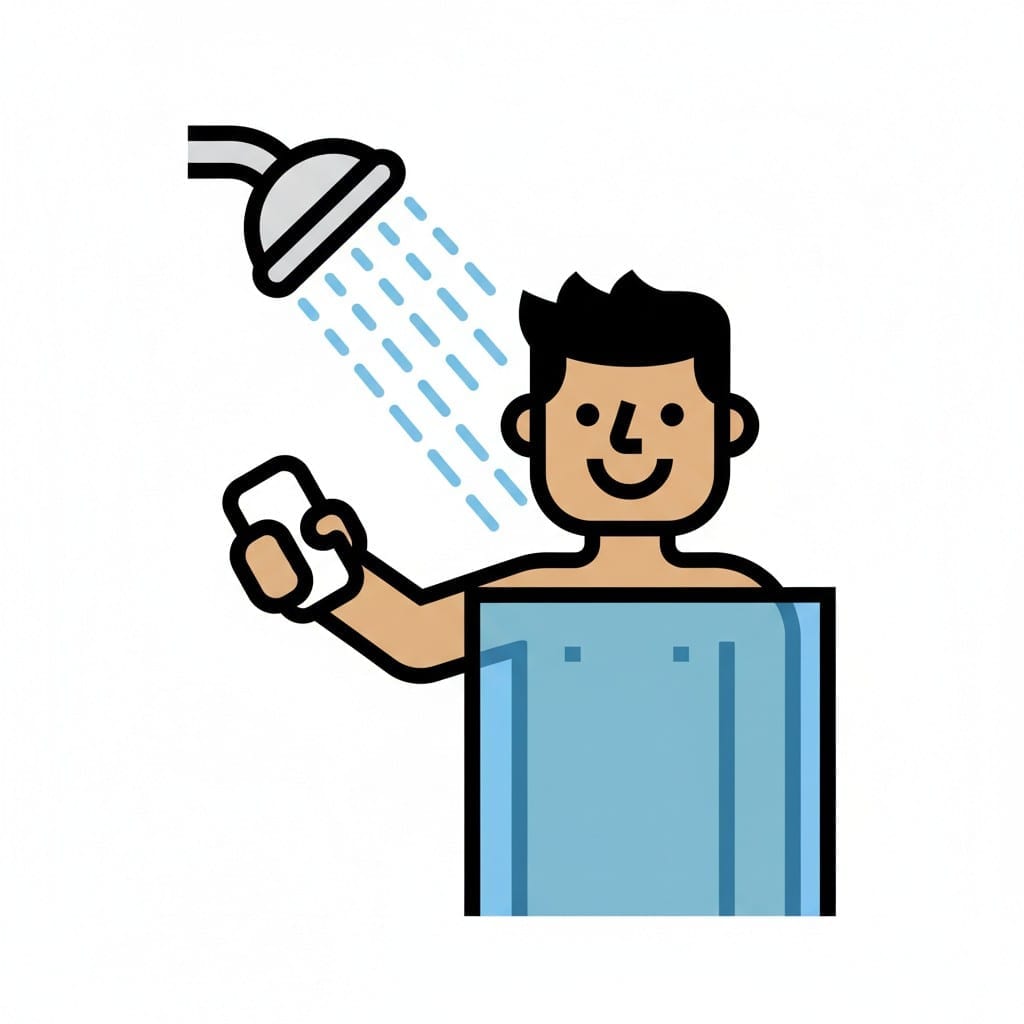 ♂
♂Shower with soap
A person in the shower holding a bar of soap, washing.
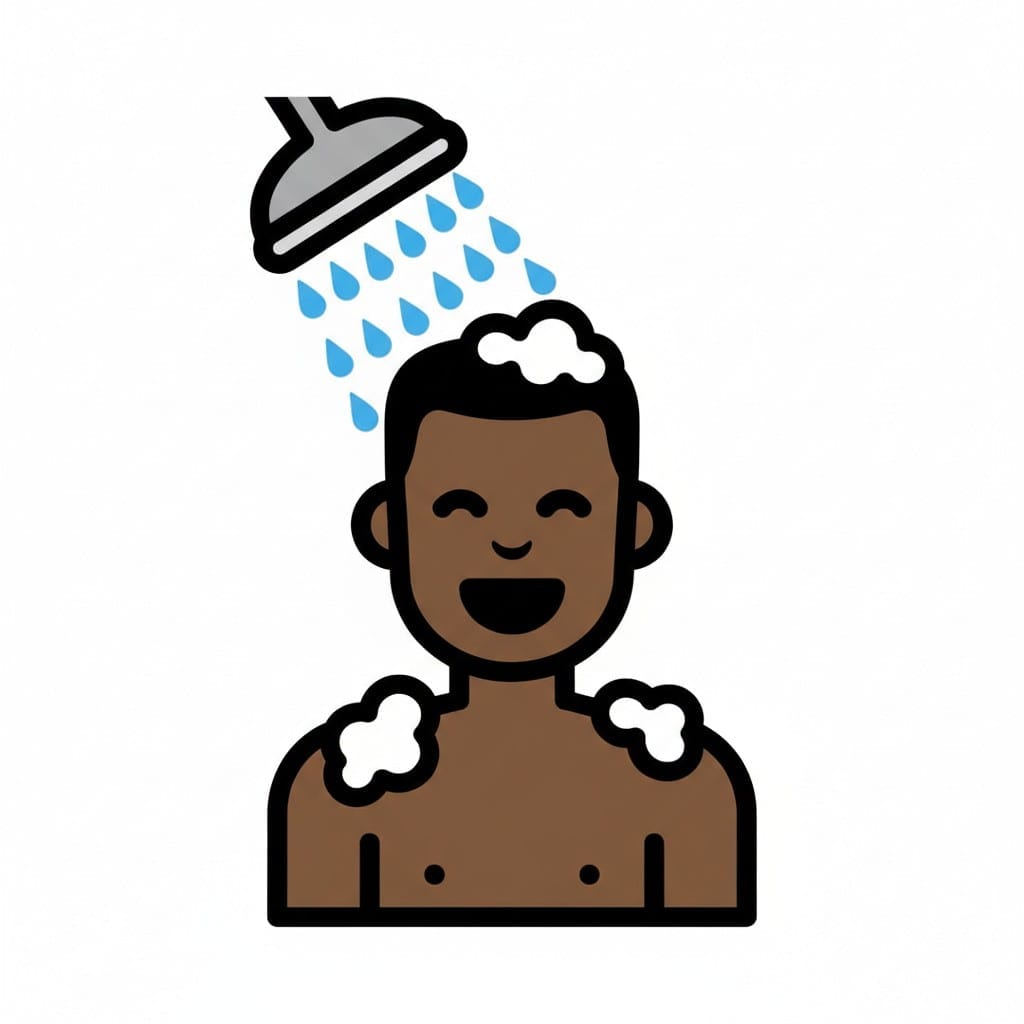 ♂
♂Shower
A man showering with soap on his head and shoulders.
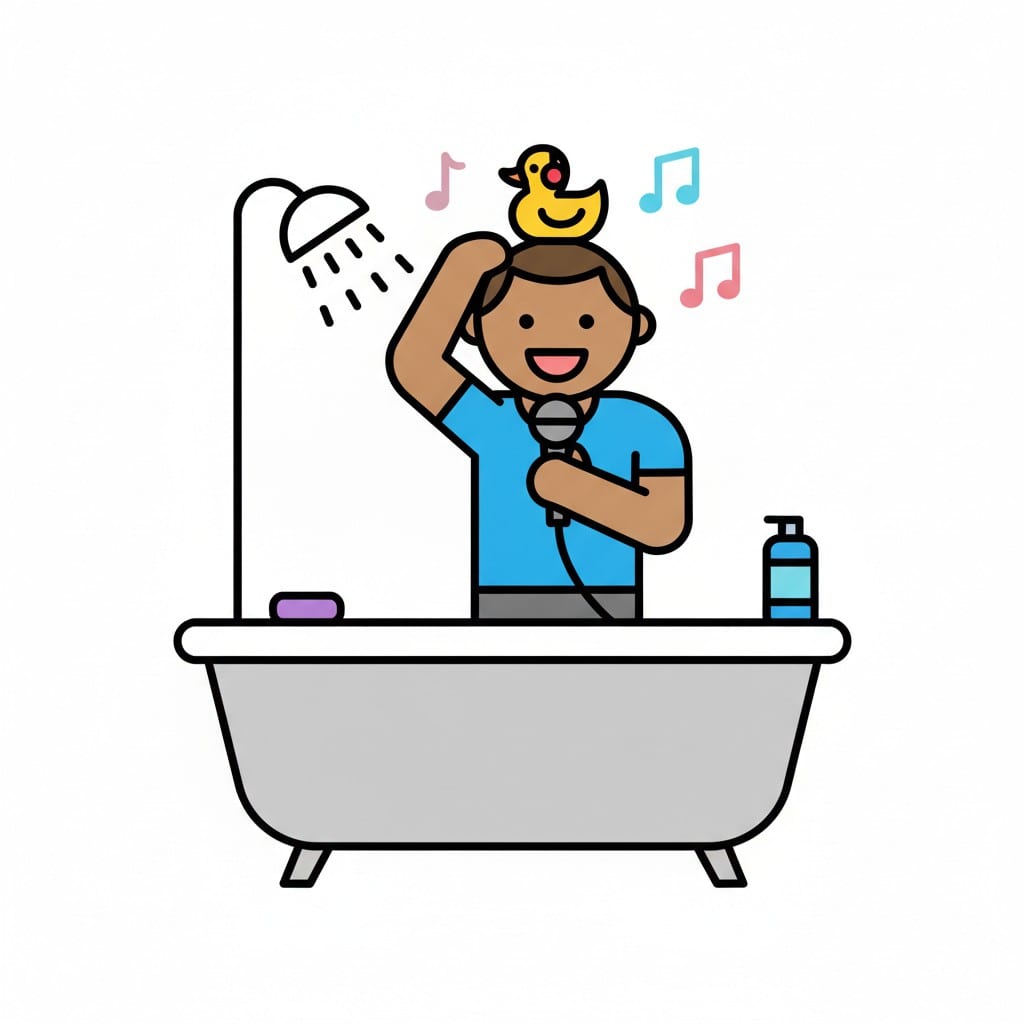 ♂
♂Singing in the shower
A boy sings in the shower with a rubber duck on his head.
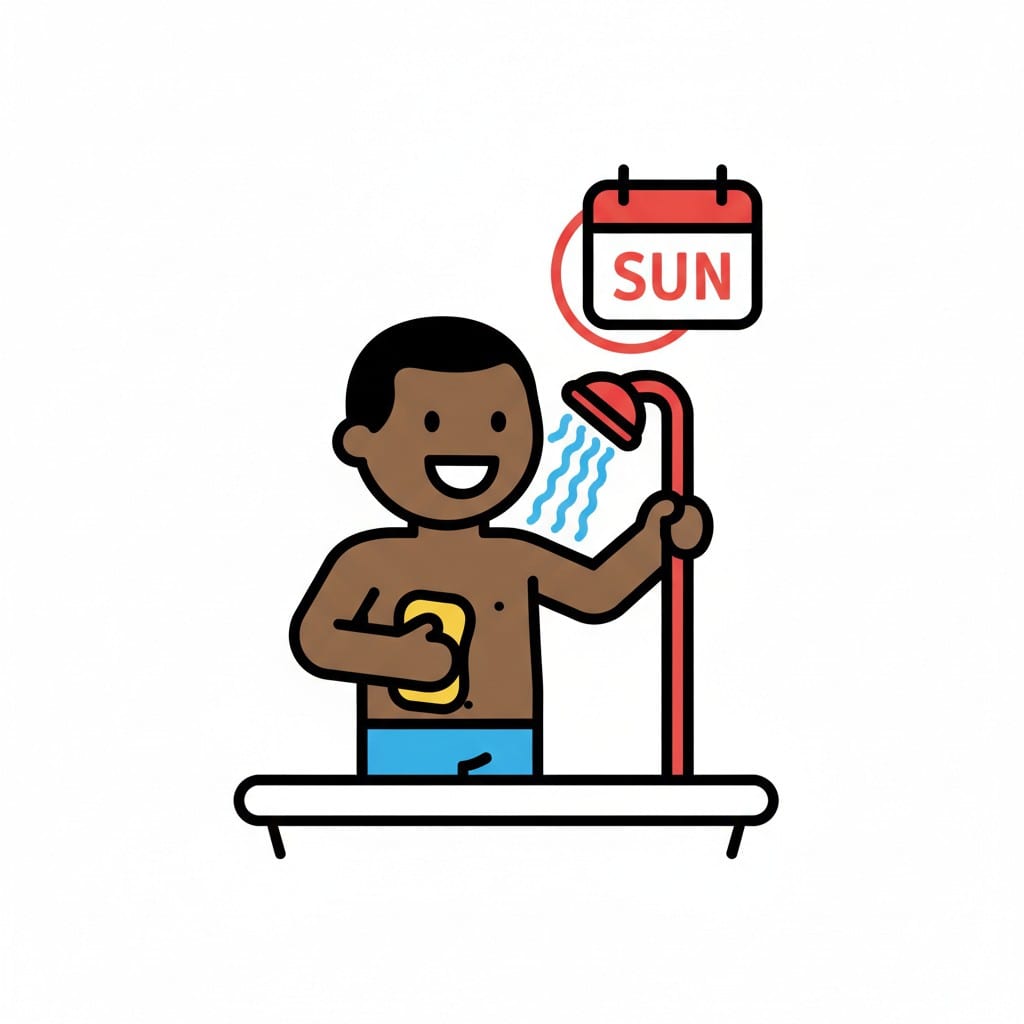 ♂
♂Sunday shower
A boy showers with a calendar showing Sunday above.
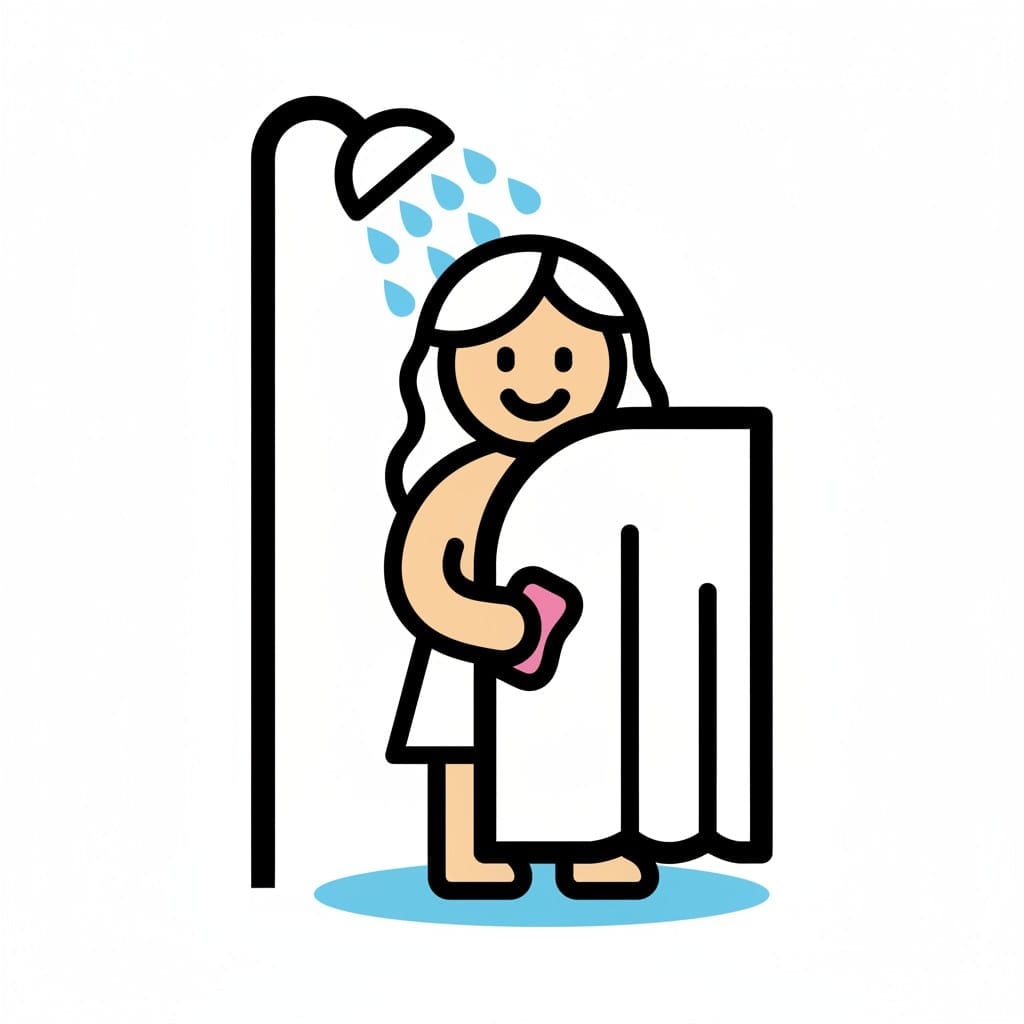 ♀
♀Shower
An illustration of a woman showering under a shower head with water droplets.
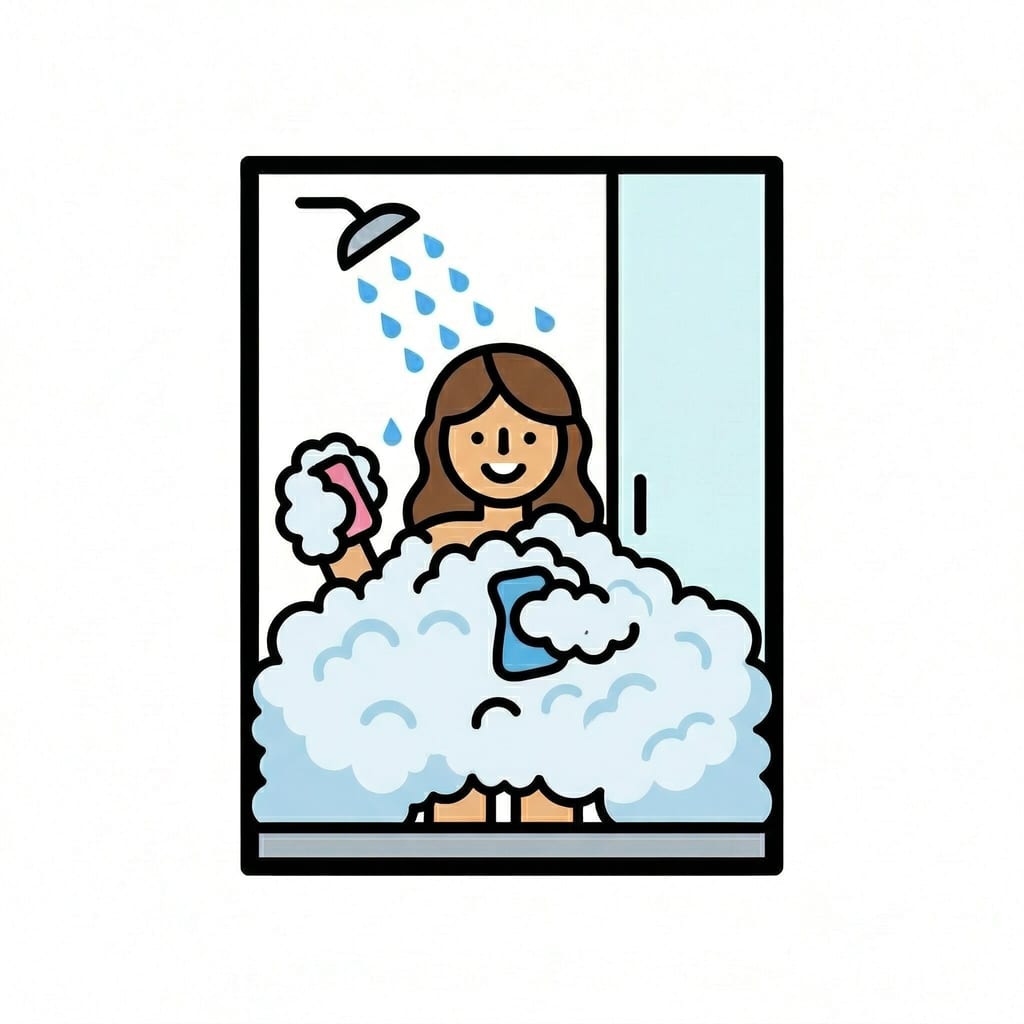 ♀
♀Shower
A person is taking a shower, covered in soap suds, holding a sponge.
 ♀
♀Shower
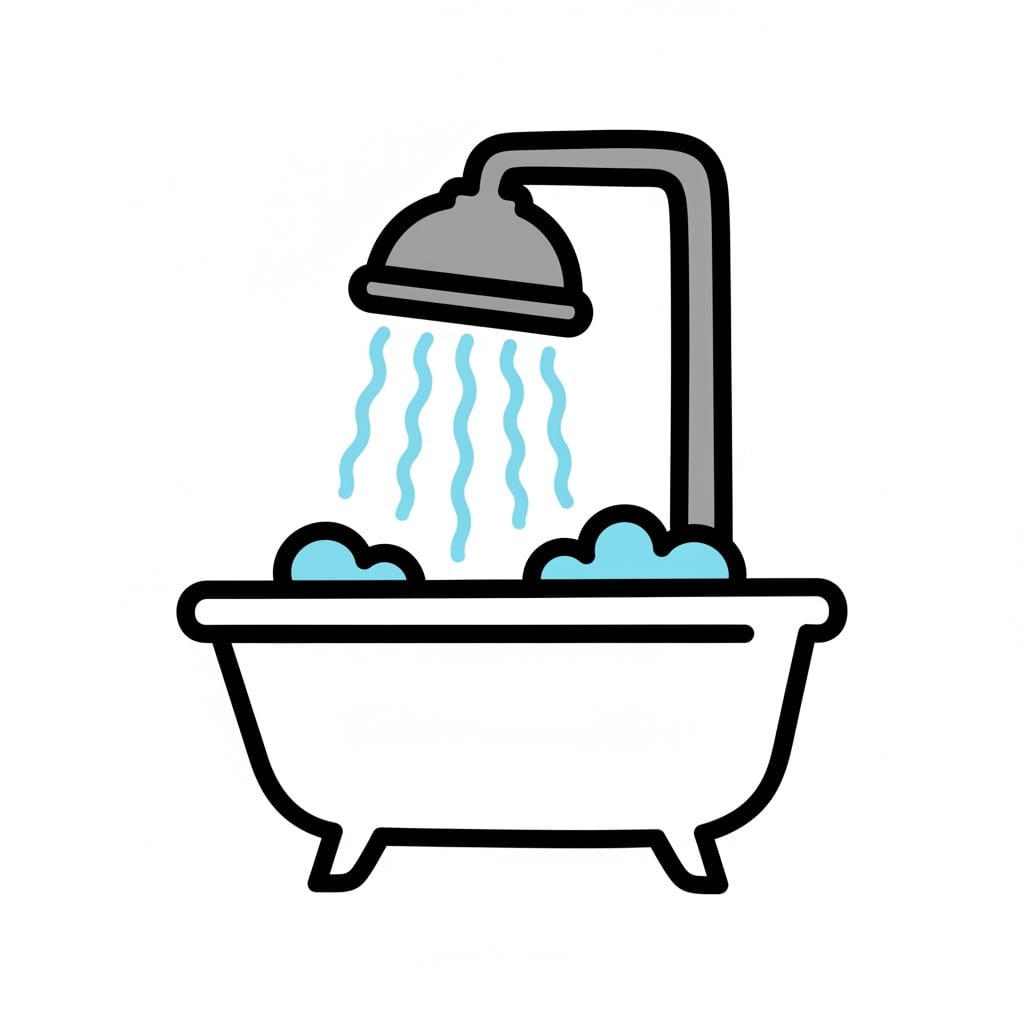
An illustration of a shower with water spraying into a bathtub that has bubbles.
♀Shower
Illustration of a person showering under a shower head.
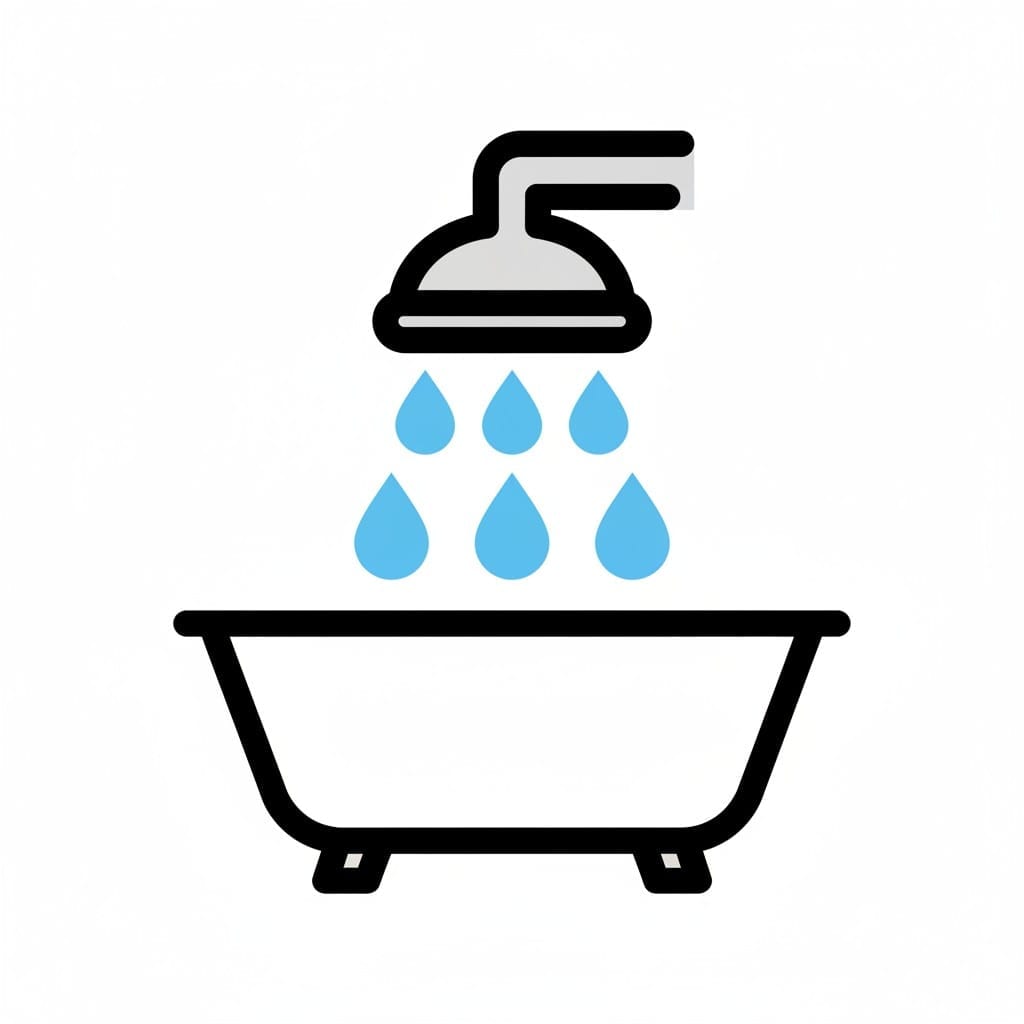
Shower and bathtub
A shower head sprays water into a bathtub.
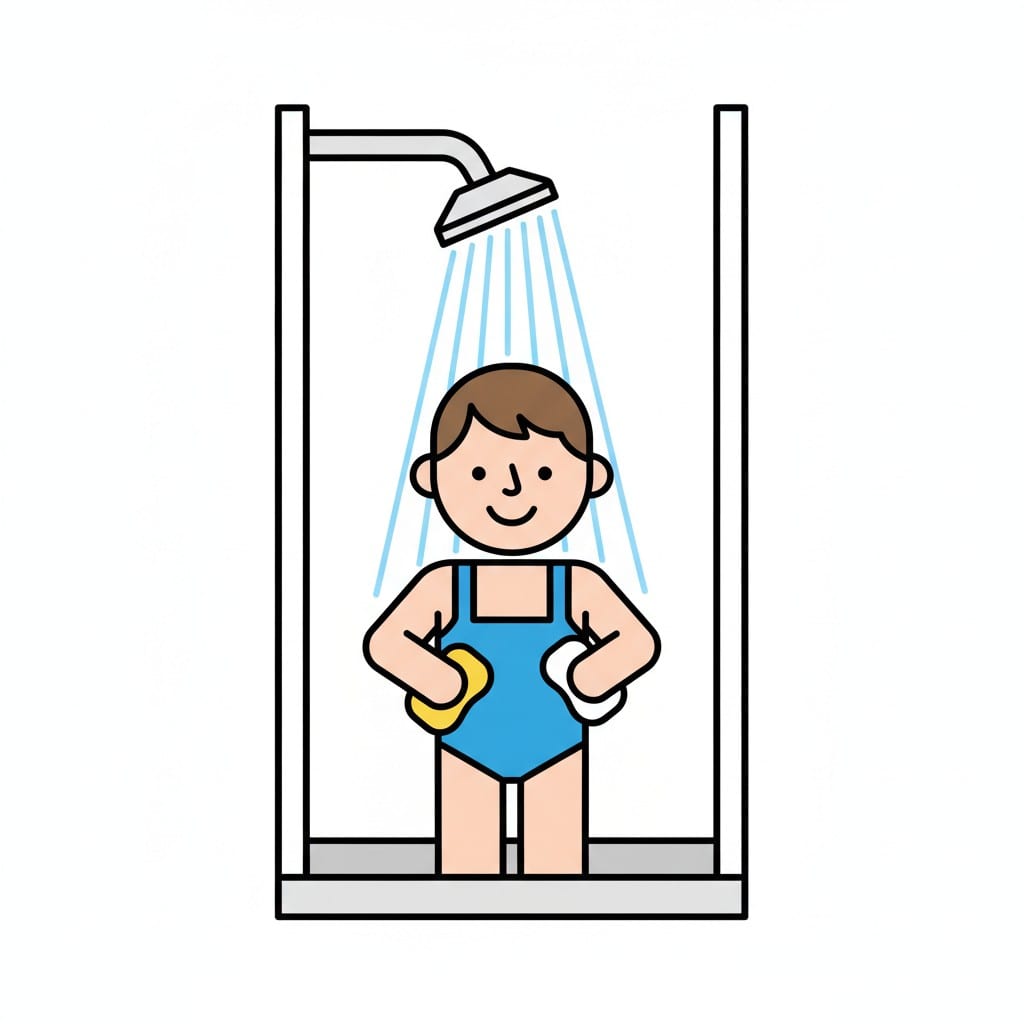 ⚲
⚲Child showering
A child washes with a sponge under the shower.
 ⚲
⚲Shower
A happy child stands under the shower spray with eyes closed.
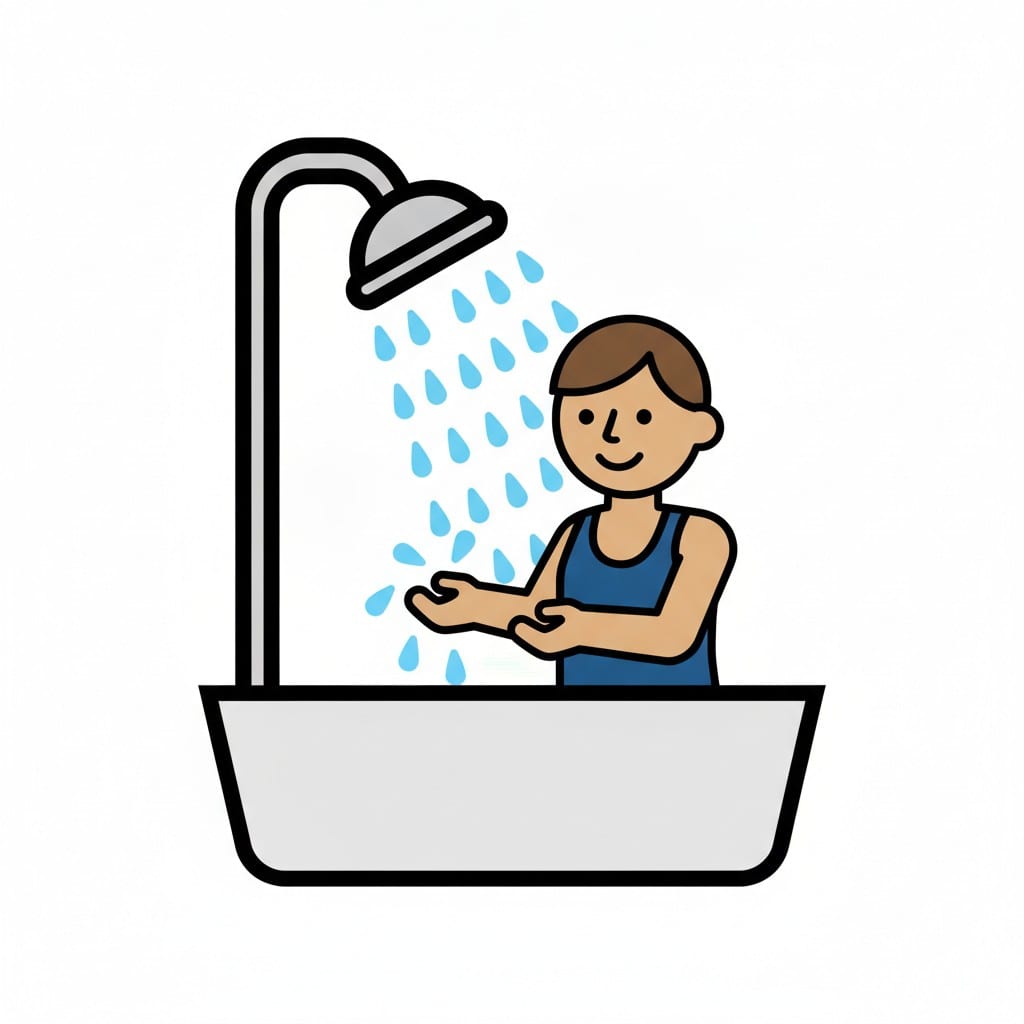 ⚲
⚲Showering in the bathtub
A child stands in the bathtub holding out their hands under the shower spray.
About this visual support
The shower is an intense room. Water hits the skin in a thousand small jabs, sound bounces off the tiles, the temperature can swing several degrees in a second, and all of it happens in a tight space with nowhere to step back. For many children it is not the hygiene part they resist but the arrival into the spray itself. Hesitating outside the curtain is a reasonable response to an unreasonable amount of information.
Visual support breaks the shower into smaller meetings. First the hand under the water to check the temperature, then the feet, then the back, then the hair. Short pauses between the steps give the skin time to catch up. When the child knows the shower is a chain of brief moments rather than one long wave, the heart rate drops before the clothes even come off.
A concrete tip: let the child hold the shower head and decide where the water lands first. Being the one who aims the spray is a different role from being the one who takes it. Activities with a strong sensory component tend to gain the most from this kind of agency. Routined can link the steps to a short timer so the shower has a visible end.
This image is part of these ready-made schedules
Use this image in a schedule
Build your own visual schedule with this image and download it as a print-ready PDF. Completely free.
More similar visual supports
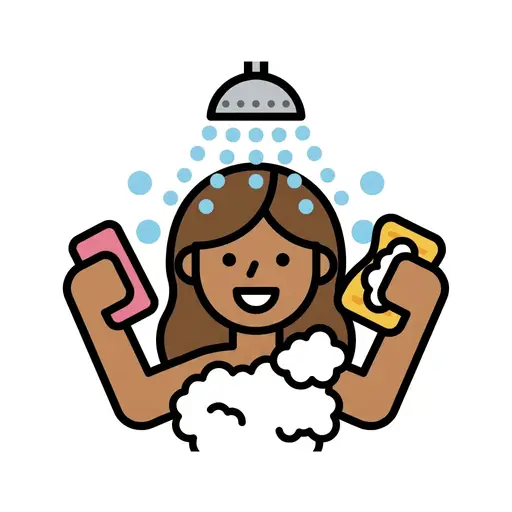
Wash
A woman taking a shower. She holds a bar of soap in one hand and a sponge with s...
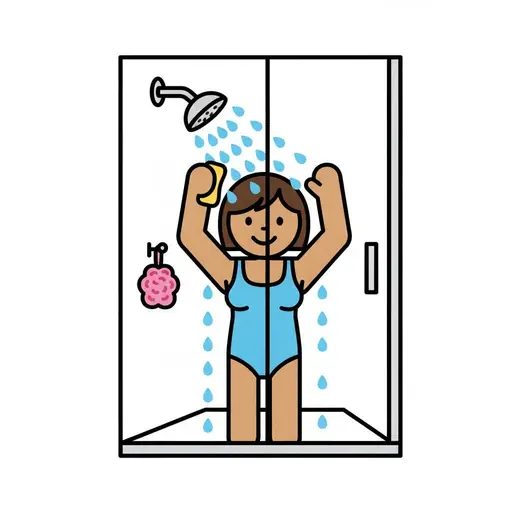
have a shower
A girl in a swimsuit stands in a shower cubicle with her arms raised and a spong...
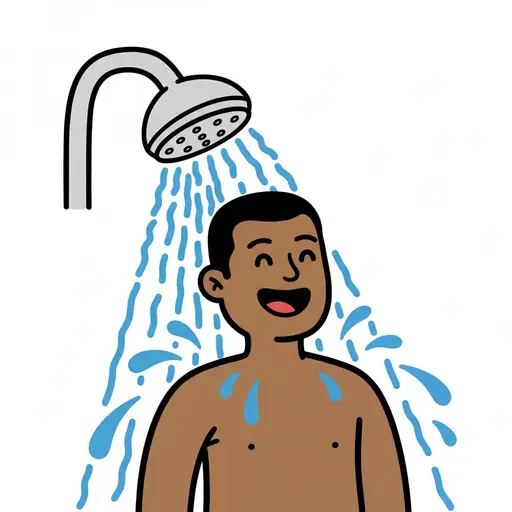
Shower child
An illustration of a boy with soap on his body, holding a sponge and a towel, st...
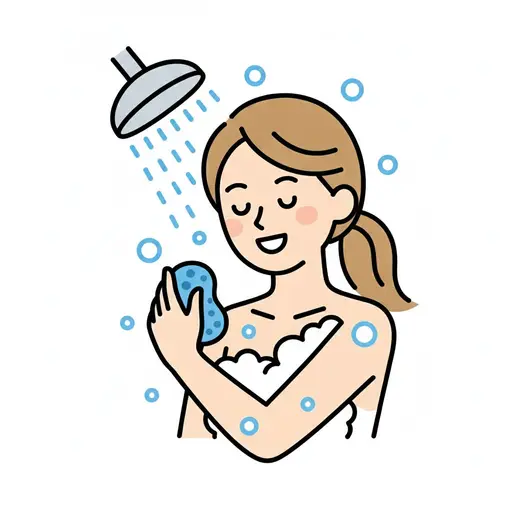
Wash body
Under a running shower head, a woman with a ponytail scrubs her shoulder with a ...
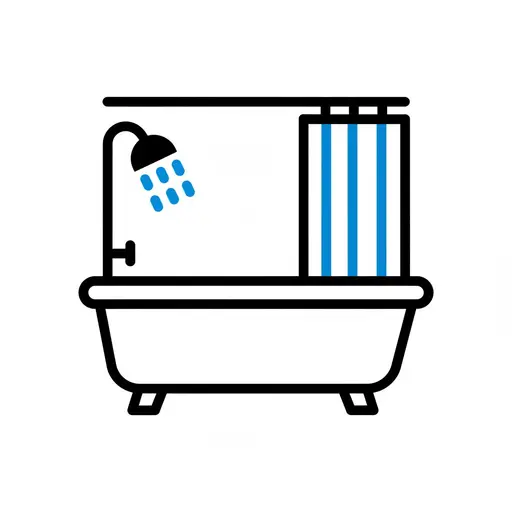
Bath or shower
An illustration of a bathtub with a shower head spraying water and a blue shower...
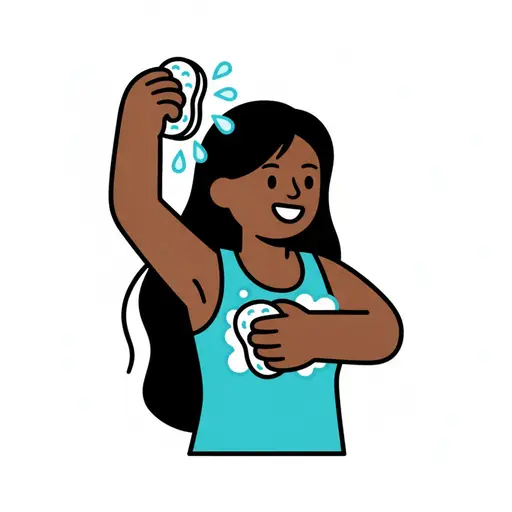
Wash your armpits
A girl holds up a dripping sponge and washes her armpit with soapy foam.
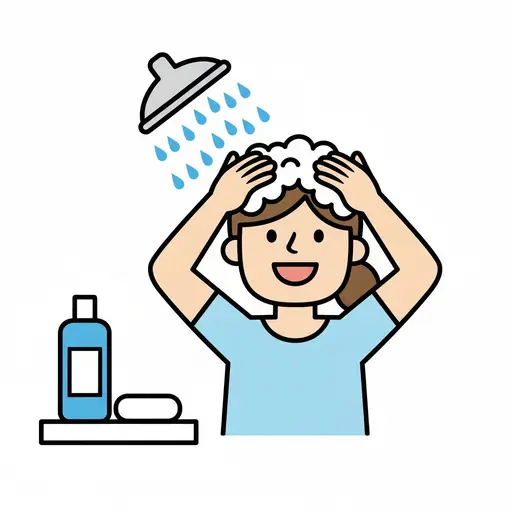
Wash hair
A girl shampoos her hair under the shower.
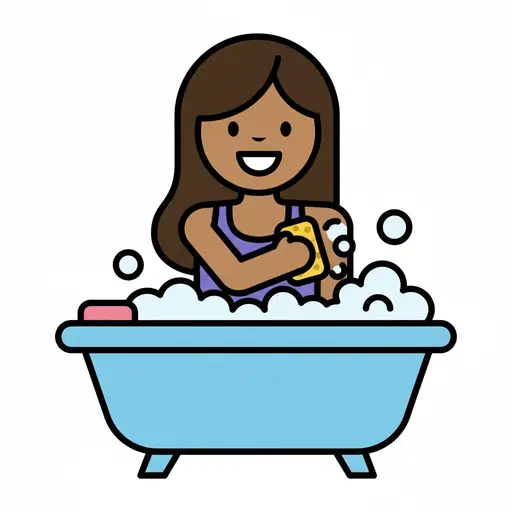
Bathe
A smiling girl sits in a bathtub full of foam and washes her arm with a yellow s...
This visual support in other languages
Take the visual supports with you
In Routined you build schedules from these pictures, add timers and voice instructions, and your child follows the day on their own.


* 14-day free trial, then $2.39 a month or $20.99 a year (US pricing). Cancel anytime.