Take off
Getting undressed is more of a motor sequence than it looks. Buttons, sleeves turning themselves inside out, clothes ending up in a pile. The steps below make the order easier to follow.
 ♂
♂Take off shirt
A man taking off a blue shirt.
About this visual support
From the outside it looks simple, but undressing is full of small motor decisions: which button first, which arm out of the sleeve, how to keep the shirt from getting stuck around the head. With several layers, it also becomes a sequence where one wrong move at the start makes the next step harder.
The cards make that order visible outside the body. The child can check the next step without asking, and the adult does not need to hover and steer each movement. It also creates natural pauses between garments, so gloves and a hat do not get left forgotten inside a jacket sleeve.
A practical tip specifically for taking clothes off: decide on a spot where the garment goes the moment it leaves the body — hook, basket, drawer — and let the last picture in the sequence show that spot. It cuts down on searching the next morning and gives the movement a clear ending. To build a longer changing routine, the cards can be sequenced inside Routined with a timer for how long the change usually takes.
Use this image in a schedule
Build your own visual schedule with this image and download it as a print-ready PDF. Completely free.
More similar visual supports

Underpants
A pair of light blue boxer briefs.

Undress
A girl pulls off a dark blue hoodie.
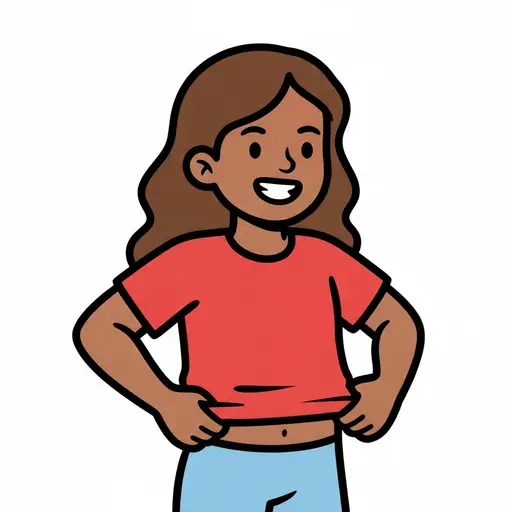
Put on clothes
A girl in a red t-shirt and light blue trousers tugs the hem straight and smiles...
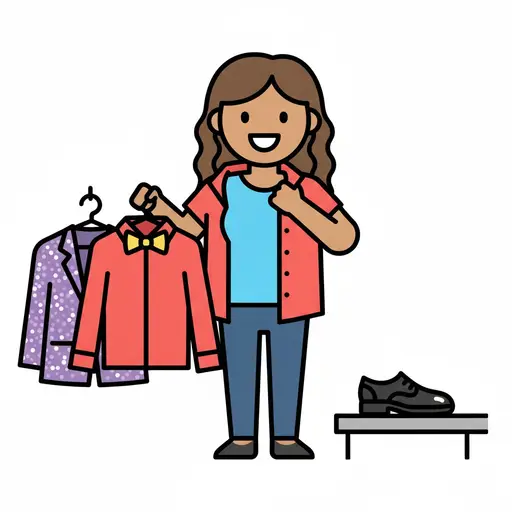
Put on clean clothes
A woman pulls on a red jacket with smart clothes and shoes nearby.

Get dressed and brush hair
A person brushes their curly hair with a purple hairbrush.

Apply deodorant
A hand applies roll-on deodorant with a perfume bottle nearby.

Hygiene
A girl washes her hands with lather under a tap with a towel hanging nearby.

Skin care
A girl squeezes skin lotion into her hand, with a sun and a leaf around her.
This visual support in other languages
Take the visual supports with you
In Routined you build schedules from these pictures, add timers and voice instructions, and your child follows the day on their own.


* 14-day free trial, then $2.39 a month or $20.99 a year (US pricing). Cancel anytime.