Talk about feelings
Before a child can say “I’m sad,” they first have to notice the feeling, find a word for it and dare to say it aloud. The visual support below walks through each of those steps.
 ♂
♂Talk about feelings
A boy points to a speech bubble containing icons for a heart, a tear drop, and a sad smiley, representing talking about feelings.
About this visual support
Talking about feelings is really three jobs at once: noticing what is moving inside the body, putting a label on it and then sharing it with someone. Many children get stuck at step one – the stomach feels tight, but no word has arrived yet.
Pictures give them something to point at when language runs out. When an angry face sits next to a slightly sad one, it becomes easier to compare and choose than to search empty air. A concrete tip: start with two cards, not six. Place them in front of the child and ask which one fits best right now. Add one new card a week as their vocabulary grows.
The listener has a job too – slowing down. Confirm what the child points to before asking why. That turns the conversation into a soft landing instead of an interview. In the Routined app you can build a small, personal set of feeling cards that travels with you from the kitchen table to the car.
This image is part of these ready-made schedules
Use this image in a schedule
Build your own visual schedule with this image and download it as a print-ready PDF. Completely free.
More similar visual supports

How are you today?
One hand on his chest and the other open, a man in a blue t-shirt and grey trous...

How are you?
A girl smiles and makes a questioning gesture with her hand, with a speech bubbl...
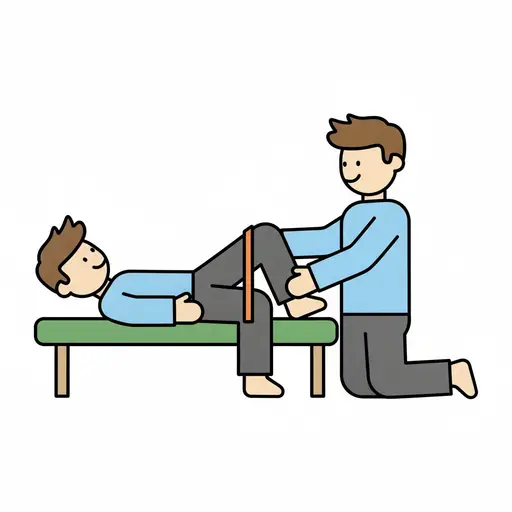
Therapy
A physiotherapist bends the leg of a person lying on a treatment bench.

Worry
A boy with a worried expression resting his hand on his chin, with swirly though...

Child psychiatry
A child with a thought bubble showing a brain and a magnifying glass, with a sma...

Take medicine/vitamin
A smiling person holds pills and a glass of water, about to take medicine or a v...
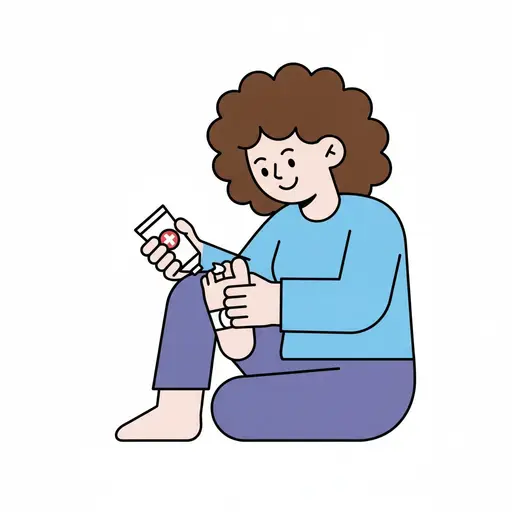
Treat a wound
A woman puts a plaster on her toe.
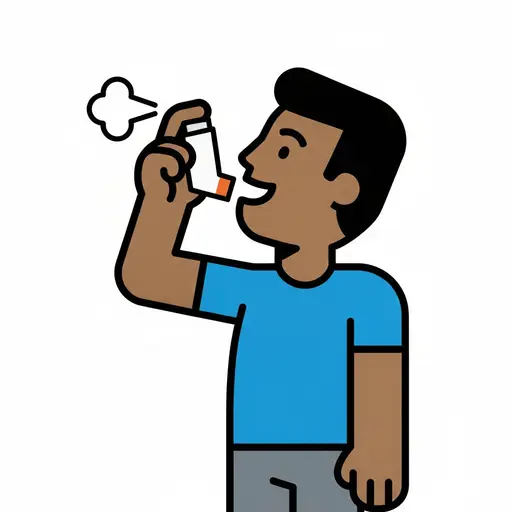
Inhale asthma medicine
A man takes a puff from an asthma inhaler.
This visual support in other languages
Take the visual supports with you
In Routined you build schedules from these pictures, add timers and voice instructions, and your child follows the day on their own.


* 14-day free trial, then $2.39 a month or $20.99 a year (US pricing). Cancel anytime.