Use sunscreen
The sticky layer on warm skin, the lingering smell and adult hands moving over the face without a clear ending are usually the hardest parts of sunscreen. The visual support below gives the routine a visible start and a visible stop.
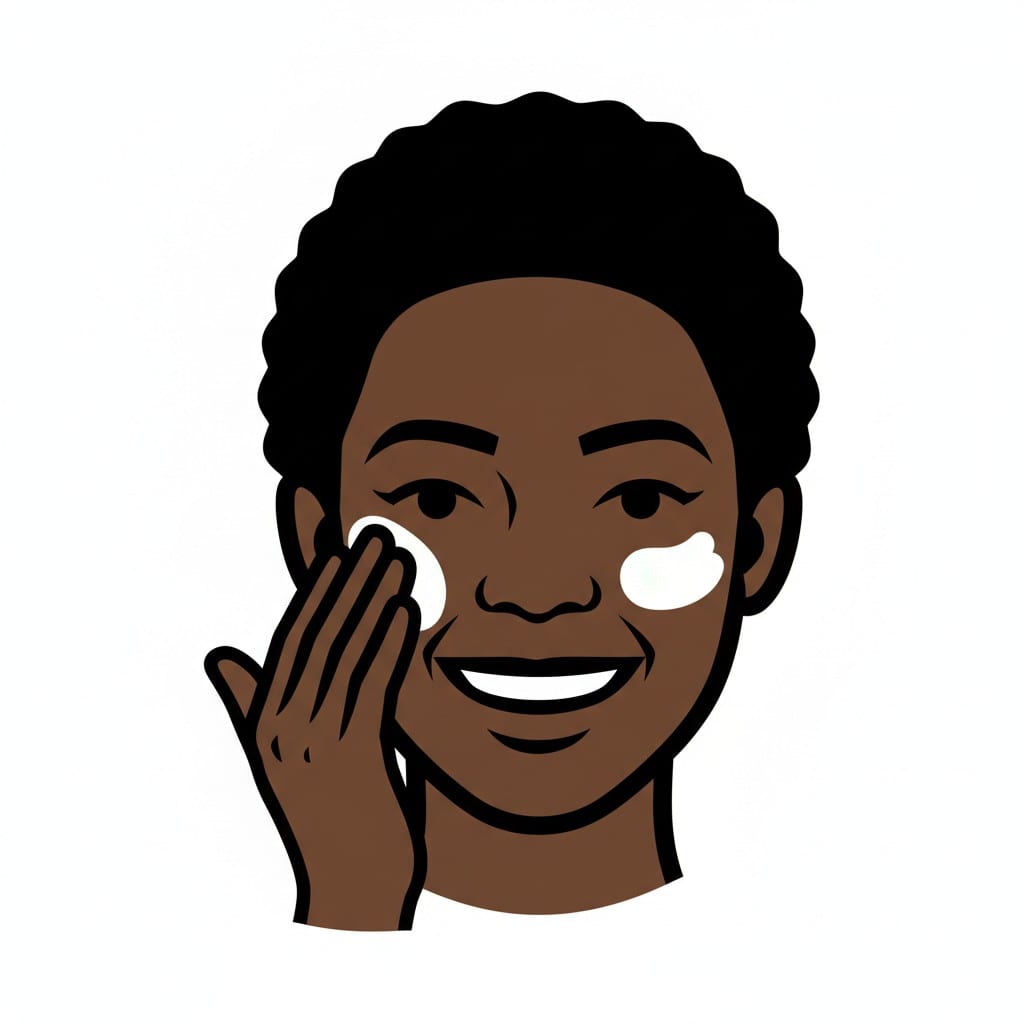 ♀
♀Sunscreen on face
A person is applying sunscreen to their face.
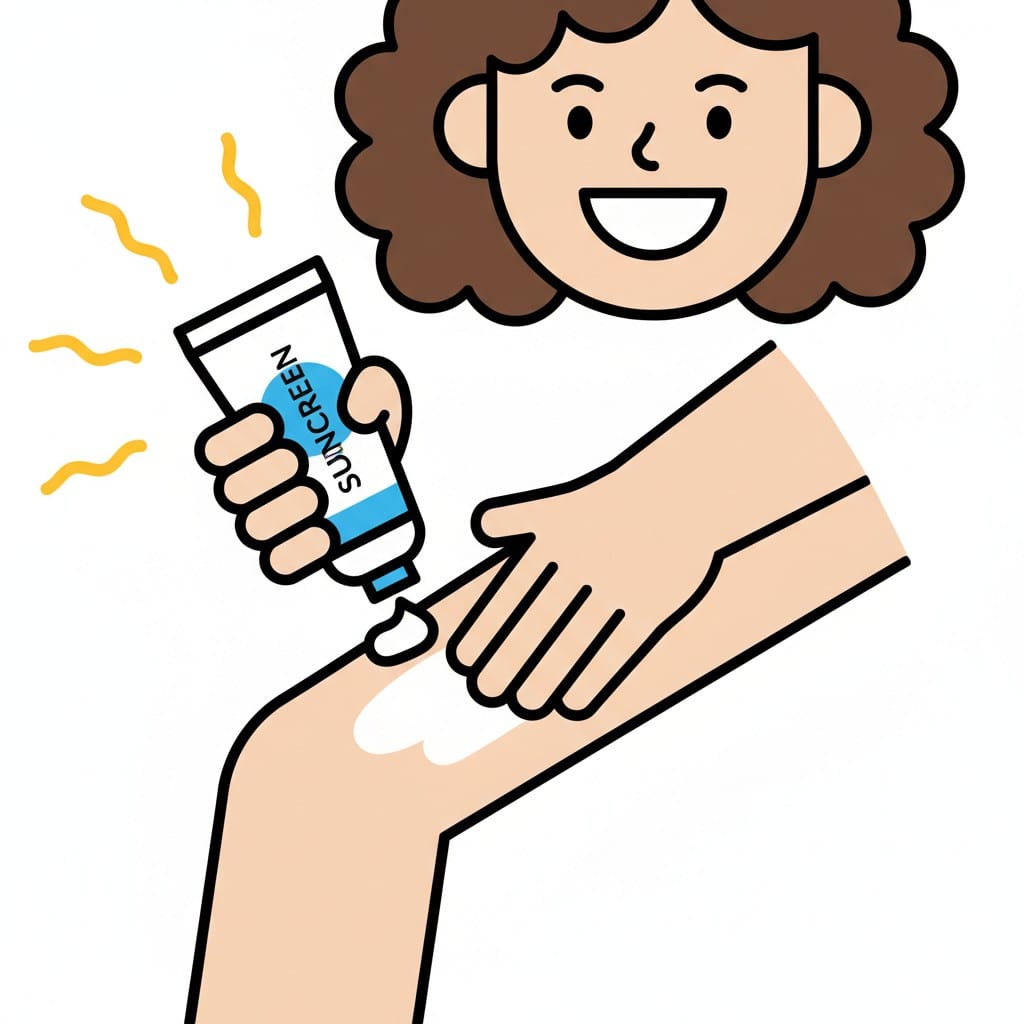 ♀
♀Sunscreen on leg
A person is applying sunscreen to their leg.
About this visual support
For many children, sunscreen is a sensory event before it is a health event. The cream is cold at first and quickly turns sticky, the smell is odd, and hands moving across forehead, nose and ears feel like someone else is steering the body for a stretch. Hearing ”just stand still” at that point usually makes it worse, because the child already feels trapped.
When the cream-up is shown as visual support, every patch of skin gets its own card: face, ears, neck, shoulders, arms, legs, feet. The child knows the face comes only once, that the hand lifts away after each area, and that the routine actually ends. That alone is often enough to let a stiffened body soften through the shoulders and let your hands finish.
A practical tip: have your child hold the card for the area you are about to do, and swap cards when you move on. That makes them a co-pilot rather than an object. The full skin-care routine can also be saved in Routined so it travels with you and feels familiar each time.
Use this image in a schedule
Build your own visual schedule with this image and download it as a print-ready PDF. Completely free.
More similar visual supports

Apply sunscreen
A girl applies sunscreen to her cheek with her hand, holding a blob of sunscreen...

Put on sunscreen
An illustration of a woman putting sunscreen on her arm.

Rub it in
A person rubs a blob of lotion into the forearm.
Apply body cream
A woman holds a pump bottle and rubs lotion onto her stomach.
Put on lotion
One hand holds a pump bottle while the other rubs the cream into the skin of the...
Acne spray
A blue spray bottle spraying towards a face with red spots.

Cap
A red and blue baseball cap with the letter A on the front.

Apply cream
A smiling woman holds a tube and rubs cream onto her arm.
This visual support in other languages
Take the visual supports with you
In Routined you build schedules from these pictures, add timers and voice instructions, and your child follows the day on their own.


* 14-day free trial, then $2.39 a month or $20.99 a year (US pricing). Cancel anytime.