Wash hands
Thirty seconds at the sink hide four steps that easily blur into one: the right temperature, enough soap, scrubbing long enough, drying properly. The visual support below separates them so the child can see what comes next.
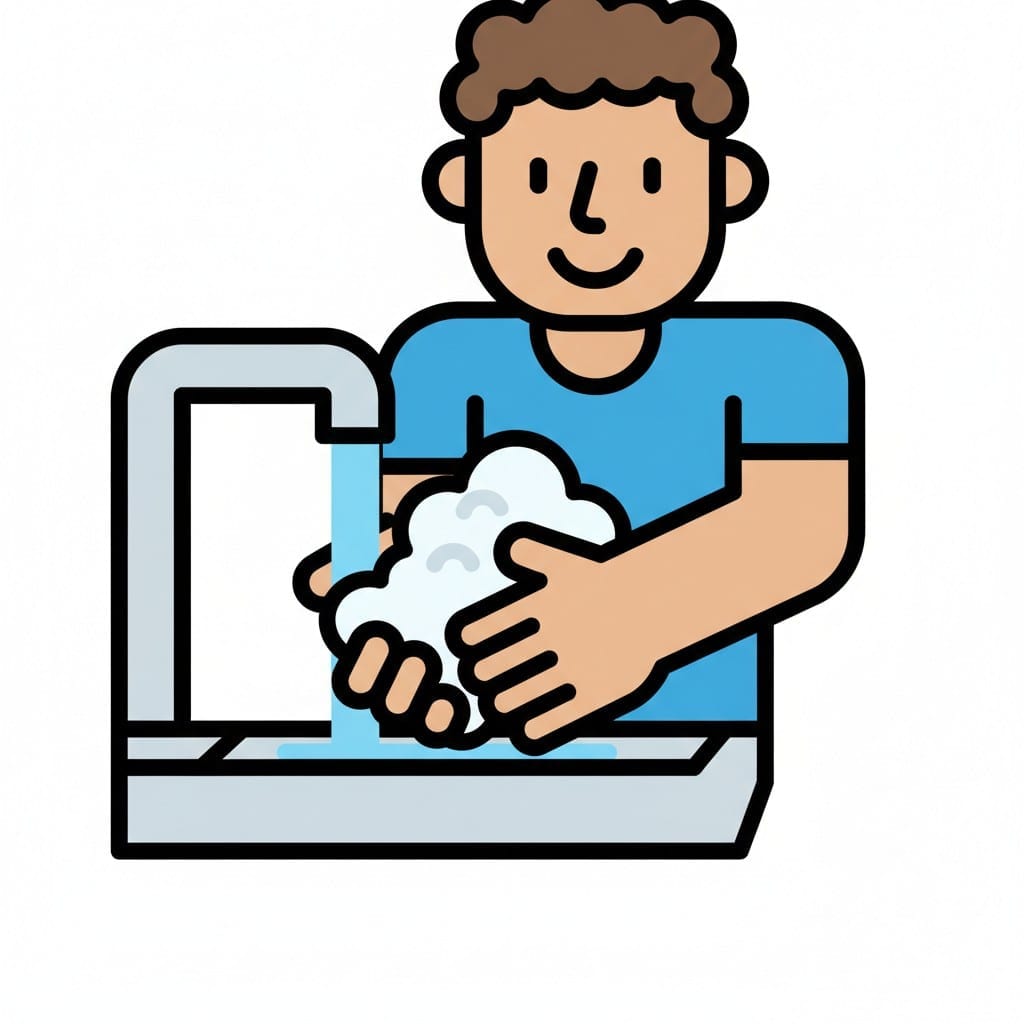 ♂
♂Washing hands in sink
A person is washing hands with soap under running water in a sink.
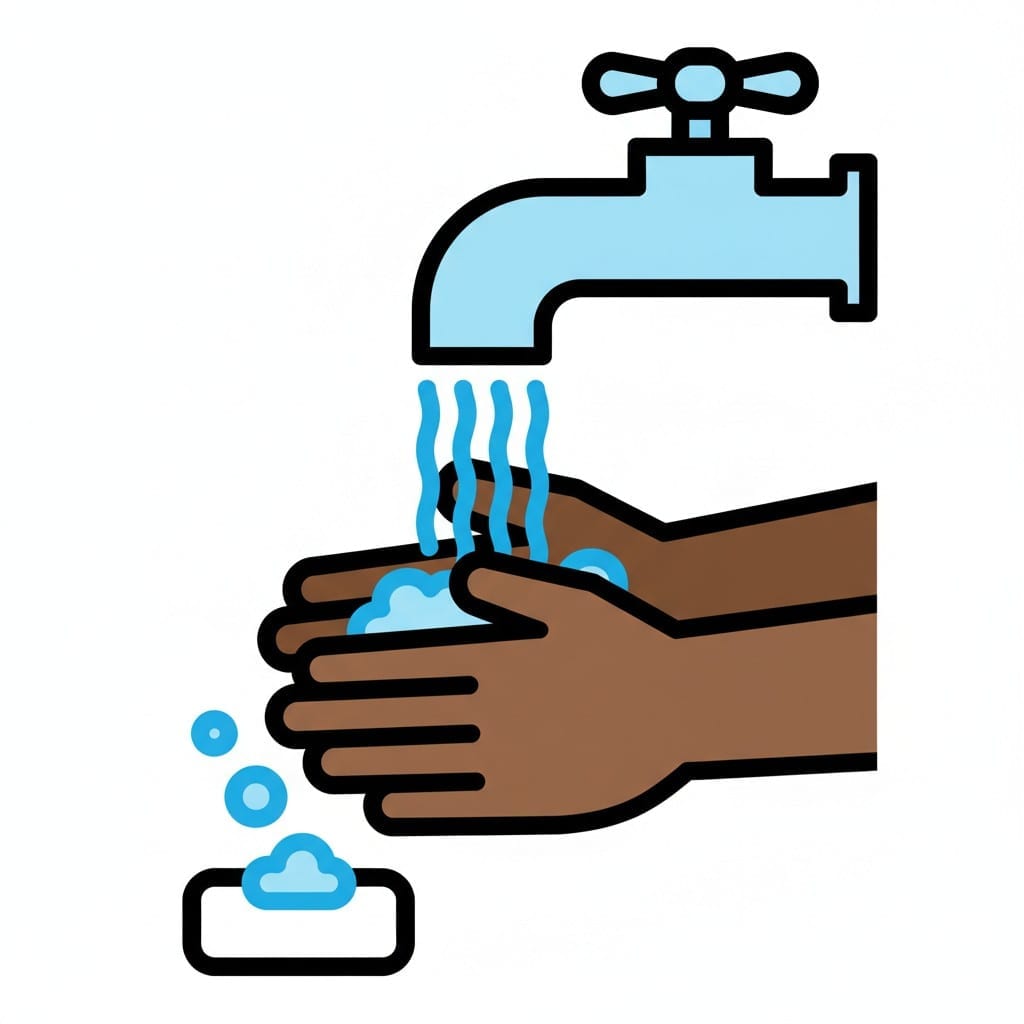 ♂
♂Hands under faucet with soap
A pair of hands under running water from a faucet, with soap foam and water drops.
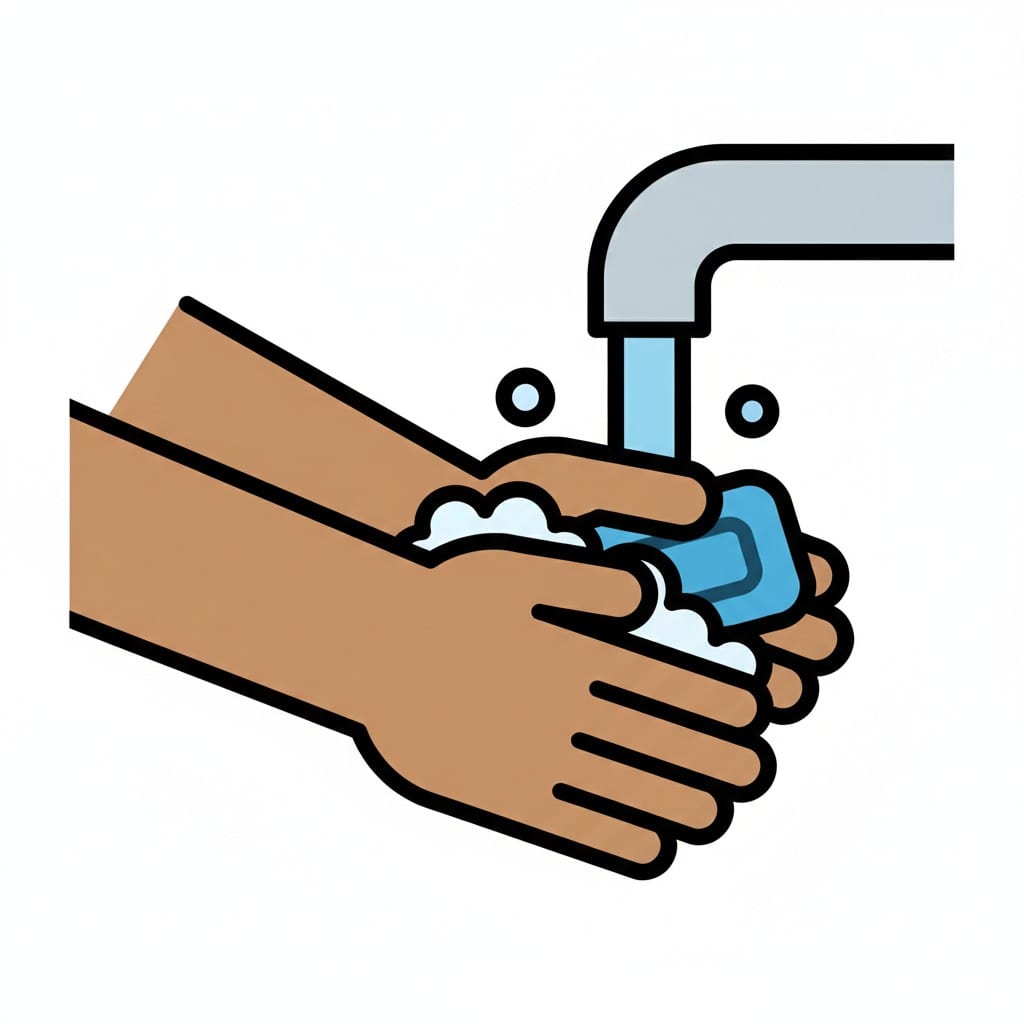 ♂
♂Wash hands
Illustration of hands washing with soap under running water from a tap.
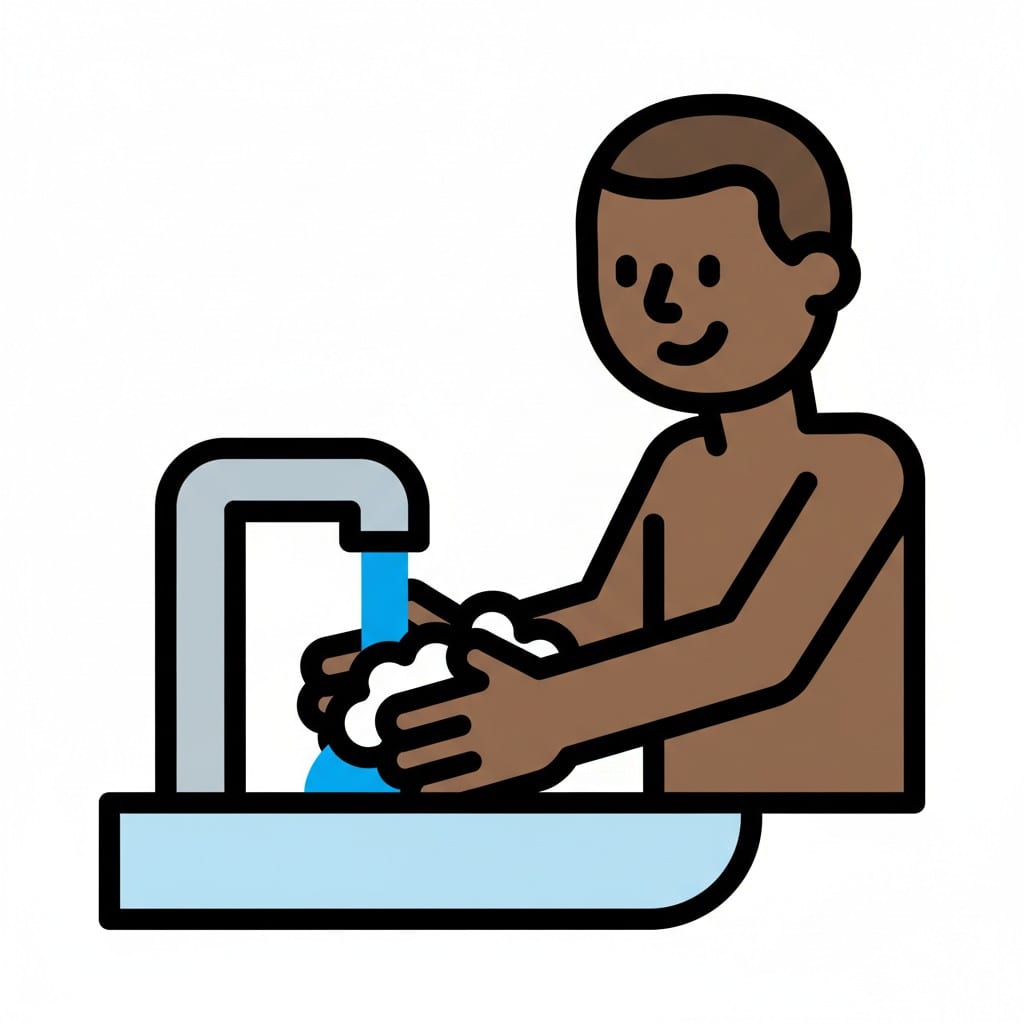 ♂
♂Wash hands
A boy washes his hands at the sink with soap and running water.
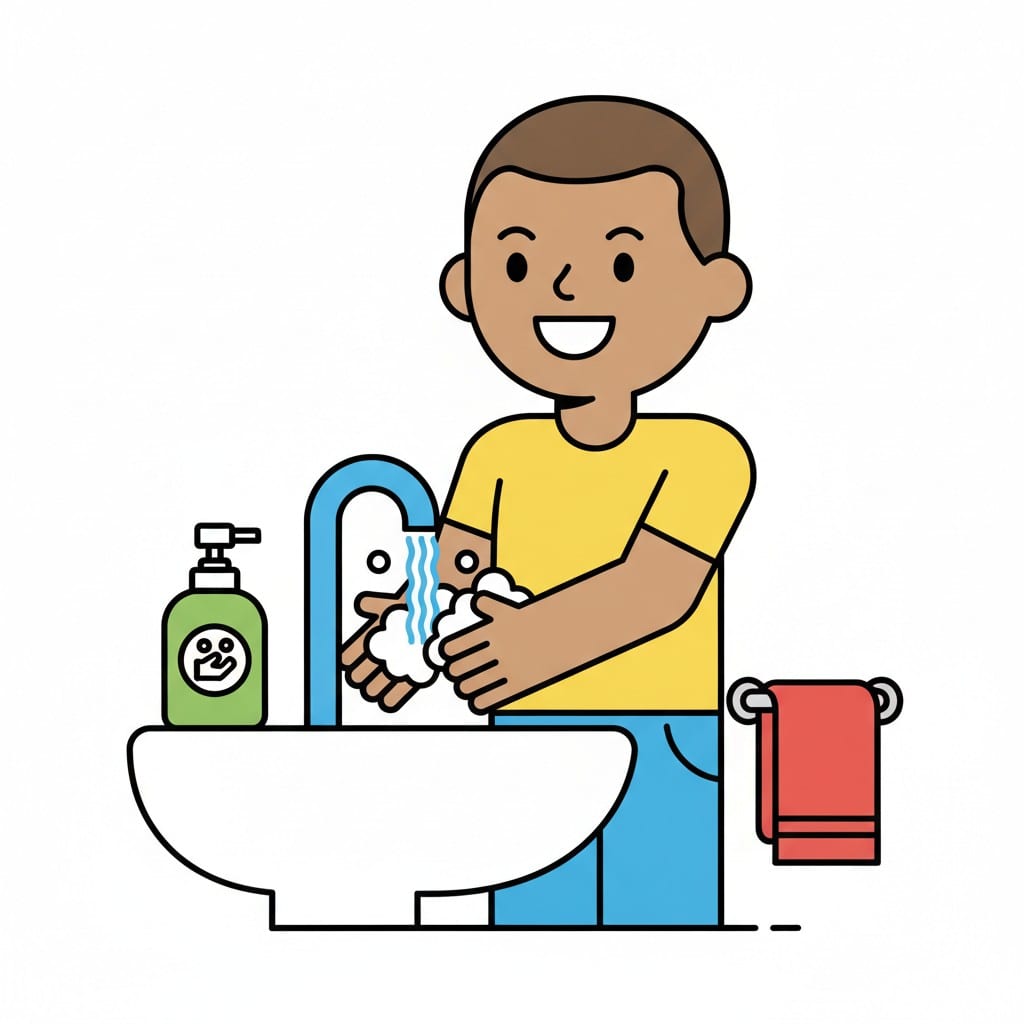 ♂
♂Hand washing
A boy washes his hands with soap at the sink.
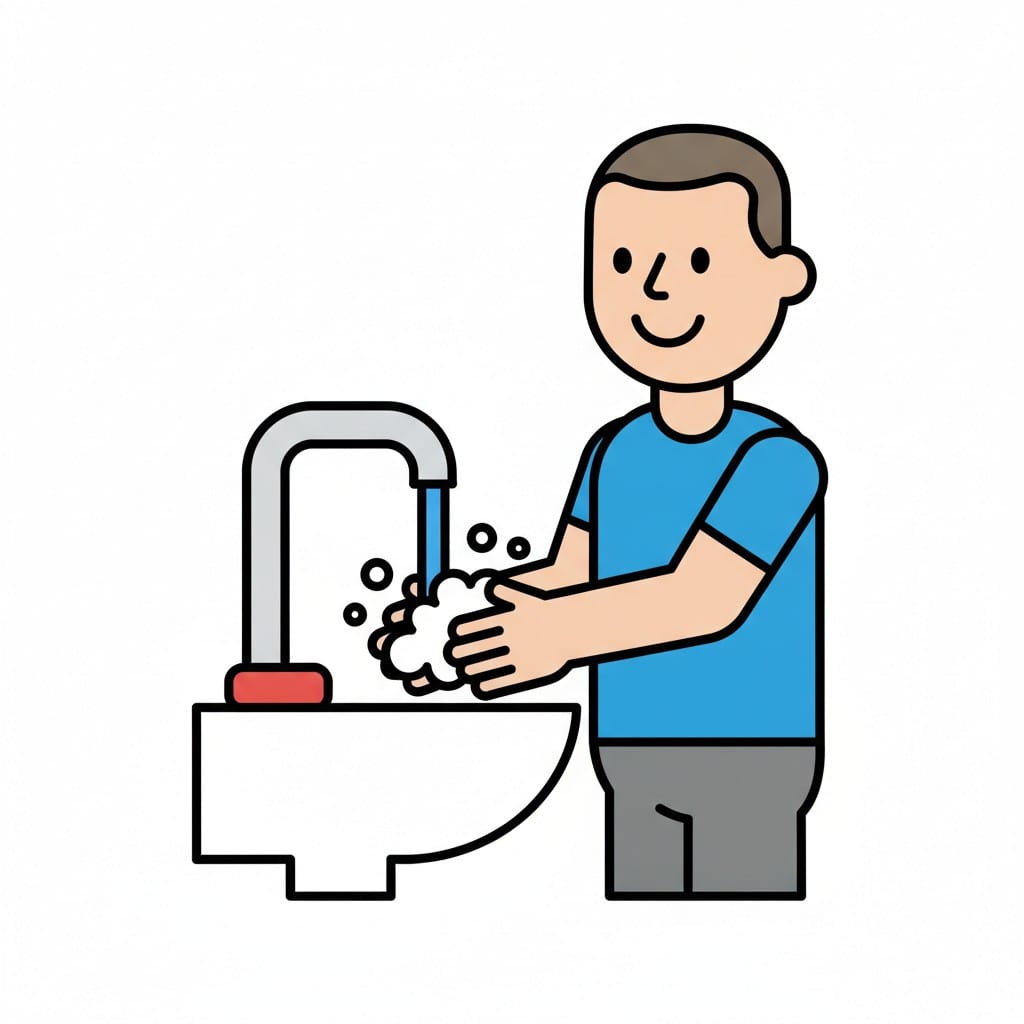 ♂
♂Lathering hands
A man lathers his hands under the tap.
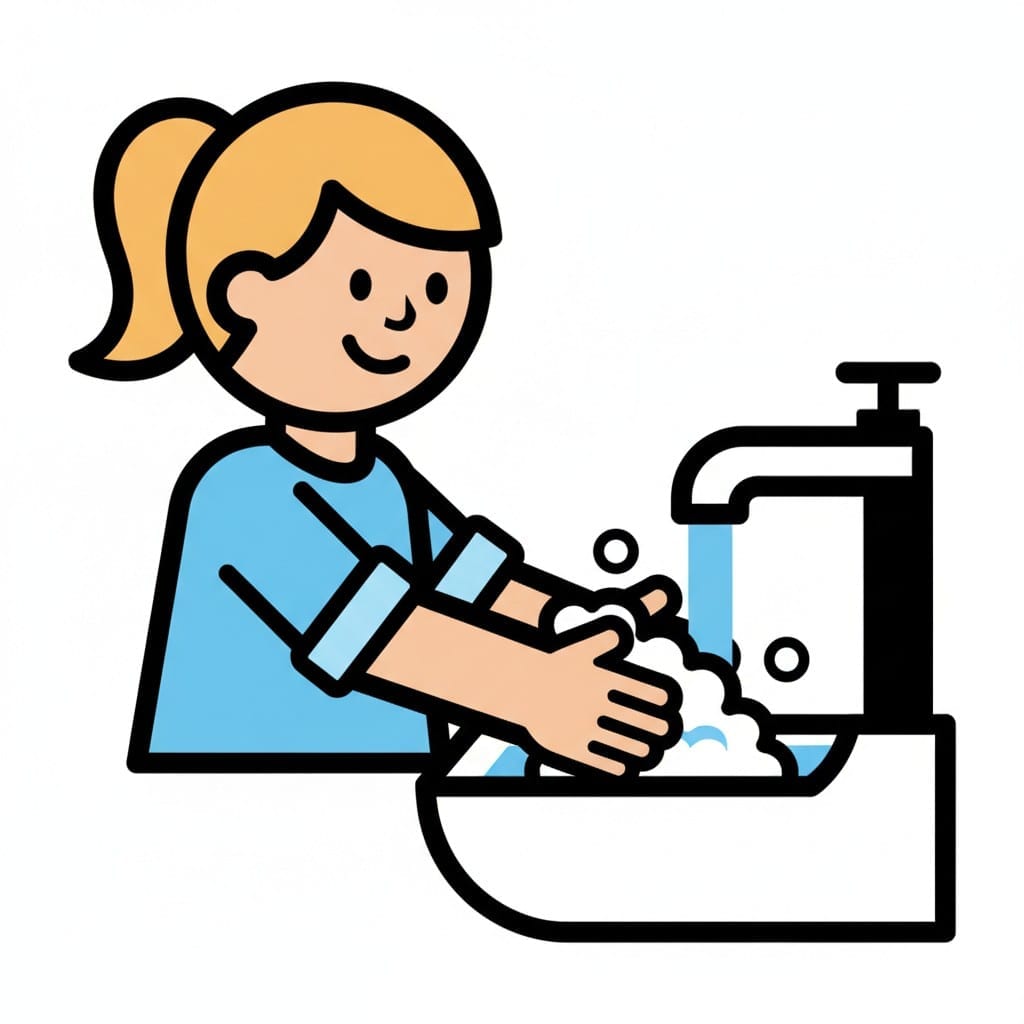 ♀
♀Washing hands in sink
A person is washing hands with soap under running water in a sink.
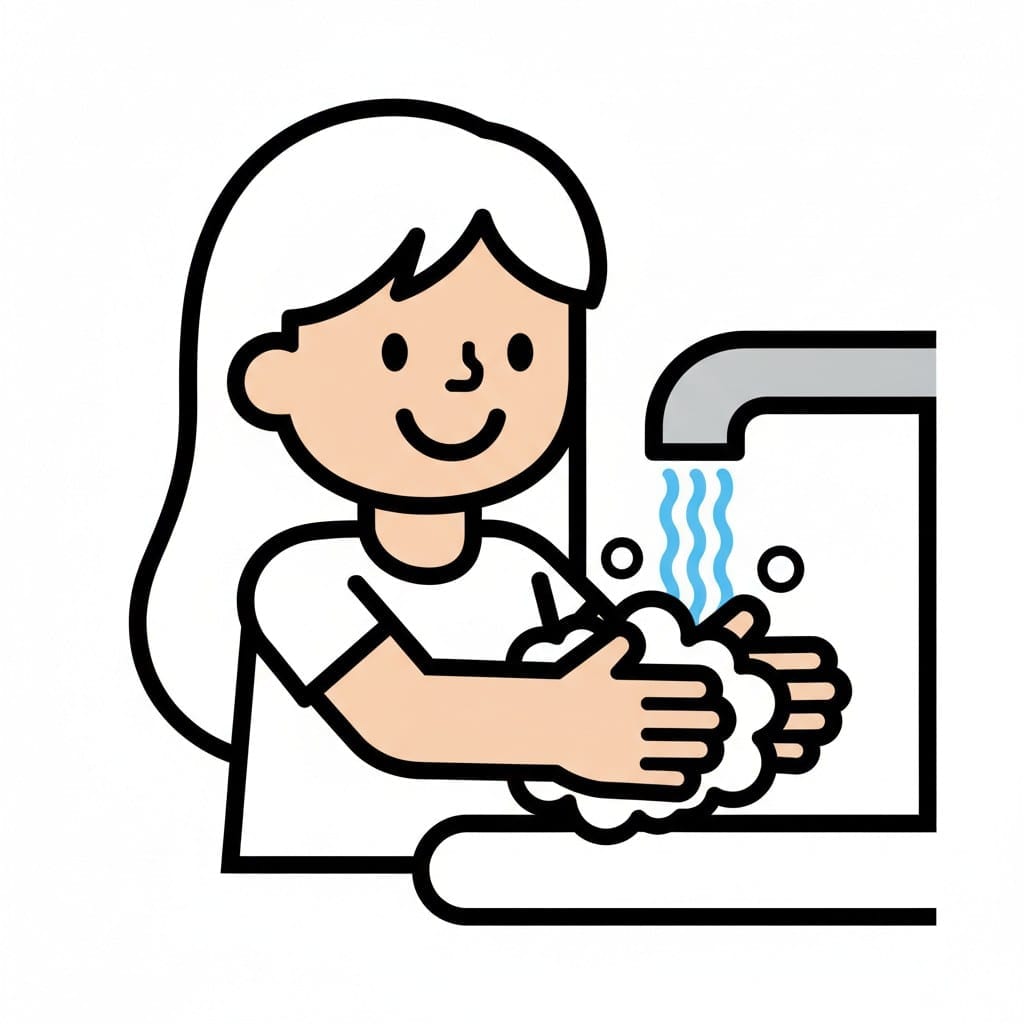 ♀
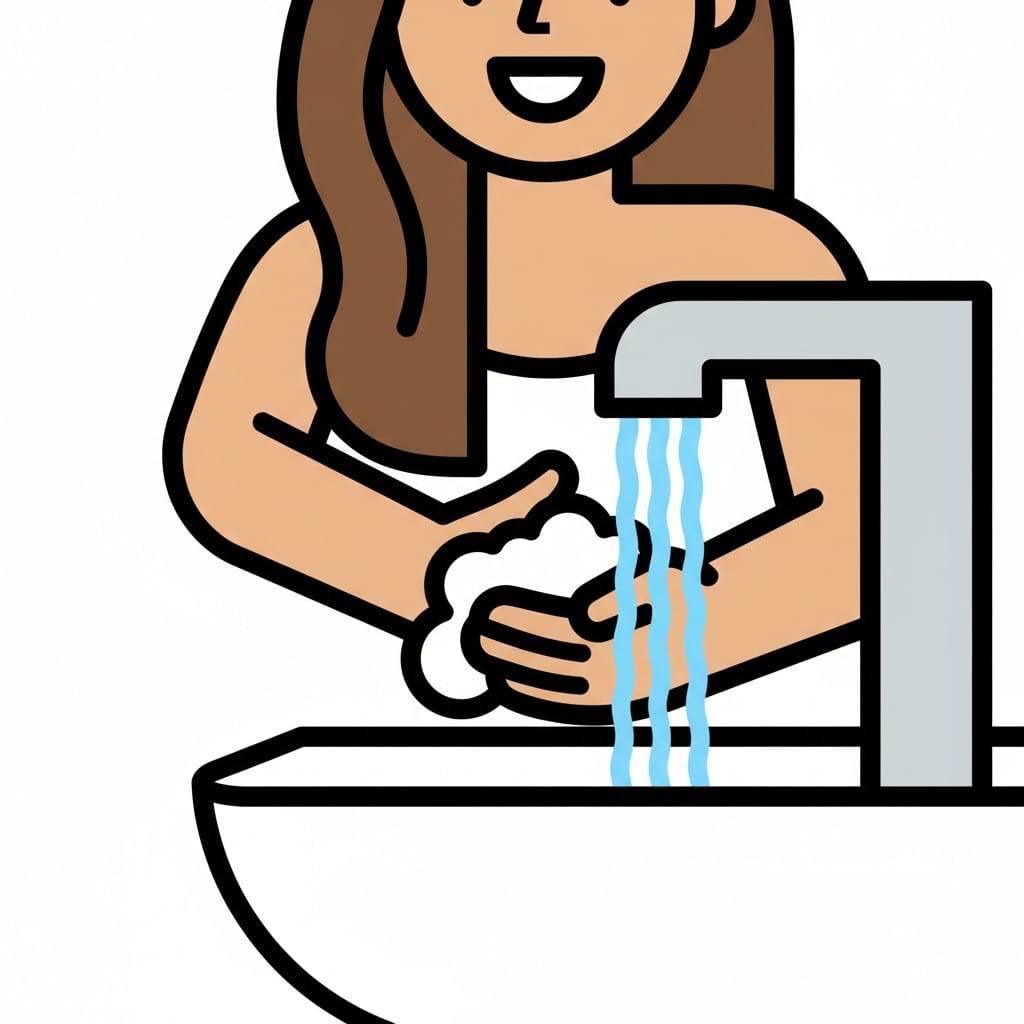
♀Wash hands
A girl washing her hands with soap and water from a tap.
 ♀
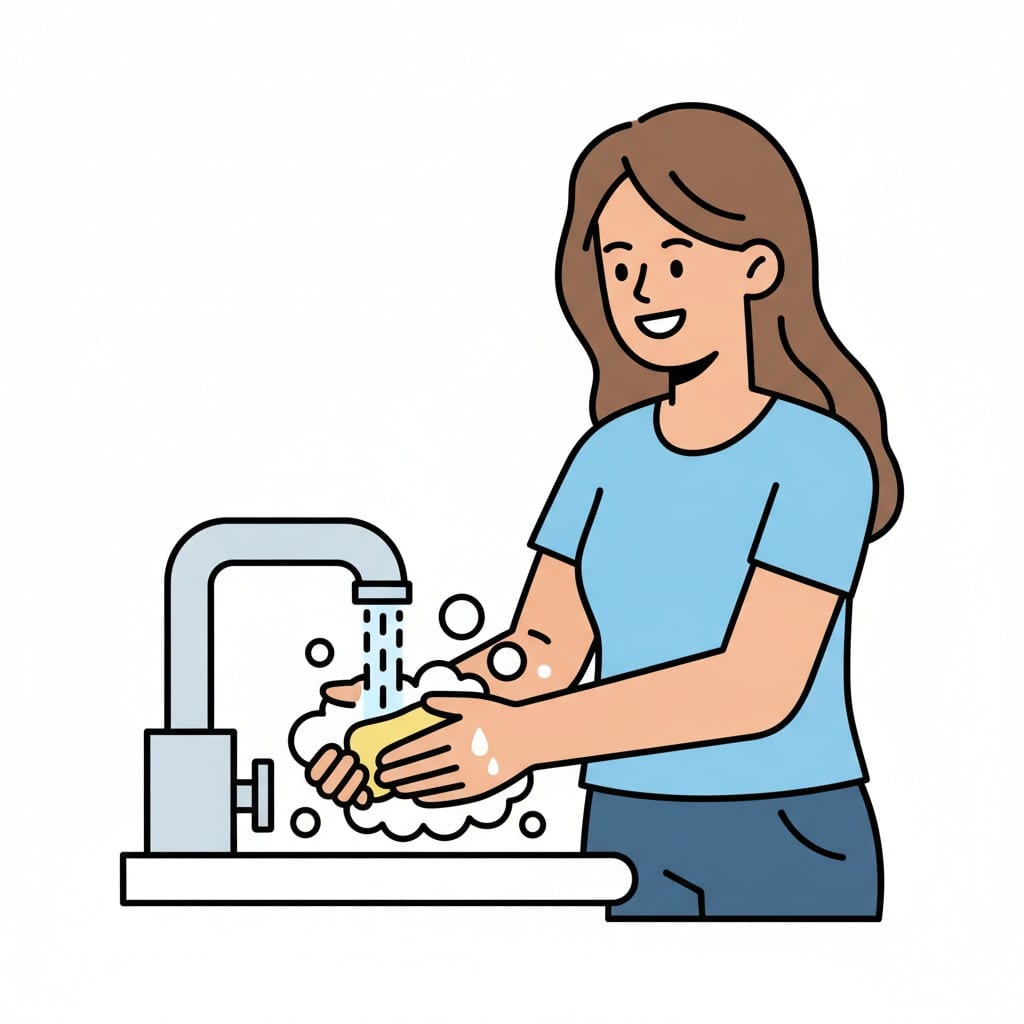
♀Wash hands
Illustration of a girl washing her hands with soap and water at a sink.
 ♀
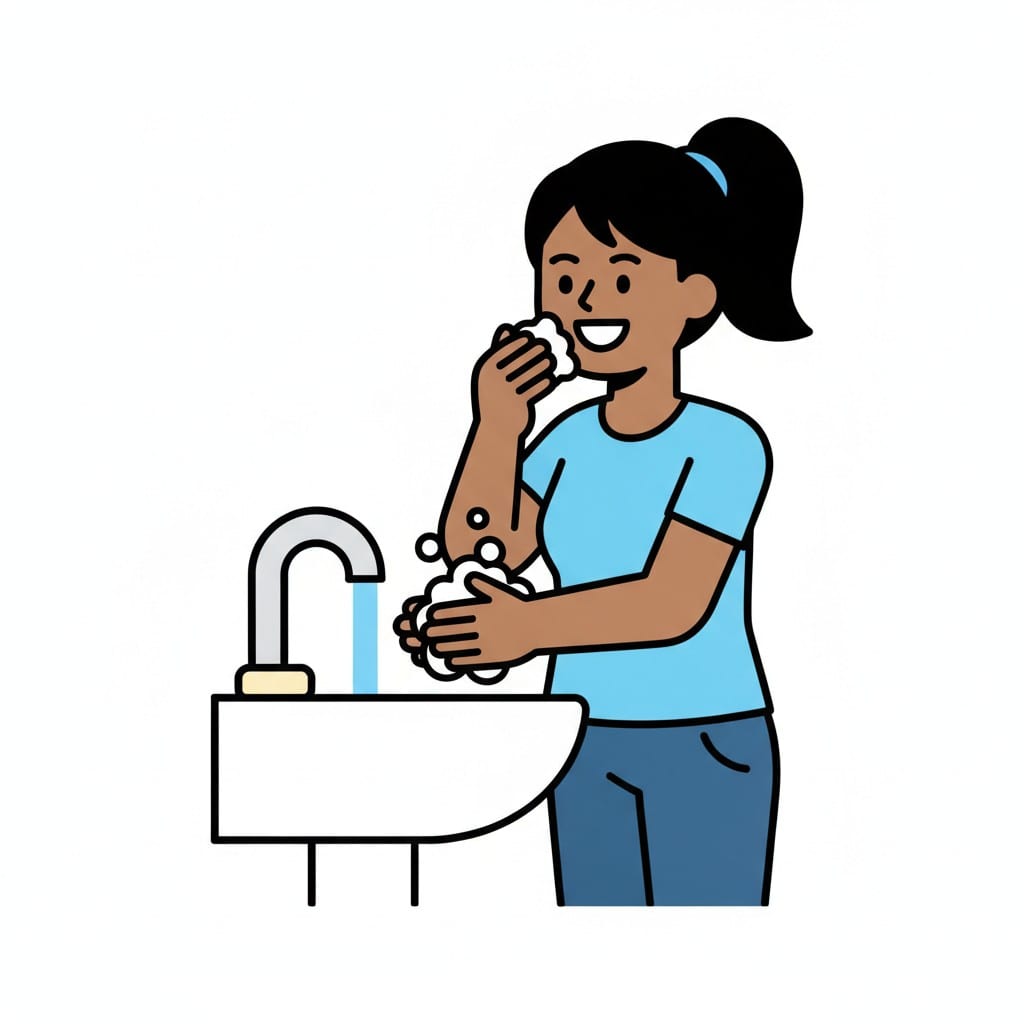
♀Woman washing hands
A woman washes her hands with soap under the tap.
 ♀
♀Washing hands and mouth
A girl washes her hands and wipes her mouth at the sink.
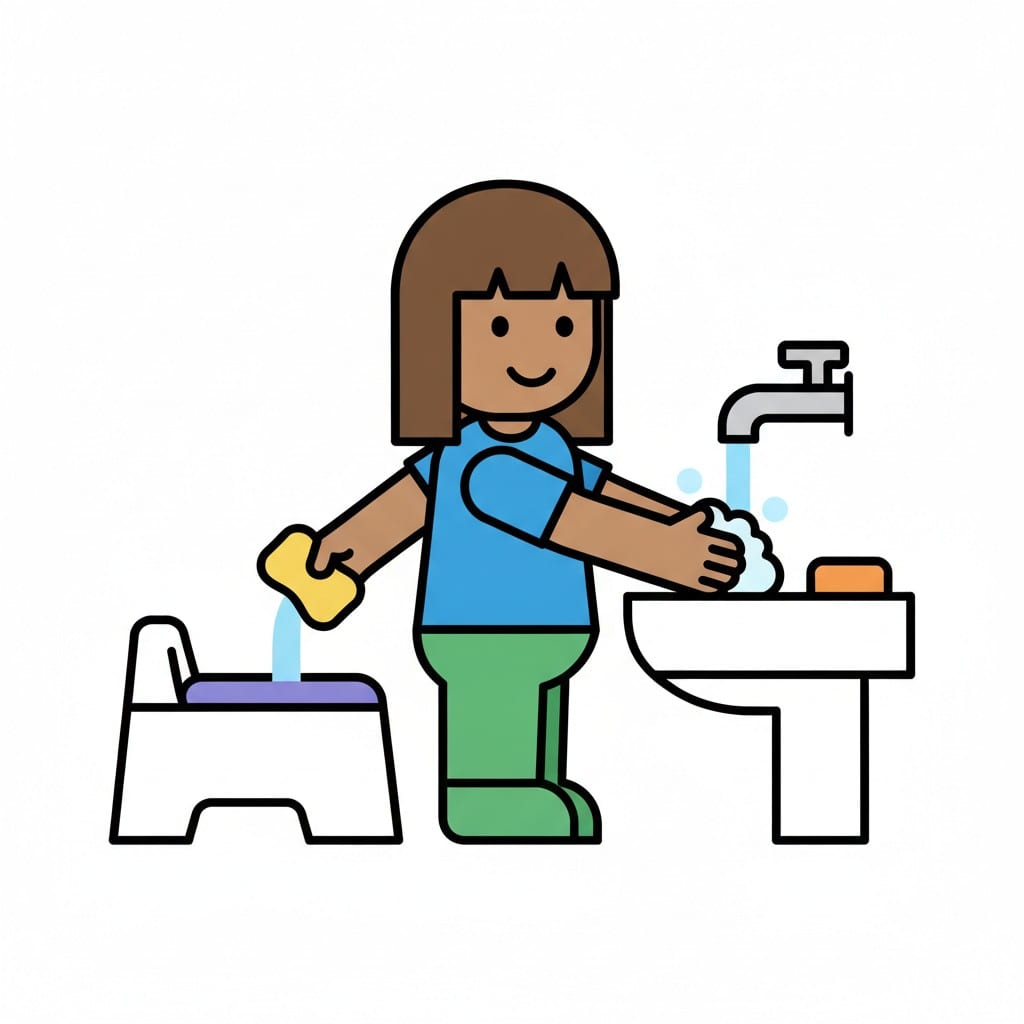 ♀
♀Potty and handwashing
A girl stands between a potty and a sink, holding a sponge over the potty and washing her hand under the tap.
About this visual support
Hand washing looks like one task but is really four: setting the water, picking up soap, scrubbing, and drying. When a child hears wash your hands as a single instruction, the soap step often gets skipped and the towel ends up barely touched. You notice it later, on sticky door handles and on whatever the next snack happens to be.
Pictures next to the tap give each step a face. The child can glance at the temperature card and adjust, point to the soap to remember it, count scrubs against their palms, and finish at the towel. You are not adding more words. You are leaving four anchor points in the room so the routine works even when you are not standing there.
A practical tip: laminate the cards and hang them at the child's eye level, not yours. The short person is the one using them. If you want to chain hand washing into bigger routines, before meals or after the toilet, Routined lets you stack steps and run a timer for the scrubbing seconds.
This image is part of these ready-made schedules
Use this image in a schedule
Build your own visual schedule with this image and download it as a print-ready PDF. Completely free.
More similar visual supports
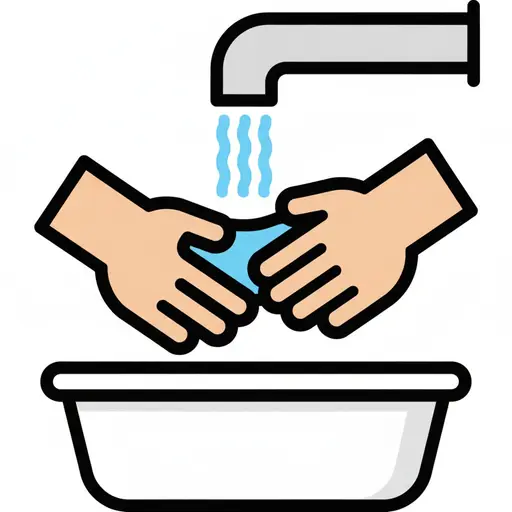
Get clean
Two hands are washed under a tap above a basin.
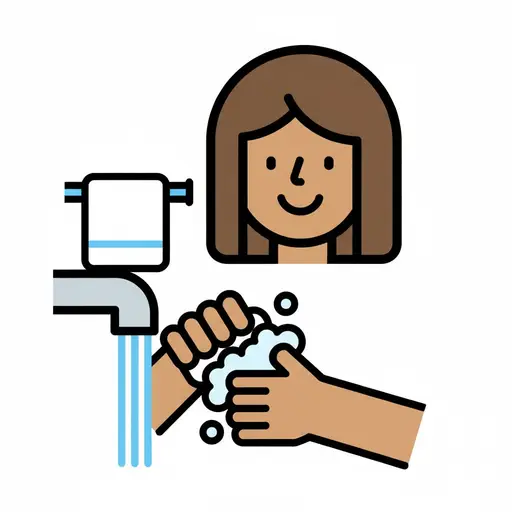
Hygiene
A girl washes her hands with lather under a tap with a towel hanging nearby.
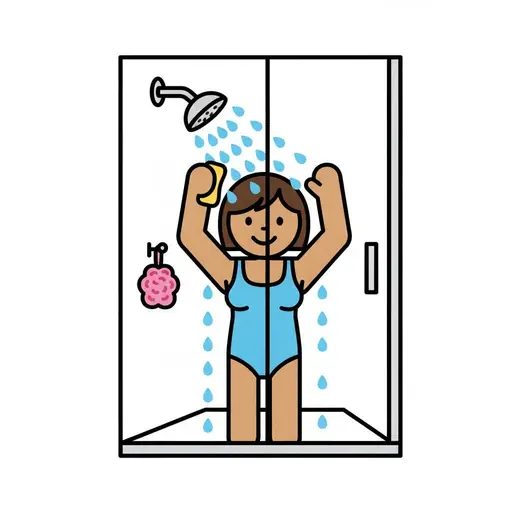
have a shower
A girl in a swimsuit stands in a shower cubicle with her arms raised and a spong...
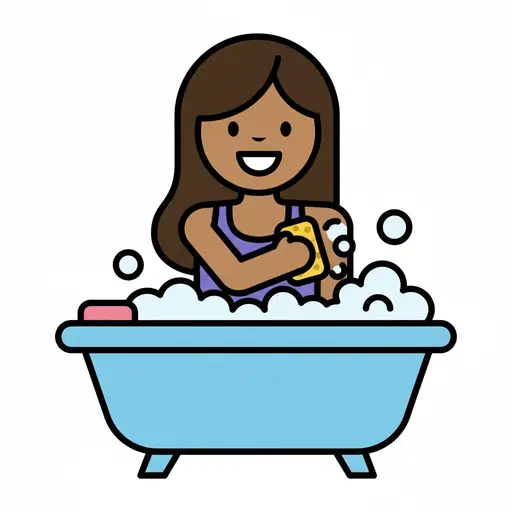
Bathe
A smiling girl sits in a bathtub full of foam and washes her arm with a yellow s...
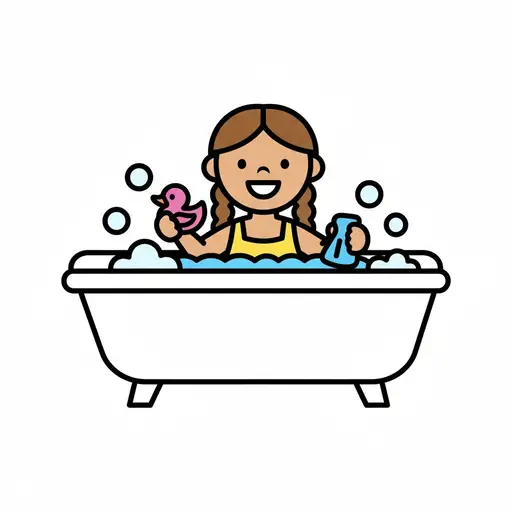
Take a bath
A girl sits in a bubble bath with a pink rubber duck and a blue sponge.
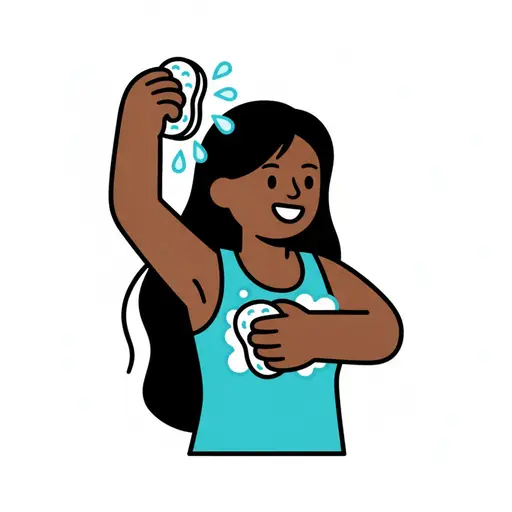
Wash your armpits
A girl holds up a dripping sponge and washes her armpit with soapy foam.
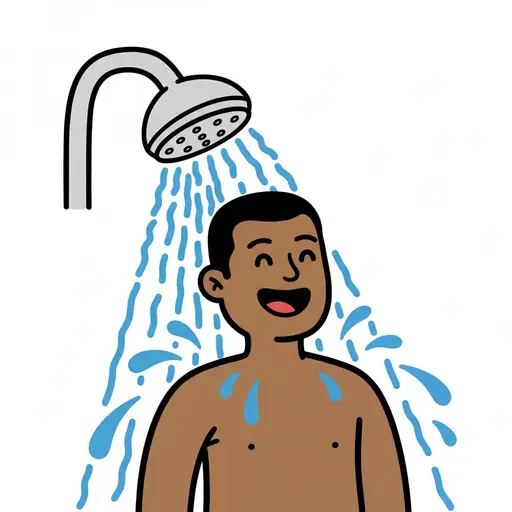
Shower child
An illustration of a boy with soap on his body, holding a sponge and a towel, st...

Dry hands
A man dries his hands on a yellow towel.
This visual support in other languages
Take the visual supports with you
In Routined you build schedules from these pictures, add timers and voice instructions, and your child follows the day on their own.


* 14-day free trial, then $2.39 a month or $20.99 a year (US pricing). Cancel anytime.