Sophia
A name on a card only becomes real once it has a face and a relationship attached. Sophia might be the cousin, the classmate or the teacher – the card is the same but the meaning belongs to the child. The visual support below is a building block.
 ♂
♂Sophia with Laurel Wreath
A happy person with outstretched arms, a laurel wreath and a crown above their head.
 ♂
♂Happy boy with crown
A happy boy with outstretched arms and a crown on his shirt.

Sophia avatar 1
A close-up of a smiling person.

Sophia avatar 2
A close-up of a smiling person with long hair and a flower in their hair.
About this visual support
Social images work differently from everyday object images. A knife is a knife, but Sophia is someone specific in your child's life – a visiting cousin, a girl in the group, maybe a best friend. The card itself does not carry that connection automatically. You fill it with meaning, ideally together with your child.
That is why name cards work best as a component inside larger visual contexts: today's group at preschool, the party on Saturday, the pick-up schedule for the week. When the name Sophia sits in a row beside other faces, it becomes clear who will actually show up, and your child gets time to prepare for the meeting itself, not just for the activity.
A concrete tip: keep a real photo in the album and show it alongside the cards when you walk through the day, so the child builds a mental bridge between symbol and person. For siblings, friends and relatives you can make a whole set with the same logic. In Routined the name cards can sit as people inside a recurring routine, so the weekly schedule also says something about who you will see, not only what you will do.
Use this image in a schedule
Build your own visual schedule with this image and download it as a print-ready PDF. Completely free.

More similar visual supports

Olivia
A cartoon image of a girl with brown hair and flowers in her hair.

A parent picks up the child
An adult happily lifts a child up in their arms.

Indoor play
A child sits cross-legged on a rug with a tablet, with a teddy and books beside ...

Leisure time
A happy boy throws a colourful ball while a toy car and a stacking ring toy sit ...

Melvin
A smiling boy in a light blue t-shirt is shown from the front in a portrait.
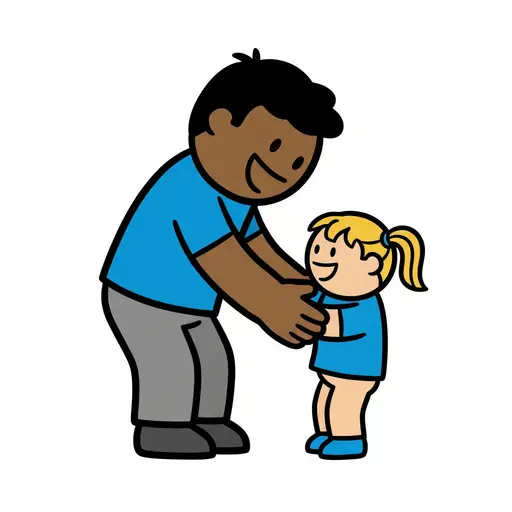
Pick up Alicia
Illustration of a man smiling and bending down towards a small child, who is smi...

Pick up kid
A man in a blue shirt bends down and lifts a small child in a yellow shirt. Both...

Play with dad
An adult holding a child who is playing with a yellow toy dump truck, dumping br...
Take the visual supports with you
In Routined you build schedules from these pictures, add timers and voice instructions, and your child follows the day on their own.


* 14-day free trial included for new users.