Breakfast TV
The screen pulls focus from the food, and when the TV goes off the protest lands in the middle of an already tight morning. The visual support below gives the TV time a clear start and a clear end, so the shut-off is scheduled rather than a surprise.
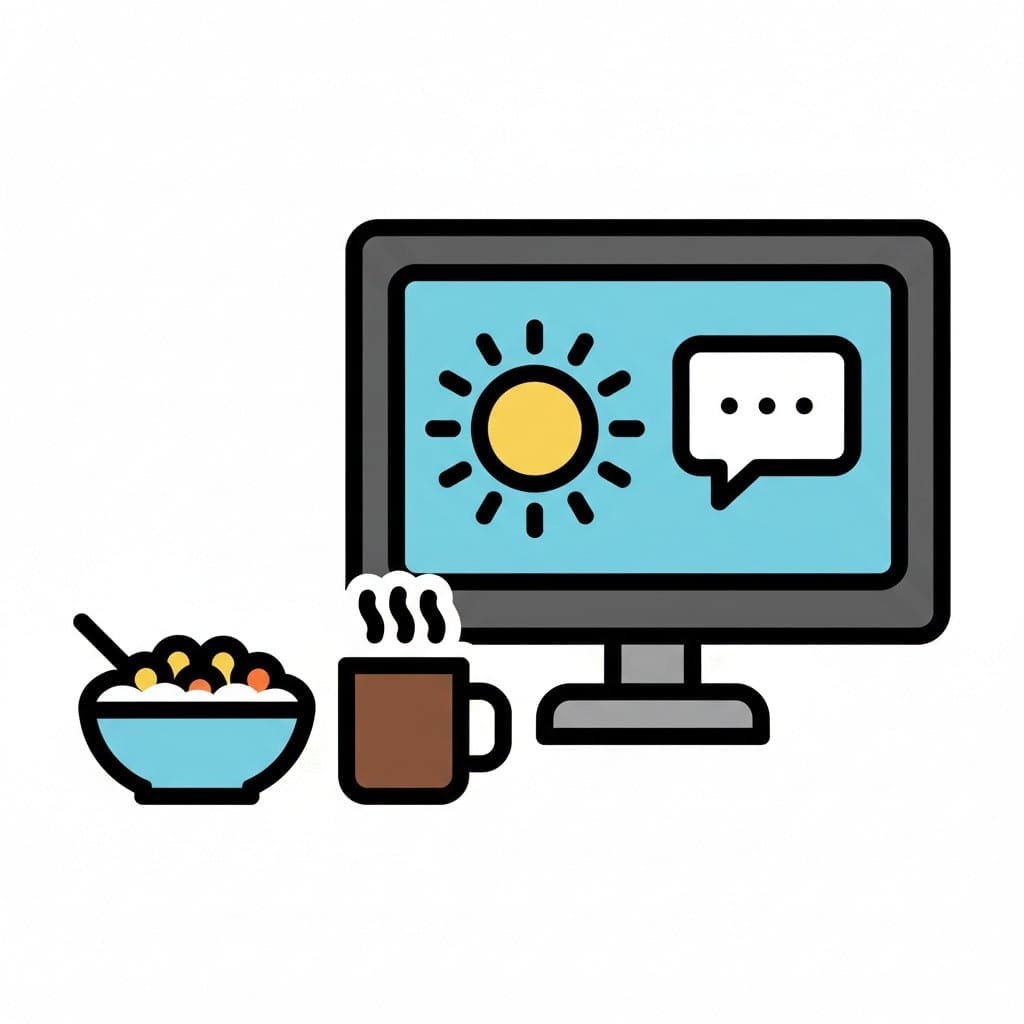
Breakfast with TV
An illustration showing a bowl of cereal, a steaming mug, and a TV screen displaying a sun icon and a speech bubble.
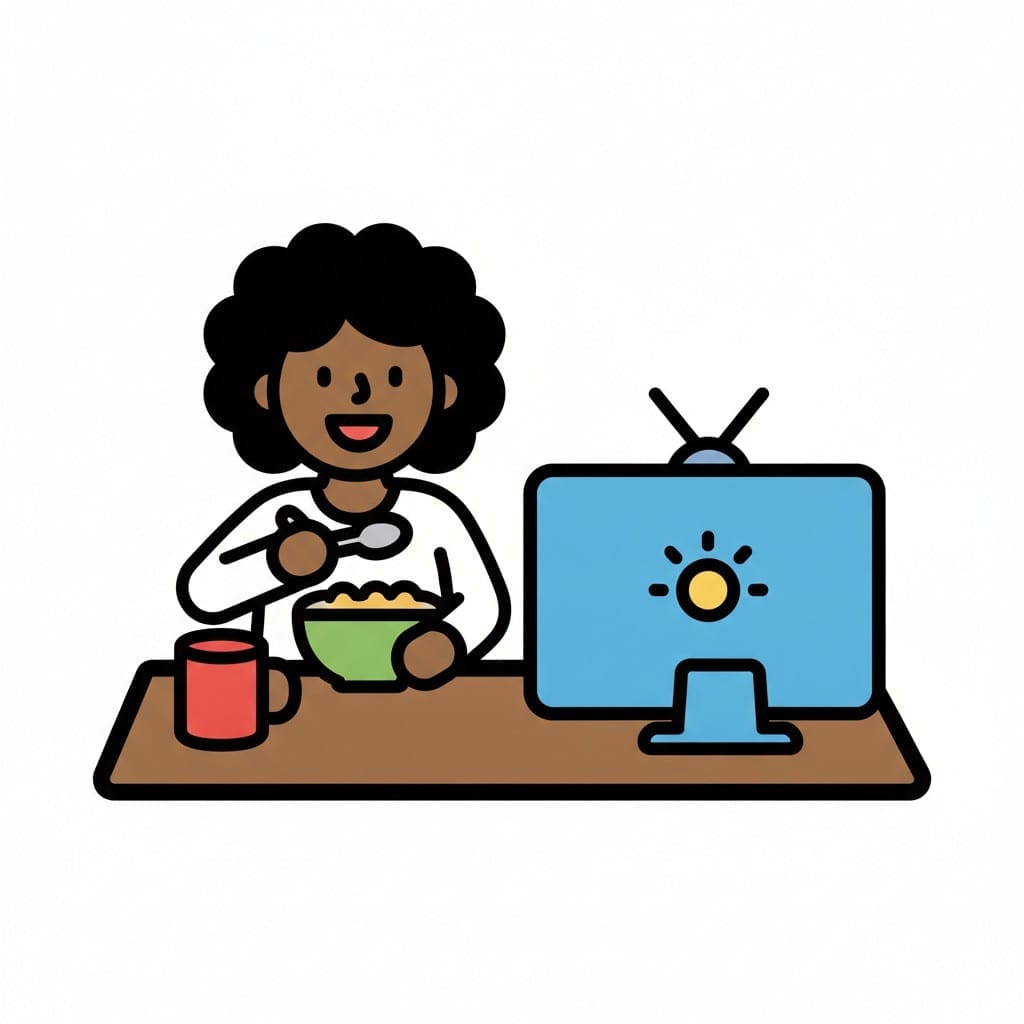 ♀
♀Girl eating cereal in front of the TV
A girl sits at a table with a bowl of cereal and a mug, watching a television that shows a sun.
About this visual support
Breakfast TV is a dual task. Food needs to be chewed and swallowed, but eyes and brain pull toward the moving images, and when it's time to switch off the cut lands in the middle of a show or a favourite clip. That's where the conflict is born, not in the TV itself but in the transition.
With visual support, the TV time gets a frame. The card for turning the TV on, the card for eating at the same time, and – most importantly – the card for switching off paired with a clear next activity: shoes, jacket, bag. When the shut-off appears as its own step in the sequence, it becomes expected rather than interruptive.
A concrete tip: decide together before the TV goes on what happens straight after it's off, and point at that exact picture as you click the remote. The child then has somewhere to move their gaze the second the screen turns black. In the Routined app you can attach a short timer to the TV window and chain it directly to the next routine so the transition is built in.
Use this image in a schedule
Build your own visual schedule with this image and download it as a print-ready PDF. Completely free.

More similar visual supports

Holiday mornings
A red mug of hot drink beside pancakes, a sprig of evergreen and a wrapped gift.
Screen time & breakfast
A boy eats cereal with a spoon while watching a phone, with pancakes and juice o...
TV and breakfast
A television stands beside a table with a bowl of cereal, toast and a glass of j...
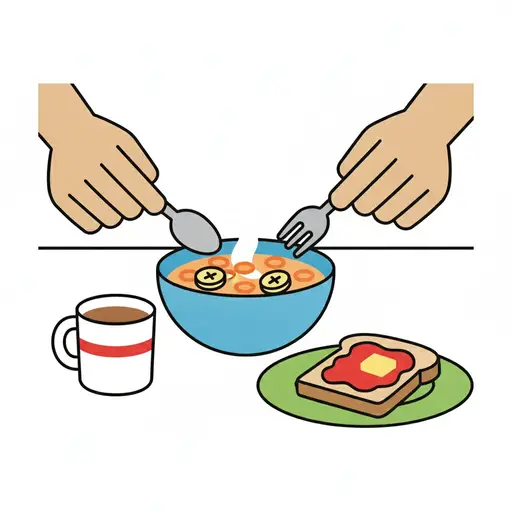
Breakfast
Two hands with a spoon and fork above a bowl of cereal, with a coffee mug and a ...
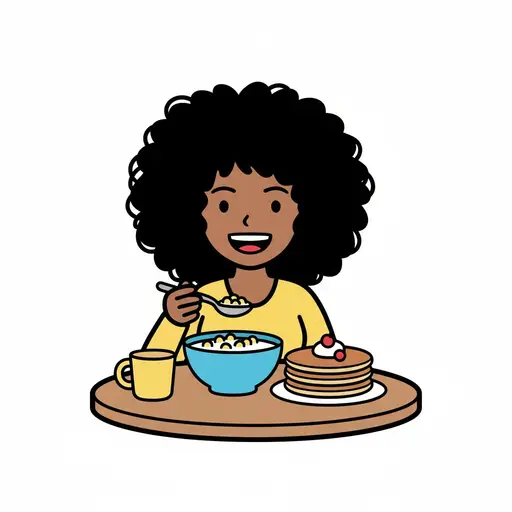
Have breakfast
A girl eating breakfast at a table with a bowl of cereal, a slice of toast, and ...
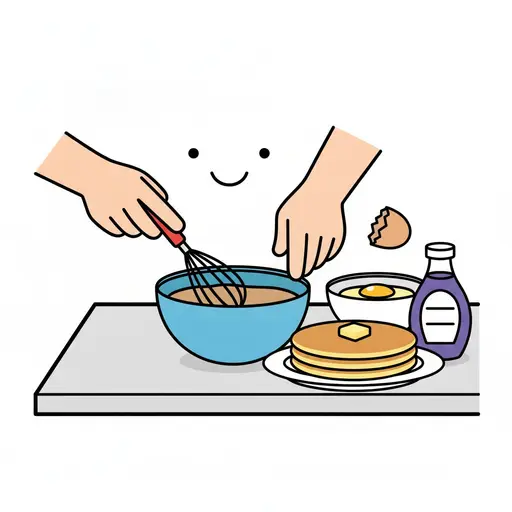
Make breakfast
Hands whisk batter and crack an egg next to a stack of pancakes.
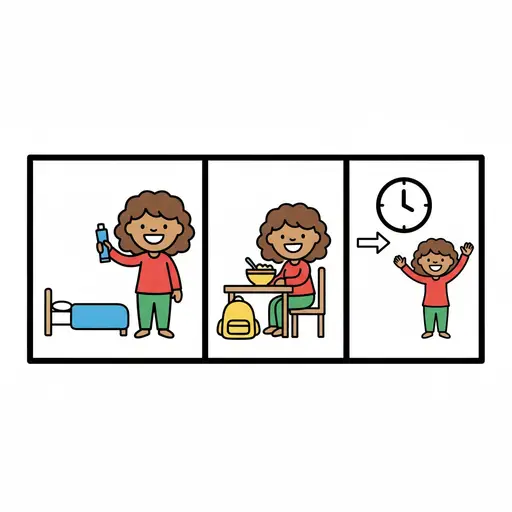
Preschool morning routine
Three panels show a girl getting up with her toothbrush, eating breakfast beside...
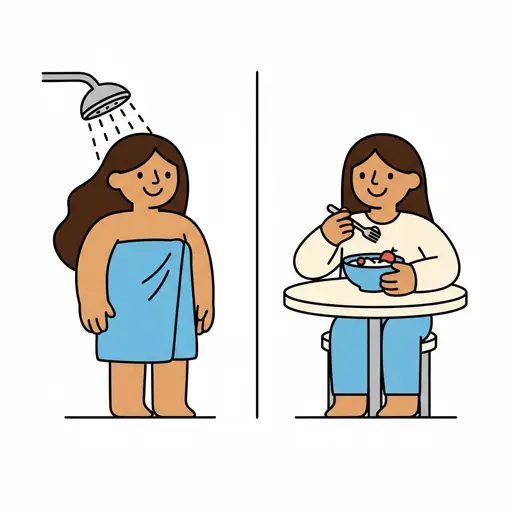
Shower and breakfast
An illustration of a woman showering, wrapped in a towel, eating cereal with a s...
Take the visual supports with you
In Routined you build schedules from these pictures, add timers and voice instructions, and your child follows the day on their own.


* 14-day free trial, then $2.39 a month or $20.99 a year (US pricing). Cancel anytime.