Cross street
Crossing a street demands several decisions at once, often in the exact second the impulse is strongest. Cars, sound, eye contact with the driver and timing are four things that have to line up just when focus slips. The steps are below.
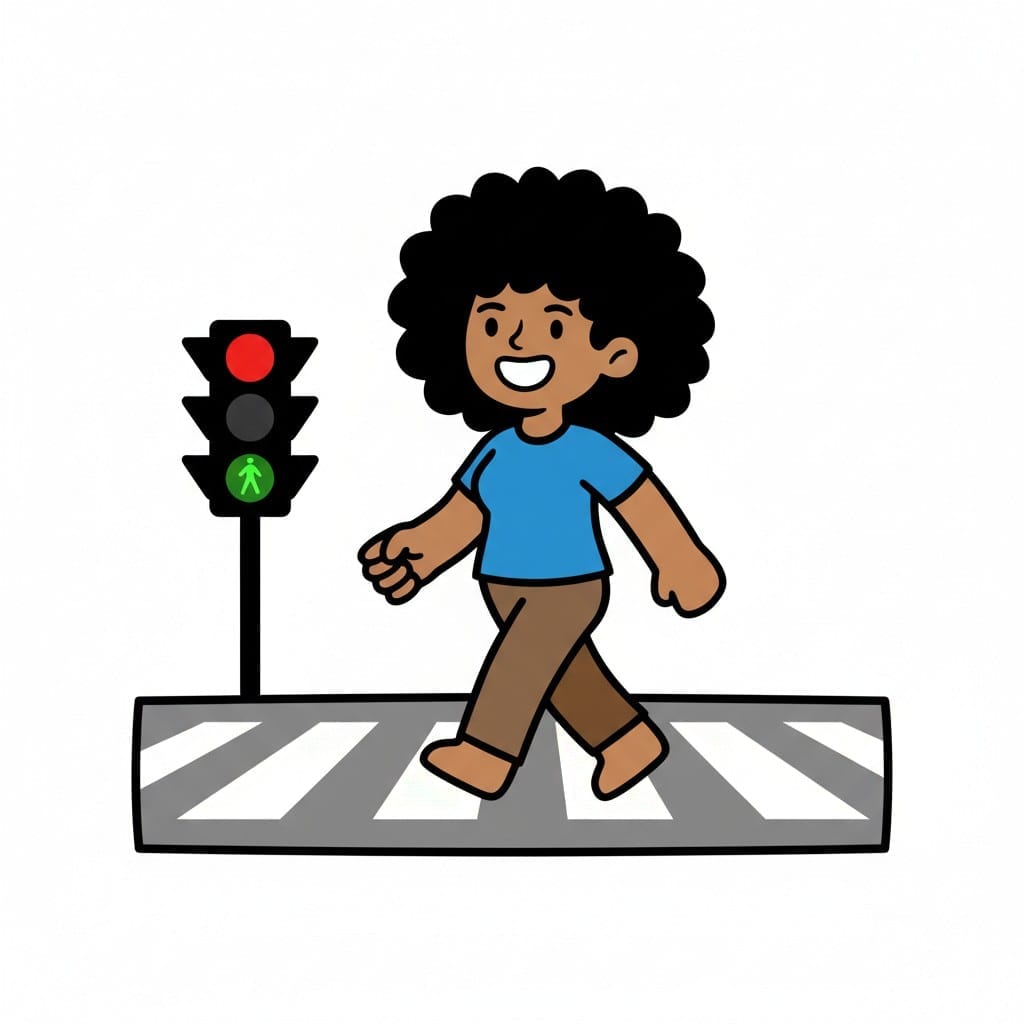 ♀
♀Cross street
A person is crossing a street at a pedestrian crossing with a green light.
About this visual support
A crossing looks simple on paper but contains at least four parallel judgements: is the car stopping, does the driver see me, will I make it, is something coming from the other side. For a child who naturally focuses on one thing at a time, the rule itself is not the hard part, it is holding several threads at once in a loud street environment.
Visual support breaks crossing into sequential blocks: stand still at the kerb, look left, look right, seek eye contact with the driver, walk. When each substep has its own image, it stops being a flowing situation to read and becomes a clear chain where the child knows exactly which step is next.
One practical tip: practise the first few times on a street with no traffic and point to each picture as you do that step. The link between image and body settles before real cars appear. If you want to tie the visual support to the walk to school, you can place it inside the morning routine in Routined, where the whole way from gate to school becomes one chain. The app is free to try for 14 days.
Use this image in a schedule
Build your own visual schedule with this image and download it as a print-ready PDF. Completely free.

More similar visual supports

Buckle up
A person in a red t-shirt is holding a black seatbelt that goes across their che...
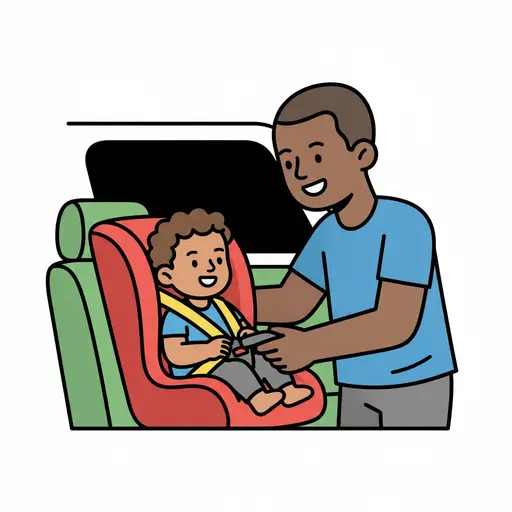
Sit in the car seat
An adult buckles a child into the car seat in the car.
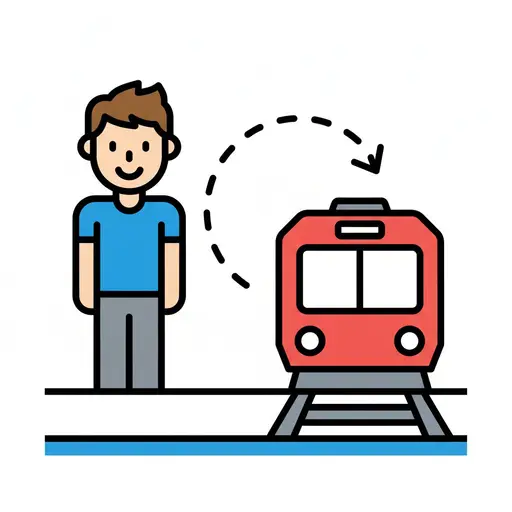
Before the train
A boy stands on the platform while a dashed arrow points toward a red train on t...

Before work
A woman wearing a yellow hard hat and blue shirt, holding a toolbox and pointing...
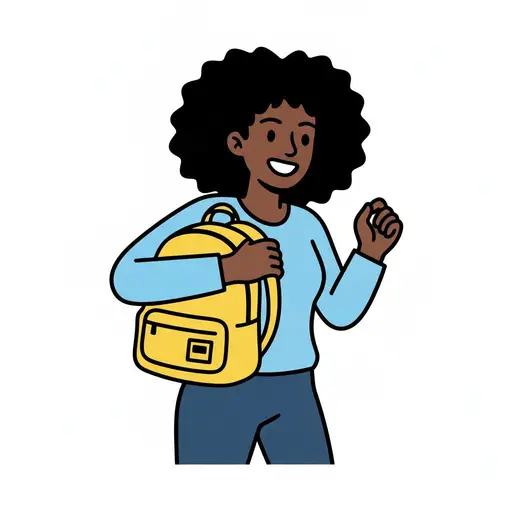
Bring backpack
A smiling girl in a blue top swings a yellow backpack onto her shoulder as she s...
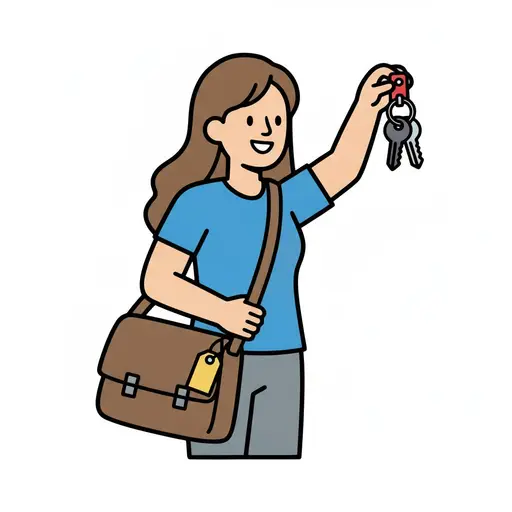
Bring keys
A woman with a shoulder bag holds up a bunch of keys.
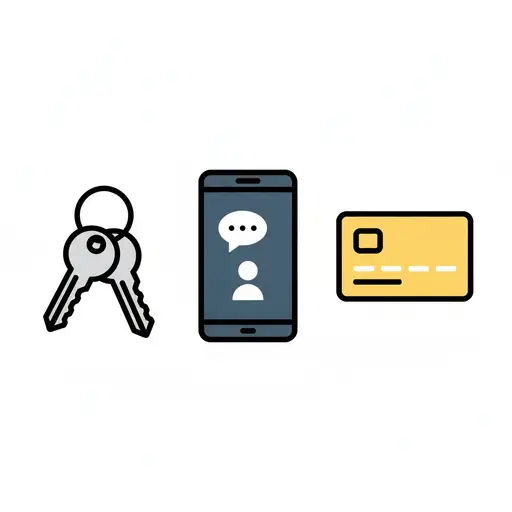
Bring keys and phone
Keys, a phone with a chat icon and a card in a row.
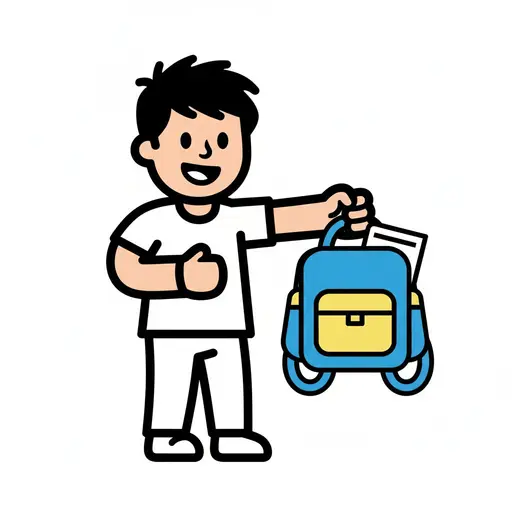
Bring school bag
Illustration of a boy holding a blue and yellow school bag.
Take the visual supports with you
In Routined you build schedules from these pictures, add timers and voice instructions, and your child follows the day on their own.


* 14-day free trial, then $2.39 a month or $20.99 a year (US pricing). Cancel anytime.