Daily routine
When the order of the day lives only in your head, every transition turns into a small negotiation. Below, the full daily cycle is laid out as one connected sequence, from waking up to the last book at night, so the frame holds even on heavy days.
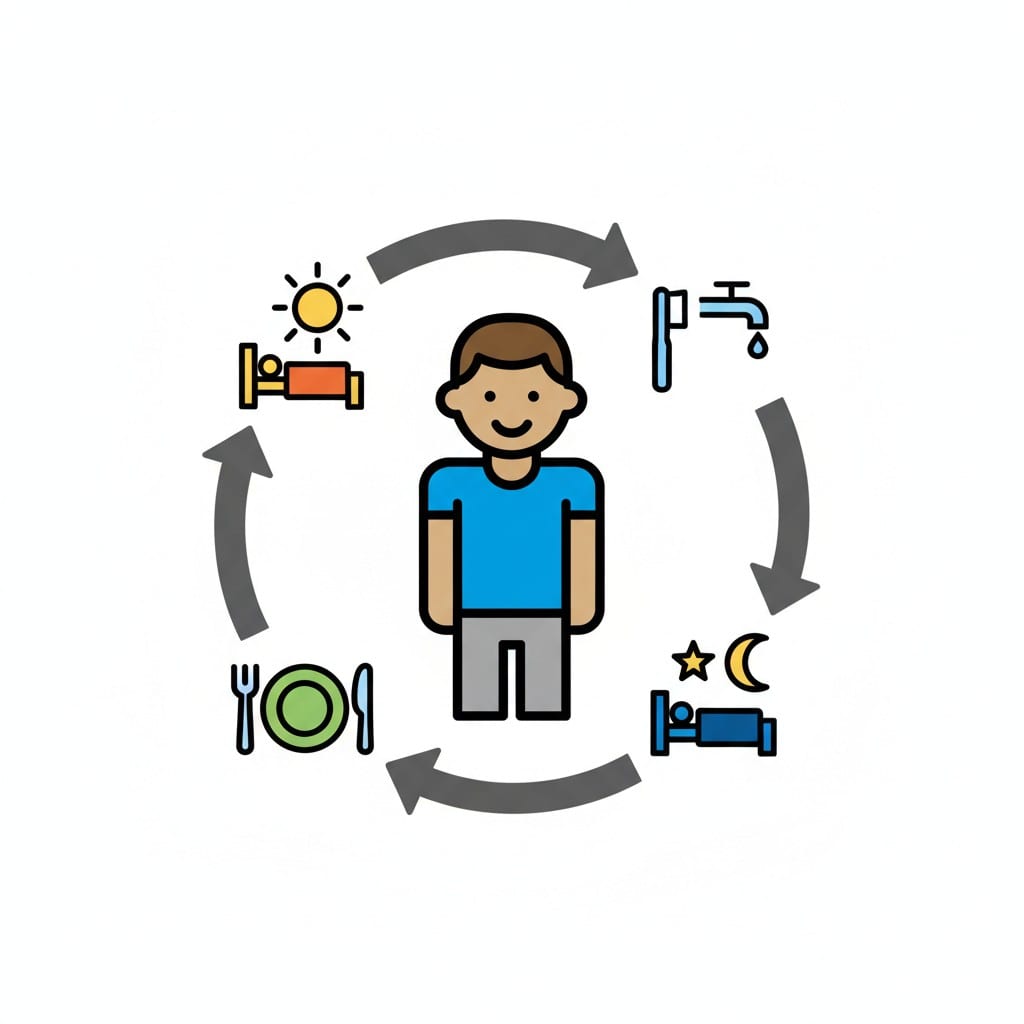 ♂
♂Daily routine
An illustration of a cartoon boy surrounded by arrows forming a circle. Within the circle are icons representing morning (bed and sun), hygiene (faucet), evening (bed, moon, and star), and meals (plate and cutlery), symbolizing a daily routine.
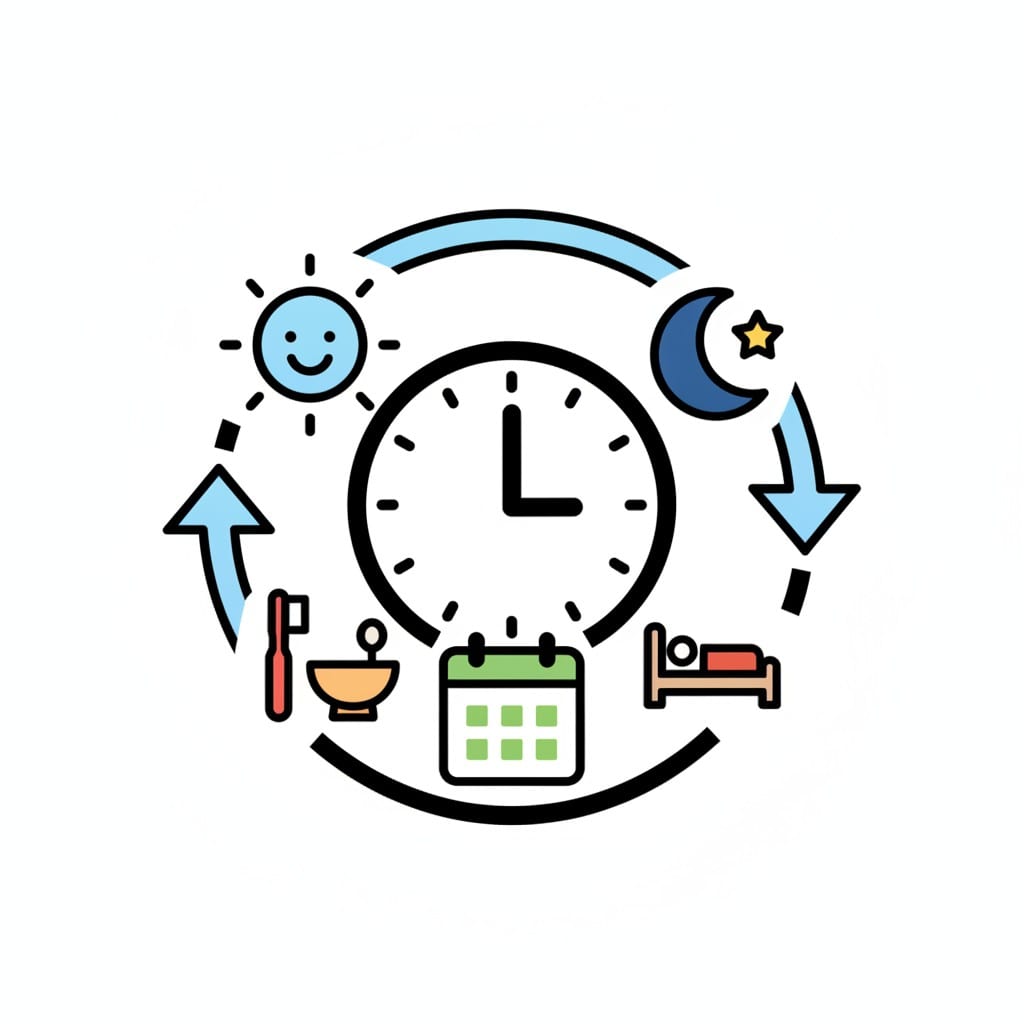
Daily routine clock
A clock in the centre is circled by arrows together with a sun, a moon and star, a toothbrush and basin, a calendar and a bed.
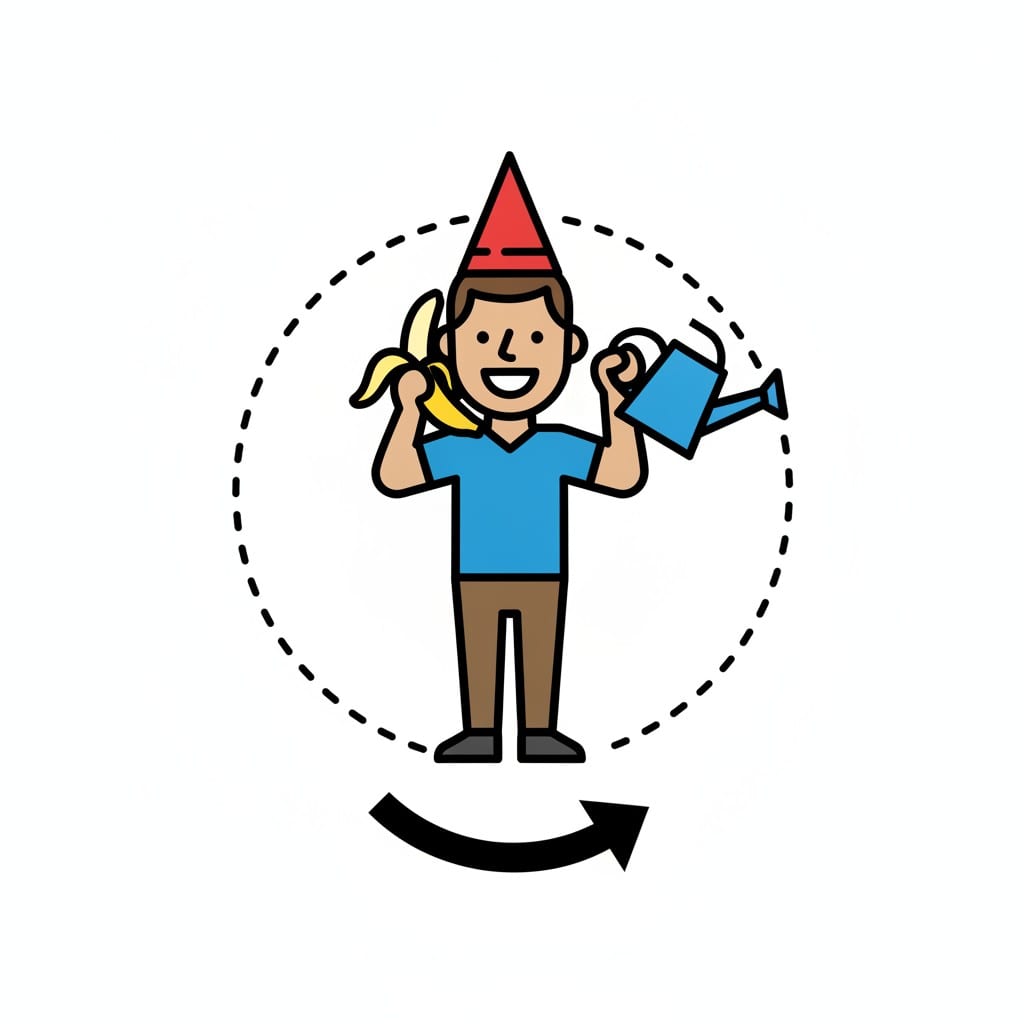 ♂
♂The routine repeats
A boy in a party hat holds a banana and a watering can inside a circle of arrows showing a routine that repeats.

The day
A big sun above a landscape with a house and a tree.
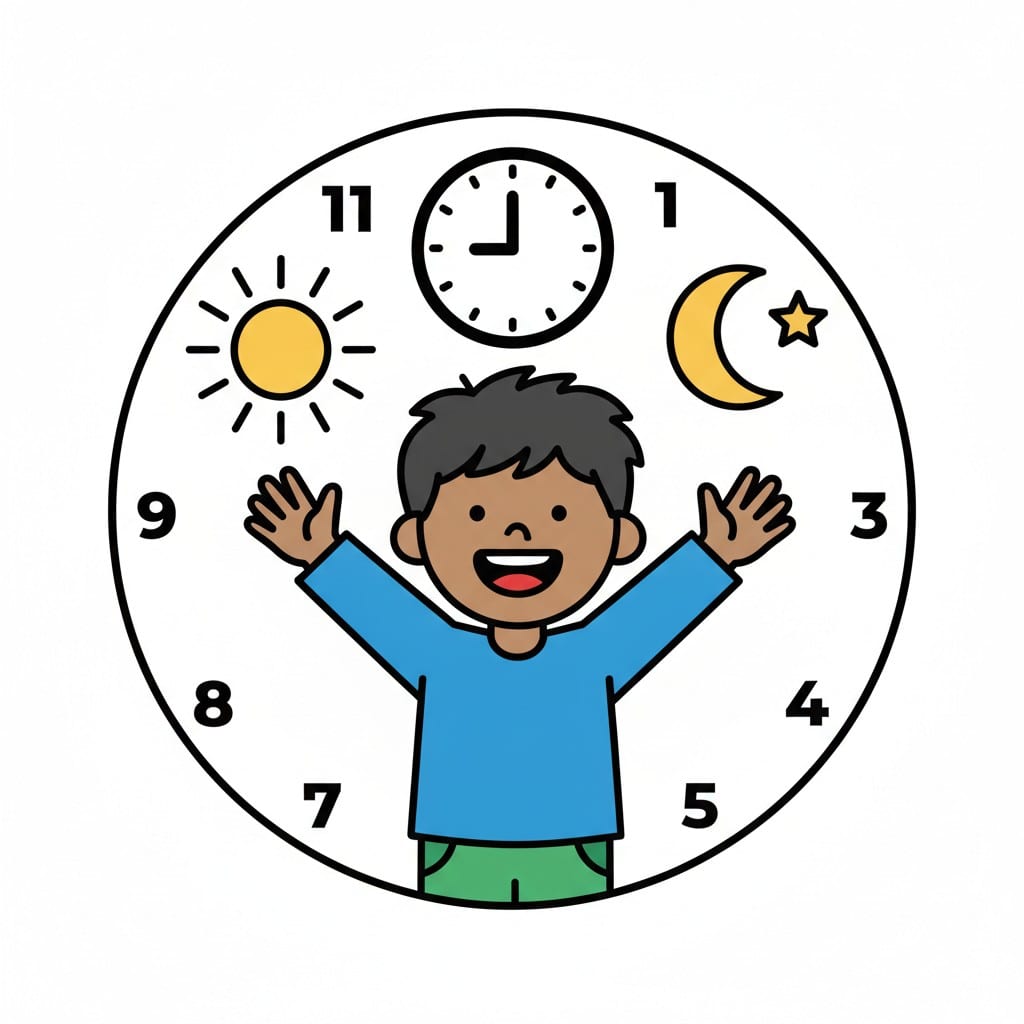
The whole day
A happy boy inside a clock face with a sun and a moon.
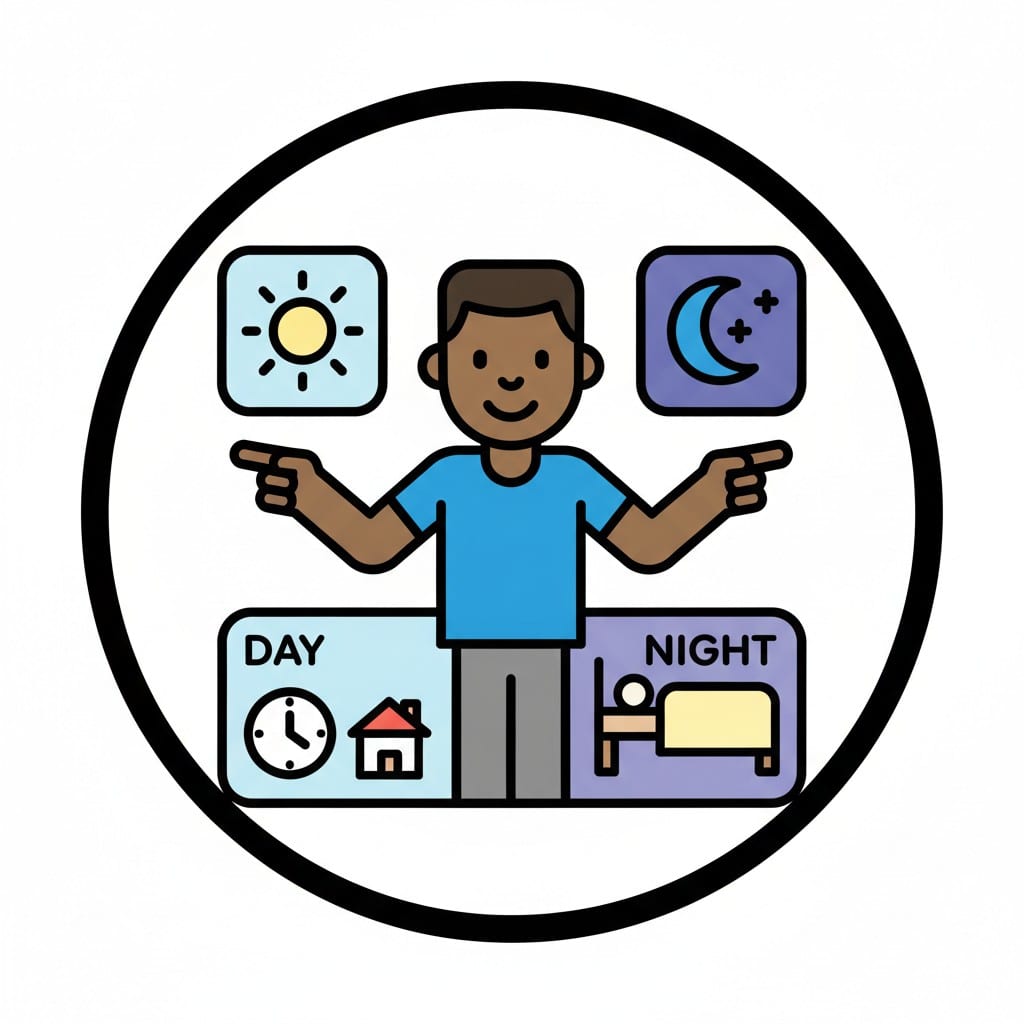
My day
A man points to day and night with a sun, moon, house and bed.
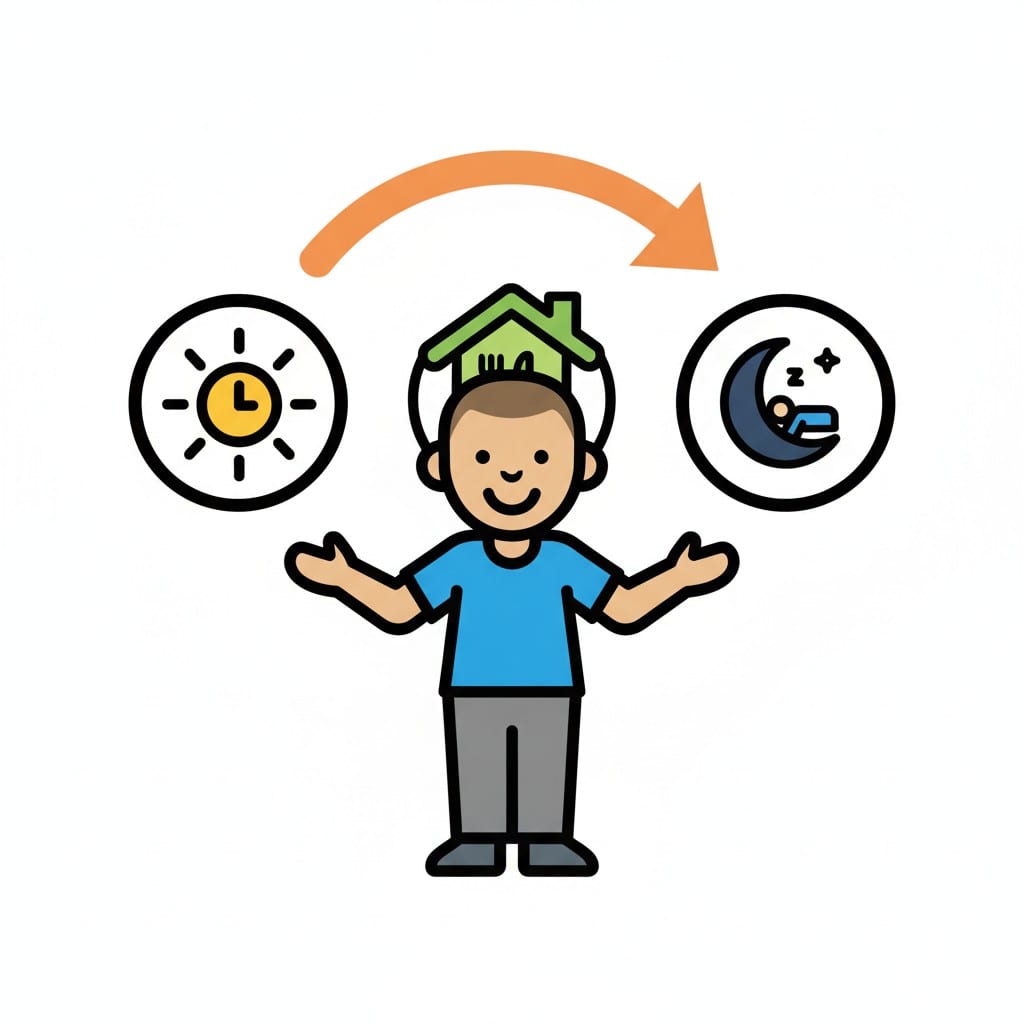
The course of the day
A boy stands between a sun and a moon with an arrow from day to night.
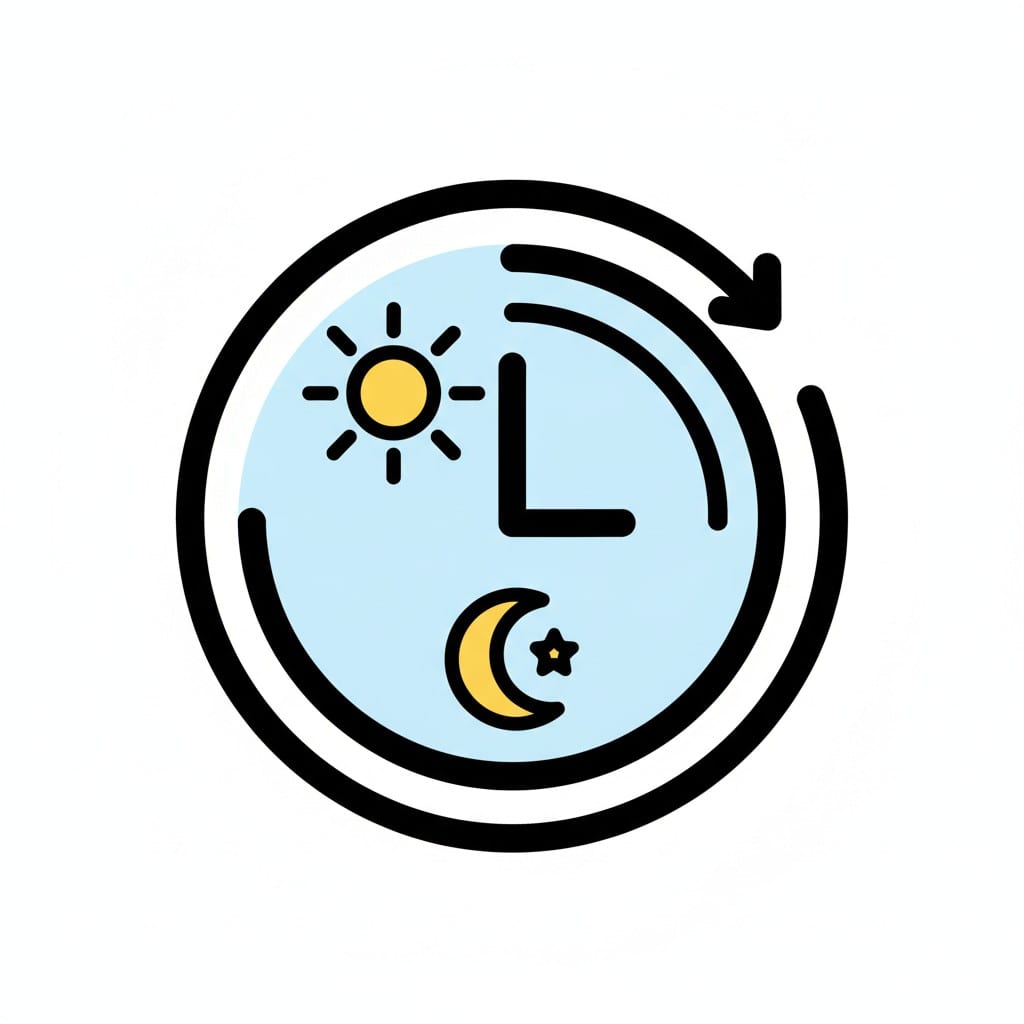
All day
A clock with a sun and a moon and an arrow around it.
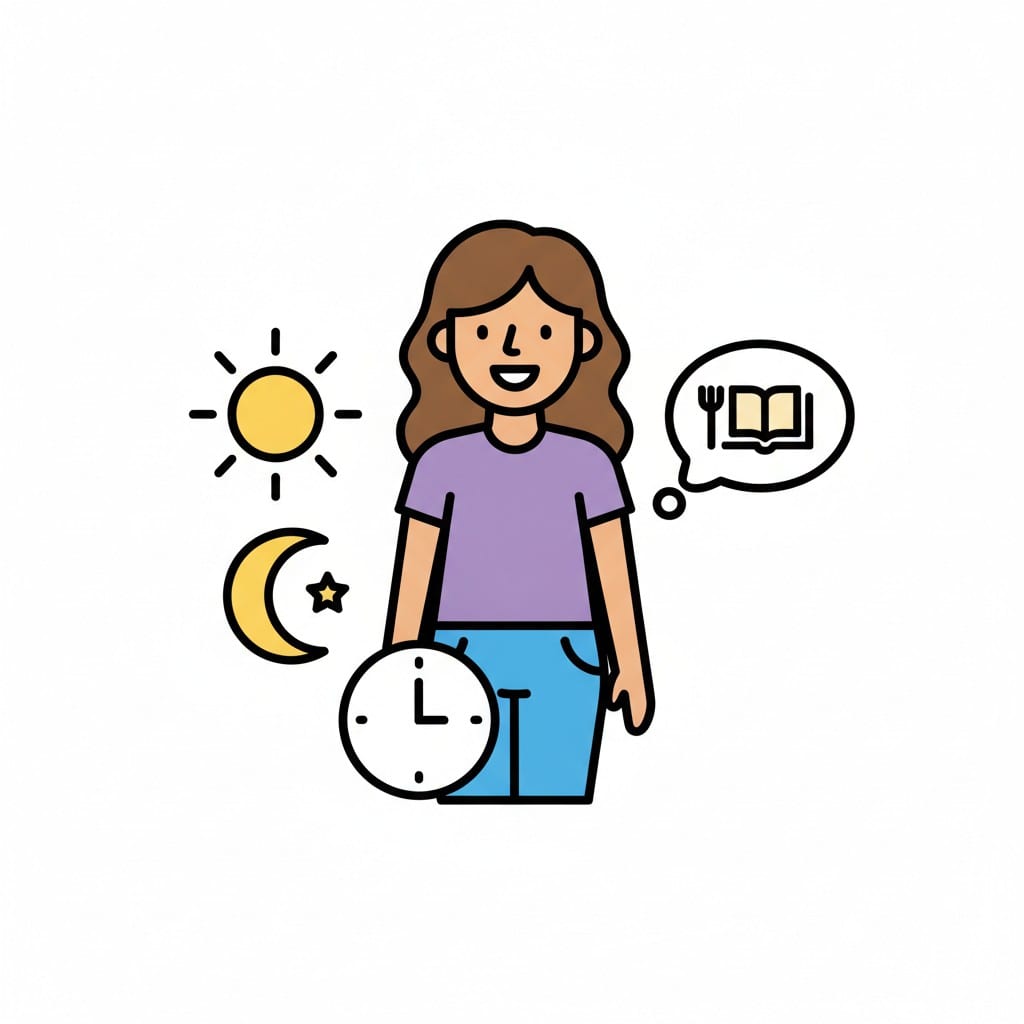
My day
A woman stands with a sun, moon and clock, thinking of food and reading.
About this visual support
A daily routine is not really one activity, it is the frame that holds everything else: meals, transitions, clothes, play, rest. When that frame lives only inside the parent, every shift becomes a small conflict, because the child constantly has to trust a plan they cannot see. A visual schedule for the whole day moves the plan out of your head and into something the child can return to on their own.
The strength lies in the sequence, not in any single picture. When breakfast always comes before brushing teeth, which always comes before shoes, and the evening ends with the same three images night after night, the body learns the order. Then a quiet point at the next card is often enough, instead of repeating the same instruction four times.
A concrete tip: lock two fixed anchors that never move, for example breakfast and the bedtime story. Everything in between can shift. The day then feels flexible without losing its shape. If you want to build the full cycle digitally, with timers per step and a check mark when each one is done, you can try Routined free for fourteen days.
Use this image in a schedule
Build your own visual schedule with this image and download it as a print-ready PDF. Completely free.

More similar visual supports
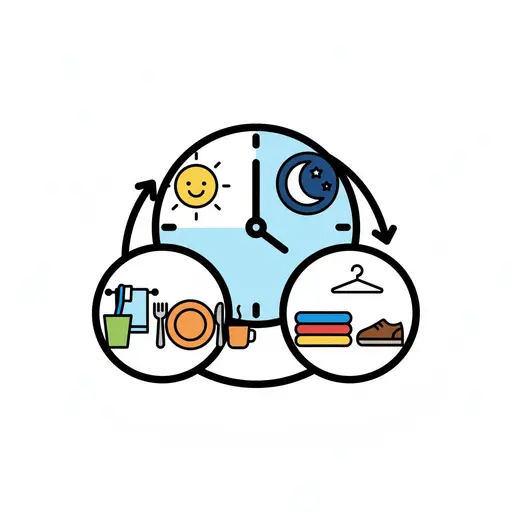
Daily routines
Illustration of a daily routine showing a clock with sun and moon, and symbols f...

Morning schedule
A schedule board with a sun, alarm clock, clock and bowl, plus a downward arrow.
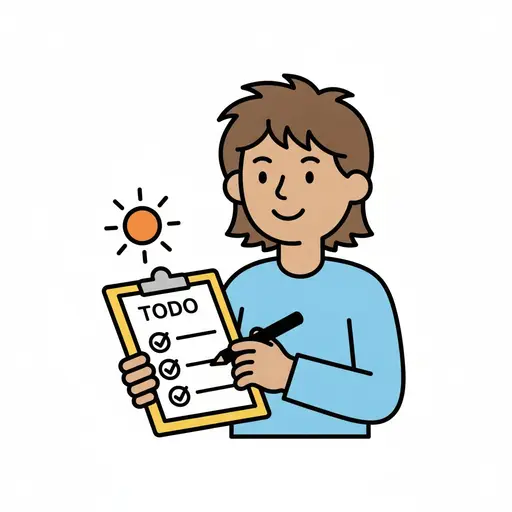
Morning routine
A person ticks off a to-do list in the morning sun.
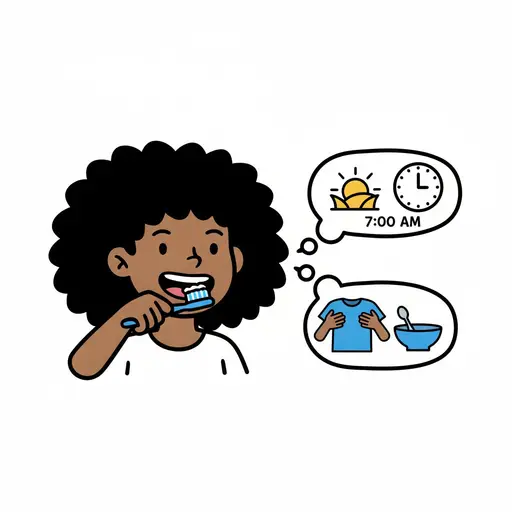
Morning routines
While brushing her teeth, a girl with curly hair pictures two thought bubbles: a...
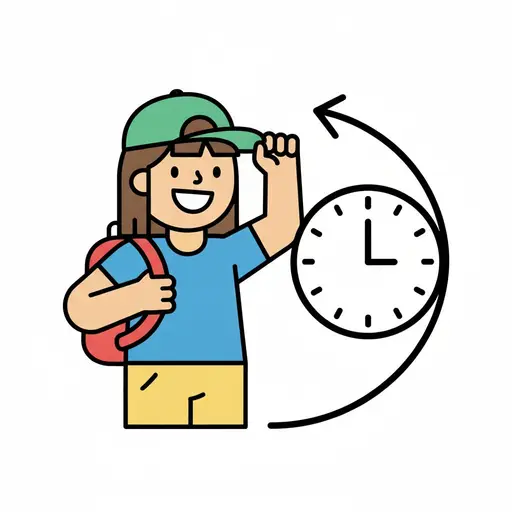
Get ready
A smiling girl adjusts a green cap and carries a red backpack next to a clock wi...
Levi's day
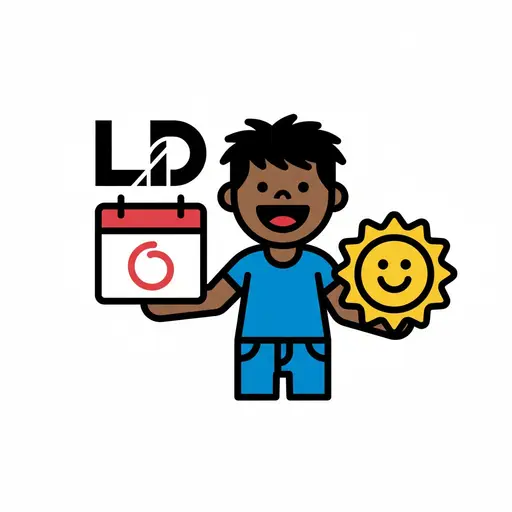
A cartoon boy holds a calendar and a sun, symbolizing a day's schedule.
Preschool morning routine
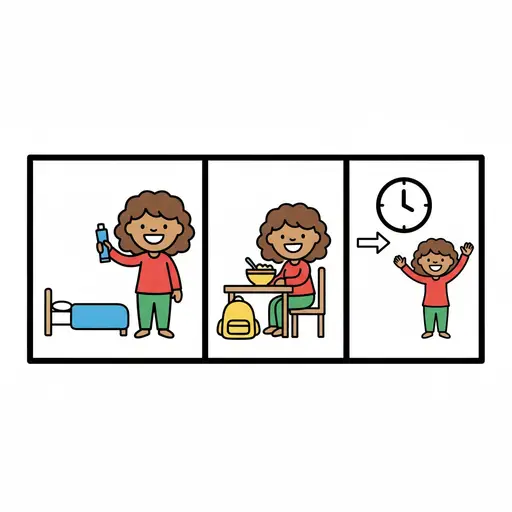
Three panels show a girl getting up with her toothbrush, eating breakfast beside...

Summer morning routine
A girl brushes her teeth by the window while the sun shines outside.
Take the visual supports with you
In Routined you build schedules from these pictures, add timers and voice instructions, and your child follows the day on their own.


* 14-day free trial, then $2.39 a month or $20.99 a year (US pricing). Cancel anytime.