Drive to school
Between the front door and the school gate sit fifteen minutes of switches: shoes on, seat belt, parking, heavy backpack. The visual support below lays the whole transition out as a chain of small steps.
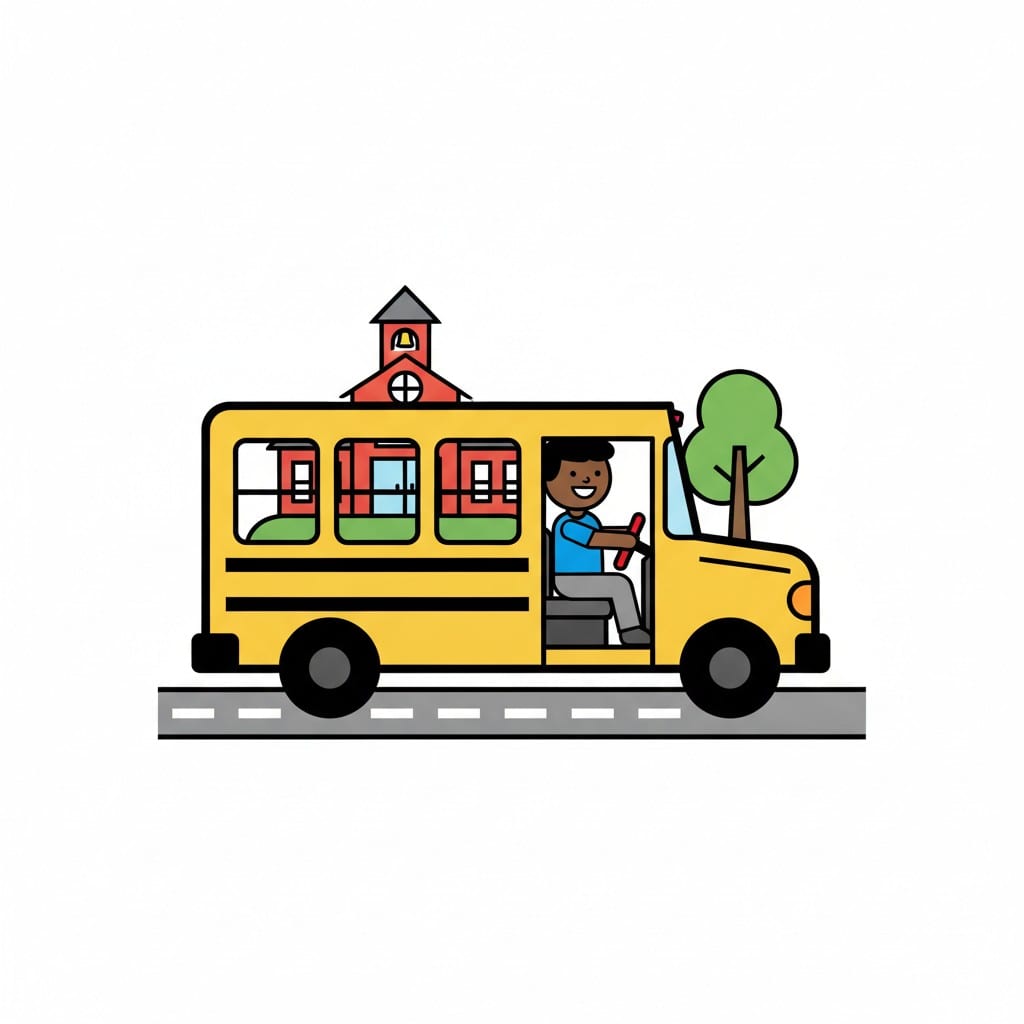
School bus to school
A yellow school bus with a driver drives past a school building.
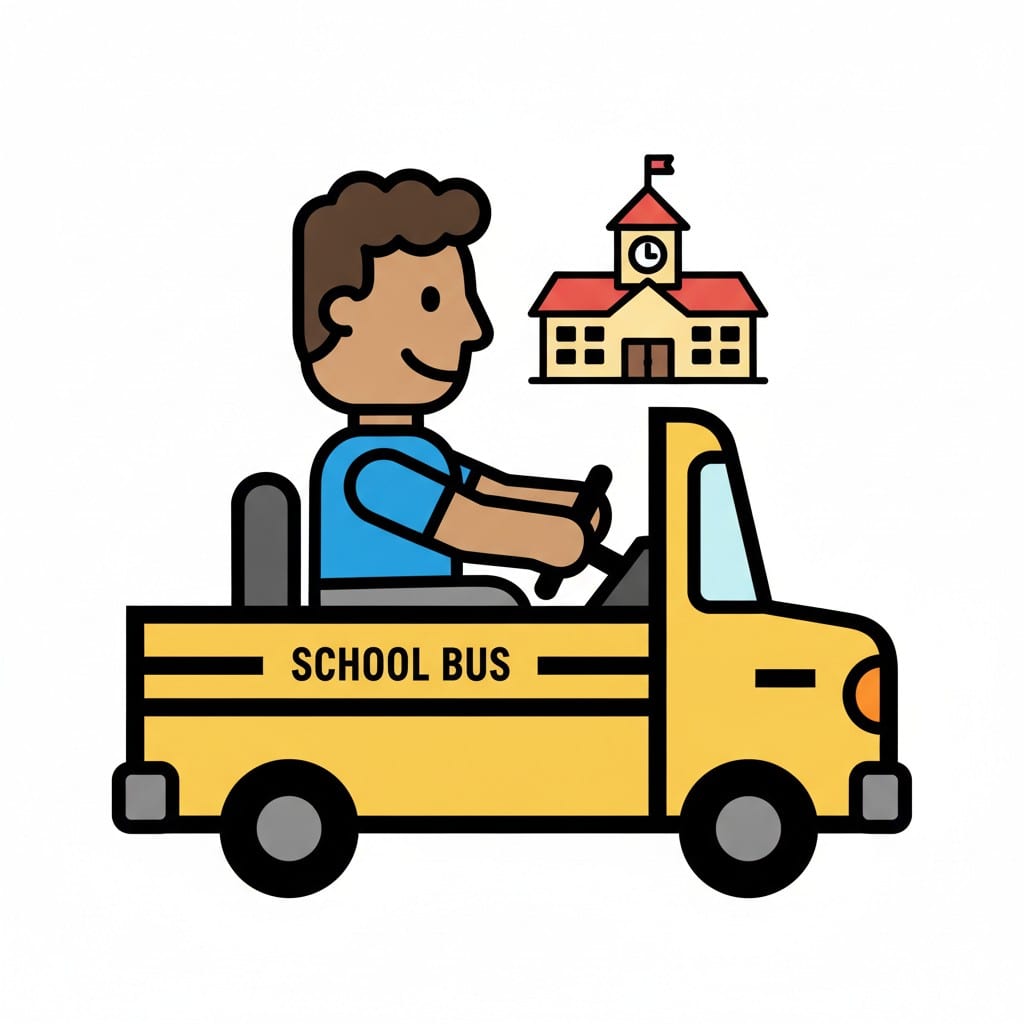 ♂
♂Driving the school bus
A man drives a yellow school bus with the school in the background.
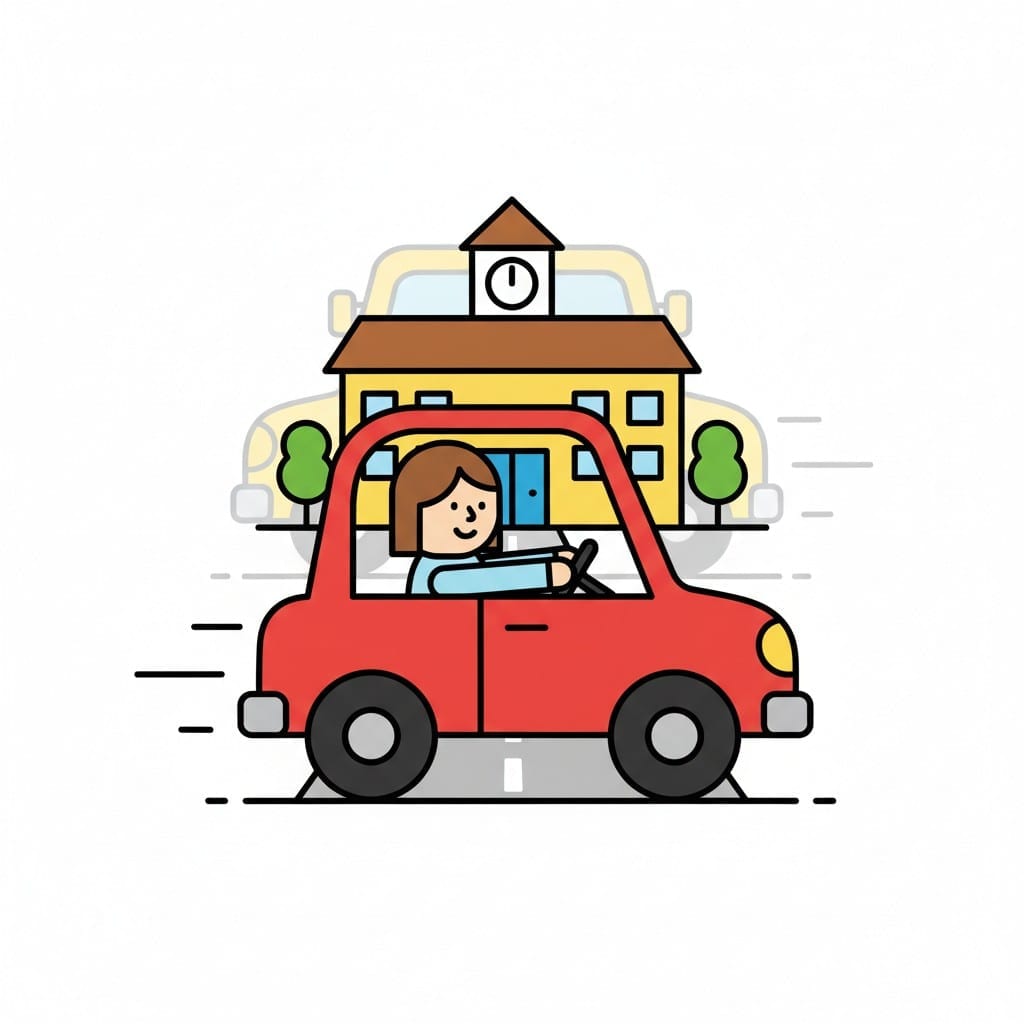 ♀
♀Drive to school
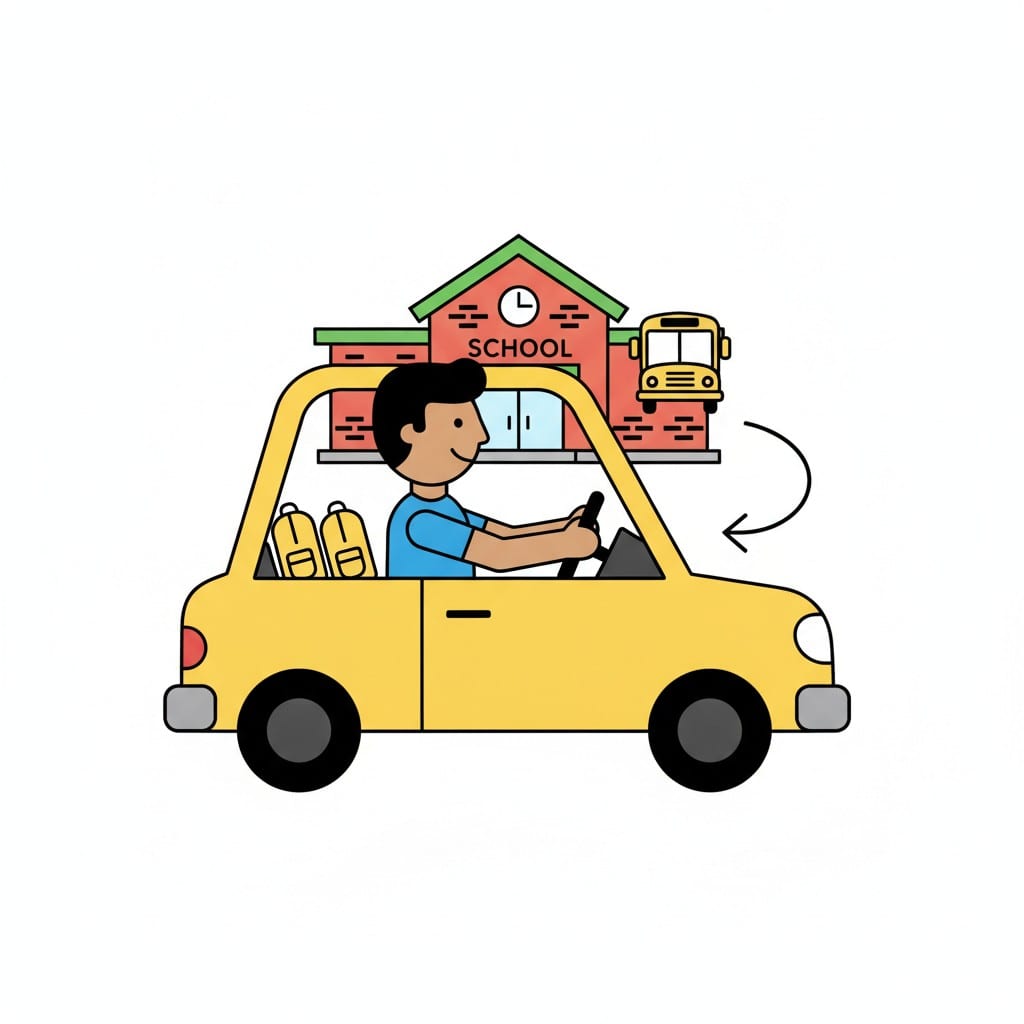
A person drives a car with a school in the background.
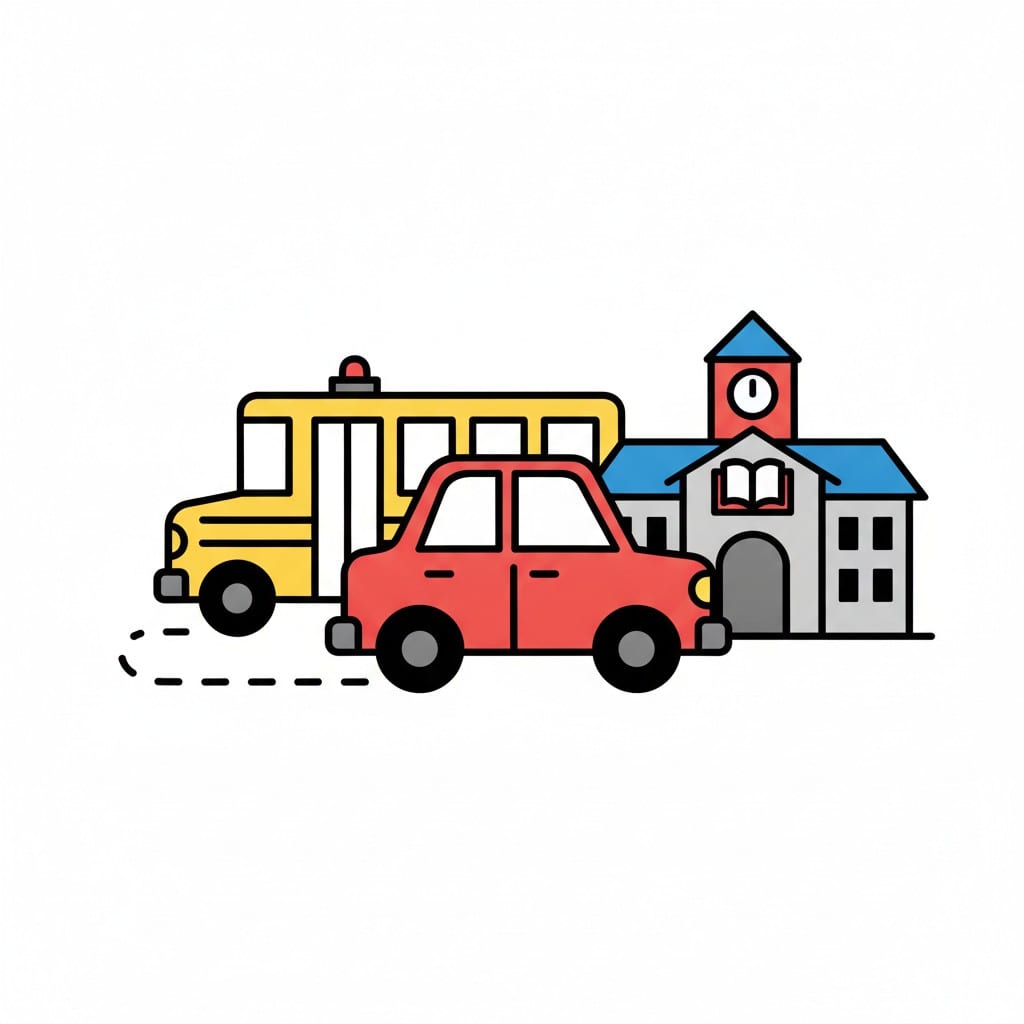
Going to school
A red car and a yellow bus drive towards a school building.
 ⚲
⚲Getting a ride to school
A person drives a yellow car with backpacks in the back seat up to the school.
About this visual support
The hardest stretch of the morning is rarely getting out of bed – it is the journey itself. Within fifteen minutes the child moves from the soft sounds of home to a cramped car seat and then into a yard of classmates already shrugging off their jackets. That is a lot of environments in very little time, and the brain does not always shift gears at the same speed as the road.
A visual schedule keeps the whole route in one chain: hallway, shoes, car, seat belt, music or quiet, parking spot, walk, classroom door. Once the child can see the sequence, the drive stops feeling like an empty gap between home and school and becomes a planned stretch with a clear start and finish. Questions about how soon you arrive ease off, and so does the worry about what waits inside.
One concrete tip: include a picture of your usual parking spot. It becomes an anchor that signals the drive is over and the walk begins, which makes the goodbye at the gate smoother. You can put the whole routine, with a travel-time timer and tick-off for each step, together in Routined, free for 14 days.
Use this image in a schedule
Build your own visual schedule with this image and download it as a print-ready PDF. Completely free.
More similar visual supports
Bus
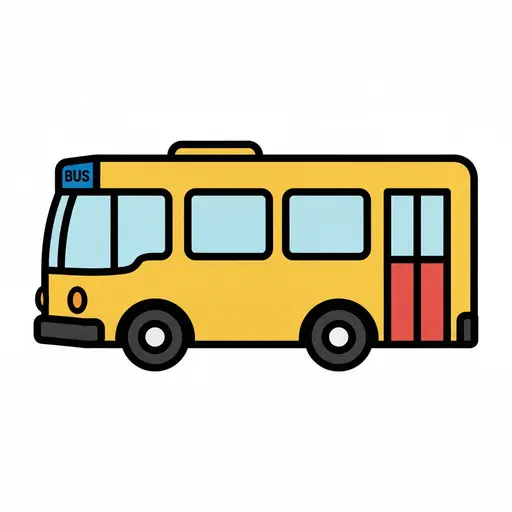
A yellow bus with red doors.
Pick up backpack
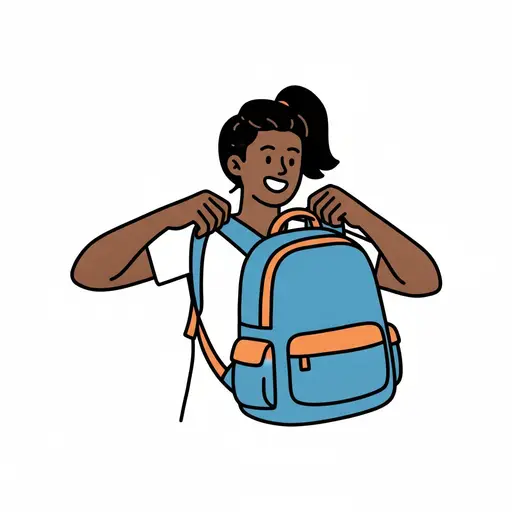
A girl lifts a blue backpack by its shoulder straps.
Ride the bus
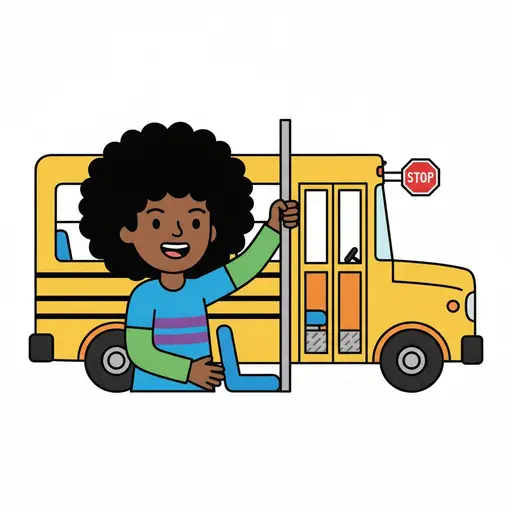
A girl holds a pole and climbs onto a yellow school bus.
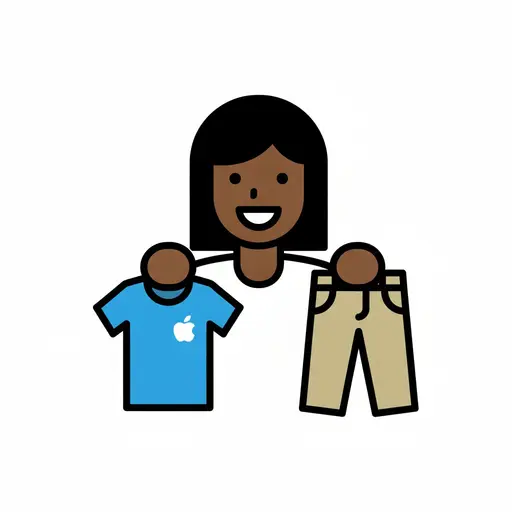
Get school clothes
A girl holds up a blue t-shirt and a pair of trousers for the school day.
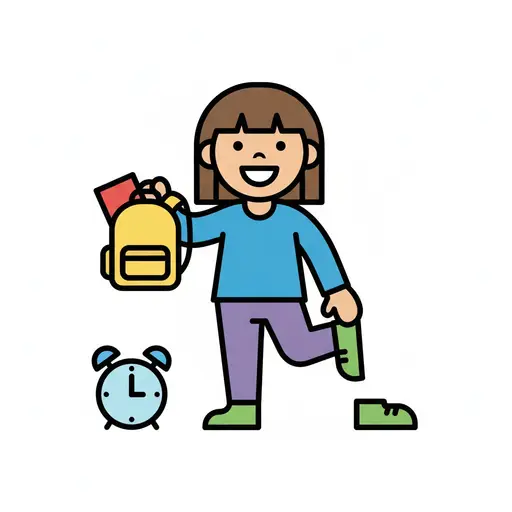
Get ready for school
A girl holds her backpack and puts on a shoe next to an alarm clock.
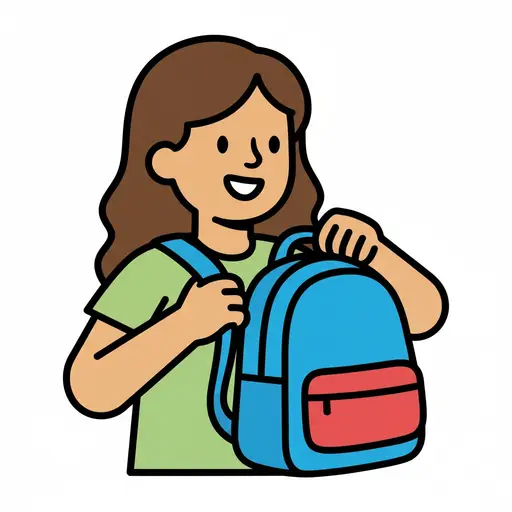
Put on the backpack
A smiling girl puts a blue backpack on over her shoulder.
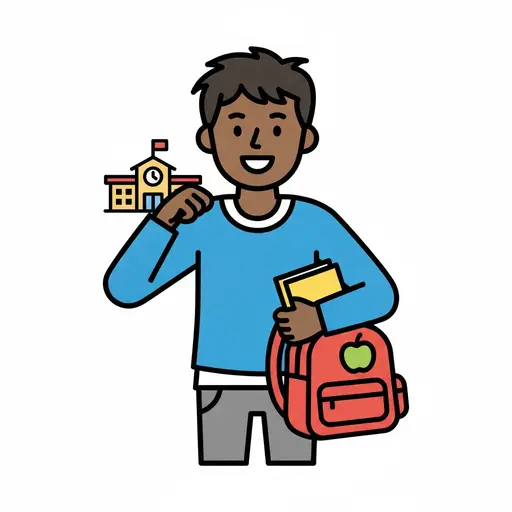
Choose school clothes
A boy with a backpack and a book stands by a school symbol.
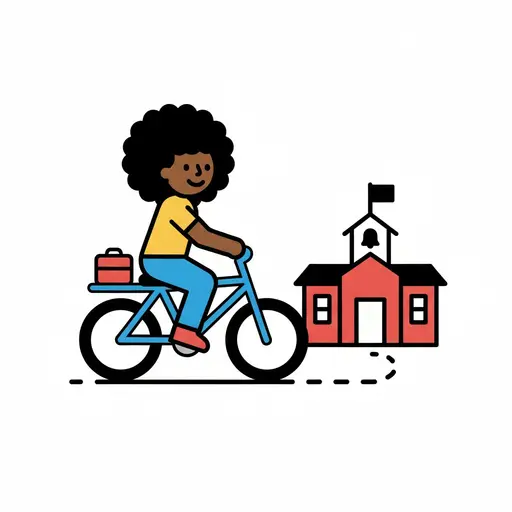
Bike to school
A girl in a yellow top pedals a blue bike with a red bag on the rear rack toward...
This visual support in other languages
Take the visual supports with you
In Routined you build schedules from these pictures, add timers and voice instructions, and your child follows the day on their own.


* 14-day free trial, then $2.39 a month or $20.99 a year (US pricing). Cancel anytime.