Drive to work
The clock decides, even when your child would rather stay home. Traffic queues, red lights and a meeting start time all set the door-closing moment. The steps below show why the trip starts now and where it ends.
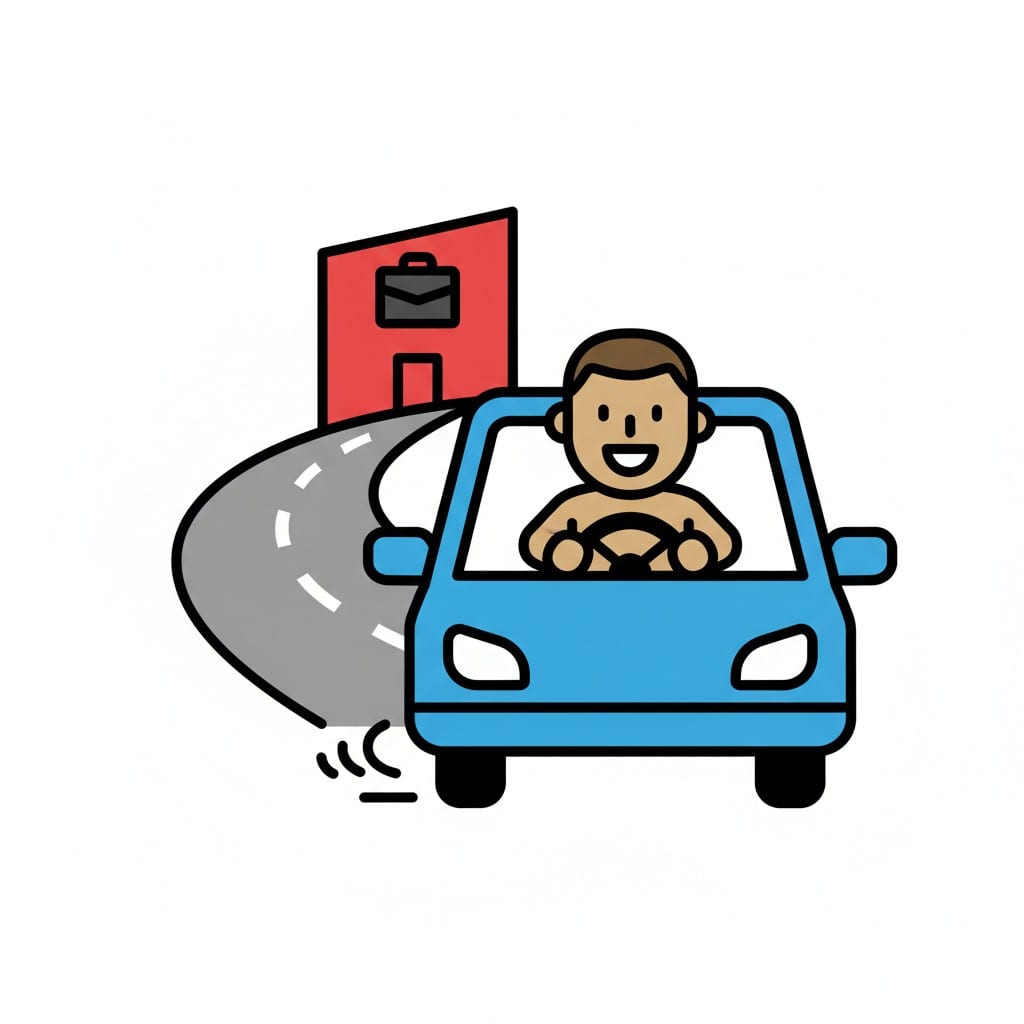 ♂
♂Driving to work
A smiling man driving a blue car along a road that leads to a building marked with a briefcase.
About this visual support
Driving to work is not a routine the child has any say in — it is shaped by traffic lights, queues and a boss waiting at the other end. For a small child watching the parent leave, that logic is invisible: it makes no sense that mum or dad has to go now, when home is the cosiest place around.
Visual schedules make the timetable visible. The child sees the car, the road, the daycare and an arrow pointing back to home later in the day. Moving from the hallway sofa to the car seat gets easier when there is a picture of where the trip ends, not just one of it starting. That softens the familiar feeling of being left without an explanation.
A concrete tip: include a picture of the reunion — who picks the child up in the afternoon and what you usually do together afterwards. It shifts the focus from absence to the return. To tie the whole morning together from wake-up to goodbye hug, you can build a sequence in Routined where the car is one labelled step in the order.
Use this image in a schedule
Build your own visual schedule with this image and download it as a print-ready PDF. Completely free.

More similar visual supports

Before work
A woman wearing a yellow hard hat and blue shirt, holding a toolbox and pointing...

Car or e-scooter
A blue car seen from the side with a scooter handlebar rising from the bonnet an...
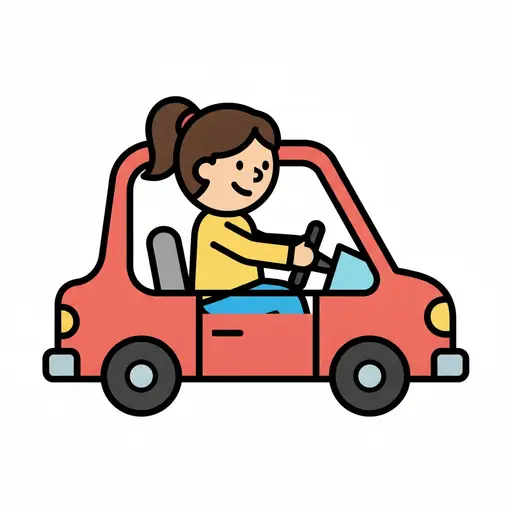
Car ride
A girl sits in a red car.
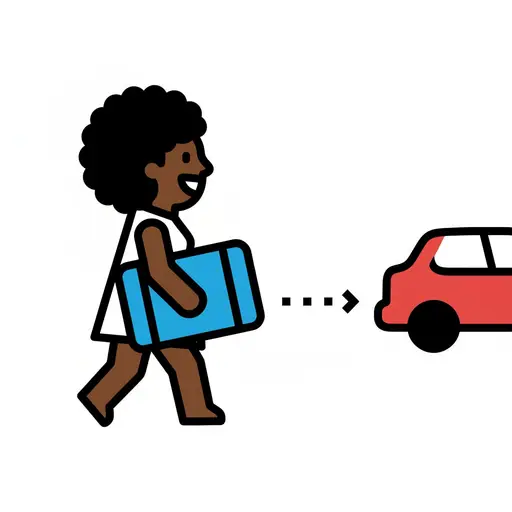
carry to car
A person carries a blue object towards a red car.

Dad drives
A person is driving a blue car with a steering wheel in their hands. The car has...
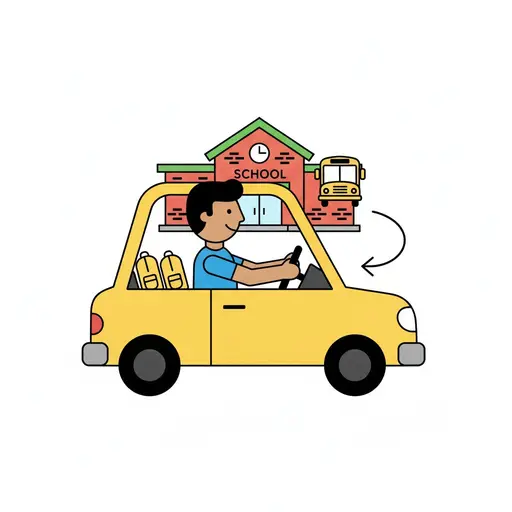
Drive to school
A person drives a yellow car with backpacks in the back seat up to the school.

Drop off kids
A smiling adult with braids waves beside a small smiling child holding a teddy b...

Get ready for work
A woman in a blue work shirt with a name badge adjusts her collar next to a brie...
Take the visual supports with you
In Routined you build schedules from these pictures, add timers and voice instructions, and your child follows the day on their own.


* 14-day free trial, then $2.39 a month or $20.99 a year (US pricing). Cancel anytime.