Get clothes
Getting clothes sounds like one errand but is really several small decisions: go there, choose, pick out, bring back. The visual support below holds the chain together so no item stays behind in the wardrobe.
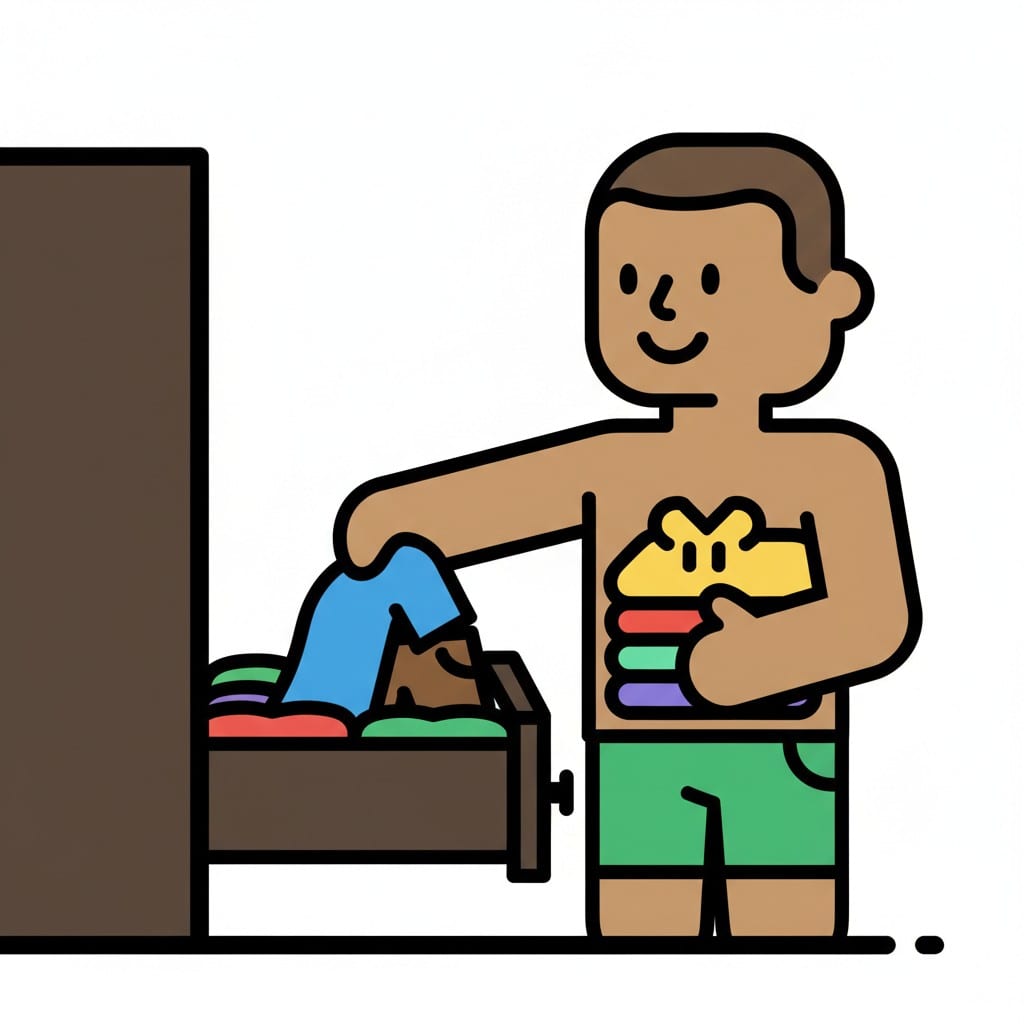 ♂
♂Get clothes
An illustration of a boy wearing green shorts, standing next to an open drawer, taking clothes out of it with one hand and holding a stack of colorful folded clothes in the other arm.
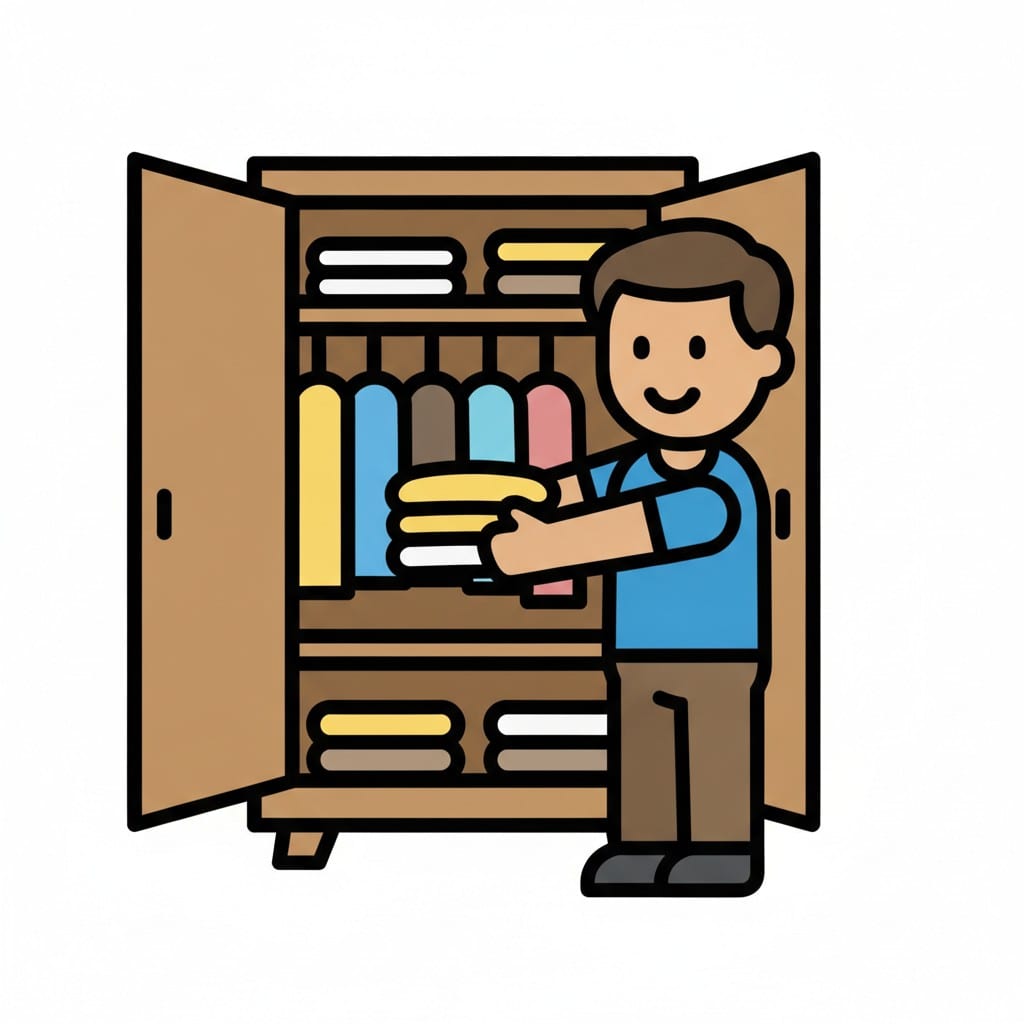 ♂
♂Getting clothes from wardrobe
A boy takes folded clothes out of an open wardrobe.
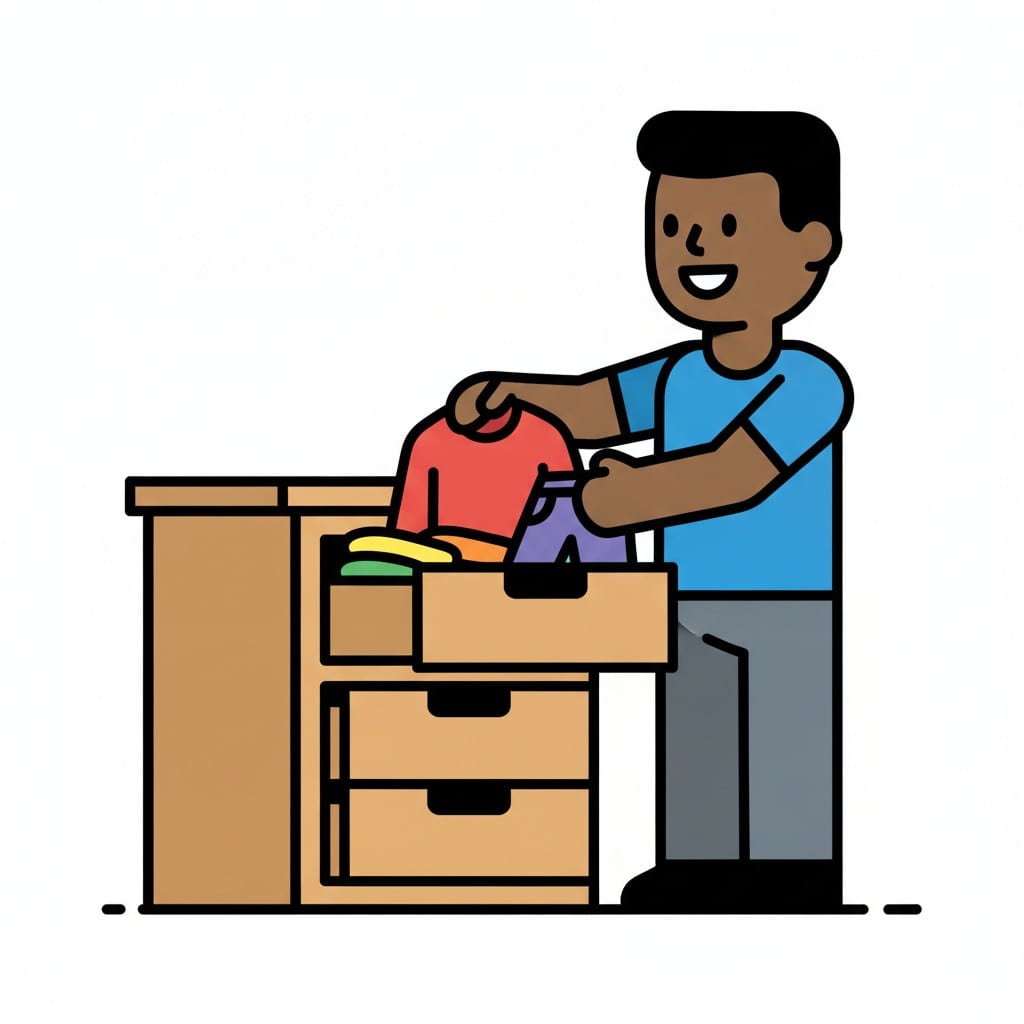 ♂
♂Taking clothes from drawer
A man takes clothes out of an open dresser drawer.
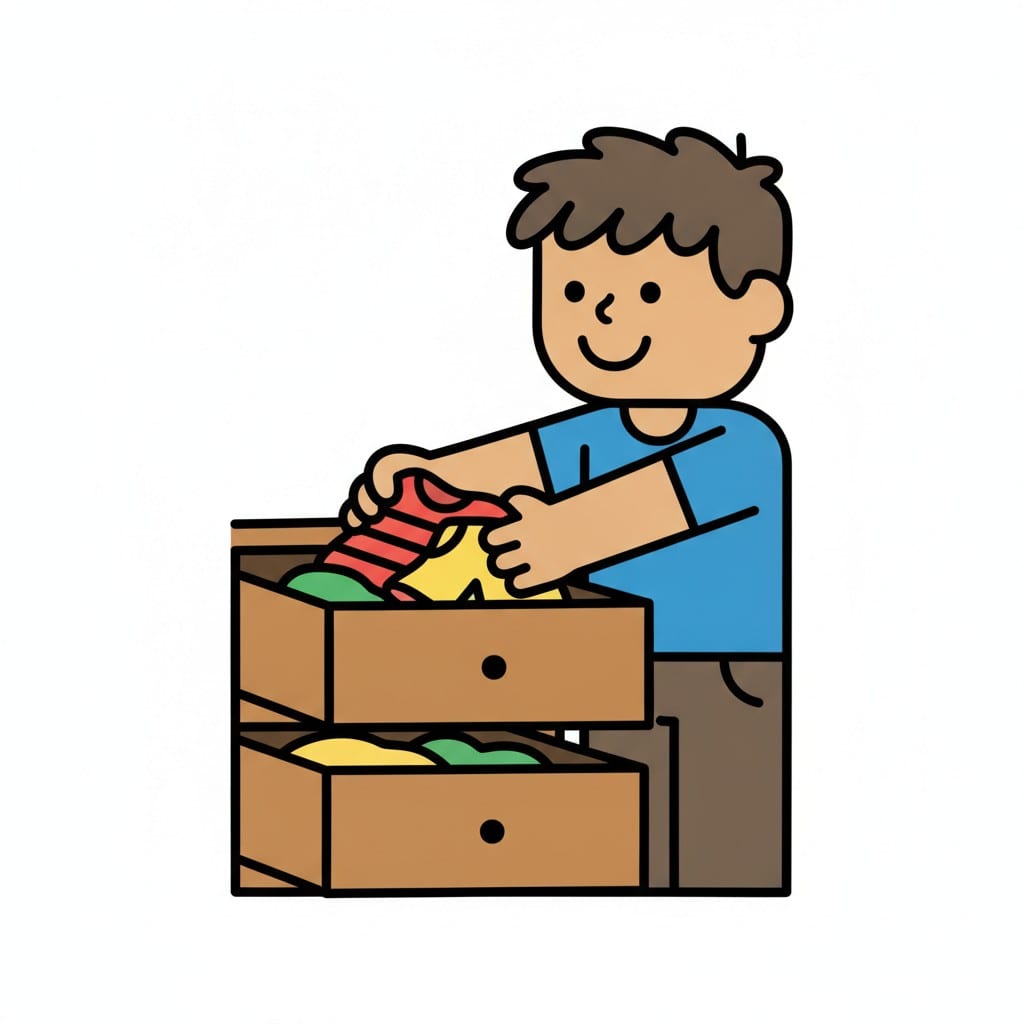 ♂
♂Boy getting clothes
A boy picks clothes out of a pulled-out drawer.
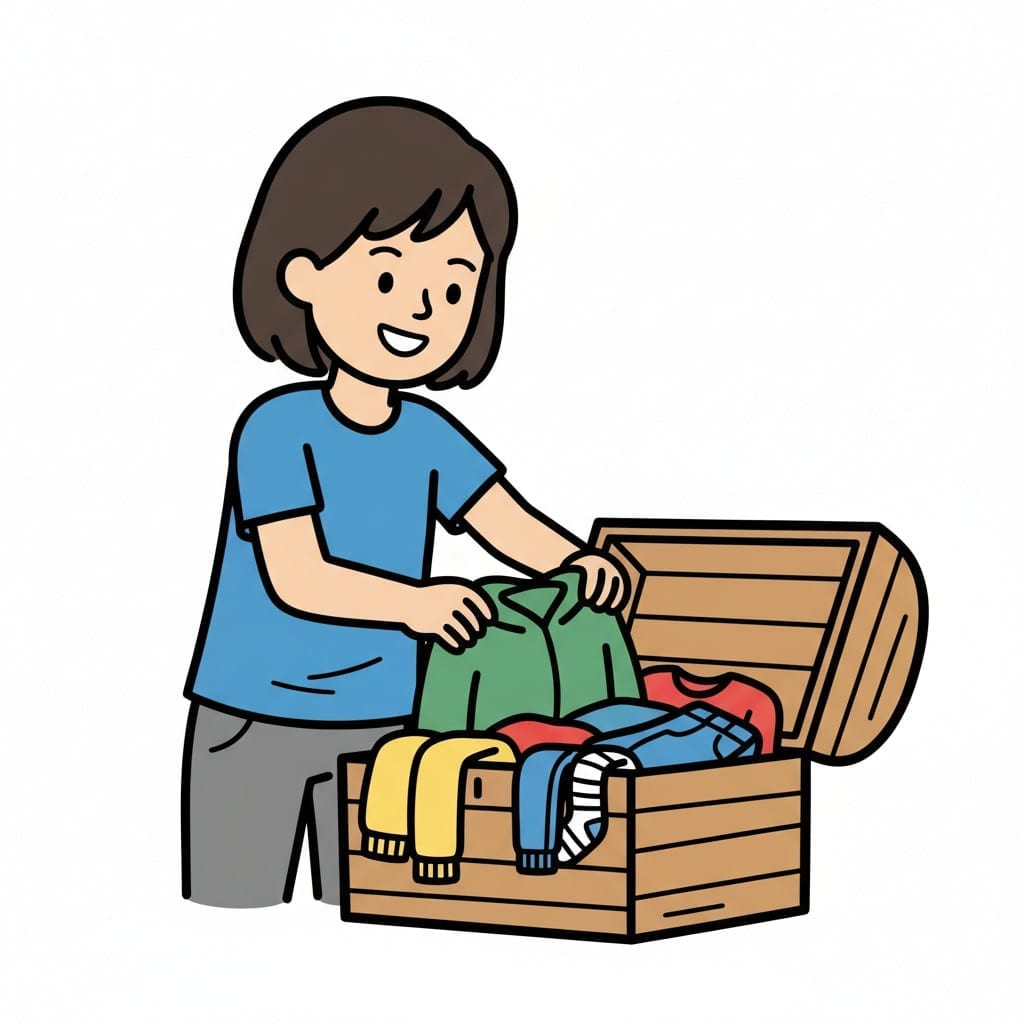 ♀
♀Picking clothes from chest
A person is taking clothes from an open wooden chest filled with various garments.
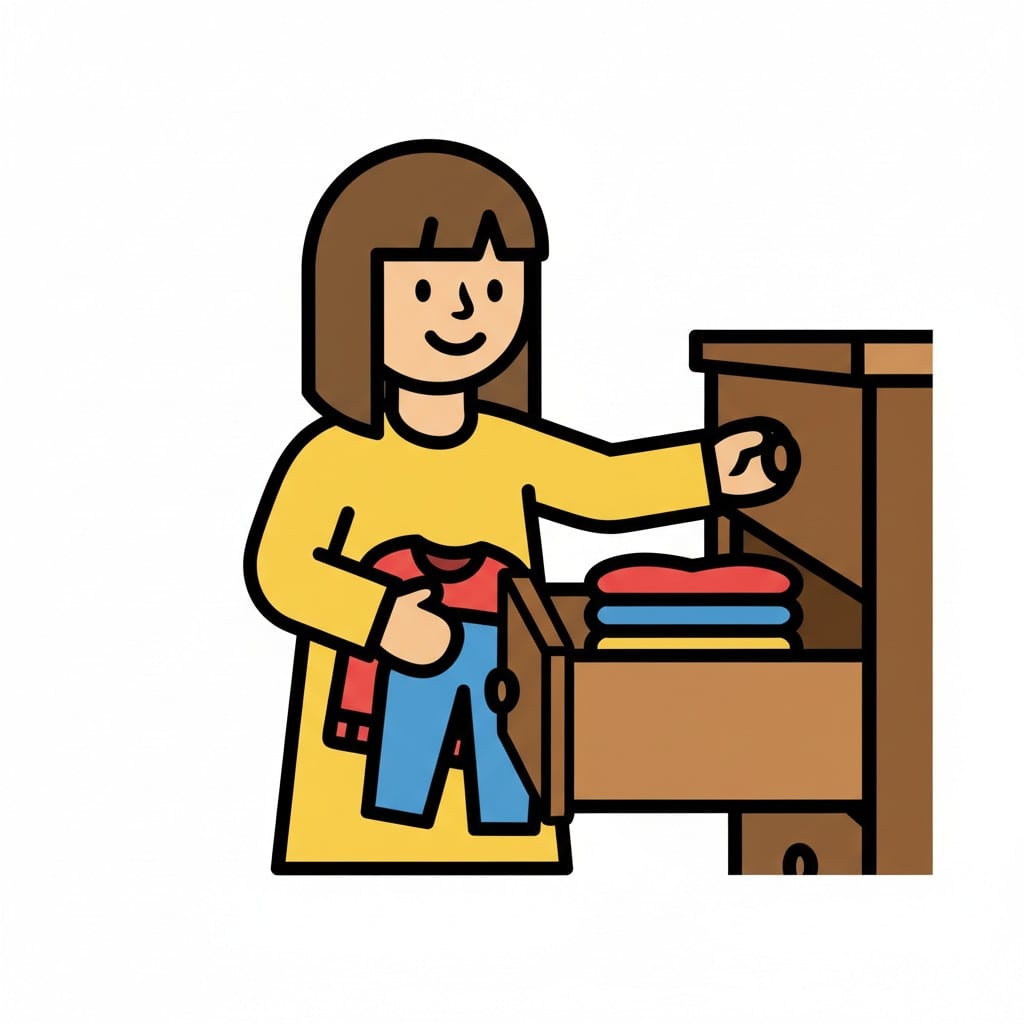 ♀
♀Picking clothes from drawer
A person is taking clothes from an open dresser drawer with folded garments inside.
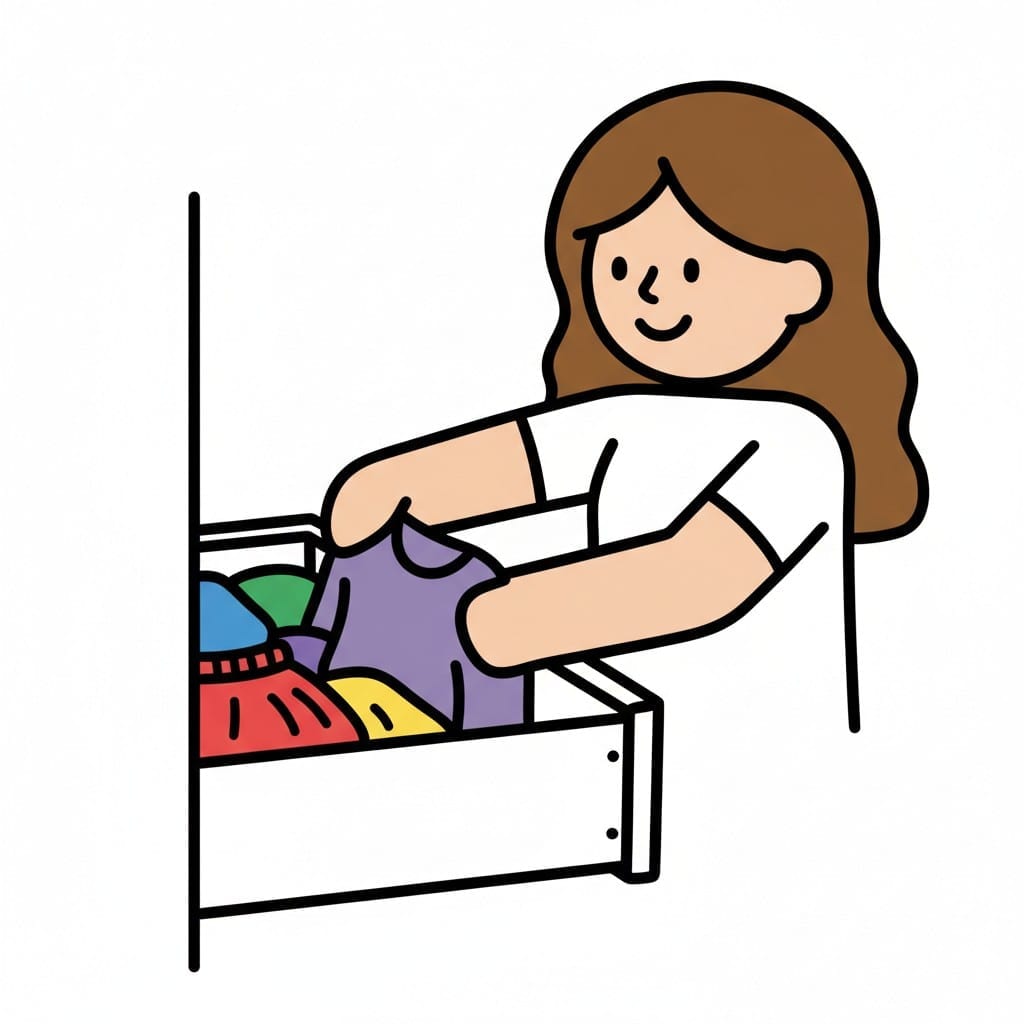 ♀
♀Get clothes
A woman taking a purple shirt out of a white dresser drawer filled with colorful clothes.
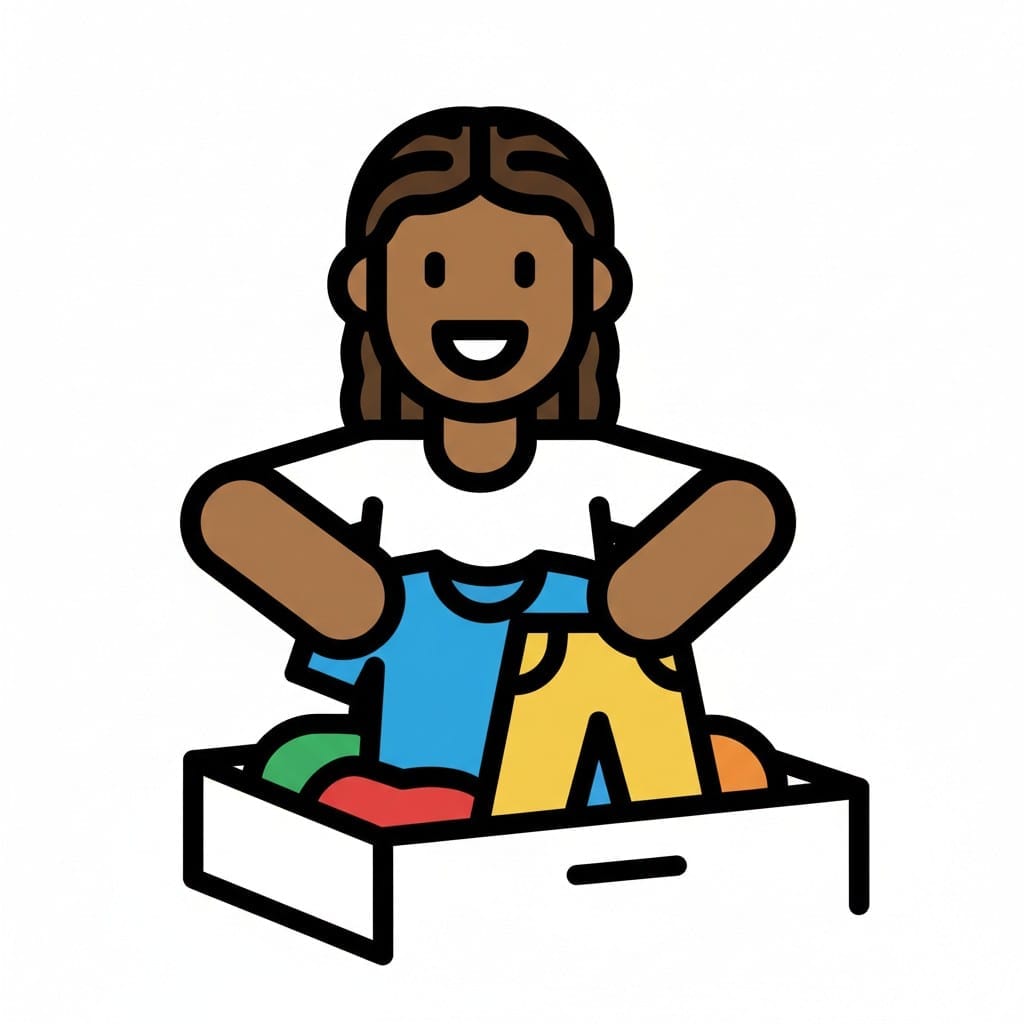 ♀
♀Get clothes
An individual smiles while pulling clothes from a box.
About this visual support
An empty room, an open wardrobe door and suddenly a child standing there with two socks who has forgotten the rest. Going to get clothes is a classic case of a task with executive function running quietly underneath: start, hold the plan, switch between choices, come back with everything.
When the steps live on a picture board, it becomes possible to check off one thing at a time without keeping the whole plan in mind. Bottoms, top, socks, underwear, an extra jumper or vest depending on the season – a visual list keeps the links from dropping. It is also easier to ask for help with a specific step when the child can point instead of explain.
A concrete tip: keep the order in the visual support the same as the order the clothes will be put on. The fetch then becomes a rehearsal of the dressing, and the two reinforce each other. In the Routined app you can save that order as a routine the child opens on their own in the morning, so the errand always looks the same.
Use this image in a schedule
Build your own visual schedule with this image and download it as a print-ready PDF. Completely free.
More similar visual supports
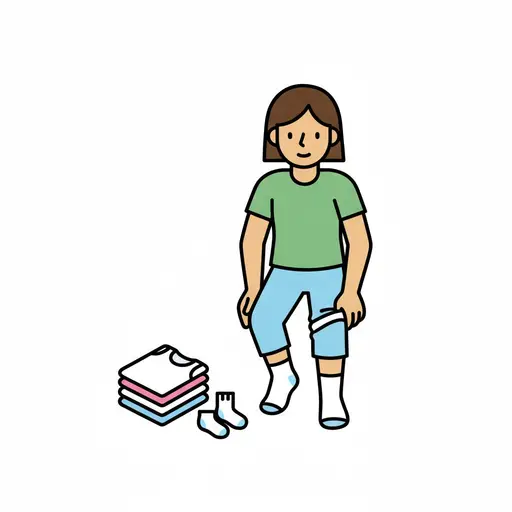
Put on underwear and socks
A person in a green t-shirt and light blue trousers pulls on a white sock, besid...
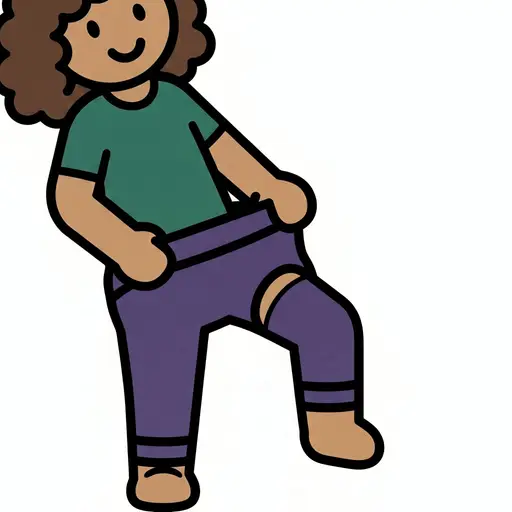
Put on leggings
A smiling person putting on purple leggings.
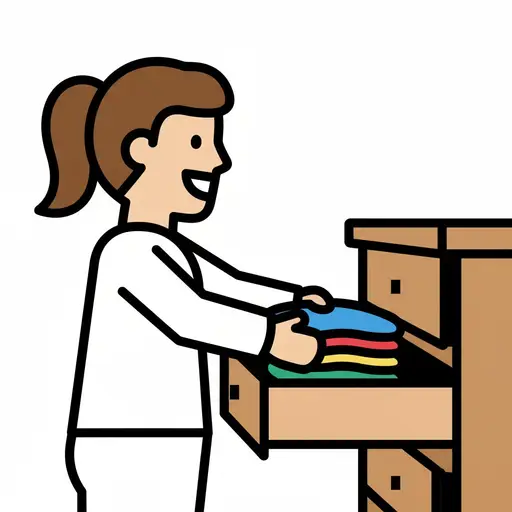
Get out clothes
A smiling woman takes folded clothes out of a dresser drawer.
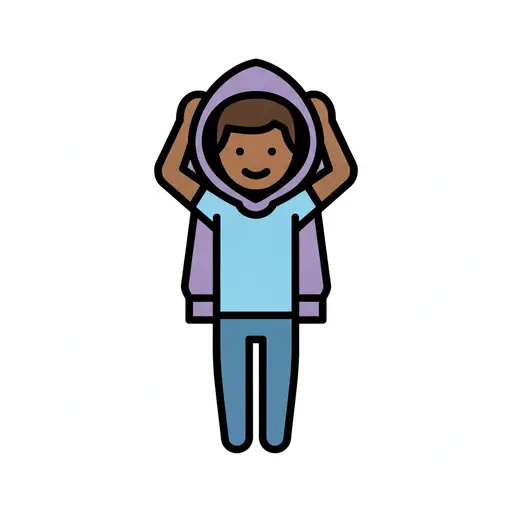
Get dressed
A child pulls a purple hoodie over their head.
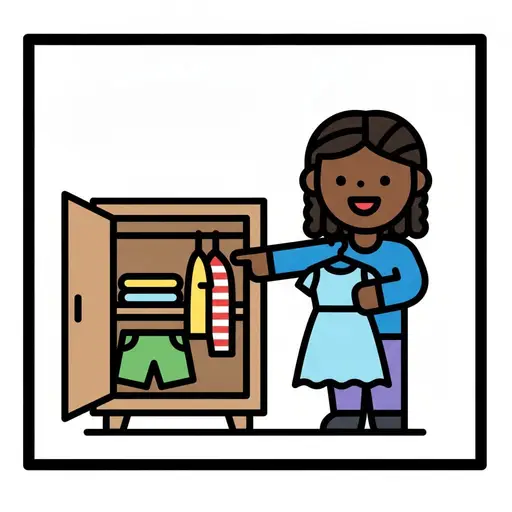
Pick out an outfit
A happy girl with braids stands by an open wardrobe holding up a light blue dres...
Sweater
A blue knitted vest with a V-neck.
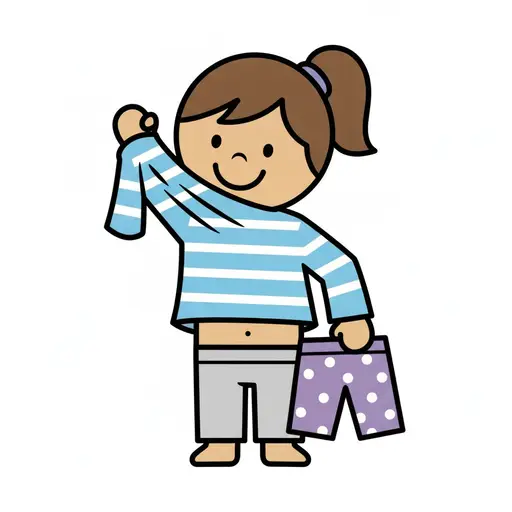
Change pajamas
A girl with a ponytail slips her arm into the sleeve of a light blue striped paj...
Tights
Purple tights seen from the front.
This visual support in other languages
Take the visual supports with you
In Routined you build schedules from these pictures, add timers and voice instructions, and your child follows the day on their own.


* 14-day free trial, then $2.39 a month or $20.99 a year (US pricing). Cancel anytime.