Get up
The body is heavy, the room is cold, and horizontal is the only position not pushing back right now. The visual support below breaks getting up into a handful of small motions, so the brain does not have to commit to everything at once.
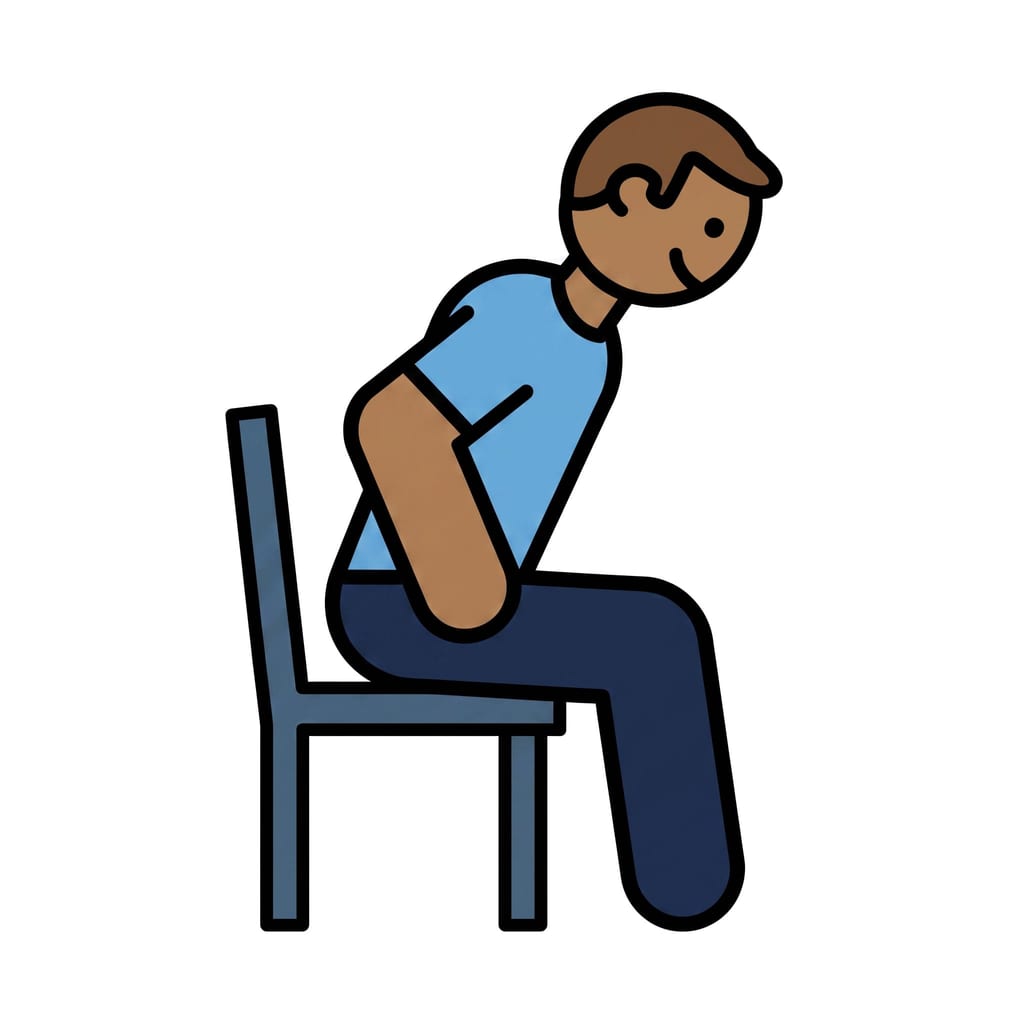 ♂
♂Sitting slumped on a chair
Seen from the side, a man sits leaning forward and slumped on a plain blue chair.
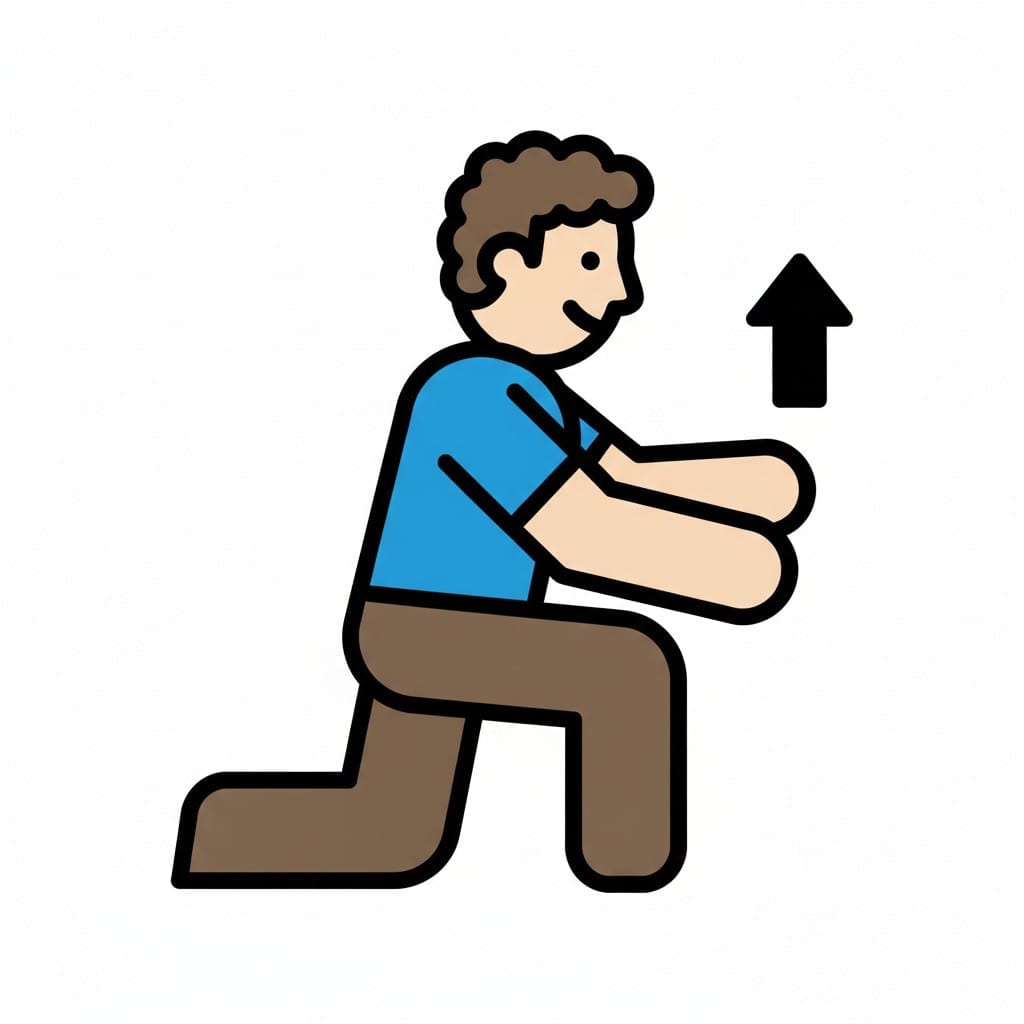 ♂
♂Rising with an upward arrow
A man in a blue t-shirt and brown trousers pushes up from kneeling while a solid black arrow points upward.
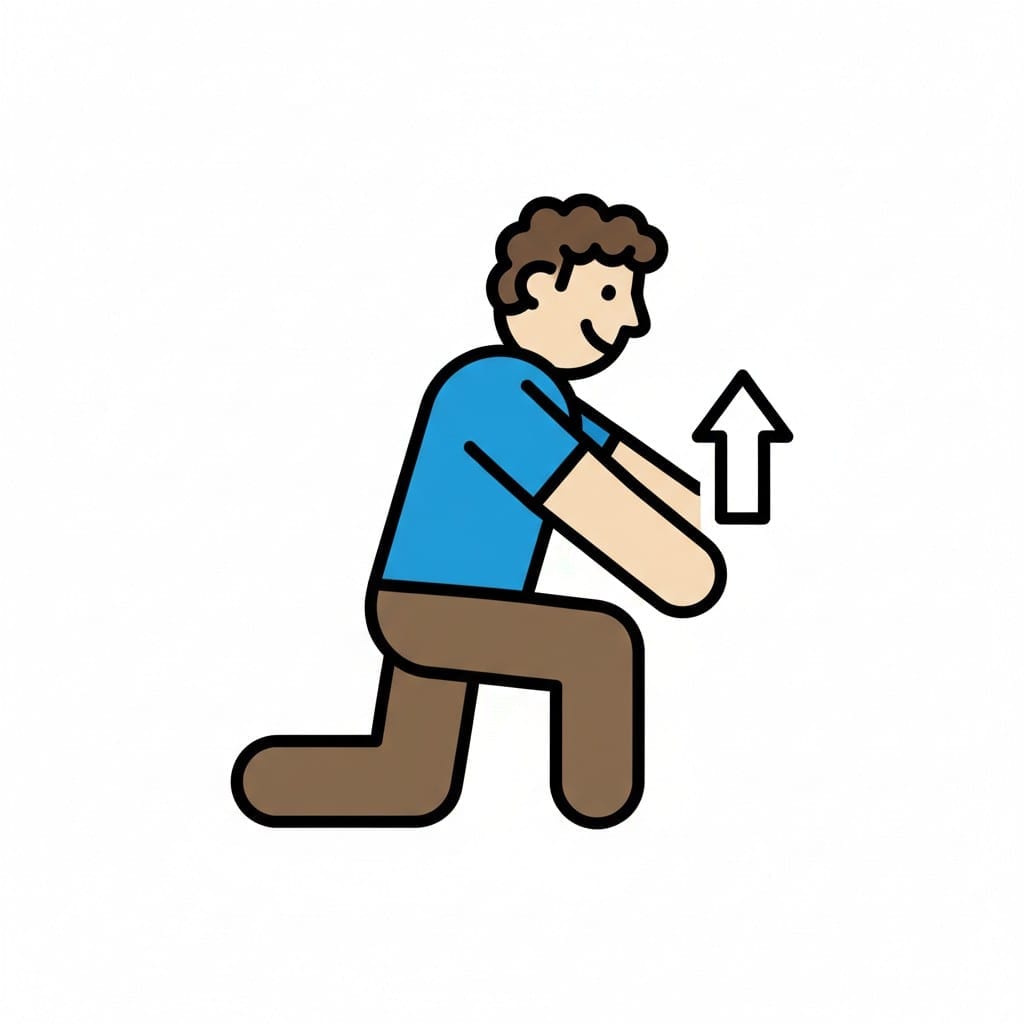 ♂
♂Coming up from the knees
From a kneeling position a man in a blue t-shirt straightens up, and an outlined arrow beside him points upward.
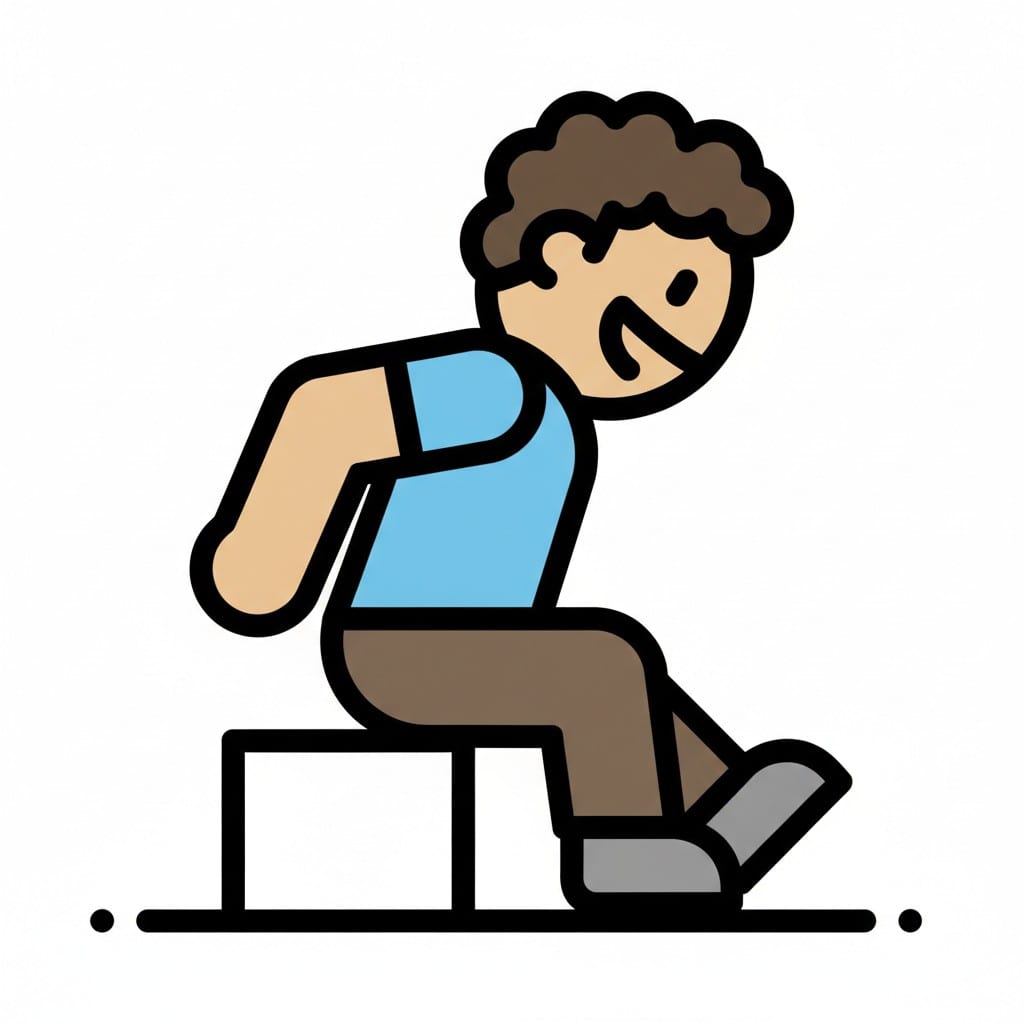 ♂
♂Getting up from a stool
Wearing a light blue top and brown trousers, a man pushes himself up off a white stool.
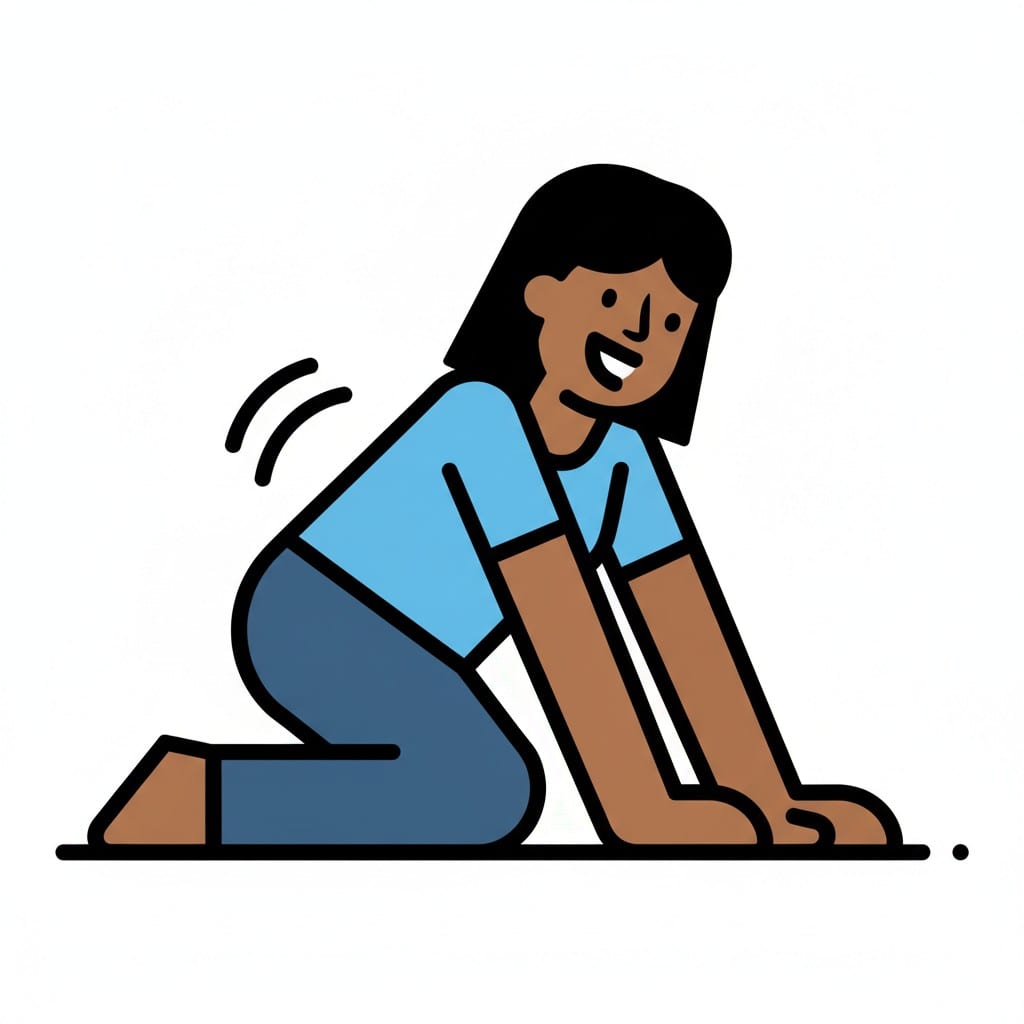 ♀
♀Woman getting up
A woman on all fours, ready to stand up from the floor or bed.
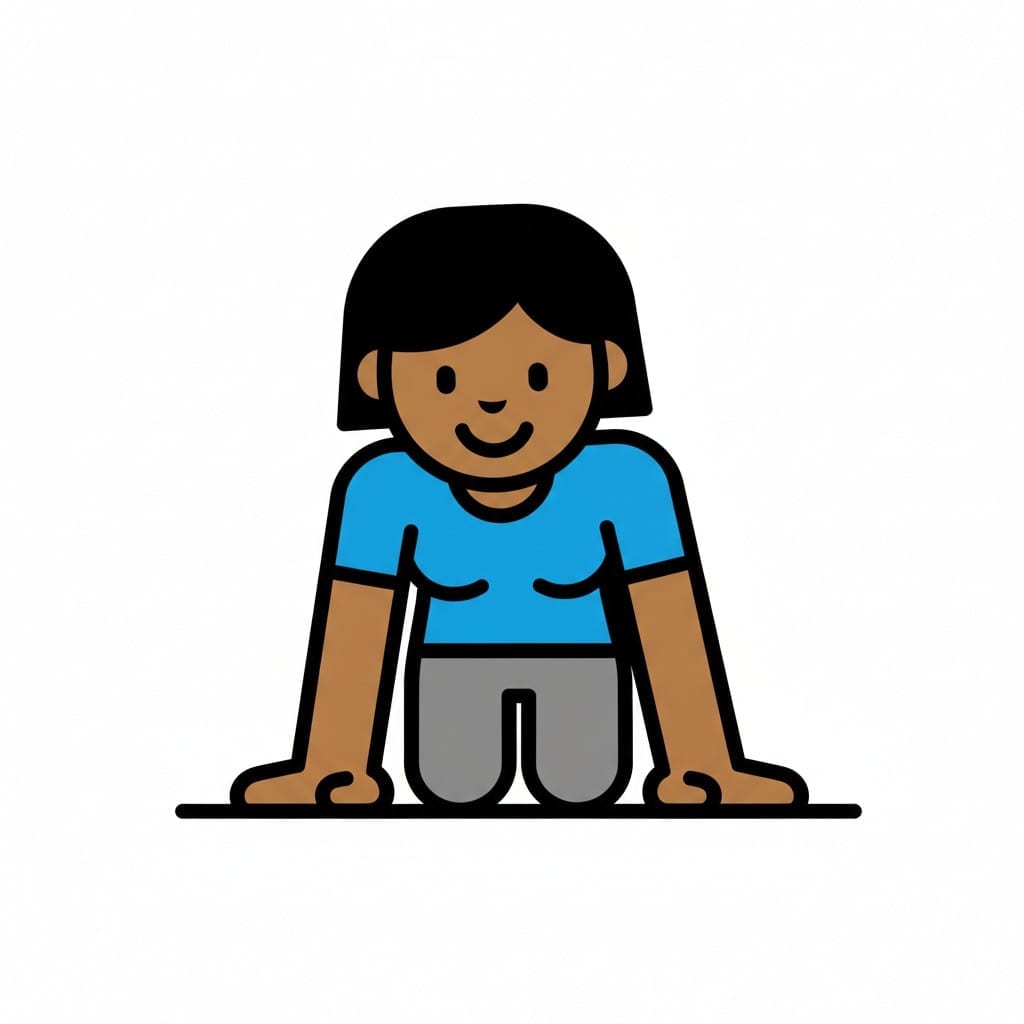 ♀
♀Woman sitting
A woman sitting on the floor or bed with her legs in front of her.
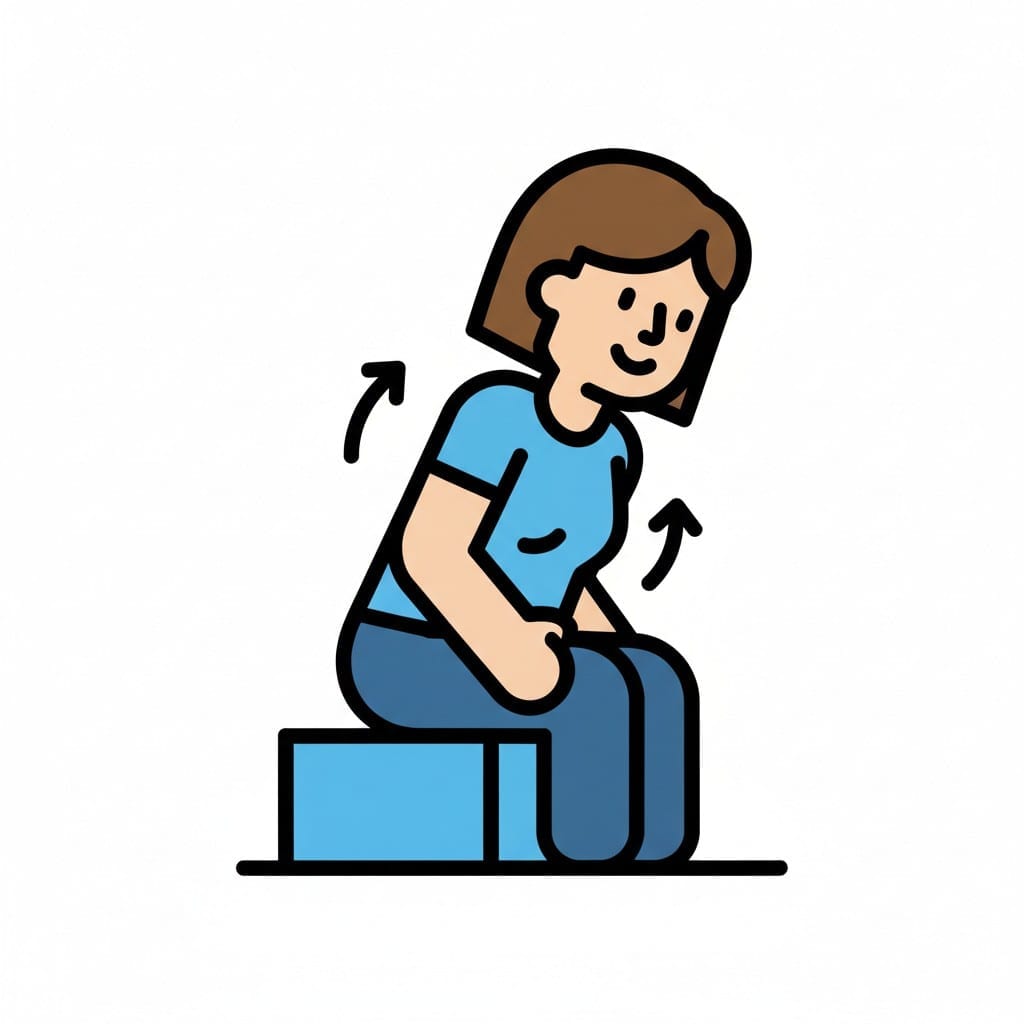 ♀
♀Get up
An illustration of a woman sitting on a blue block, with two upward arrows indicating the action of standing up.
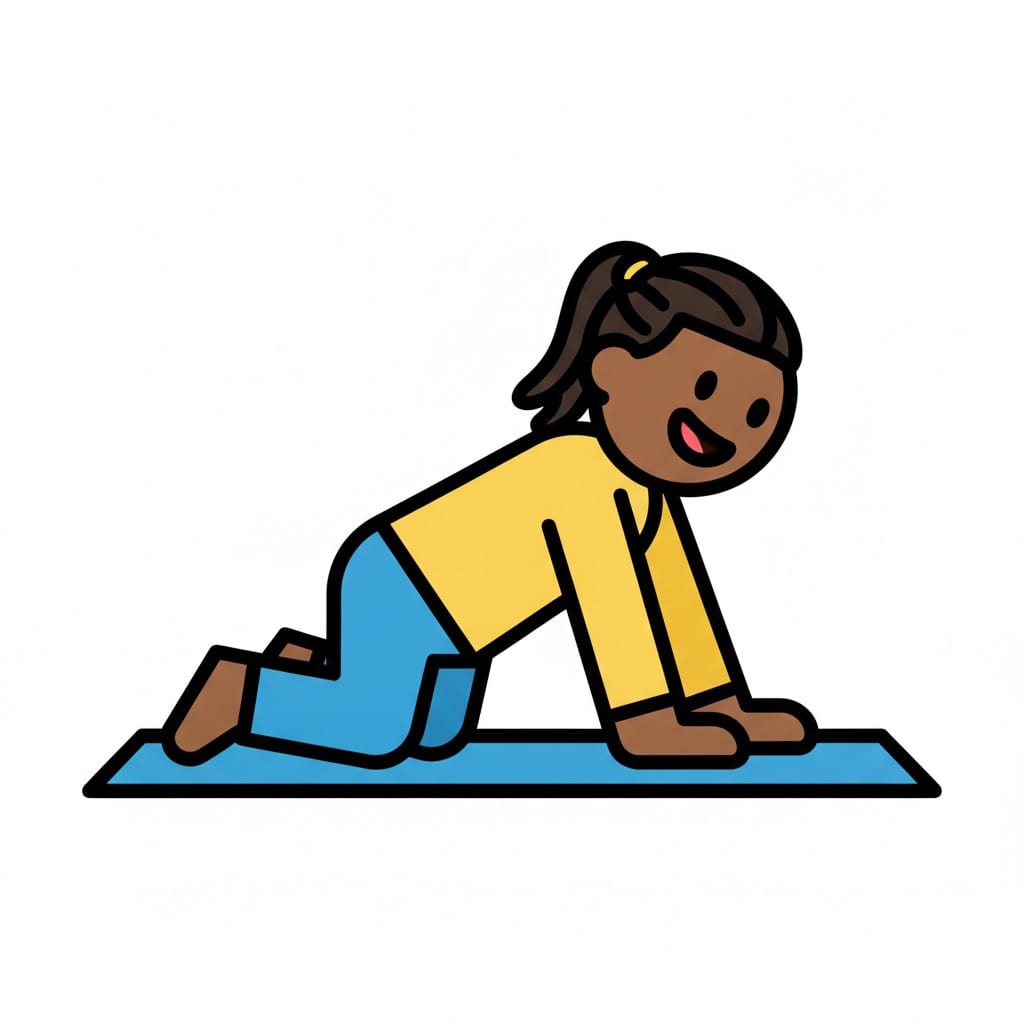 ♀
♀Girl getting up
A girl is on all fours on a mat, about to get up.
 ⚲
⚲Get out of bed
A child climbs out of bed and puts their feet on the floor.
 ⚲
⚲Getting out of bed
A person climbs out of bed, pushing off the blanket with their hands.
About this visual support
Getting up is not a single action but a chain the brain would rather not start at all. Thinking the thought all the way through — feet on the floor, cold room, clothes, day ahead — is overwhelming inside six seconds. That is why many children (and adults) stall on step one and start negotiating with themselves for five more minutes.
The visual support works against exactly that overwhelm. By showing the move as several small pictures — turn the head, plant the feet, pull on a hoodie — the brain only has to agree to one beat at a time. None of the steps is dramatic enough to wake real resistance.
One concrete tip: place the hoodie or sweater your child will wear right next to the bed the night before, and let the second square of the visual support be exactly that. The physical cold-shock shortens, and your child does not have to make any decision about what goes on. Inside the Routined app you can also let the morning sequence start with a calm sound cue instead of an alarm, so getting up begins before irritation has time to settle in.
Use this image in a schedule
Build your own visual schedule with this image and download it as a print-ready PDF. Completely free.

More similar visual supports
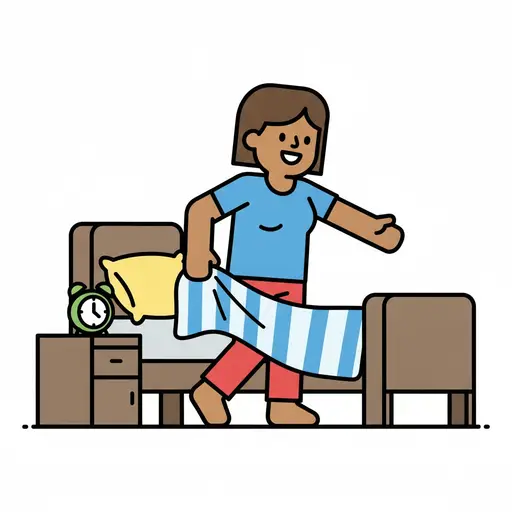
Get out of bed
A smiling person in pyjamas gets out of bed and pulls back a striped duvet, with...
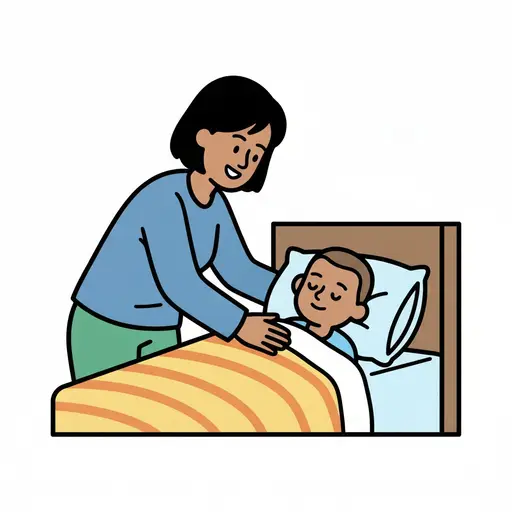
Wake children
A mom leans over a sleeping child under a striped blanket.
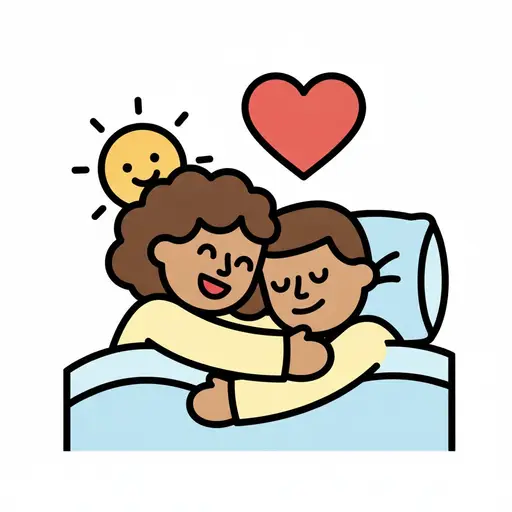
Wake Up and Cuddle
An adult and a child cuddle under the duvet at wake-up time with a heart above.
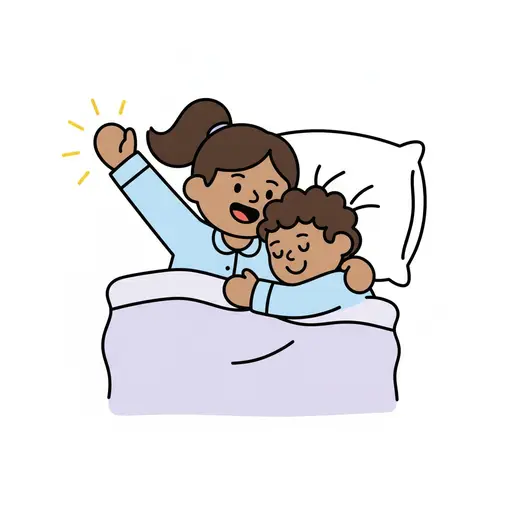
Wake Up and Snuggle
An adult stretches an arm up and snuggles with a child in bed at wake-up time.
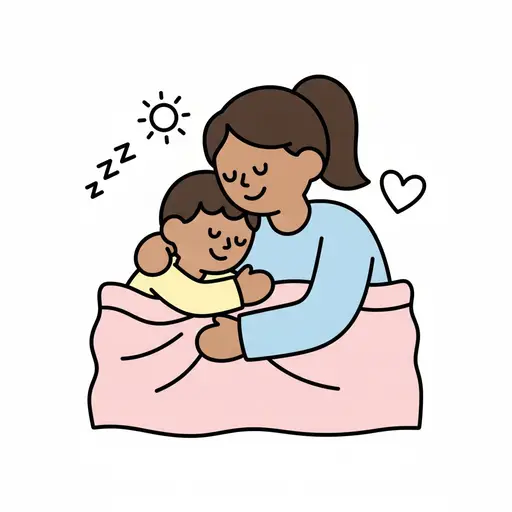
Wake Up Cuddle
An adult cuddles a sleepy child in bed with sleep symbols and a heart around the...
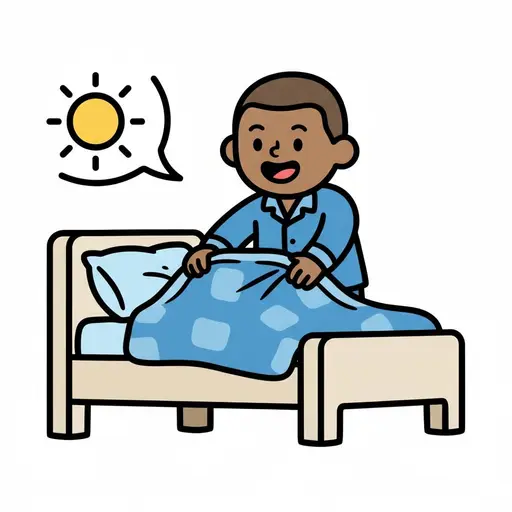
get up and make the bed
A boy in blue pajamas sitting on his bed, pulling up the blanket. A sun icon is ...

Good morning
A happy girl with a backpack waves by the preschool in the morning sun.
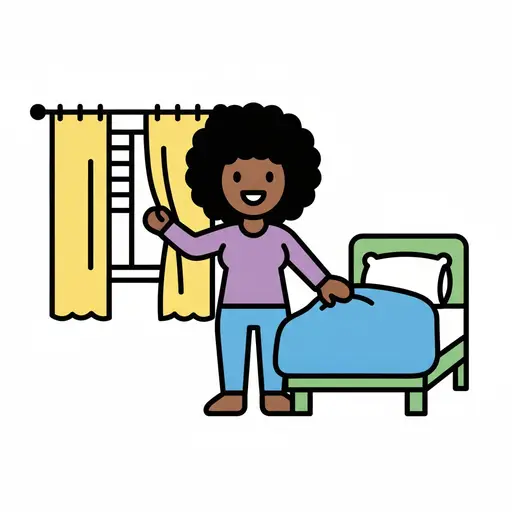
Make bed and open curtains
A girl draws back the curtain and makes the bed.
Take the visual supports with you
In Routined you build schedules from these pictures, add timers and voice instructions, and your child follows the day on their own.


* 14-day free trial, then $2.39 a month or $20.99 a year (US pricing). Cancel anytime.