get up and make the bed
When the first step has already eaten all the energy, the second feels unfair. The pictures below make both moments visible from the start, so the child knows what is coming and avoids a cold restart mid-routine.
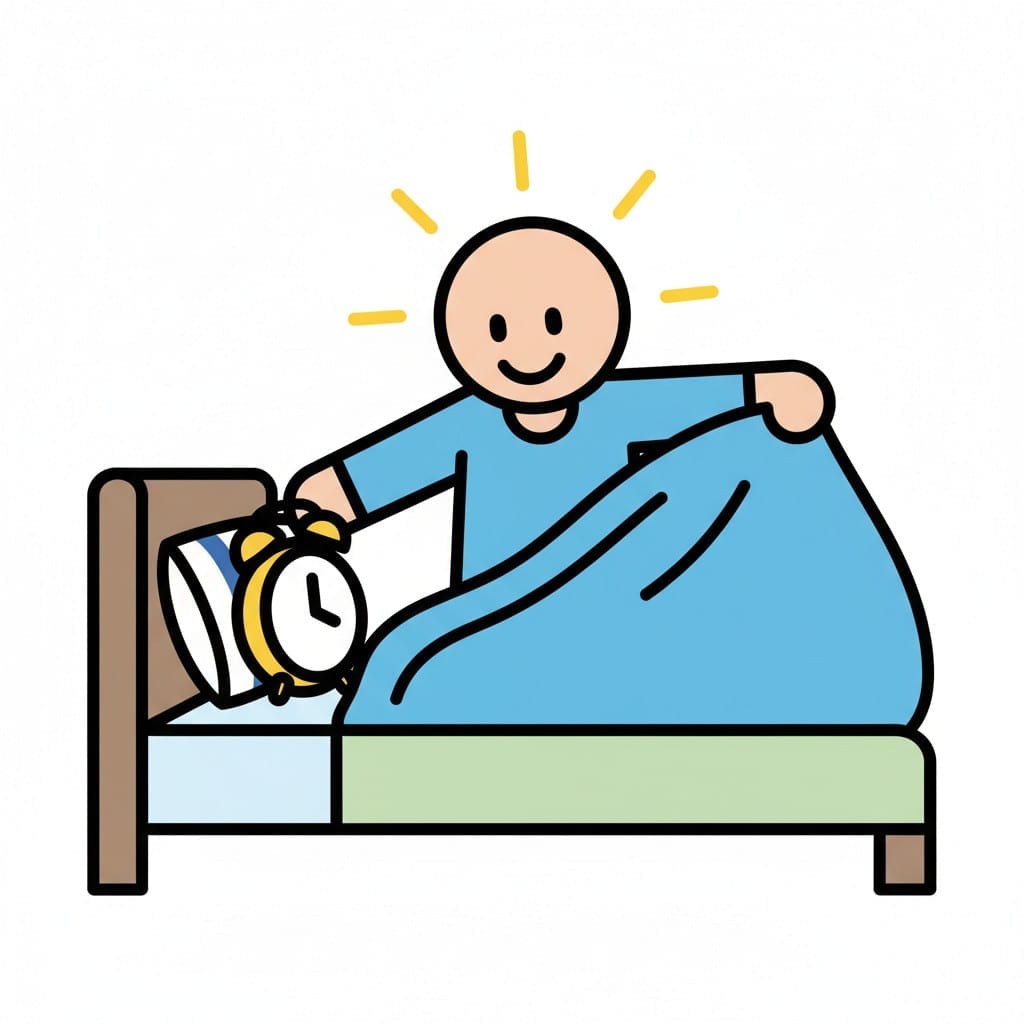 ♂
♂Waking up with alarm clock
A person is in bed, reaching for an alarm clock. Sun rays indicate it's morning.
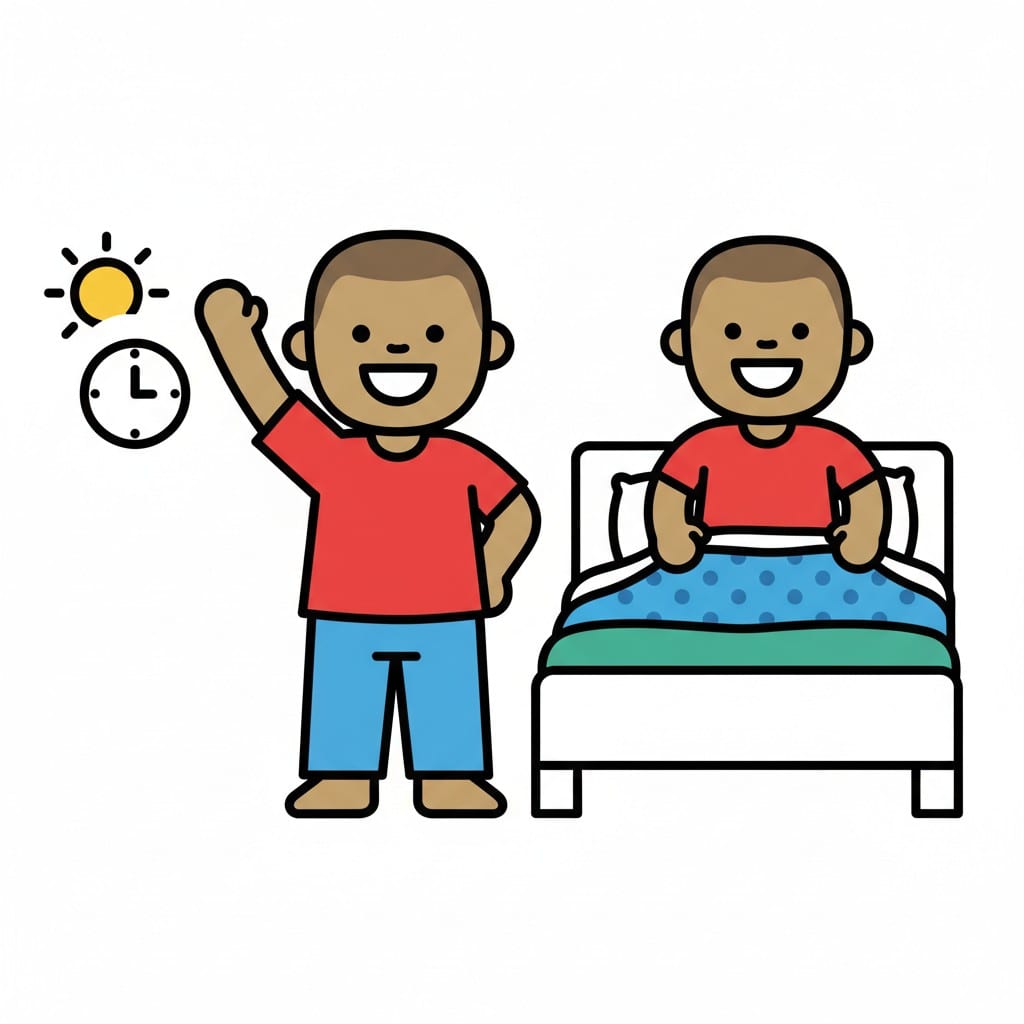 ♂
♂Getting out of bed
Two depictions of the same person. One person is sitting in bed and another person is standing next to the bed, ready to start the day. A sun and a clock symbolize morning.
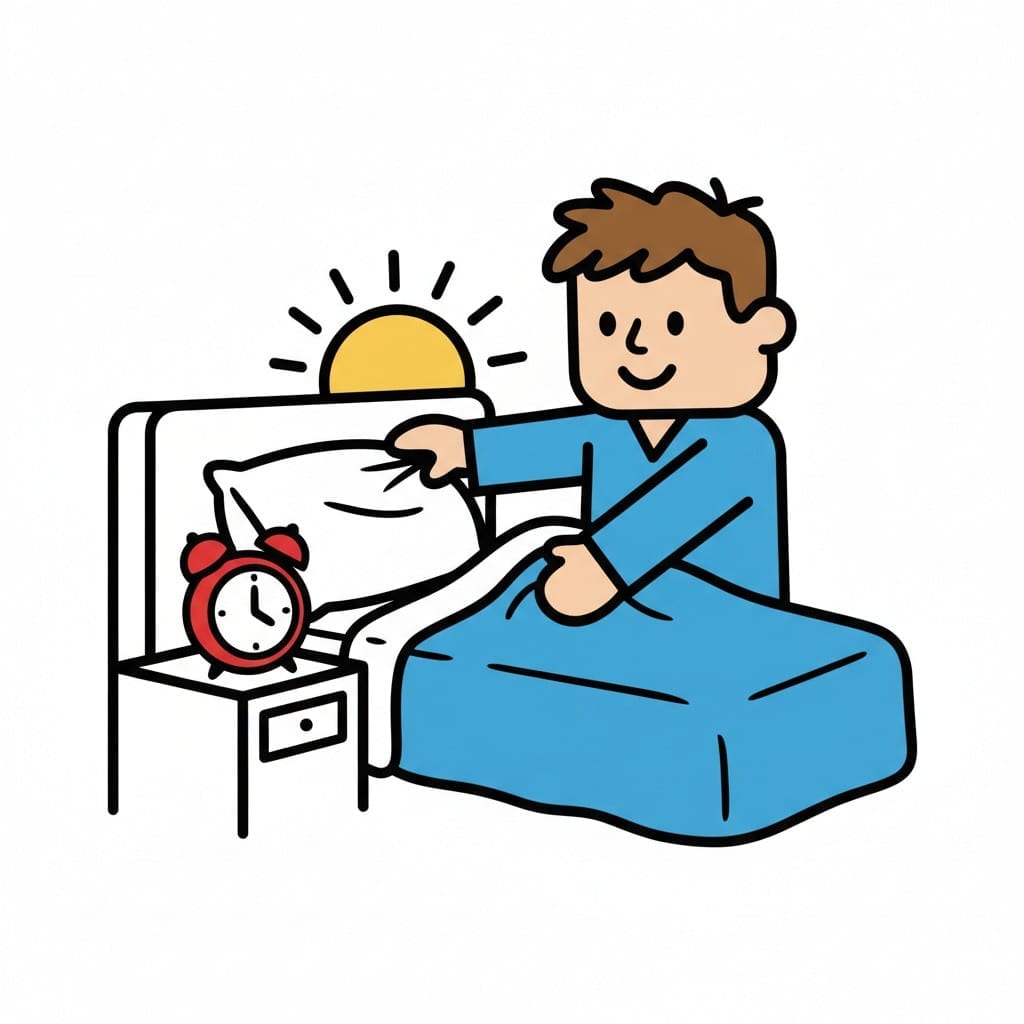 ♂
♂Making the bed
A person is sitting in bed, pulling the covers to make the bed. An alarm clock is on the nightstand and a sun symbolizes morning.
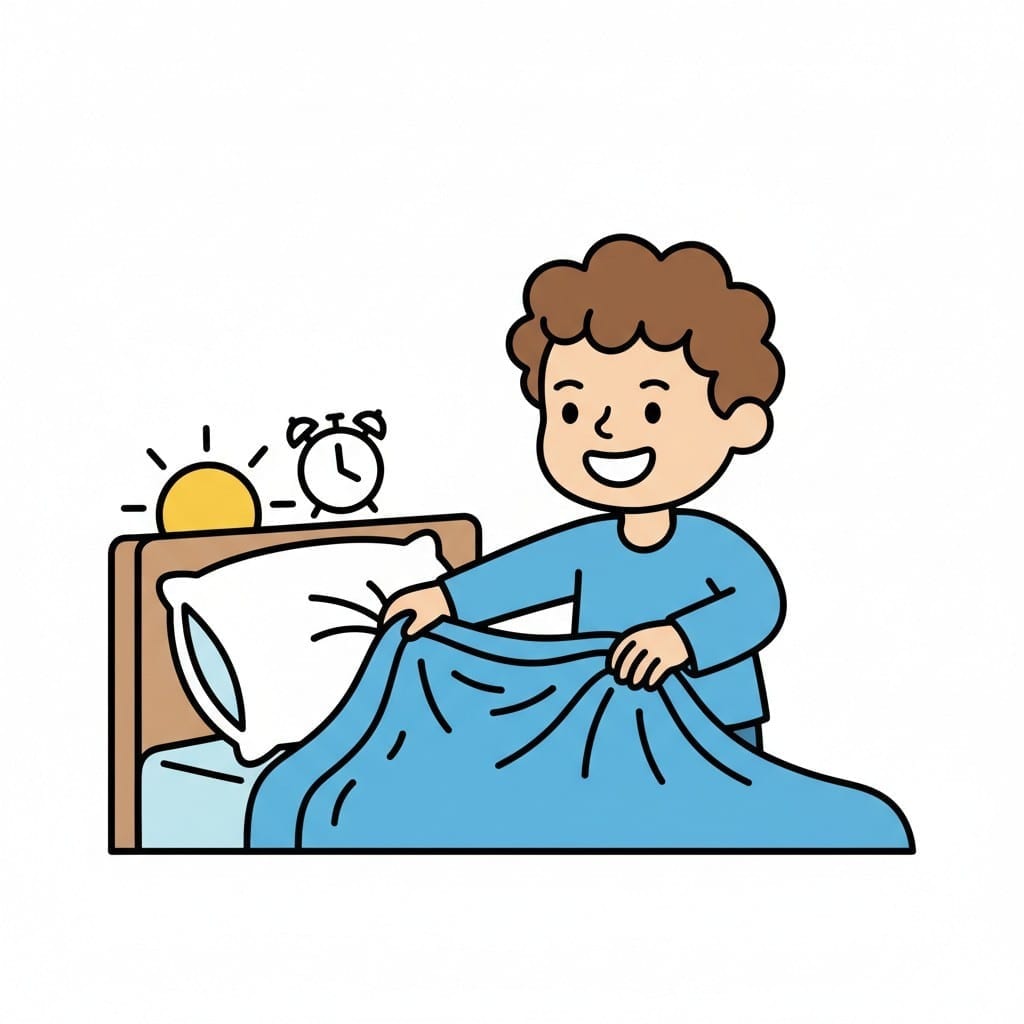 ♂
♂Make bed
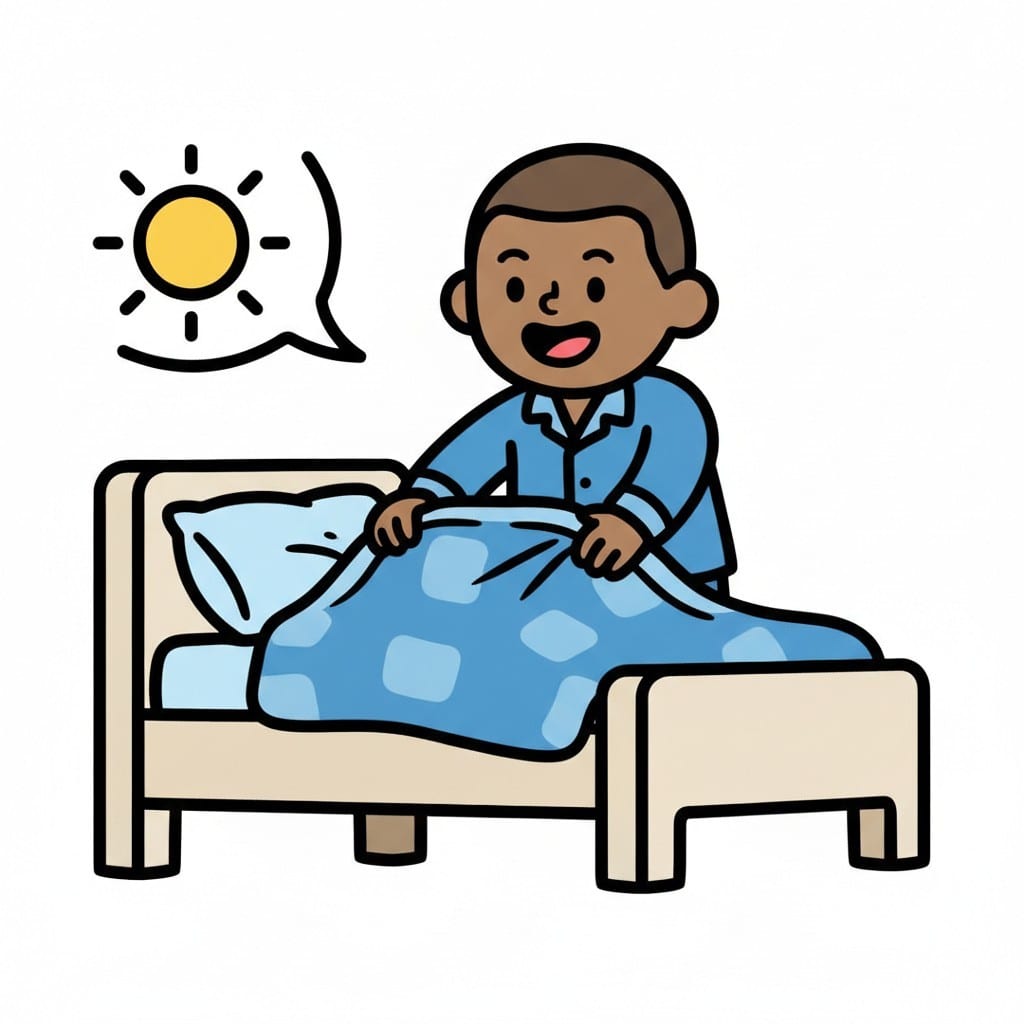
A boy in blue pajamas making his bed. A sun and alarm clock are on the nightstand.
 ♂
♂Make bed
A boy in blue pajamas sitting on his bed, pulling up the blanket. A sun icon is visible.
About this visual support
The sequence is what matters here. Getting up out of bed is already a heavy step, especially for a body still in the shock of the transition. When making the bed lands right after, it does not feel like the next item in a routine, it feels like a punishment: I just did the hard thing and now there is another one.
Showing both steps as a visible sequence from the start changes that. From the bed the child sees that the task is two pieces, not a surprise that pops up the moment the first one is finished. Expectations land at the right level, and the second step becomes a continuation instead of a cold restart.
A concrete tip for the get-up-and-make-bed pair: keep the bed-making step deliberately simple. Just pull the duvet roughly over the bed, no hospital corners. Save the neat version for the weekend. Then the second step is short and possible even on mornings when everything already feels heavy. In Routined you can place both steps in a row and reorder them if the child prefers to make the bed before or after getting dressed.
Use this image in a schedule
Build your own visual schedule with this image and download it as a print-ready PDF. Completely free.
More similar visual supports
Get up
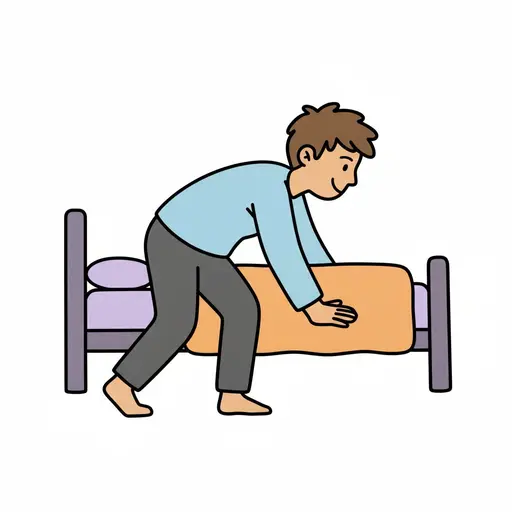
A person climbs out of bed, pushing off the blanket with their hands.
Get out of bed
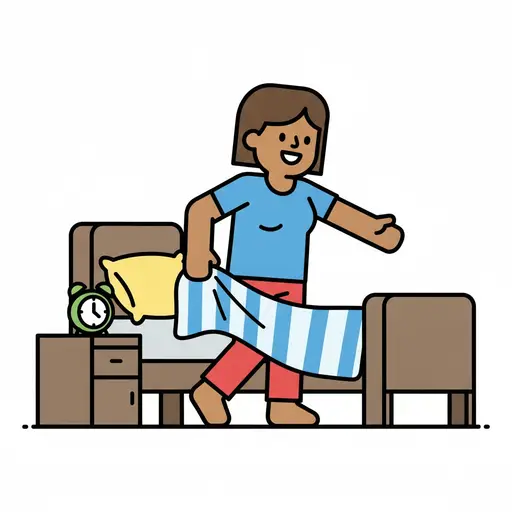
A smiling person in pyjamas gets out of bed and pulls back a striped duvet, with...

Good morning
A happy girl with a backpack waves by the preschool in the morning sun.
Wake and Snuggle
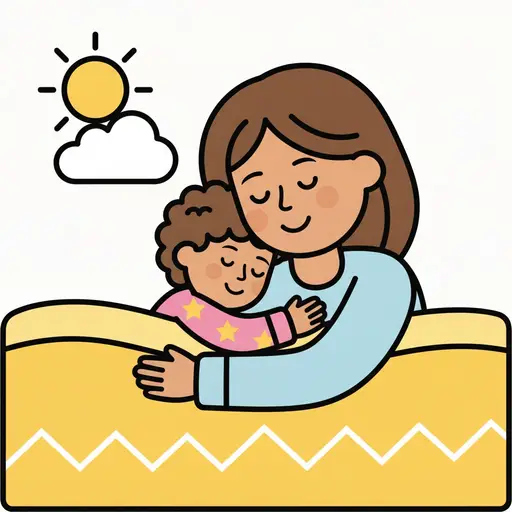
With the sun up outside, a woman holds a child who rests against her in bed.
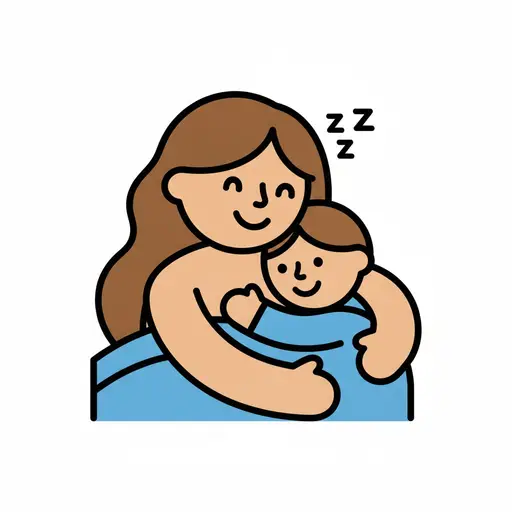
Wake and Cuddle
Under a blue duvet a woman hugs a child, with small sleep symbols floating above...
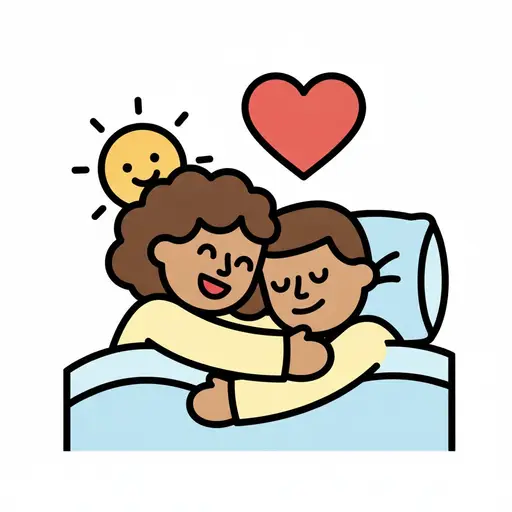
Wake Up and Cuddle
An adult and a child cuddle under the duvet at wake-up time with a heart above.
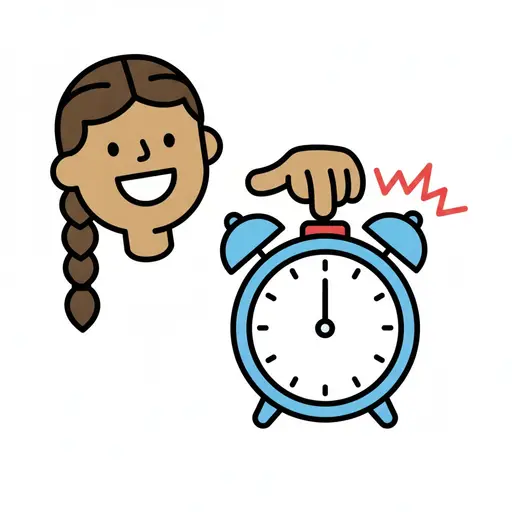
Stop the alarm
A smiling child presses the button on top of a ringing alarm clock to turn it of...
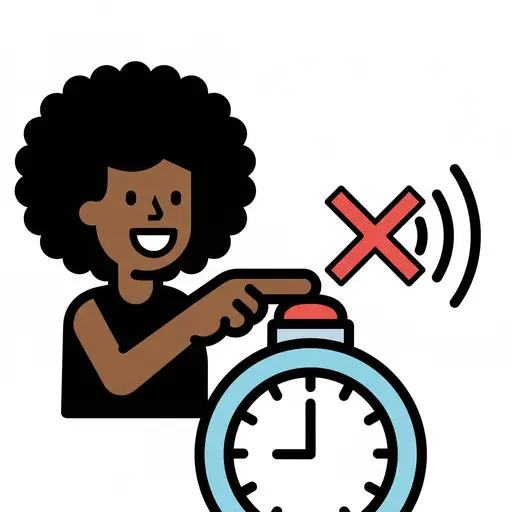
Turn off alarm
A smiling girl presses the red button on top of an alarm clock while a red cross...
This visual support in other languages
Take the visual supports with you
In Routined you build schedules from these pictures, add timers and voice instructions, and your child follows the day on their own.


* 14-day free trial, then $2.39 a month or $20.99 a year (US pricing). Cancel anytime.