Go to bus
The bus is unforgiving: a minute late and you are left at the stop while the day tips over. At the same time, a ten-minute walk feels like an hour to a tired child. The pictures below tie time and steps together.
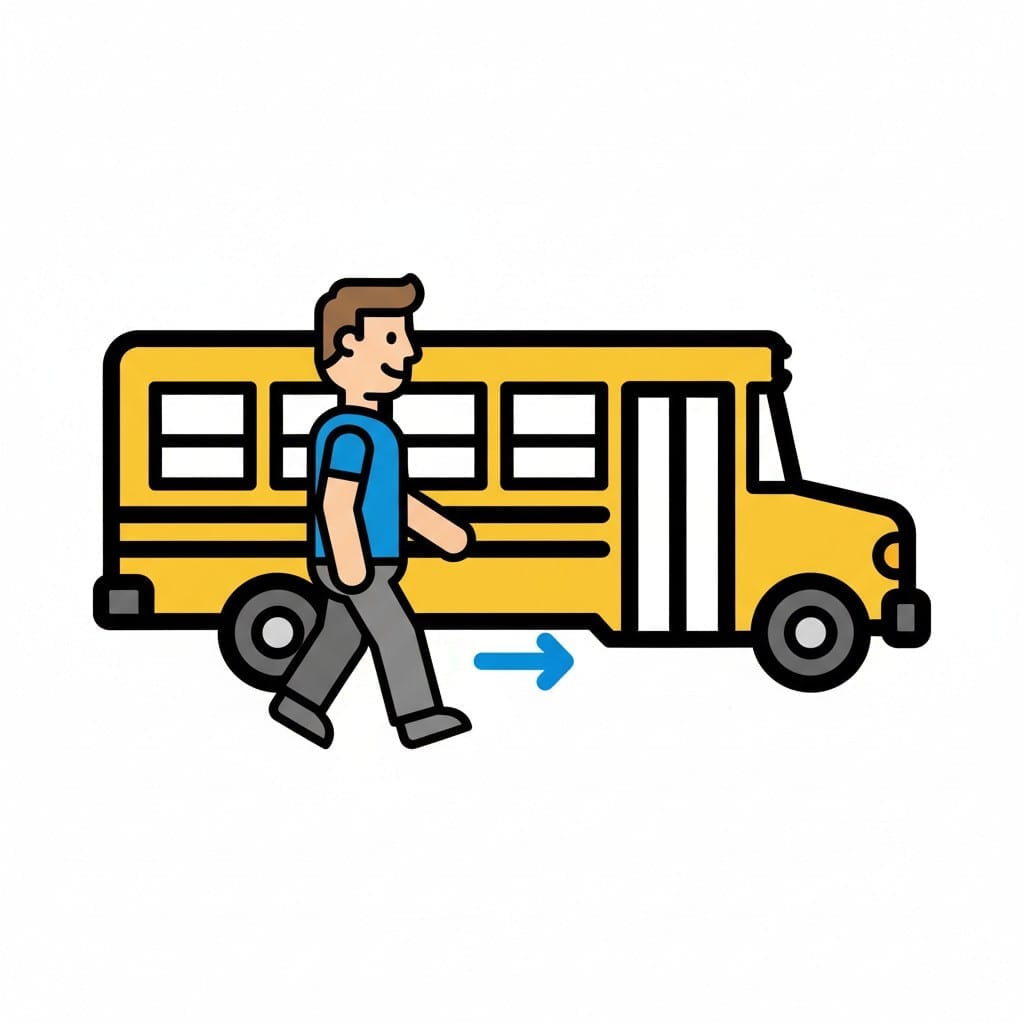 ♂
♂Go to bus
A boy walking towards a yellow school bus, with a blue arrow indicating direction towards the bus.
 ♂
♂At the bus
A boy standing near a yellow school bus, pointing towards the bus or forward.
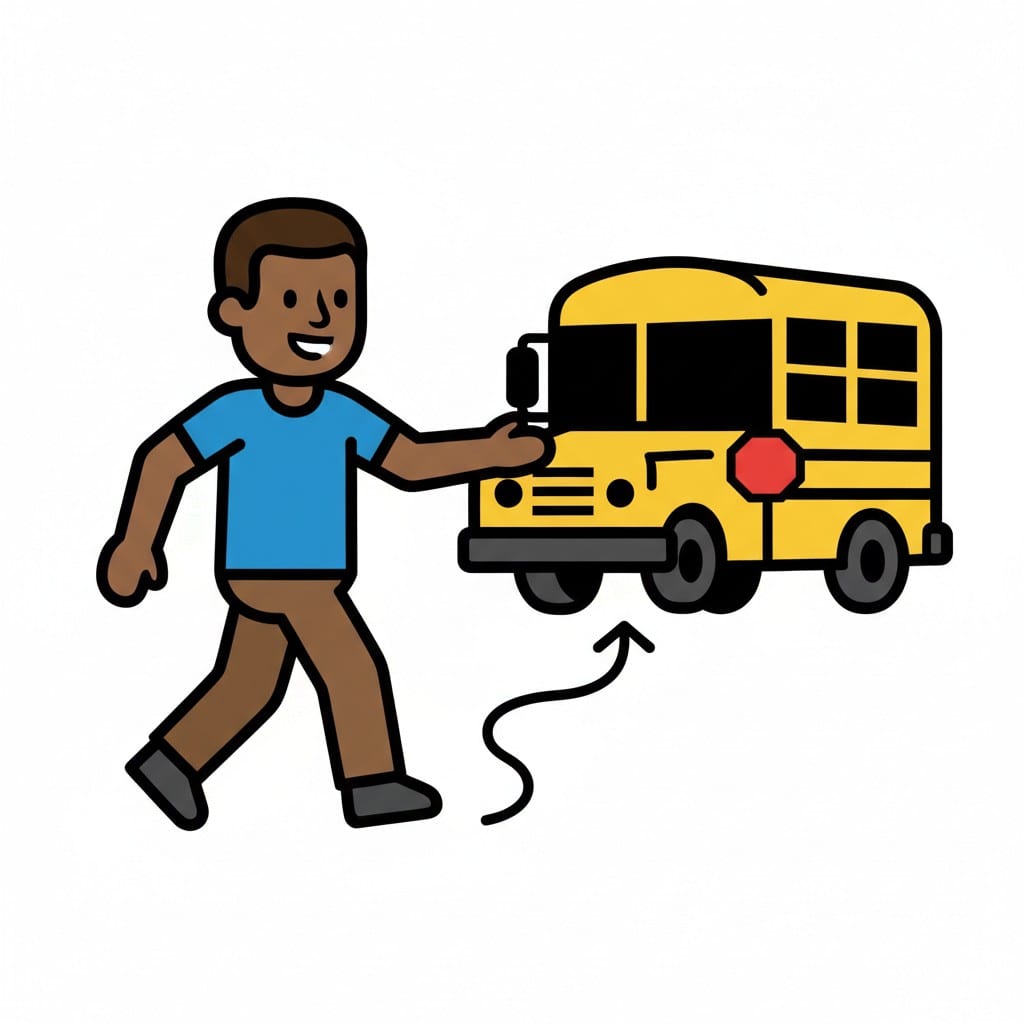 ♂
♂Go to bus
A person walking towards a yellow school bus, with an arrow indicating movement towards the bus.
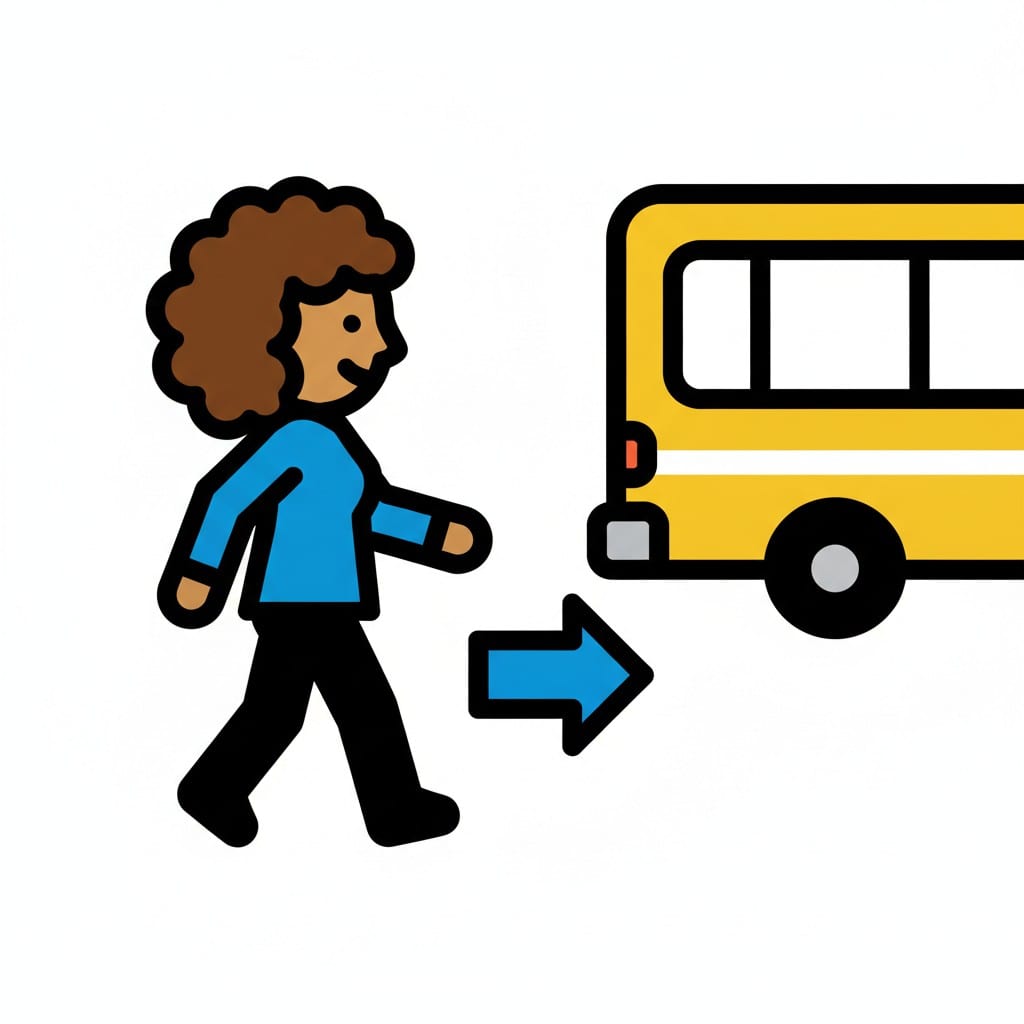 ♀
♀Go to bus
A person walks towards a yellow bus with a blue arrow pointing to the bus.
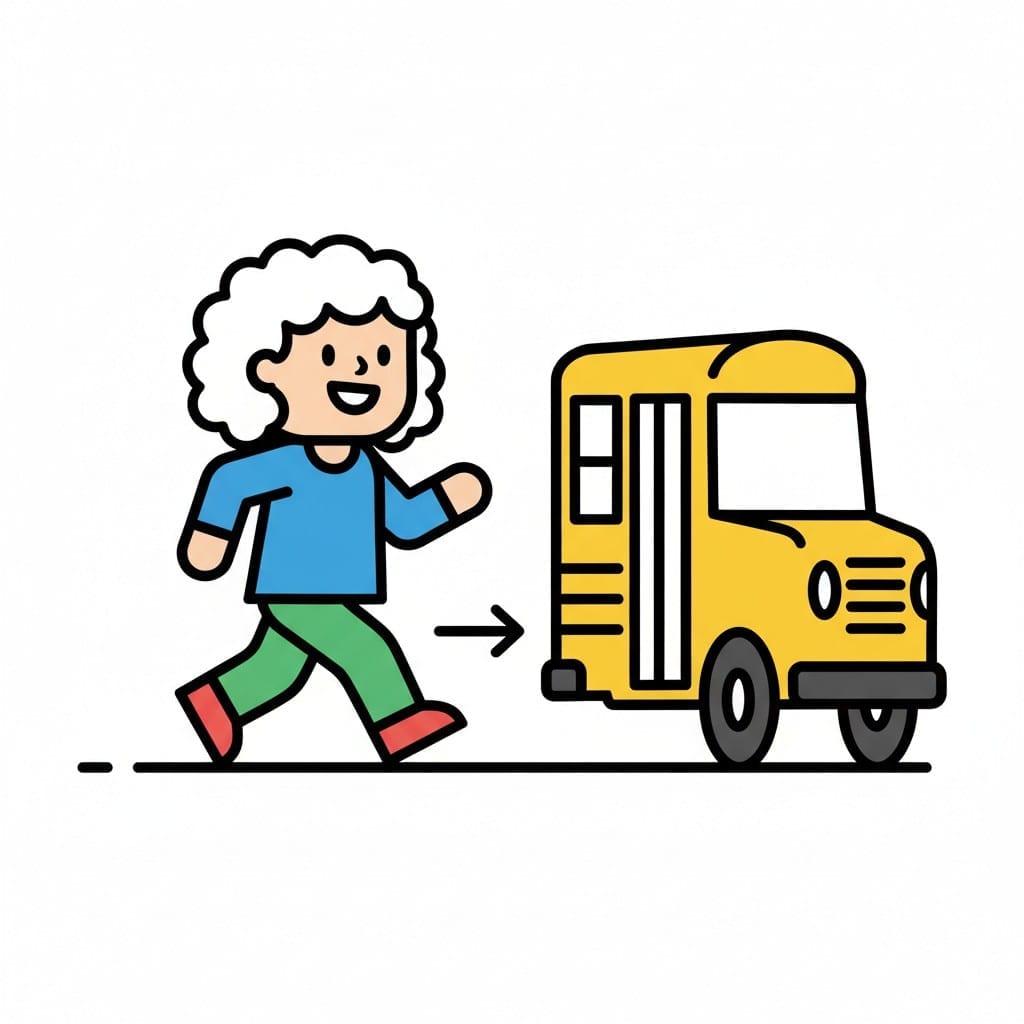 ♀
♀Go to bus
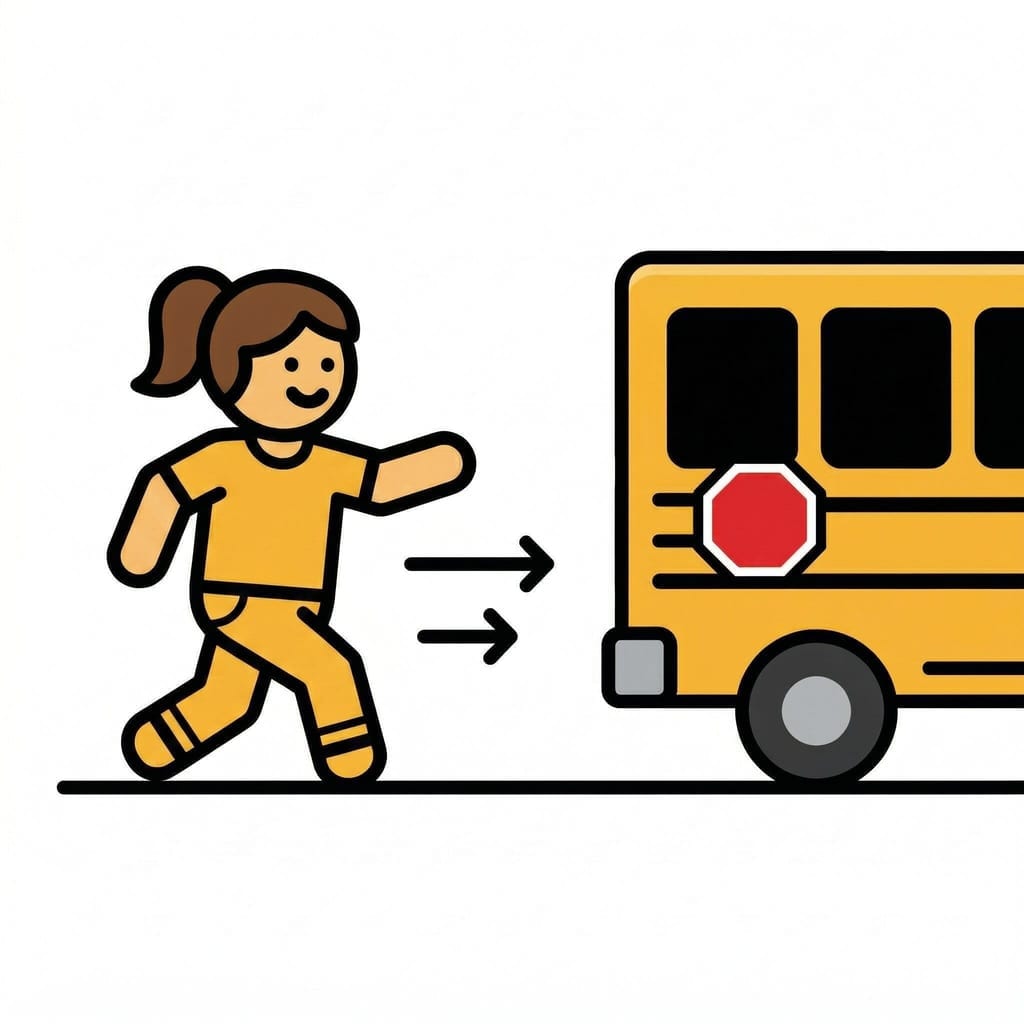
A smiling child-like person runs towards a yellow bus with a black arrow pointing to the bus.
 ♀
♀Go to bus
A person walking towards a yellow bus with a stop sign extended.
 ♀
♀Go to bus
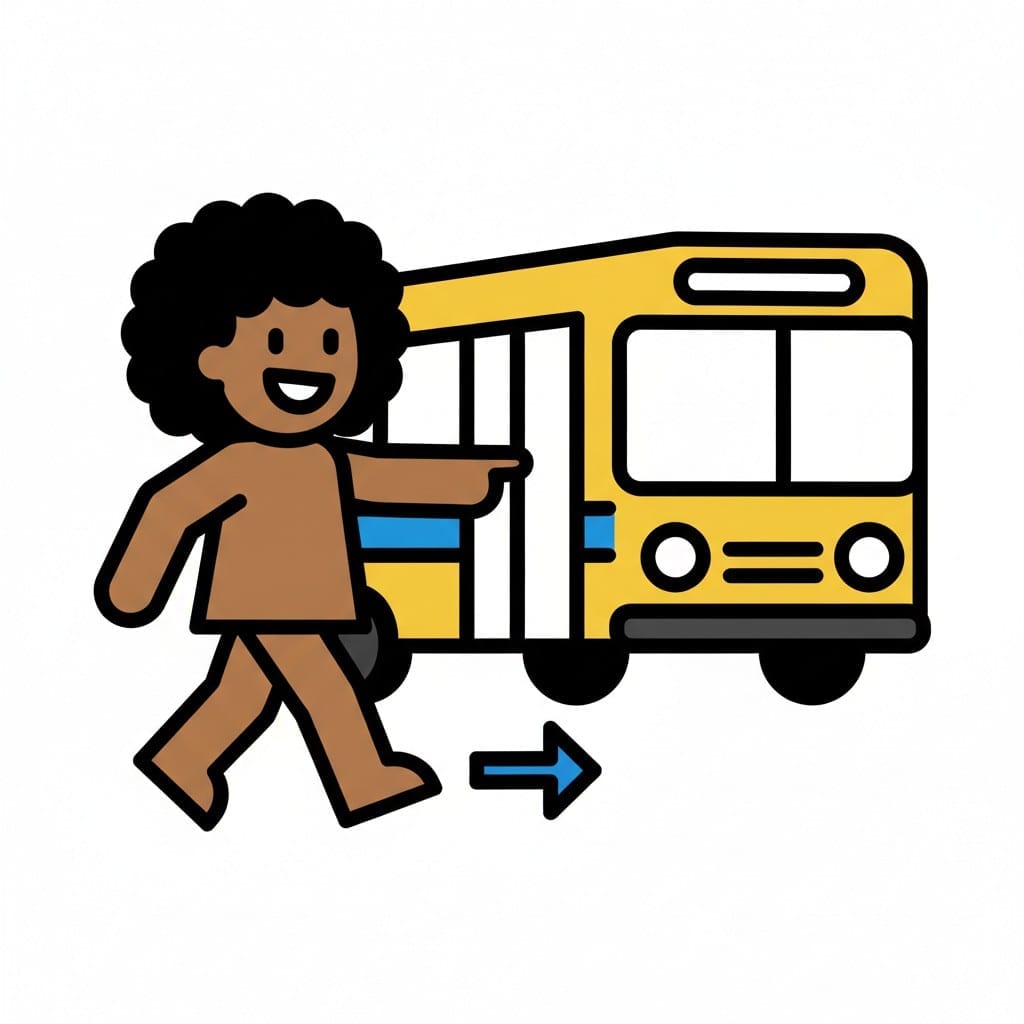
A smiling person pointing at a yellow bus, with an arrow indicating movement towards the bus.
About this visual support
The bus trip comes with a hard external deadline that no one in the family controls. It is not like home where breakfast can run five minutes over without consequence – if you miss the bus, you miss the whole chain after it. That pressure lands on the child who already struggles to hold pace in morning tiredness.
A visual support helps by making the invisible minutes concrete. When each step on the way is a picture – coat on, out the door, around the corner, up to the sign – time becomes measurable in steps rather than minutes. The child just sees where in the sequence you are, and the time anxiety drops.
A concrete tip: walk the route on a quiet weekend and photograph the three clearest landmarks. Use those as the visual support instead of generic icons – the actual neighbourhood is easier to read than a symbol.
If you want to pair the picture sequence with a visual timer counting down to departure, Routined is free to try for fourteen days.
Use this image in a schedule
Build your own visual schedule with this image and download it as a print-ready PDF. Completely free.
More similar visual supports
Go to school
A child with a yellow backpack walks up to a school building with a clock tower.
Put on coat
A person stands in a red coat, green trousers and boots.
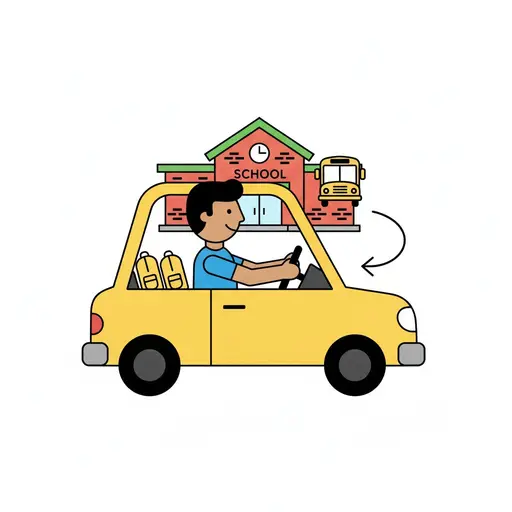
Drive to school
A person drives a yellow car with backpacks in the back seat up to the school.
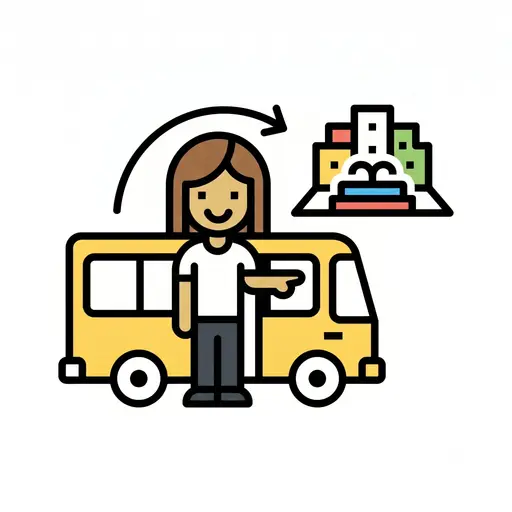
Ride Bus to the Plaza
A girl rides a yellow bus with an arrow pointing to a plaza with buildings.

Get dressed for outside
A happy boy wearing winter clothes, including a blue jacket, green shirt, red an...
Bus
A yellow bus with red doors.
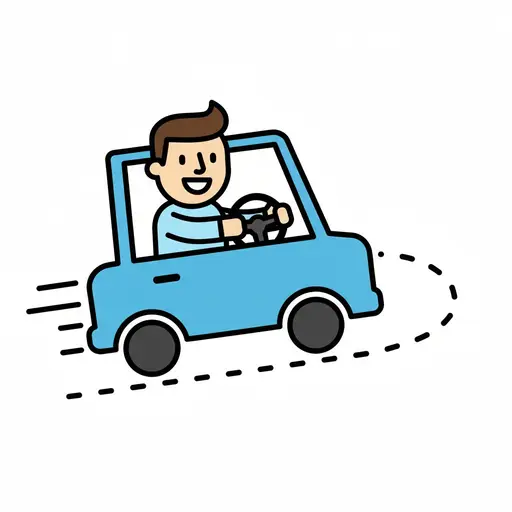
Dad drives
A person is driving a blue car with a steering wheel in their hands. The car has...
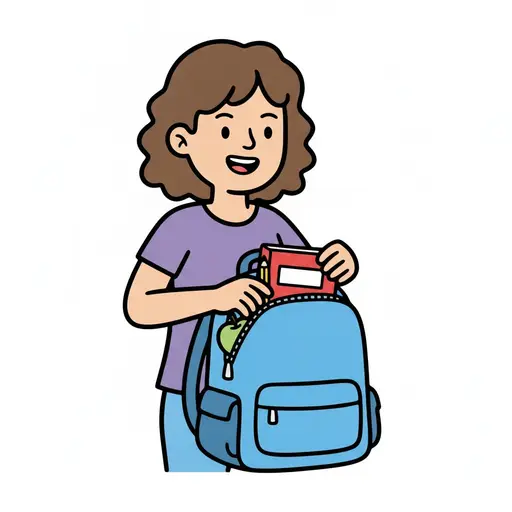
Pack school bag
A girl puts a book and pencils into a blue backpack.
This visual support in other languages
Take the visual supports with you
In Routined you build schedules from these pictures, add timers and voice instructions, and your child follows the day on their own.


* 14-day free trial, then $2.39 a month or $20.99 a year (US pricing). Cancel anytime.