Go to the car
Stepping out through the door can feel abrupt. Inside everything is known, outside a change of setting arrives fast. When the route to the car is already rehearsed in pictures, the switch is gentler. See how it goes below.
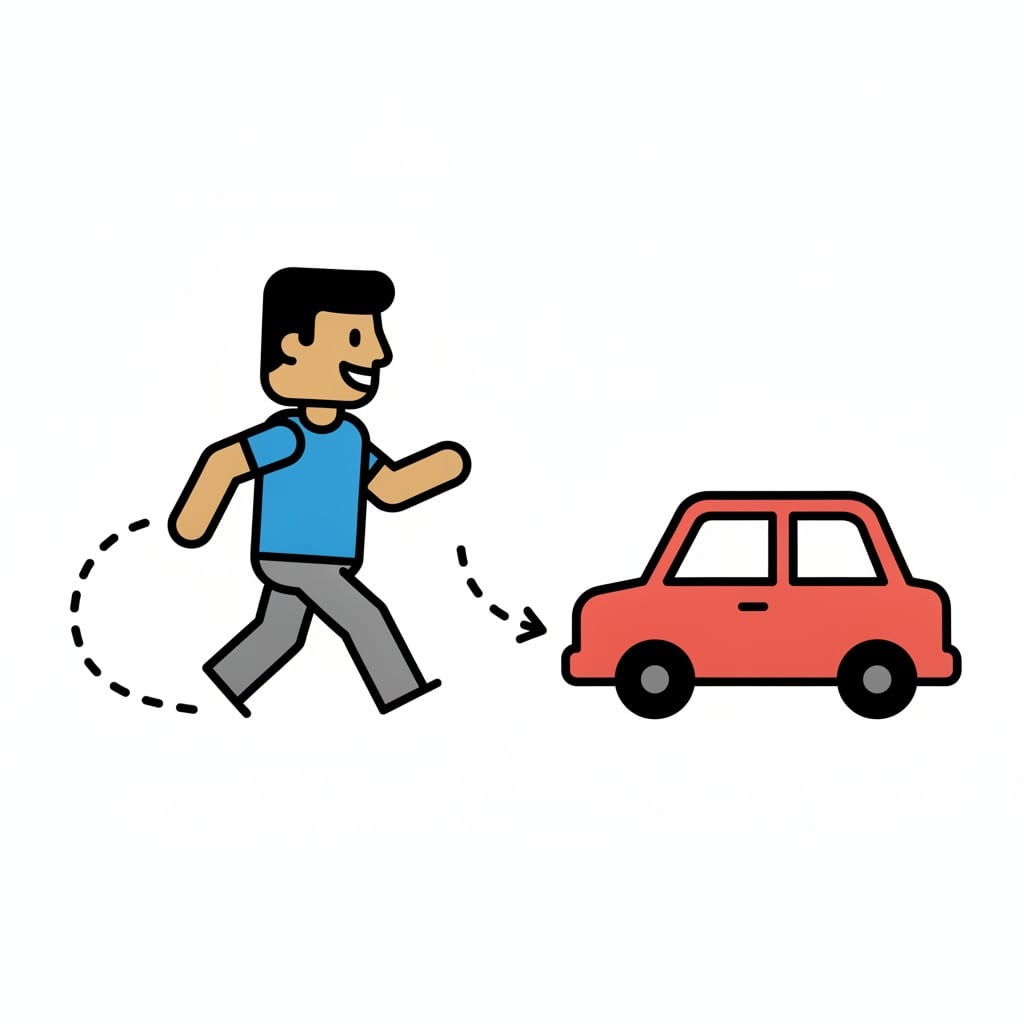 ♂
♂Man walking to the car
A man walks towards a red car along a dotted arrow.
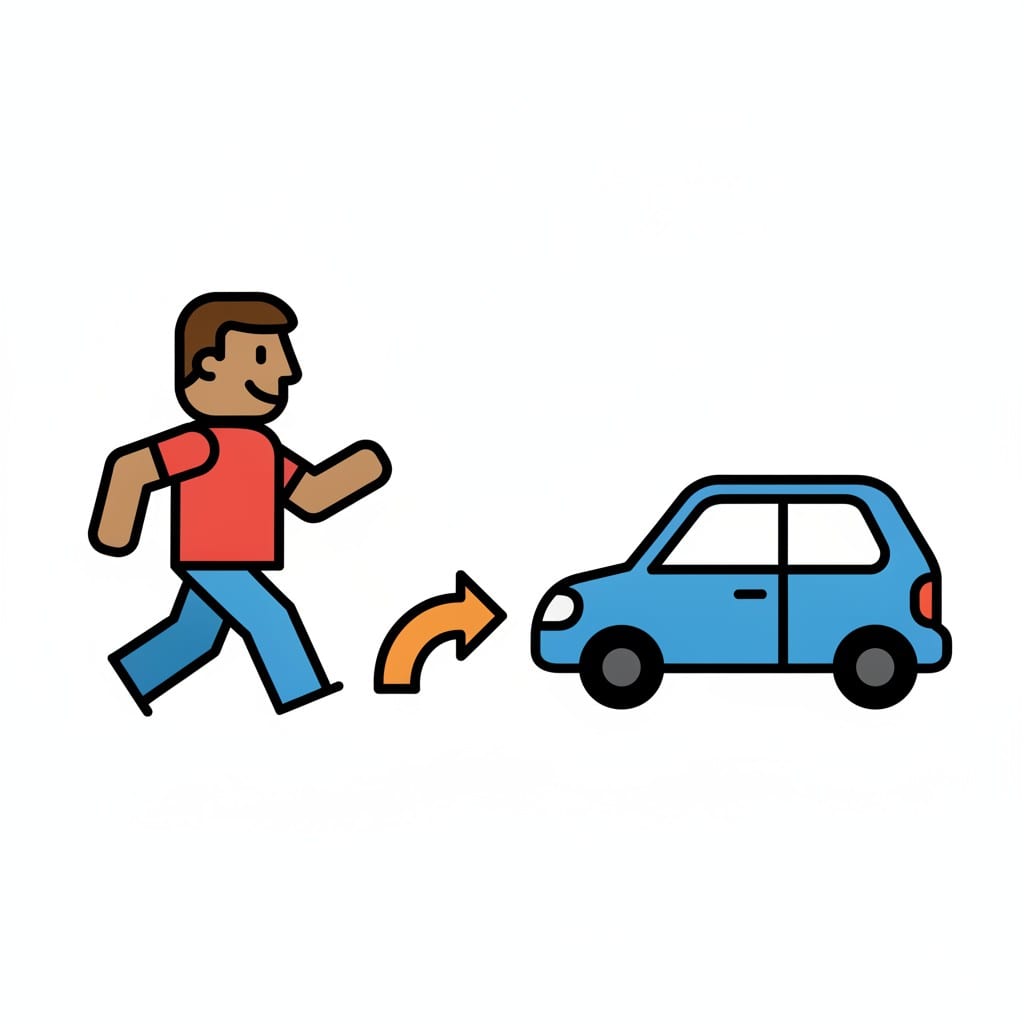 ♂
♂Walking to the blue car
A man walks towards a blue car with an orange arrow between them.
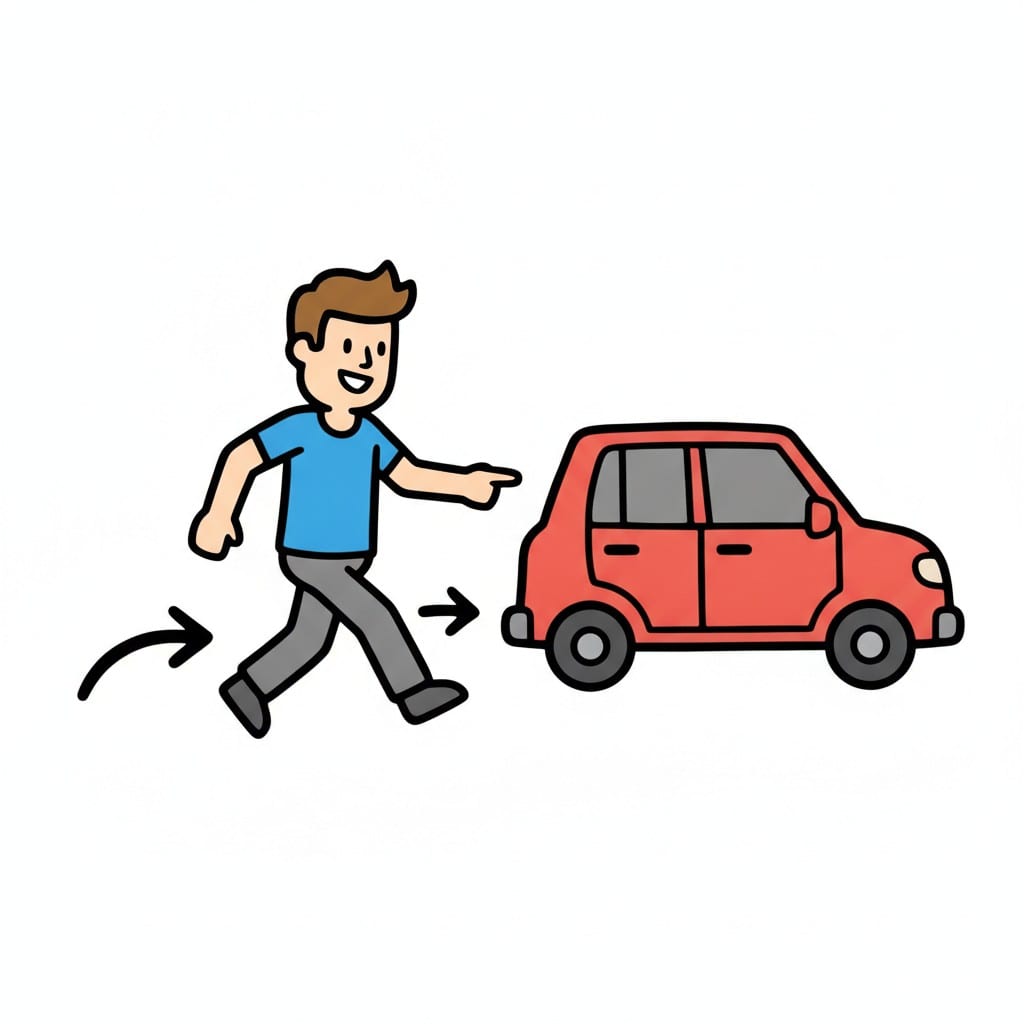 ♂
♂Boy heading to the car
A boy points and walks towards a red car.
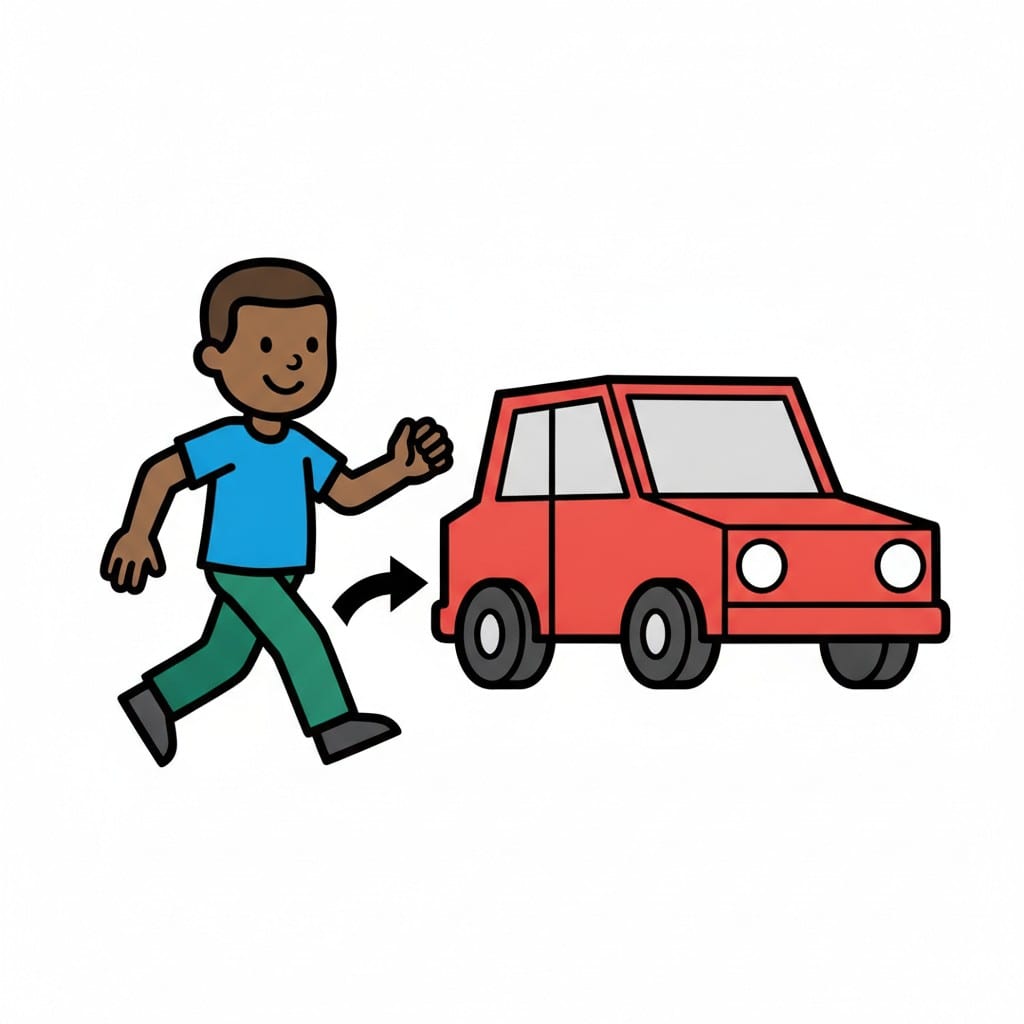 ♂
♂Hurrying to the car
A boy walks quickly towards a red car.
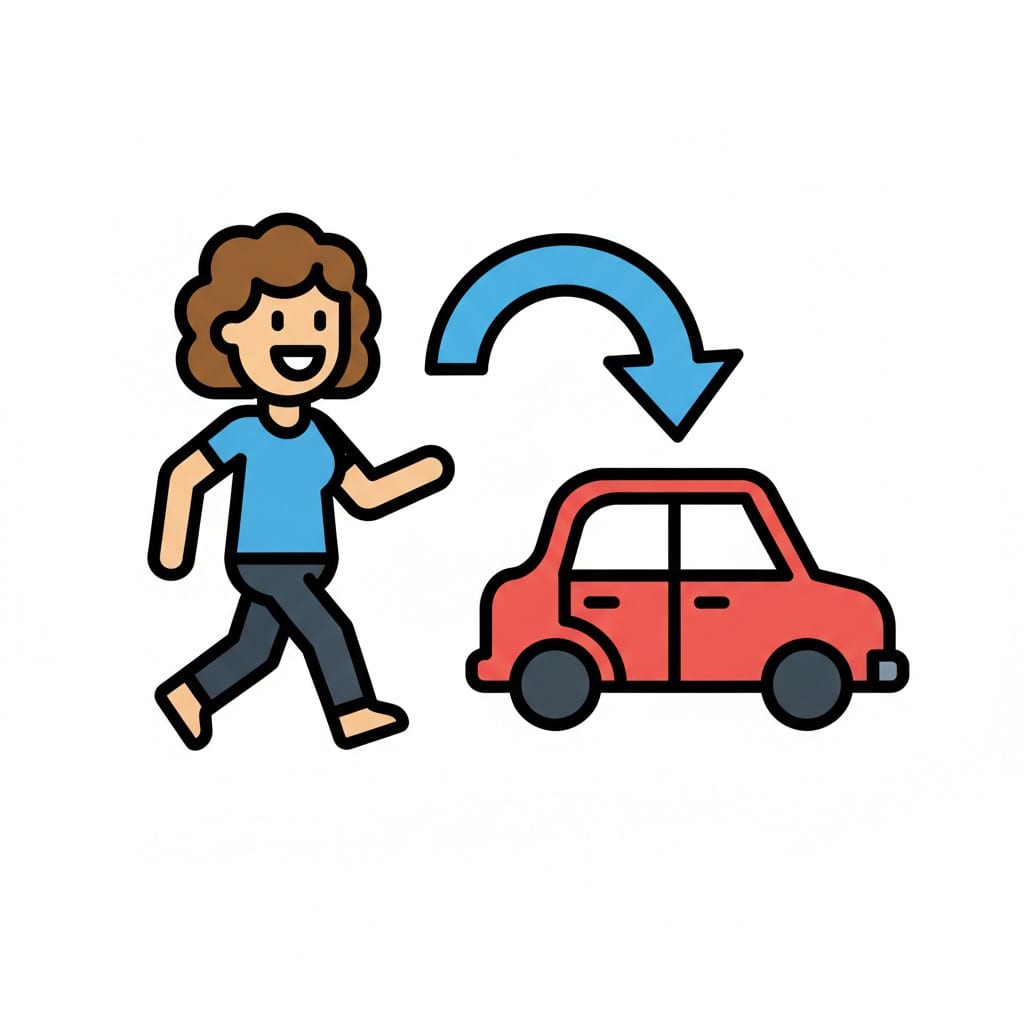 ♀
♀Go to the car
A smiling person walks toward a red car with an arrow pointing to the car.
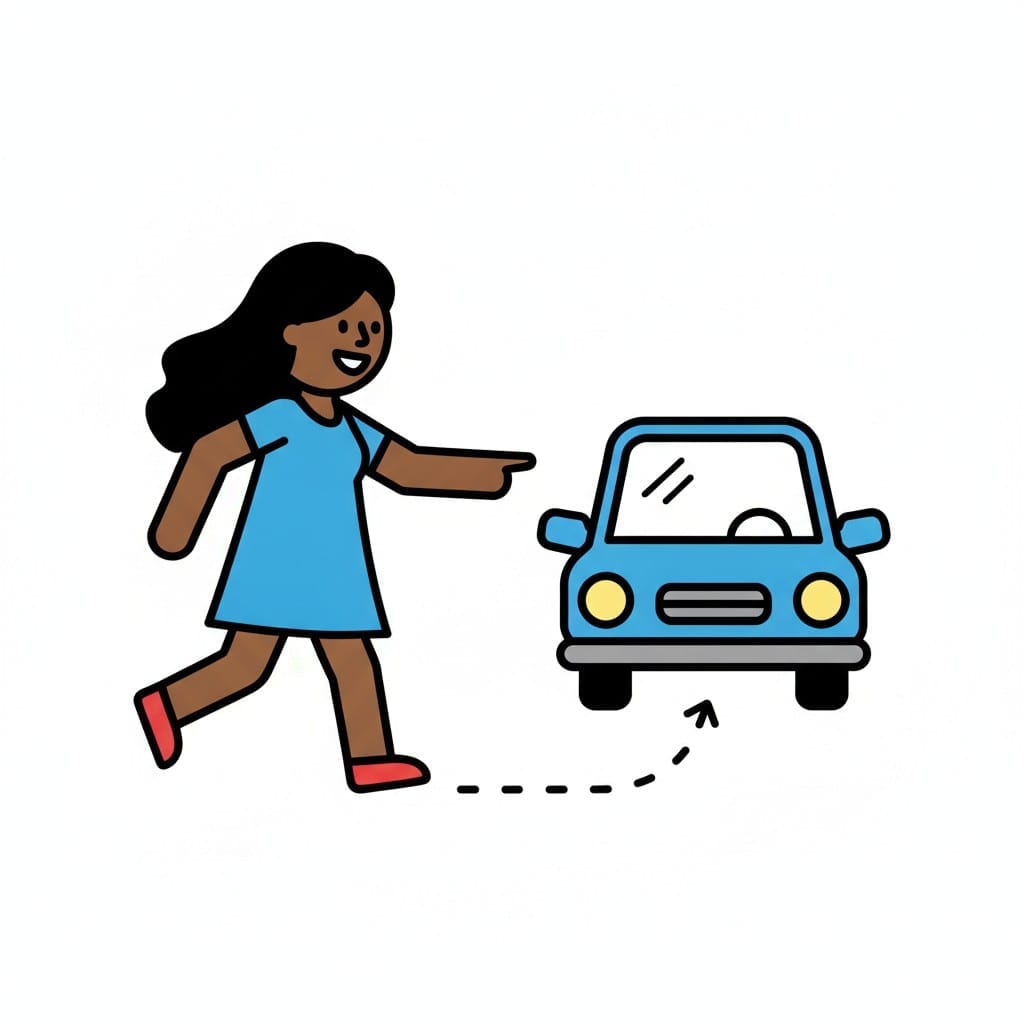 ♀
♀Girl walking toward the blue car
A girl in a blue dress strides toward a blue car, pointing at it while a dotted line with an arrow shows the way.
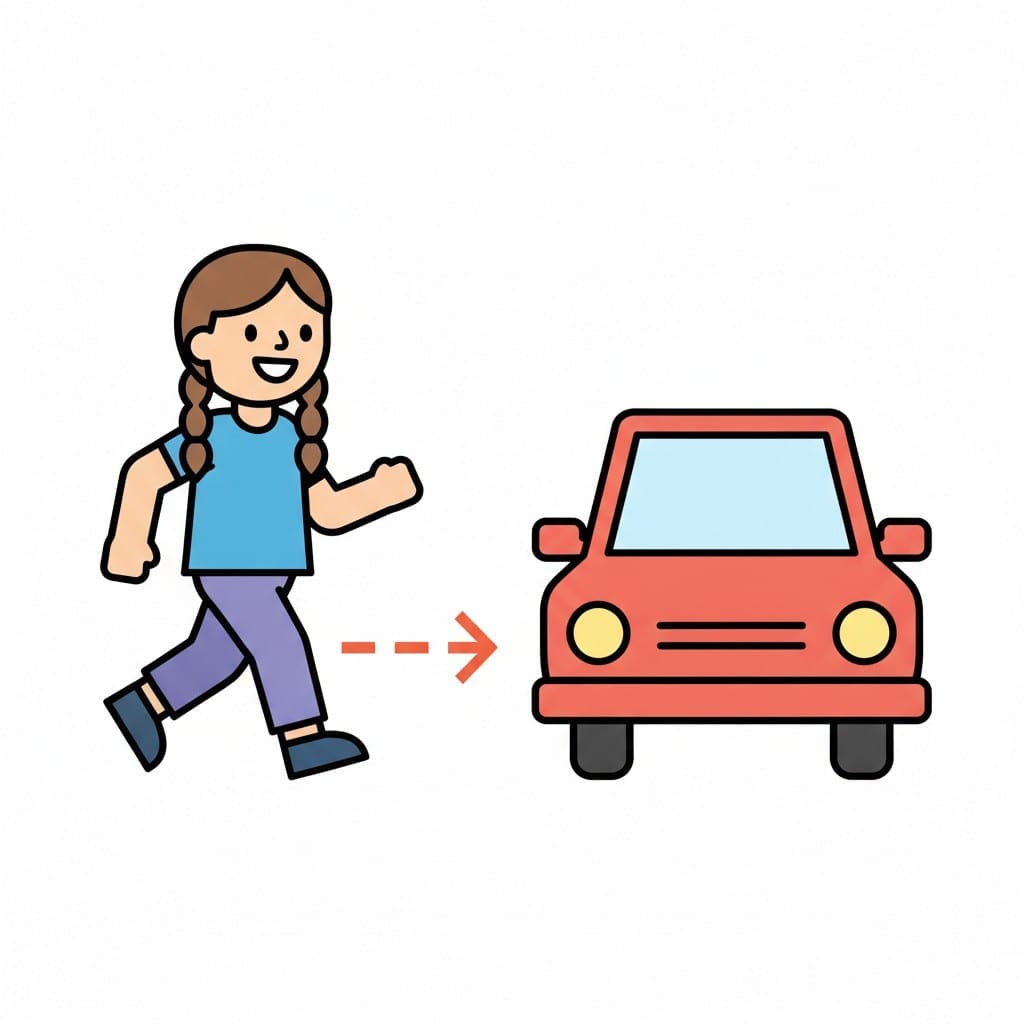 ♀
♀Girl walking towards the red car
A smiling girl with braids walks towards a red car, with a dashed arrow pointing from her to the car.
About this visual support
At home the setting is predictable: the same sounds, the same rooms, the same rhythm. Stepping outside swaps all of that in seconds for cold, light, noise and movement, and for a child who needs time to shift gears that change can feel like a jolt. The problem is not the car itself but the break between inside and outside.
With visual support the child sees the transition as a short chain rather than a single leap: put on shoes and jacket, open the door, go out, close the door, walk to the car, get in. Each small picture becomes a handle to hold, and what felt abrupt is broken into steps that can be foreseen and managed.
One concrete tip is to use the same final picture every time you arrive, for example the child pulling the car door handle themselves. That fixed ending gives the transition a clear point to move toward. To link the morning steps with the walk out, you can build the routine in the Routined app and try it free for 14 days.
Use this image in a schedule
Build your own visual schedule with this image and download it as a print-ready PDF. Completely free.
More similar visual supports
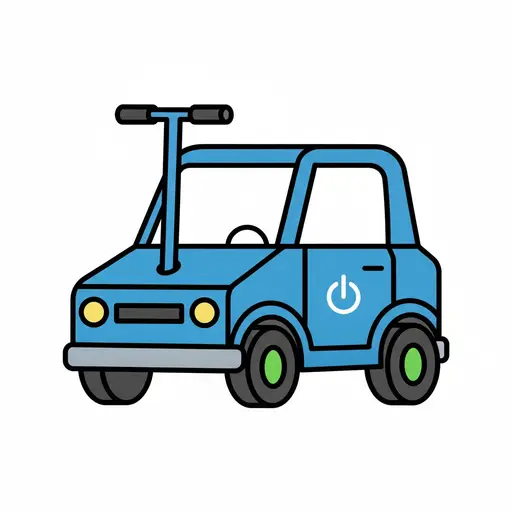
Car or e-scooter
A blue car seen from the side with a scooter handlebar rising from the bonnet an...
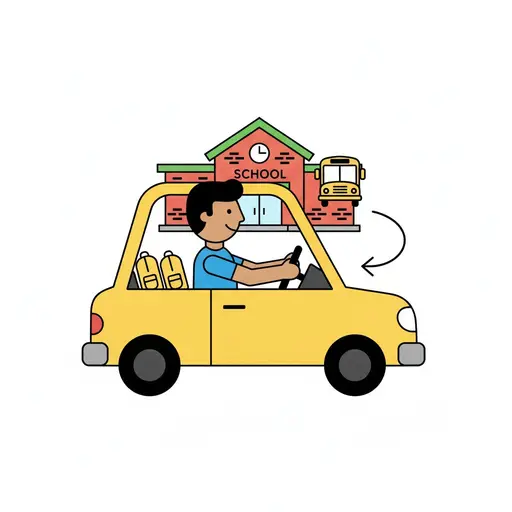
Drive to school
A person drives a yellow car with backpacks in the back seat up to the school.
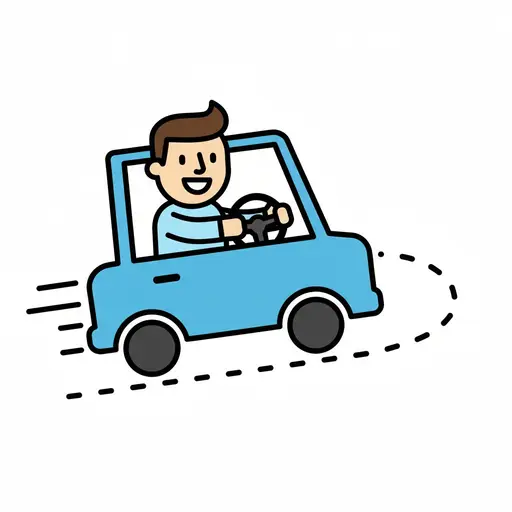
Dad drives
A person is driving a blue car with a steering wheel in their hands. The car has...
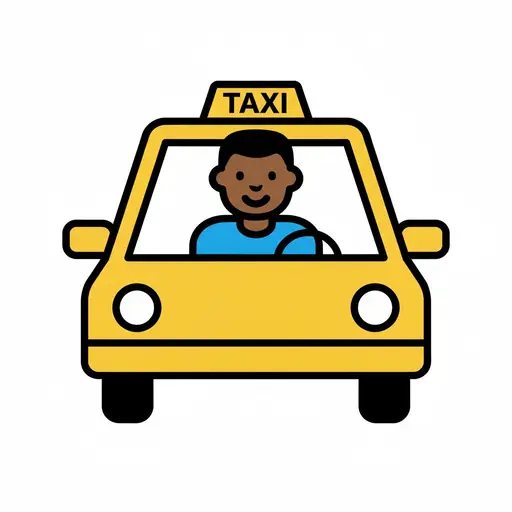
Ride a Taxi
A boy sits in a yellow taxi seen from the front.
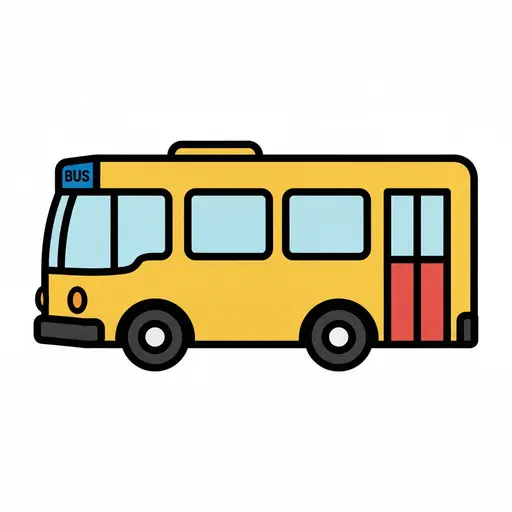
Bus
A yellow bus with red doors.
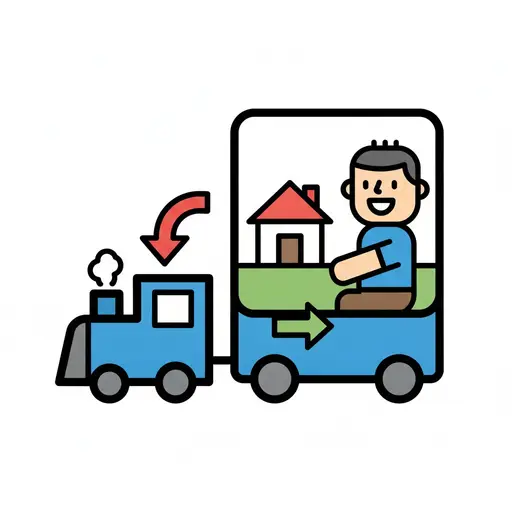
Ride the Train Home
A boy rides a blue train with an arrow and a house showing the way home.
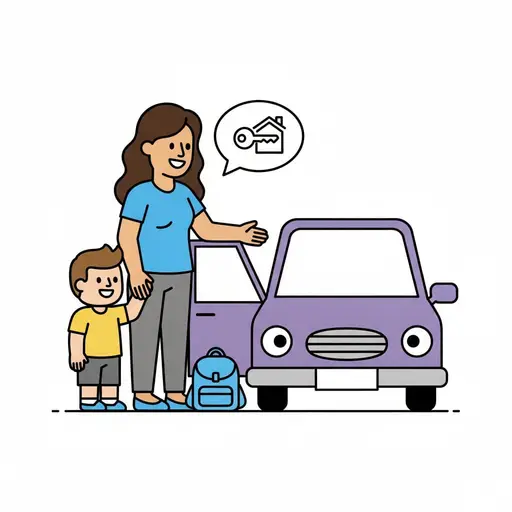
Drop off kids
A woman stands by a purple car with a small child and a backpack, with a speech ...
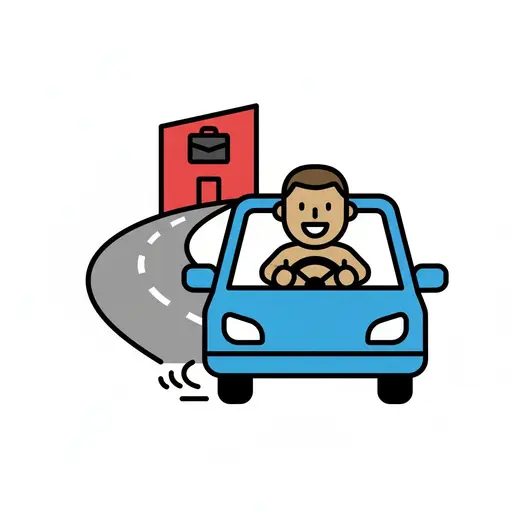
Drive to work
A smiling man driving a blue car along a road that leads to a building marked wi...
This visual support in other languages
Take the visual supports with you
In Routined you build schedules from these pictures, add timers and voice instructions, and your child follows the day on their own.


* 14-day free trial, then $2.39 a month or $20.99 a year (US pricing). Cancel anytime.