Put on belt
Loops, buckle and the right hole – a belt looks simple, but the fine motor work takes longer than it seems. The visual support below breaks every move into its own step.
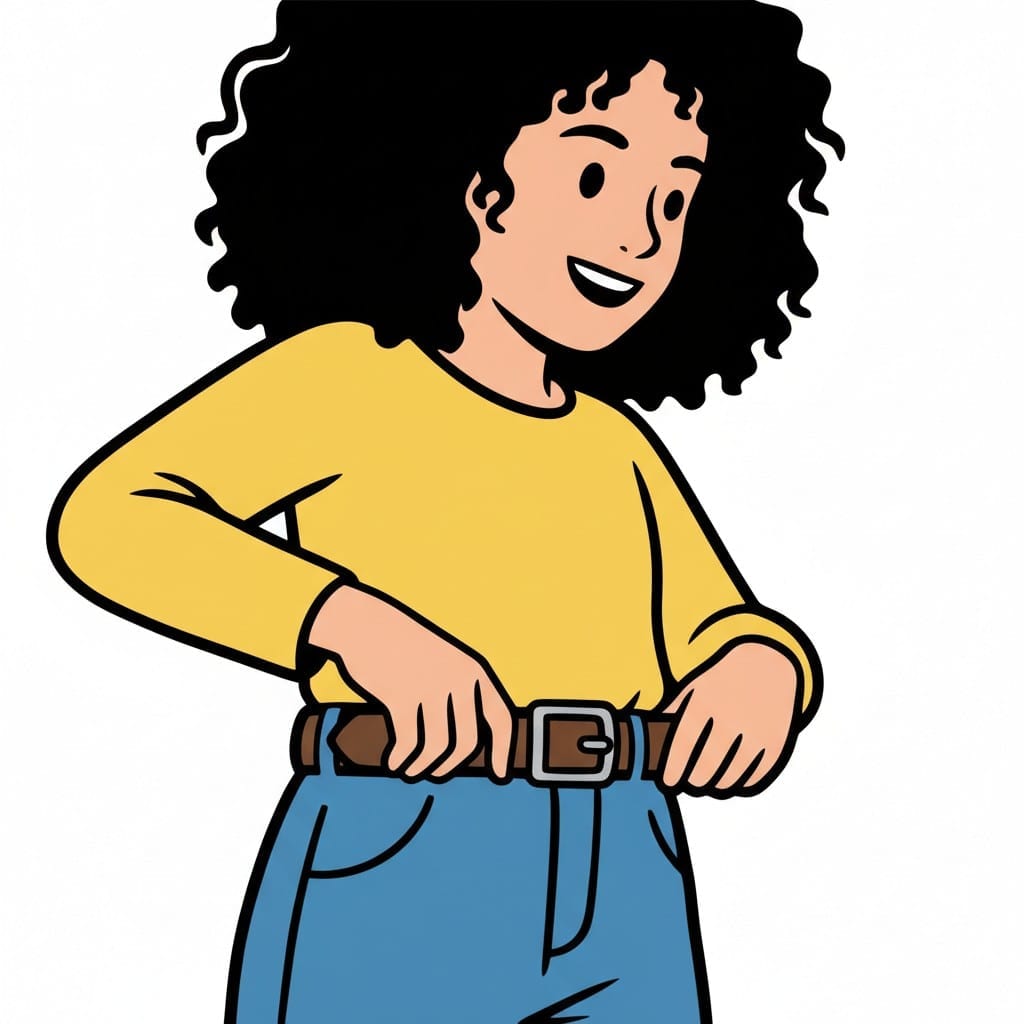 ♀
♀Putting on belt
A person putting on a belt around their waist.
About this visual support
Threading the strap through belt loops, finding the right hole and pulling tight enough but not too tight – that is three separate fine motor moves hiding inside one short instruction. For a child whose grip is still developing, the belt often becomes the last hurdle right when everyone else is at the door.
A visual schedule splits the chain into clear parts: buckle open, end through the first loop, around the back, around the front, into the hole. When each picture stands for one bounded movement, the child can see exactly where they are and what comes next, which removes a lot of the guesswork and the frustration that comes with it.
One practical tip: lay the belt flat on the bed or a chair with the buckle nearest the child, so the direction is decided before they even start. That avoids the most common interruption, having to turn the belt around because it ended up backwards. If you want to combine the pictures with a timer and a checklist, the Routined app offers a 14-day trial.
Use this image in a schedule
Build your own visual schedule with this image and download it as a print-ready PDF. Completely free.
More similar visual supports

Put on rain clothes
A smiling girl in a yellow raincoat and red rain boots, with raindrops falling a...
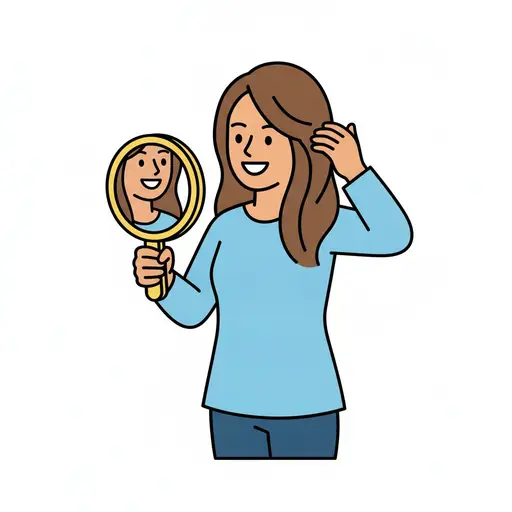
Check clothes
A woman fixes her hair while holding a mirror.
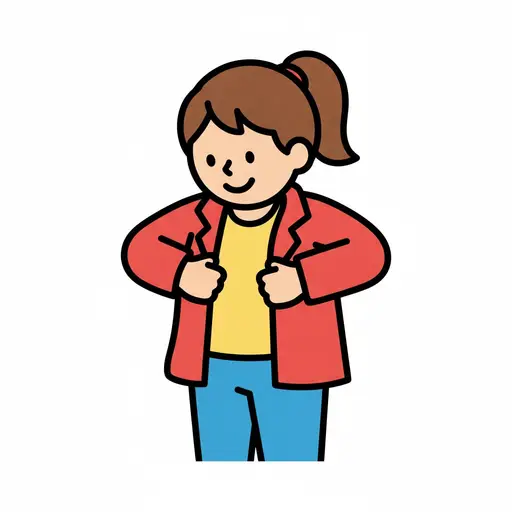
Get jacket on
A girl pulls on a red jacket.
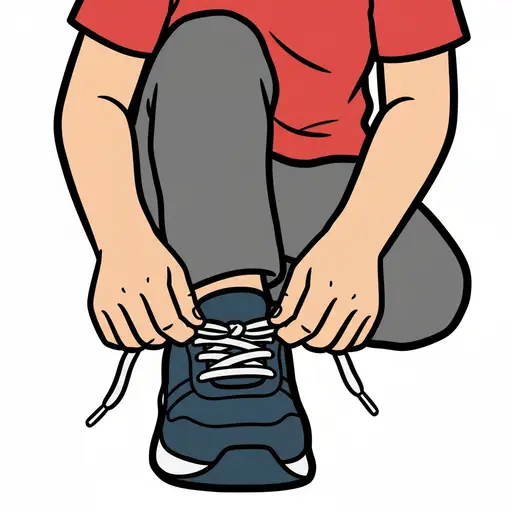
Tie shoes
A boy bending down to tie his shoelaces on a blue athletic shoe.

Prepare to go outside
A boy wears a red jacket with the hood up.
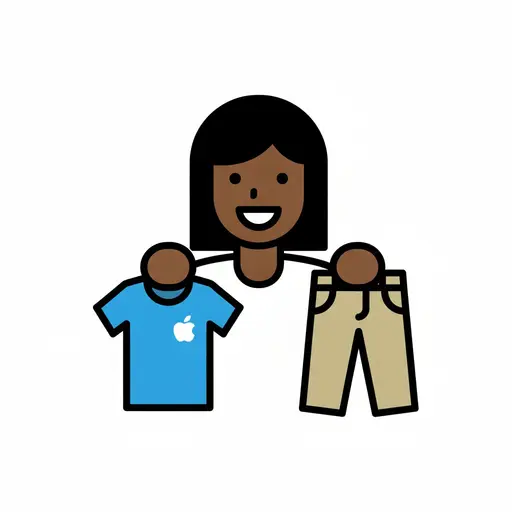
Get school clothes
A girl holds up a blue t-shirt and a pair of trousers for the school day.
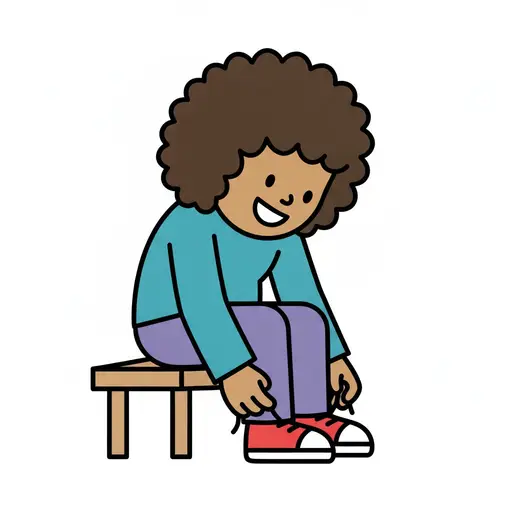
Put on shoes
A person sits on a bench pulling on red shoes.

Coat and gloves
A blue winter coat lies next to a pair of red gloves.
This visual support in other languages
Take the visual supports with you
In Routined you build schedules from these pictures, add timers and voice instructions, and your child follows the day on their own.


* 14-day free trial, then $2.39 a month or $20.99 a year (US pricing). Cancel anytime.