Put on the backpack
When the backpack appears, the child knows the leaving is near, but how long is left and what has to happen first stays blurry. Make the time up to the door clear with the steps below.
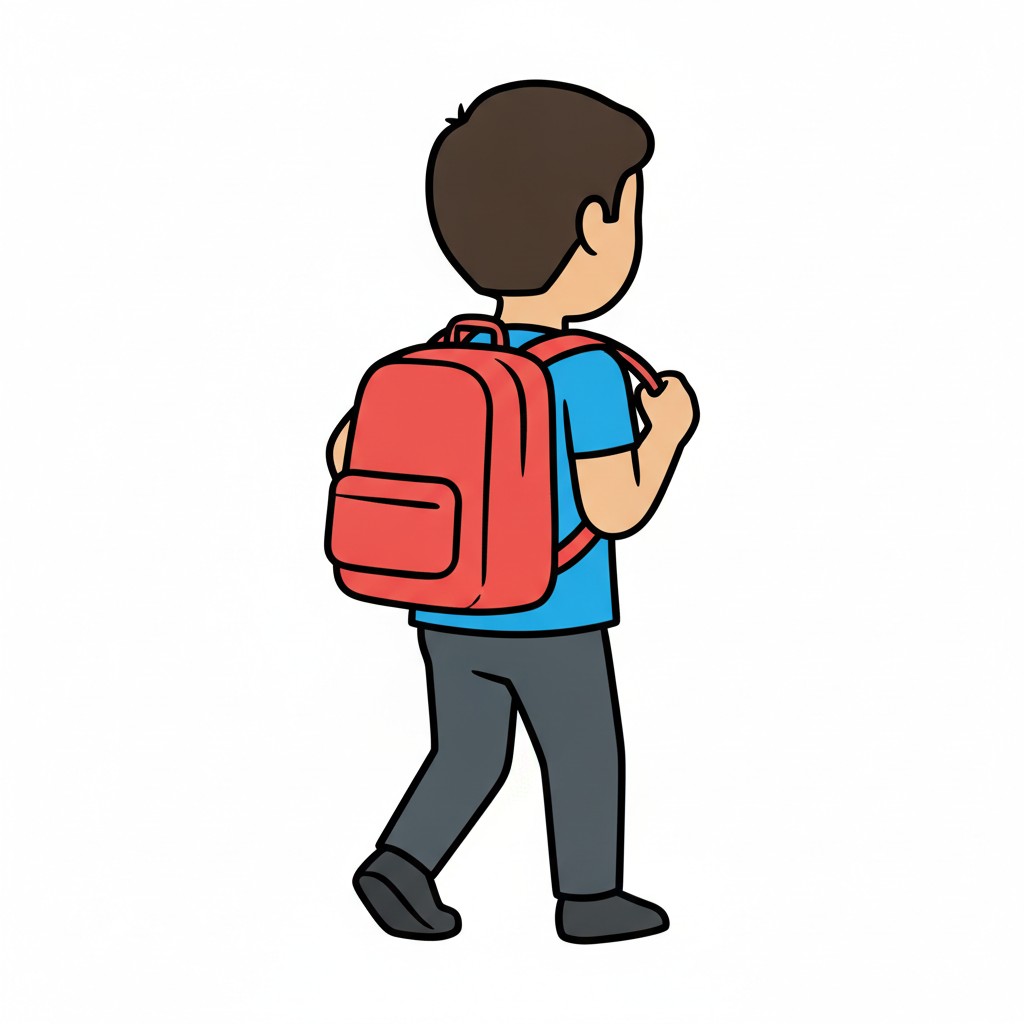 ♂
♂Backpack on your back
A person walks with a red backpack on, seen from behind.
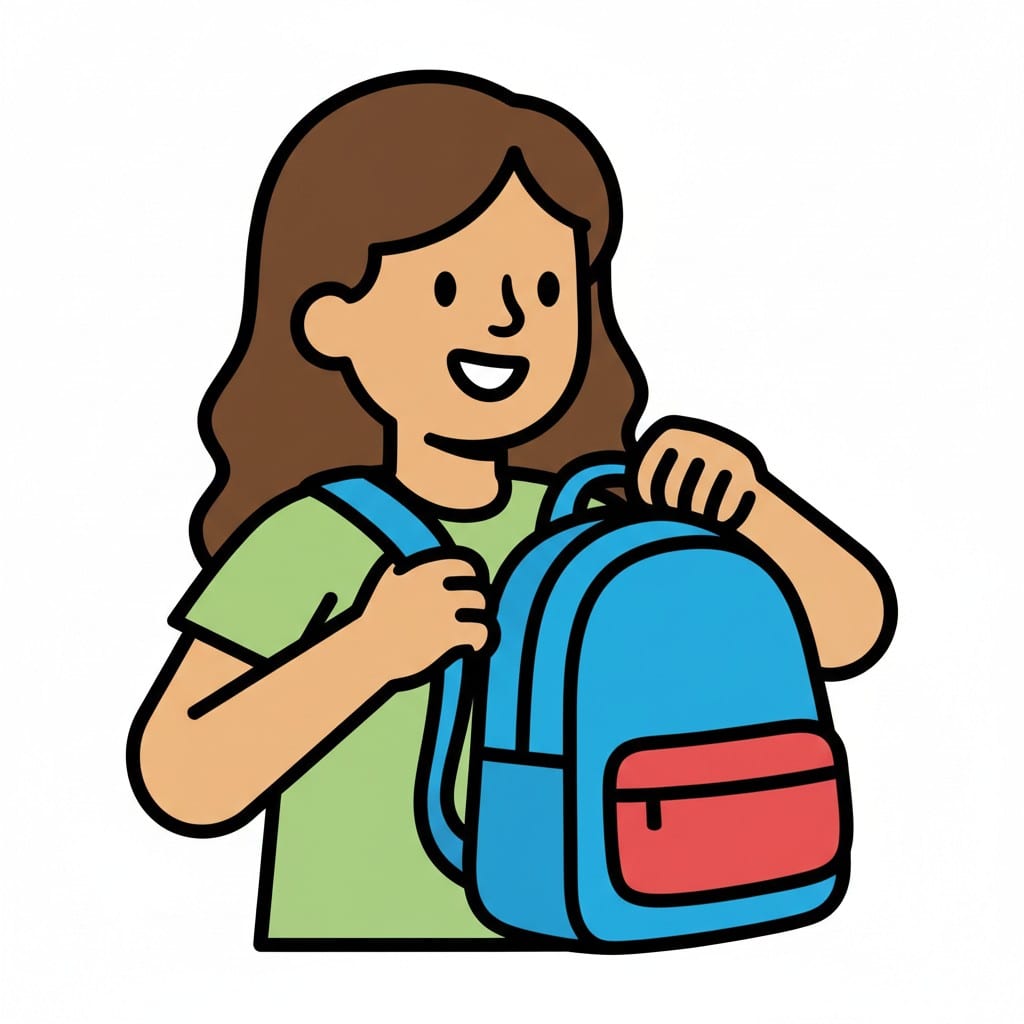 ♀
♀Put on the backpack
A smiling girl puts a blue backpack on over her shoulder.
About this visual support
The backpack is a signal: the leaving is close now. But a signal without a time frame creates as much stress as calm, because the child knows something is about to happen without grasping how soon or what must be done first. That vagueness makes some children rush and others freeze.
Visual support solves it by placing the backpack in a clear time order: this is done, this is left, then we go. When the child sees how many steps remain, the wait becomes understandable, and the body can settle into the departure instead of guessing. The sense of time turns into something to look at rather than something to hold in mind.
One concrete tip is to put the backpack second to last in the picture row, right before the shoes and the door, so it always means the same thing: soon but not yet. It becomes a reliable marker near the end instead of a sudden jolt. In Routined you can link a timer to the final steps, so the time up to the door is visible while you get ready.
Use this image in a schedule
Build your own visual schedule with this image and download it as a print-ready PDF. Completely free.
More similar visual supports
Put on jacket and backpack
A boy wearing a jacket and backpack takes a step.
Pick up backpack
A girl lifts a blue backpack by its shoulder straps.
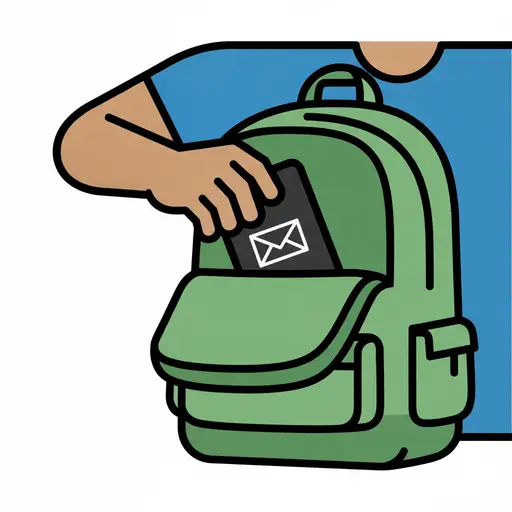
Pack phone
Close-up of a hand sliding a dark phone with an envelope icon on its screen into...
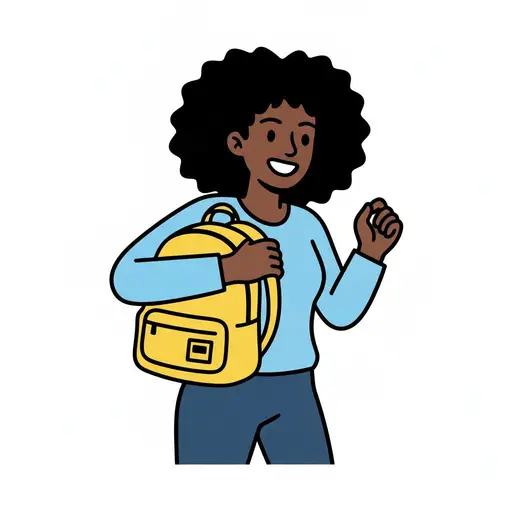
Bring backpack
A smiling girl in a blue top swings a yellow backpack onto her shoulder as she s...
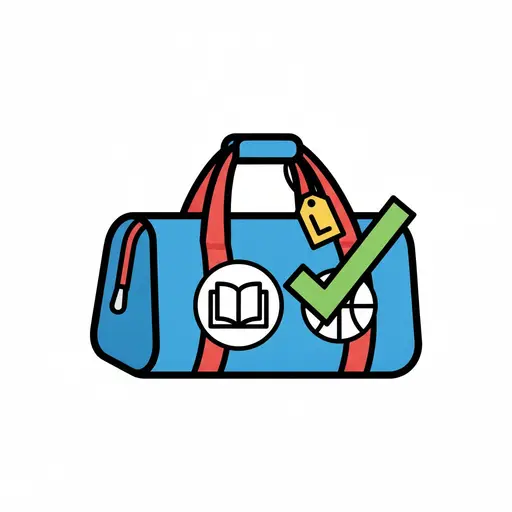
Bag is ready
A blue bag with book and ball symbols and a green tick showing it is packed.
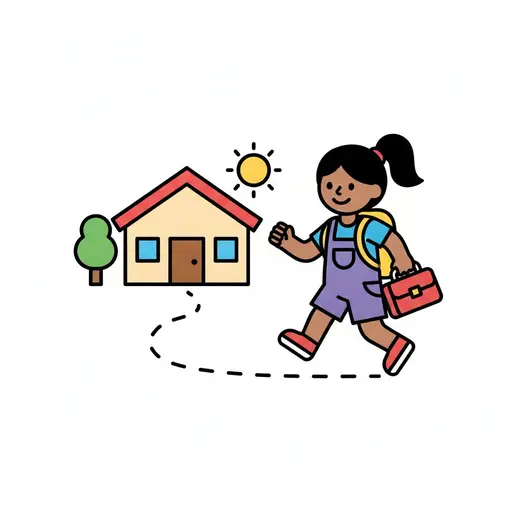
Go to preschool
A girl with a backpack and a bag walks along a path from a house.
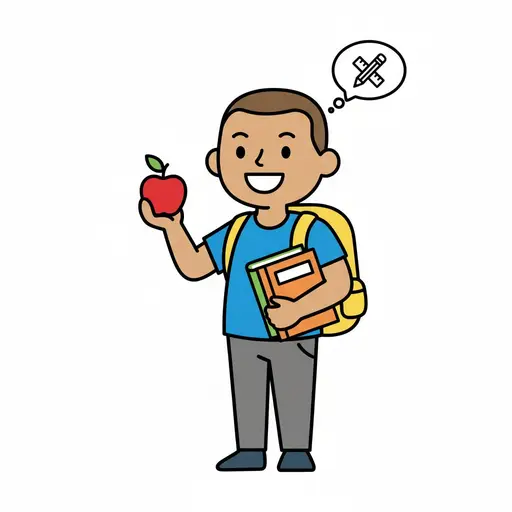
Ready for school
A boy with a backpack holds an apple and books, ready to go to school.
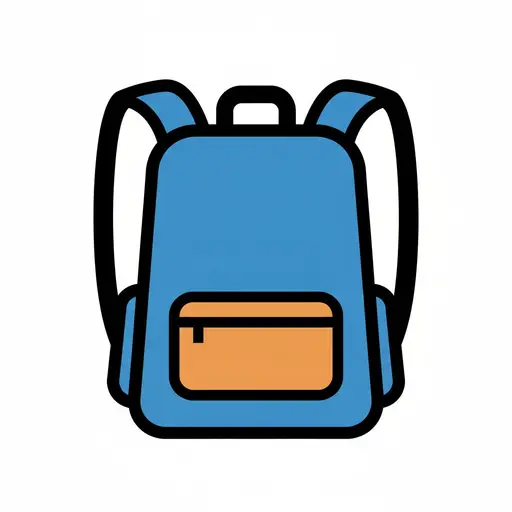
Backpack
A blue backpack with shoulder straps, a carry handle and an orange zip pocket on...
This visual support in other languages
Take the visual supports with you
In Routined you build schedules from these pictures, add timers and voice instructions, and your child follows the day on their own.


* 14-day free trial, then $2.39 a month or $20.99 a year (US pricing). Cancel anytime.