Wake children
Going from deep sleep straight into demands is one of the day's hardest switches. The steps below ease the path into morning, so the brain has time to come online before anything has to happen.
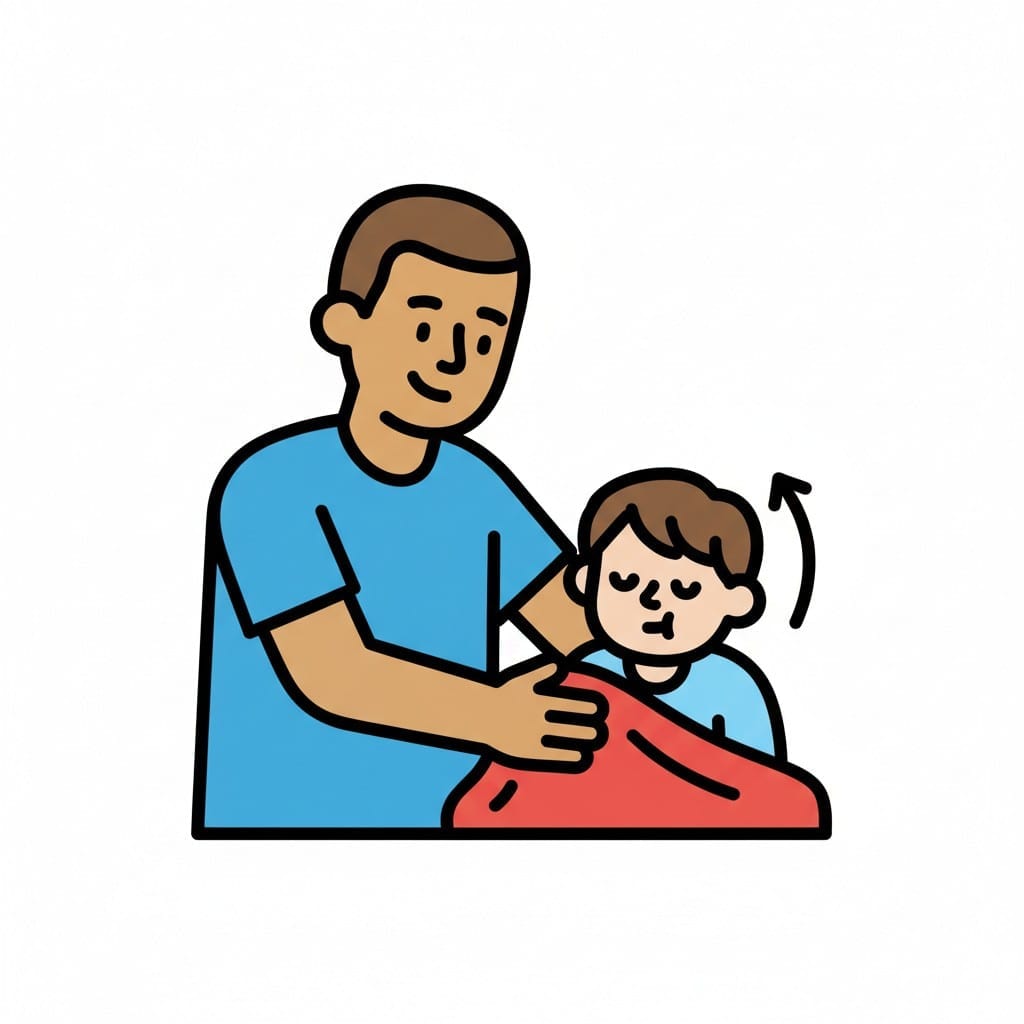 ♂
♂Gently waking the child
A man leans over and places a hand on a child sleeping under a red blanket.
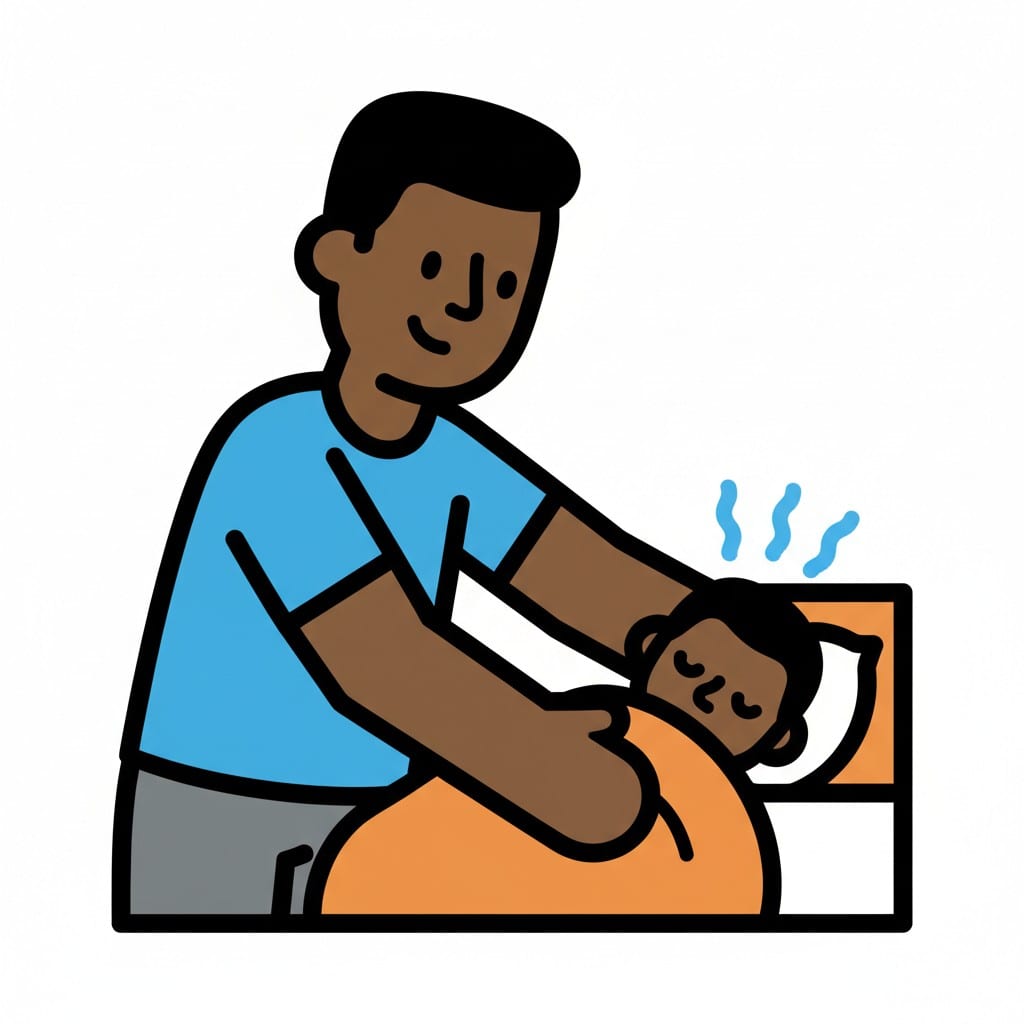 ♂
♂Dad waking a child in bed
A man bends over a bed to wake a child lying on a pillow with sleep symbols floating above.
 ♂
♂Man waking a child
A smiling adult leans over the bed to wake a sleeping child while the sun shines outside.
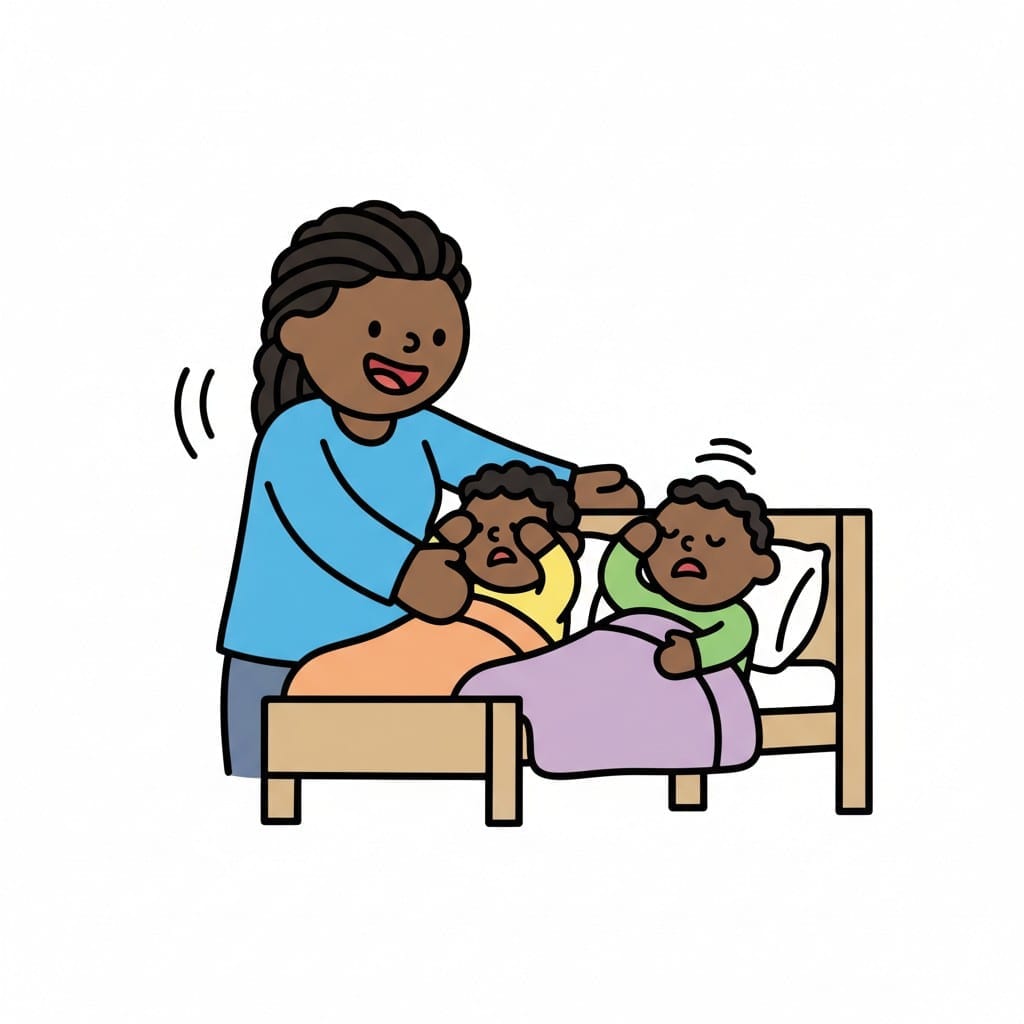 ♀
♀Parent wakes children
A parent stands by a bed, waking two children who are lying in bed. The children look sleepy and rub their eyes.
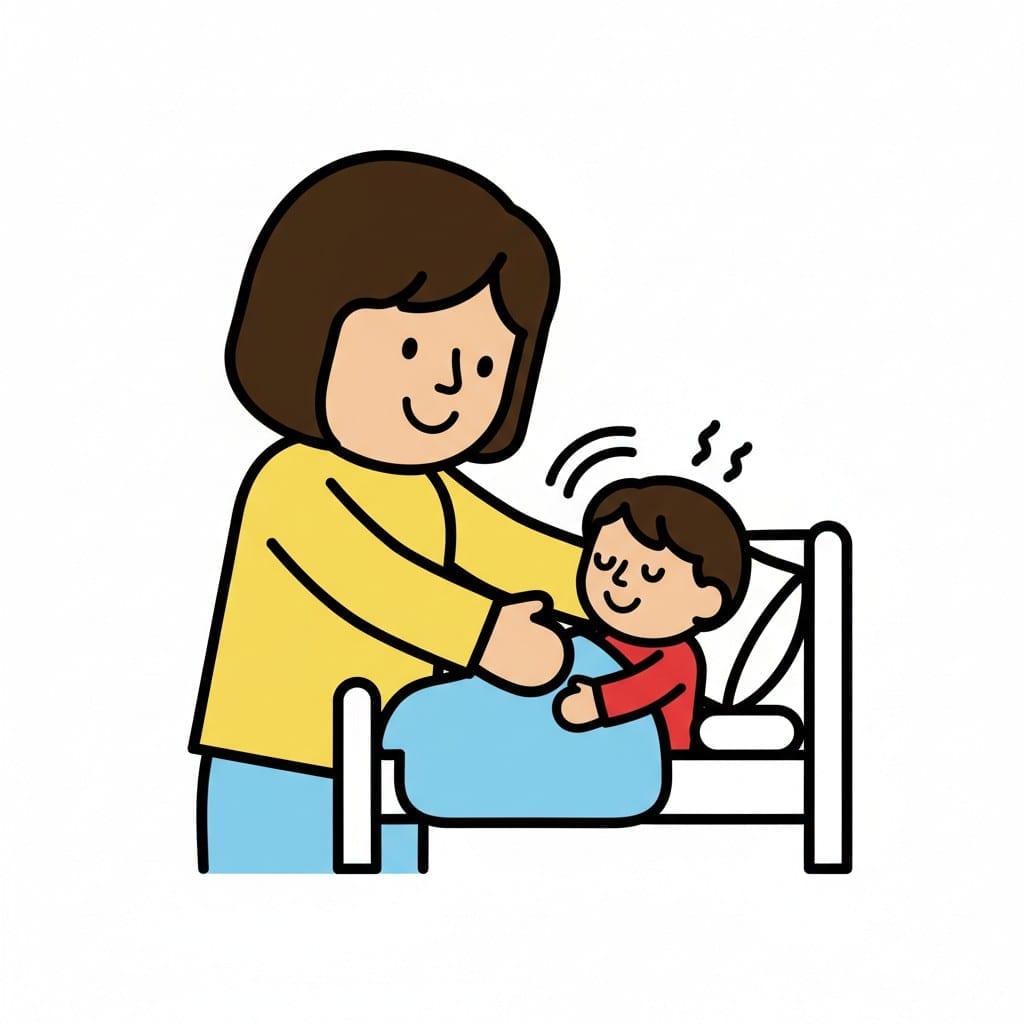 ♀
♀Mum waking the child
A woman in a yellow top rests her hand on a child who is just waking up in bed.
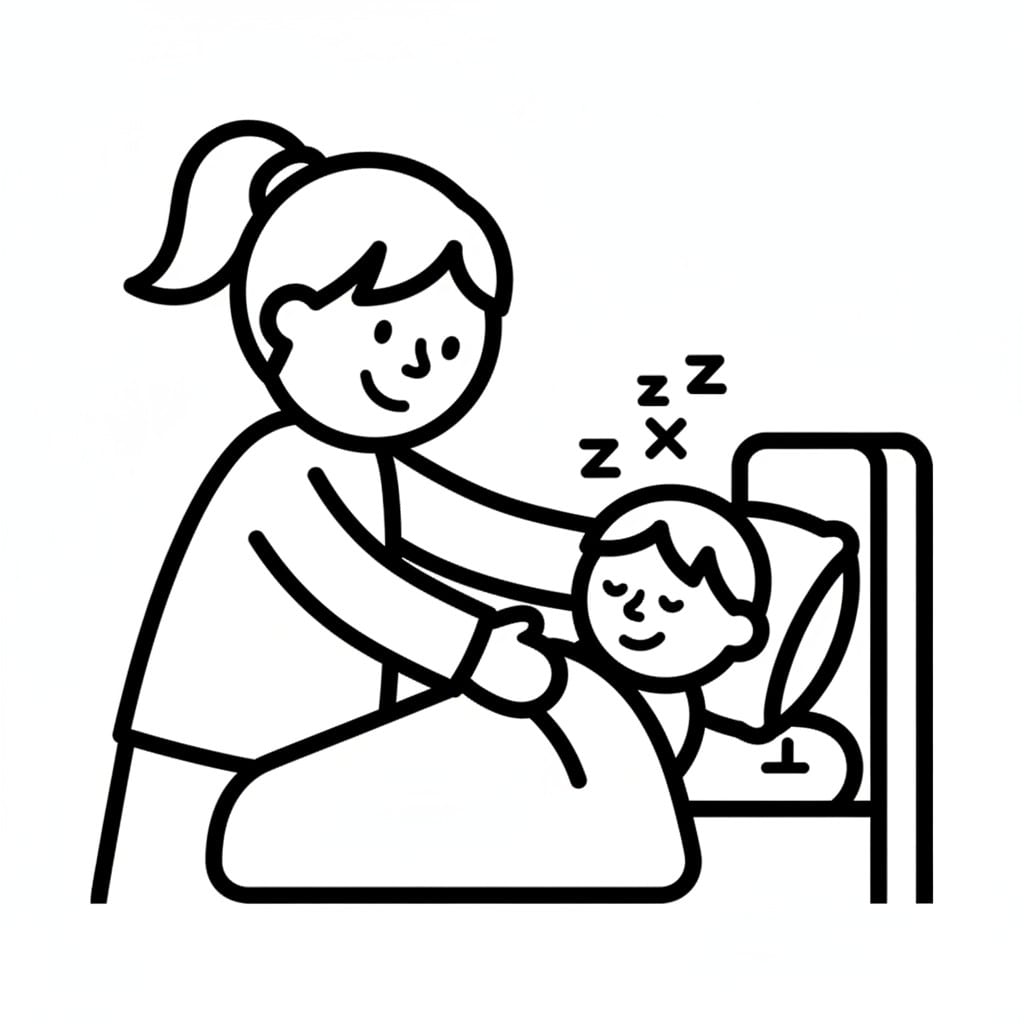 ♀
♀Woman waking a child
A woman gently touches a child asleep in bed to wake them for the day.
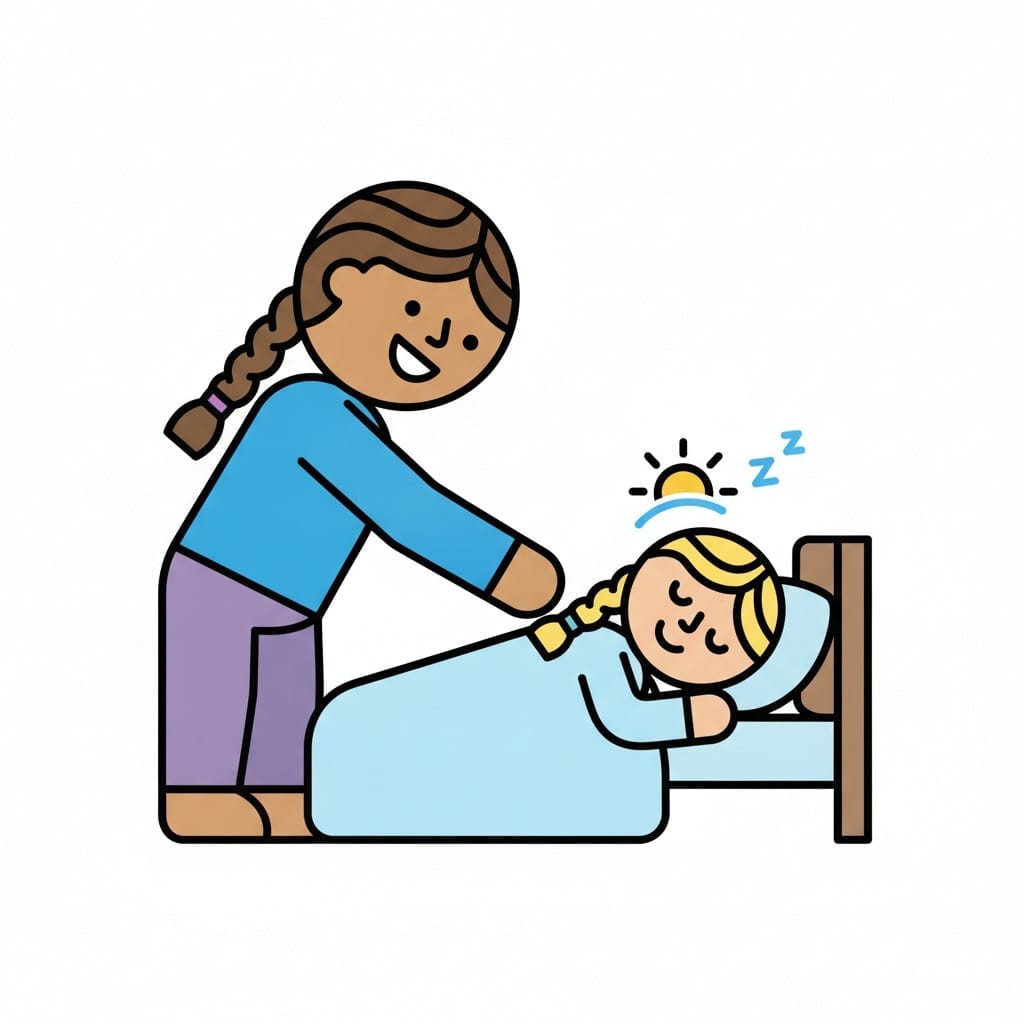 ♀
♀Adult gently waking a sleeping child
A smiling adult with a braid leans forward and places a hand on a sleeping child in a bed, with a sunrise and Z letters above.
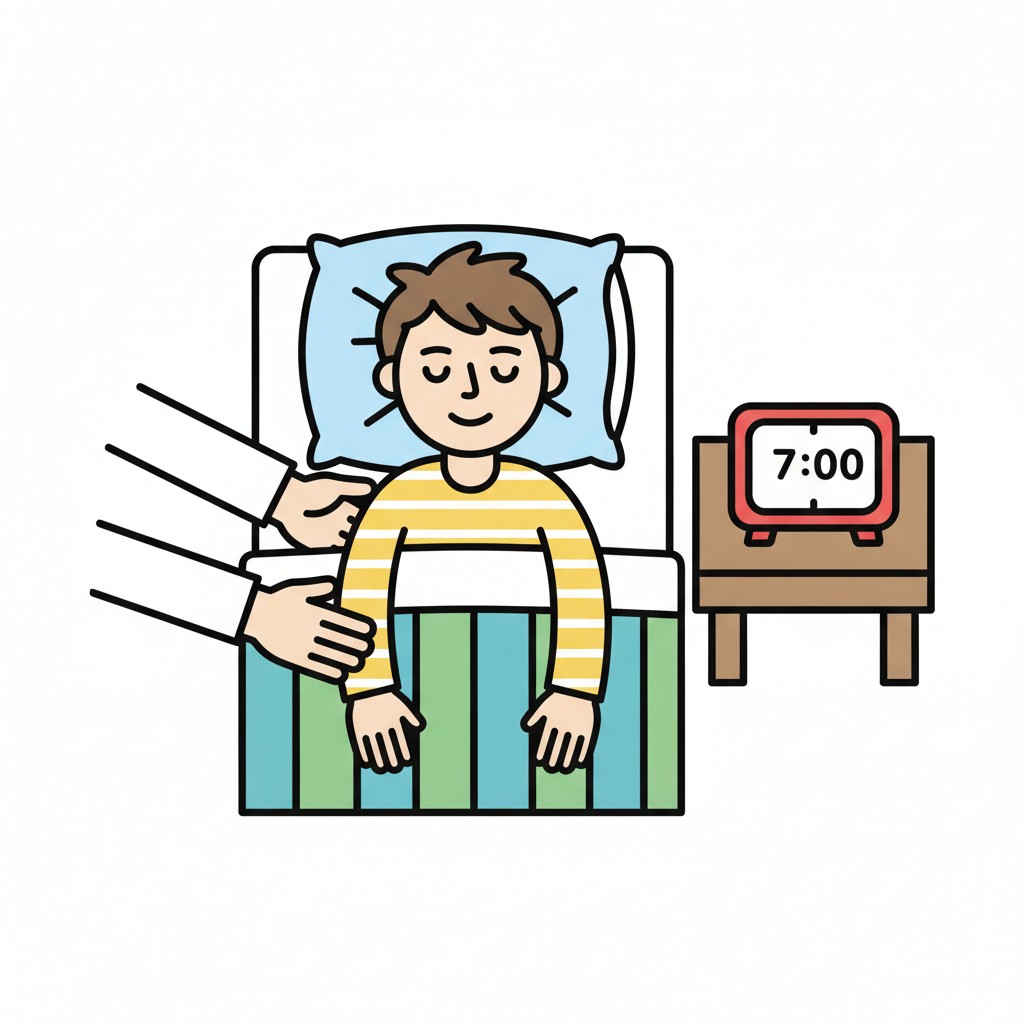 ⚲
⚲Wake gently
A hand gently shakes a sleeping child in bed, with a clock showing seven.
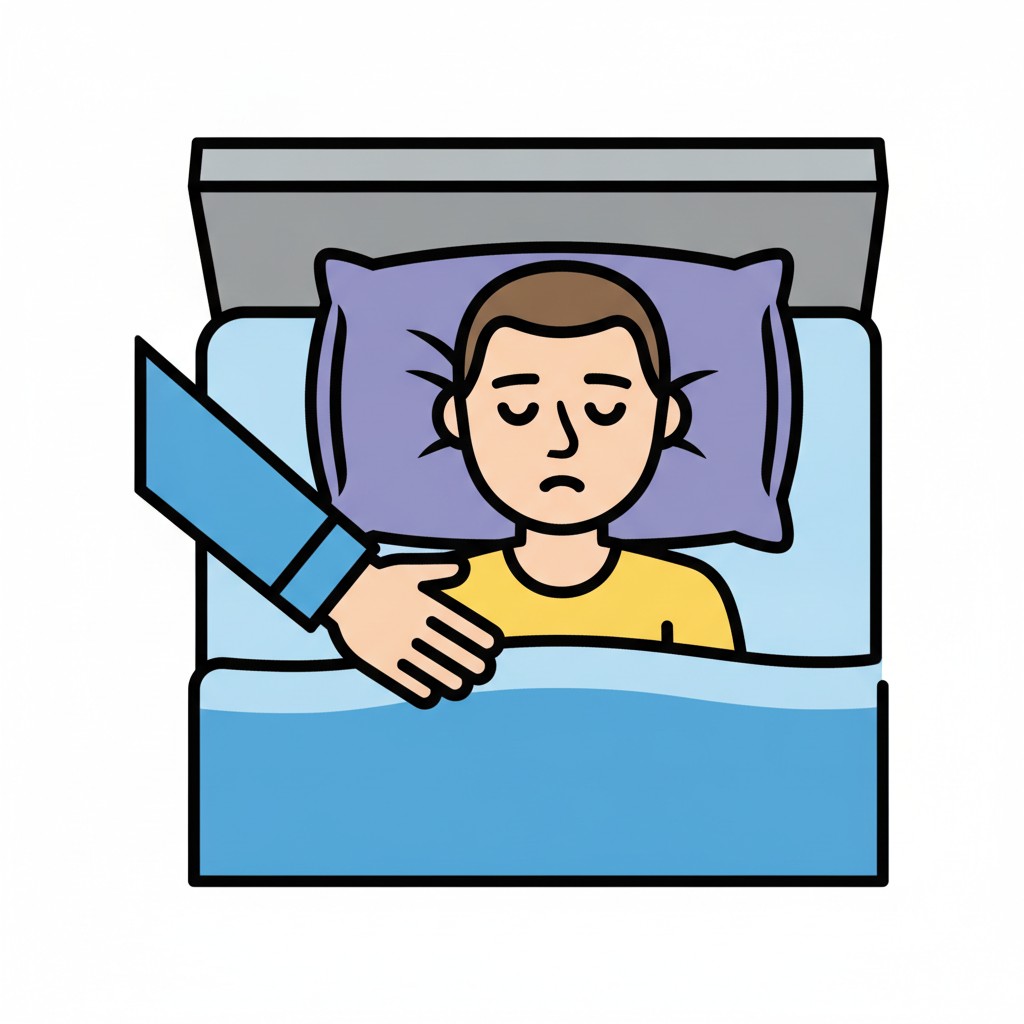 ⚲
⚲Time to wake up
A hand rests on the shoulder of a child sleeping in a bed.
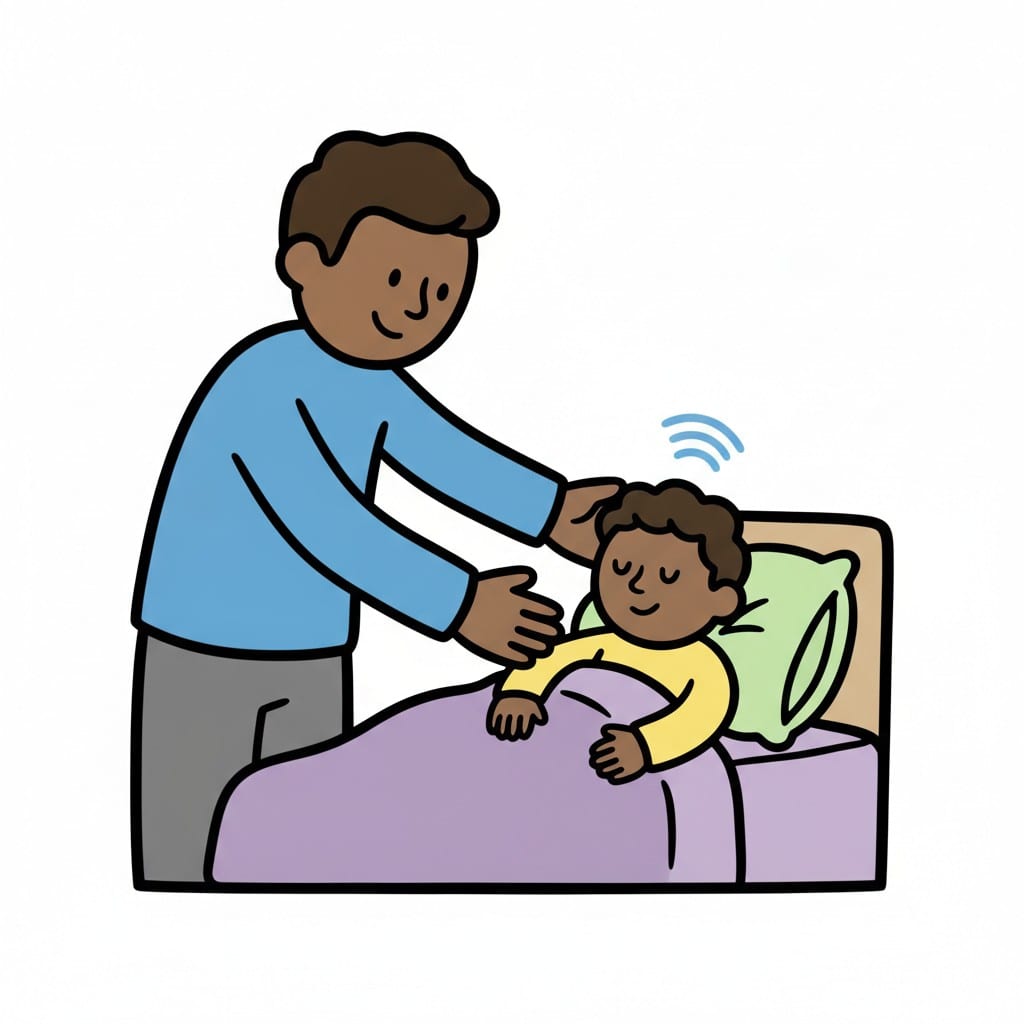 ⚲
⚲Waking the children
An adult leans over the bed and wakes a sleeping child.
 ⚲
⚲Time to wake up
Two hands wake a sleepy child in bed as the sun rises.
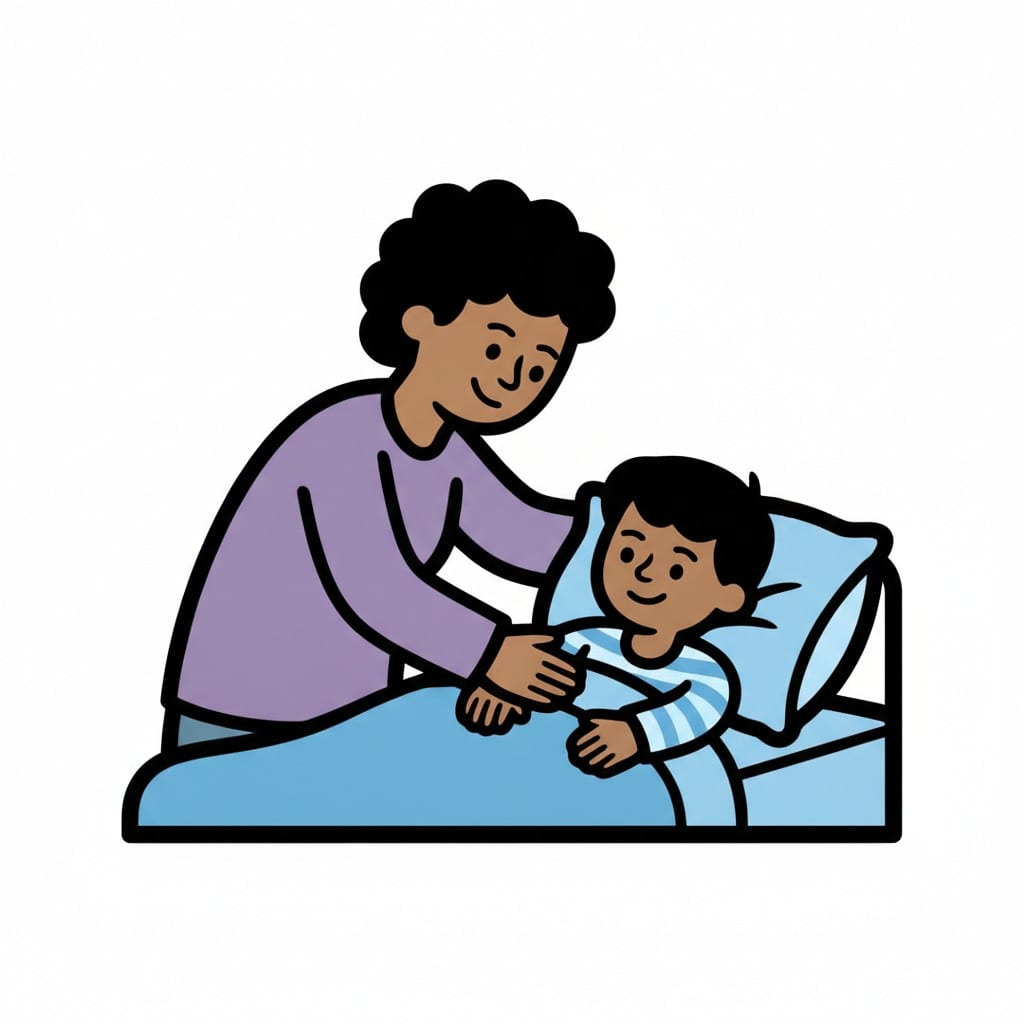 ⚲
⚲Mom wakes the boy
A mom leans over the bed and wakes a boy.
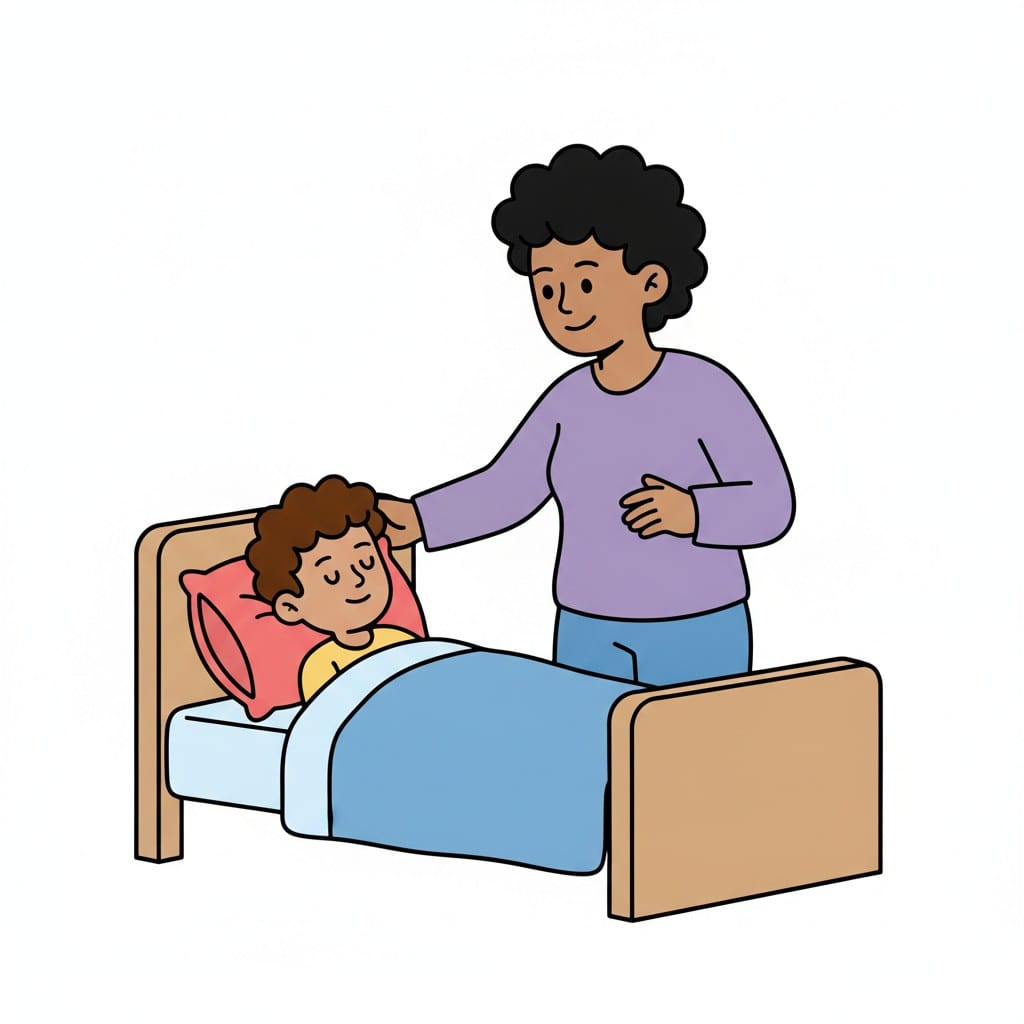 ⚲
⚲Waking gently
A mom strokes a sleeping child's hair.
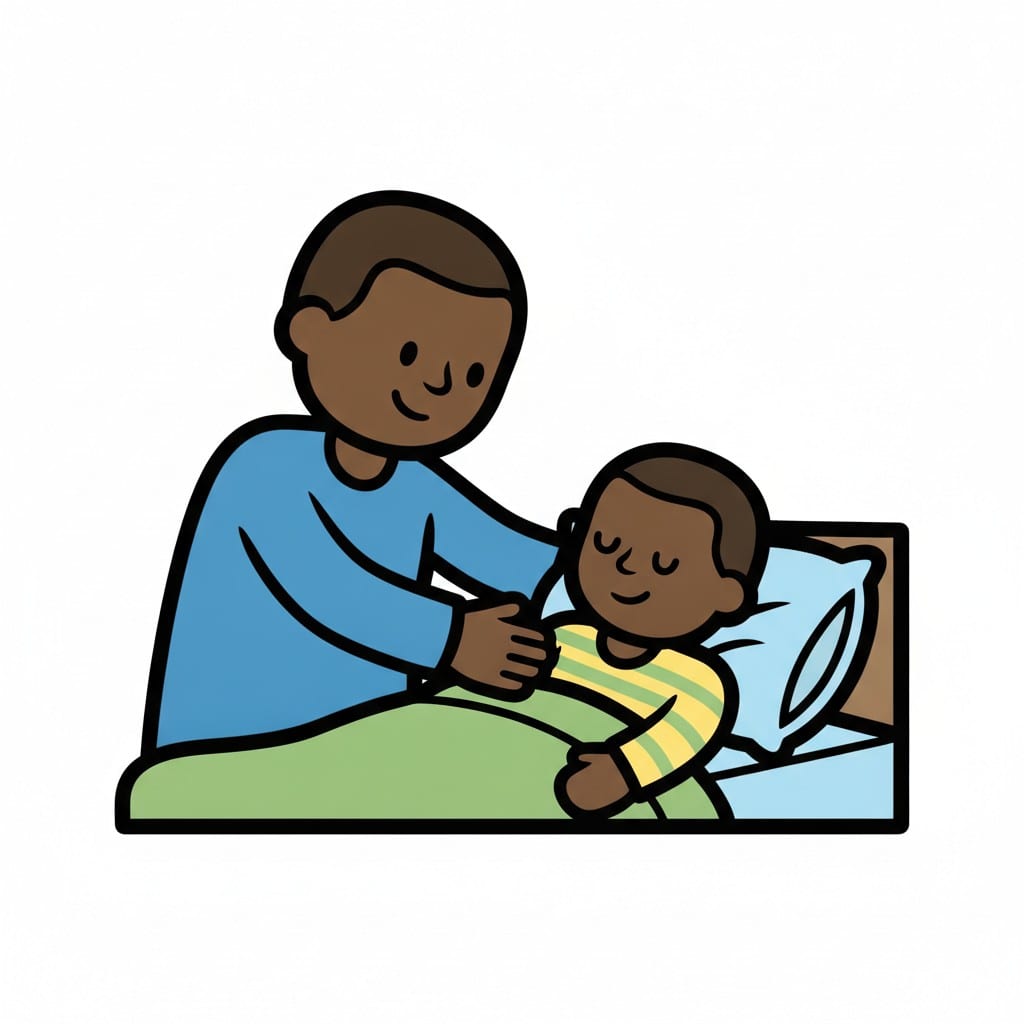 ⚲
⚲Waking the child
An adult places a hand on a sleeping child in bed.
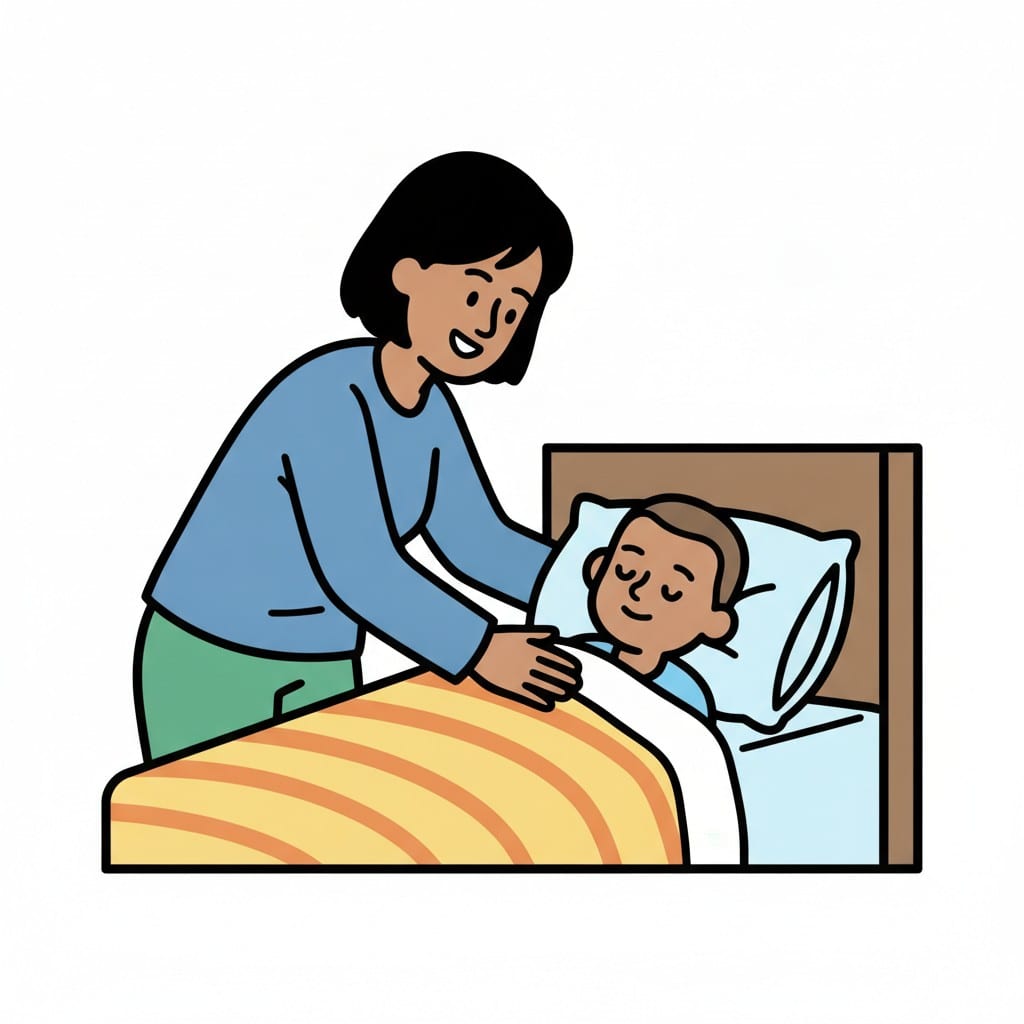 ⚲
⚲Mom by the bed
A mom leans over a sleeping child under a striped blanket.
About this visual support
Sleep is not a switch. When a body in deep sleep meets ceiling light, an alarm and a parent asking something important, two systems collide. The brain needs a few minutes to find its way back into the room, and during that gap most input feels like pressure.
Breaking the wake-up into visible steps changes the experience. First a calm voice, then a hand on the shoulder, then the curtain, then sitting up. Each picture tells the child what is coming next, so the body is never ambushed by the next demand, and you do not have to raise your voice to get movement going.
A tip that fits this moment specifically: put the first cards near the bed itself, on a nightstand or at eye level when the head is on the pillow. The child meets the routine the second the eyes open, without having to look around to find it. In Routined you can also set a gentle morning sequence with longer durations on the early steps, so the start of the day gets the time it actually needs.
Use this image in a schedule
Build your own visual schedule with this image and download it as a print-ready PDF. Completely free.
More similar visual supports

Wake Up and Cuddle
An adult and a child cuddle under the duvet at wake-up time with a heart above.
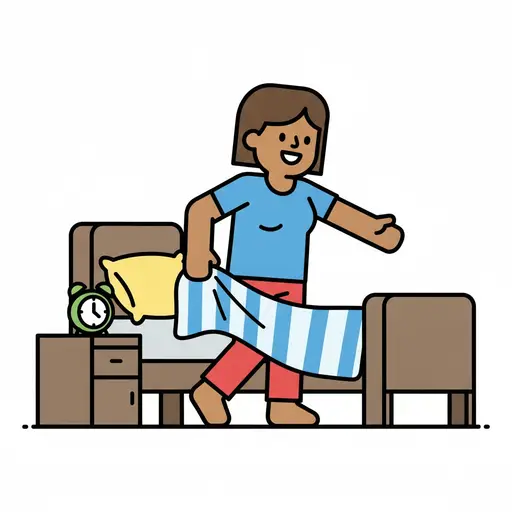
Get out of bed
A smiling person in pyjamas gets out of bed and pulls back a striped duvet, with...

Get up
A person climbs out of bed, pushing off the blanket with their hands.
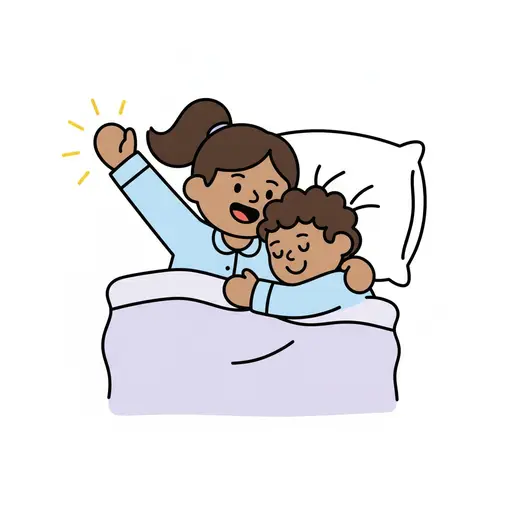
Wake Up and Snuggle
An adult stretches an arm up and snuggles with a child in bed at wake-up time.
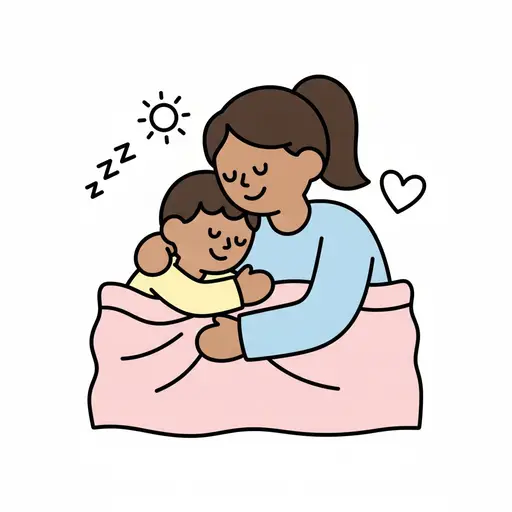
Wake Up Cuddle
An adult cuddles a sleepy child in bed with sleep symbols and a heart around the...

Morning
The sun rises over mountains with a cup of coffee, a clock, a book and a bird.

Morning mood
A girl in pyjamas holds a warm mug and smiles with a sun and a bird behind her.
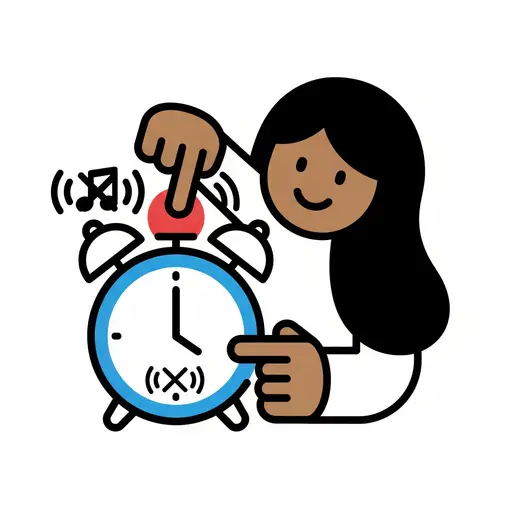
Turn off the alarm
A girl presses the button on top of a ringing blue alarm clock to turn off the s...
This visual support in other languages
Take the visual supports with you
In Routined you build schedules from these pictures, add timers and voice instructions, and your child follows the day on their own.


* 14-day free trial, then $2.39 a month or $20.99 a year (US pricing). Cancel anytime.