When Your Child Wakes Too Early: Gentle Ways to Handle 5 AM Wake-Ups
If your child is up and ready to go at 5 AM, you're not alone — and you're not doing anything wrong. Early waking usually has a handful of fixable causes. Here's how to find yours and gently shift mornings later.
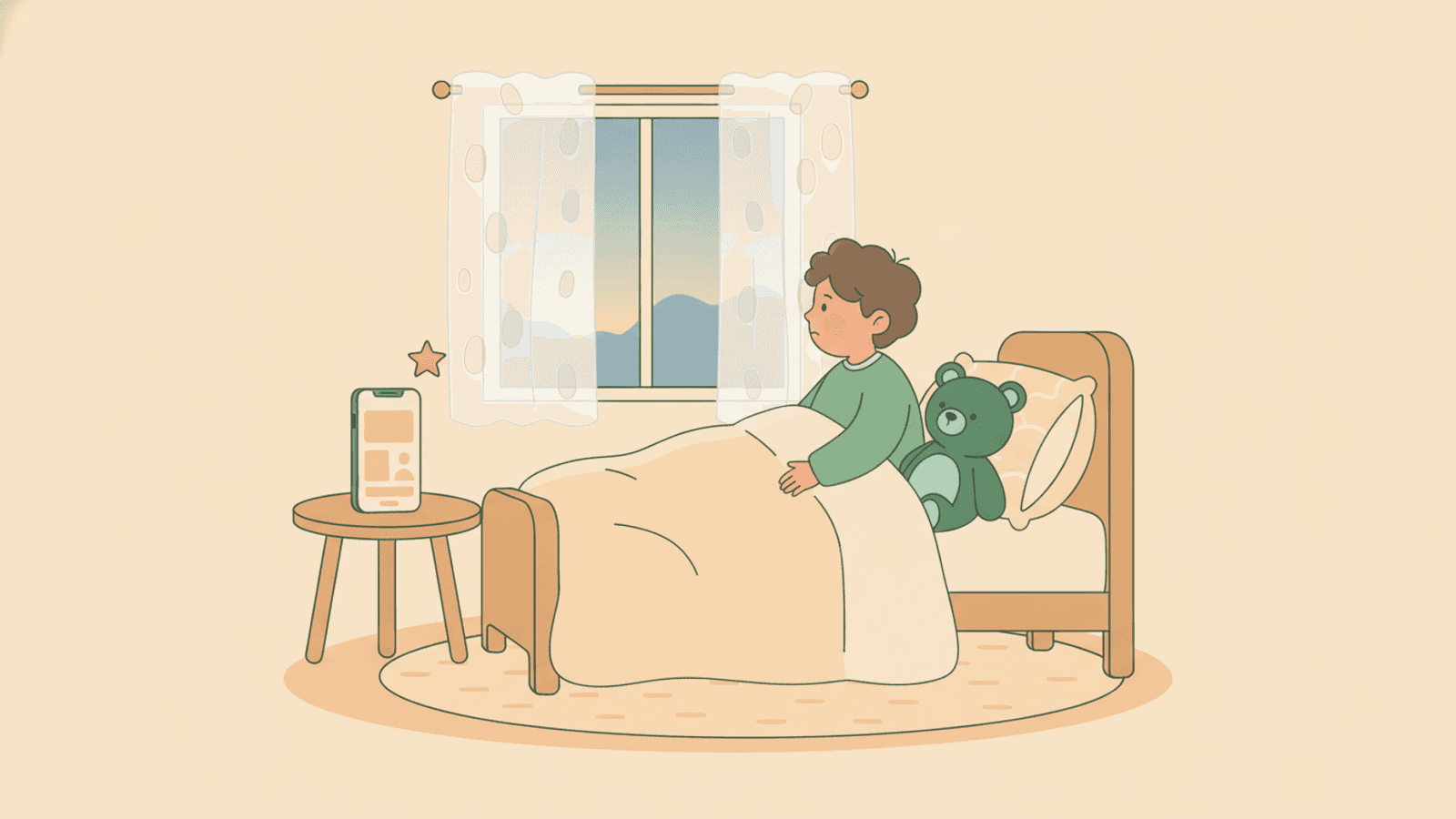
If your child is wide awake and ready for the day at 5 AM, you are not alone — and you are not doing anything wrong. Early waking is one of the most common sleep worries for parents of young children, and it almost always comes down to a handful of fixable causes. The trick is finding which one is yours and adjusting gently.
Why children wake too early
A few things drive early waking, often together: light creeping in, a room that is too warm or too cold, hunger, noise, or a bedtime that is actually too early. Counter-intuitively, an overtired child often wakes earlier rather than later — when sleep pressure has built up too high, sleep breaks apart toward morning.
Sleep is also lighter in the early hours. Around 4–6 AM most of us drift through lighter stages, so it takes very little — a bird, the sunrise, a full bladder — to tip a child from asleep to wide awake.
First, rule out the simple causes
- Light. Even a little dawn light tells the brain to stop making melatonin. A blind that genuinely darkens the room is often the single biggest fix in spring and summer.
- Temperature. A room that heats up at sunrise can wake a child. Keep it cool and air it out before bed.
- Hunger. A child who eats dinner at 5 PM may genuinely be hungry by 5 AM. A slightly later or more filling evening snack can help.
- Noise. Early traffic, birds or a sibling can be enough. A steady low sound, like a fan, can mask sudden noises.
The counter-intuitive fix: bedtime and naps
If you have ruled out the basics and your child still springs up at five, look at the rest of the day. A bedtime that is too early, or too much daytime sleep, can both cause early waking. Try moving bedtime 15–20 minutes later for a week, or trimming a long nap a little. Keep changes small and give each one about a week before you judge it.
What to do at 5 AM
How you respond matters. If 5 AM reliably brings cuddles, screens or breakfast, the body quietly learns that 5 AM is when good things happen. Keep your response calm, boring and consistent: low light, few words, and a gentle reminder that it is still sleep time.
A visual “ok-to-wake” cue helps toddlers and preschoolers who cannot yet read a clock — a light or a simple picture that means “not yet” versus “now you can get up”. The child learns to wait quietly for the signal instead of waking the whole house.
For children with ADHD or autism
Sleep differences are very common with ADHD and autism — falling asleep, staying asleep and waking early can all be harder. Predictability helps most: the same wind-down, the same room conditions, the same response every morning. If sleep problems are persistent and wearing on the day, talk to your doctor or care team, who can check whether anything else is contributing. This article is general guidance, not medical advice.
Read more
Frequently asked questions
What counts as waking 'too early'?
There is no single number, but consistently waking before about 6 AM and not settling back to sleep is usually what parents mean. What matters most is whether your child seems rested and able to manage the day.
Will keeping my child up later fix early waking?
Sometimes, but not always. An overtired child often wakes earlier, so a much later bedtime can backfire. Try a small shift of 15–20 minutes and watch for a week before deciding.
Should I let my child into our bed at 5 AM?
That is your call, but be aware that whatever happens at 5 AM tends to repeat. If you would rather not make it a habit, keep the response calm and consistent and gently return them to their own room.
Do blackout curtains really help?
Very often, yes — especially in spring and summer when dawn comes early. Light is a powerful wake signal, and darkening the room properly is one of the simplest things to try first.
When should I worry about early waking?
The odd early morning is normal. If it is persistent, your child seems exhausted, or it comes with snoring, breathing pauses or other concerns, check in with your doctor.