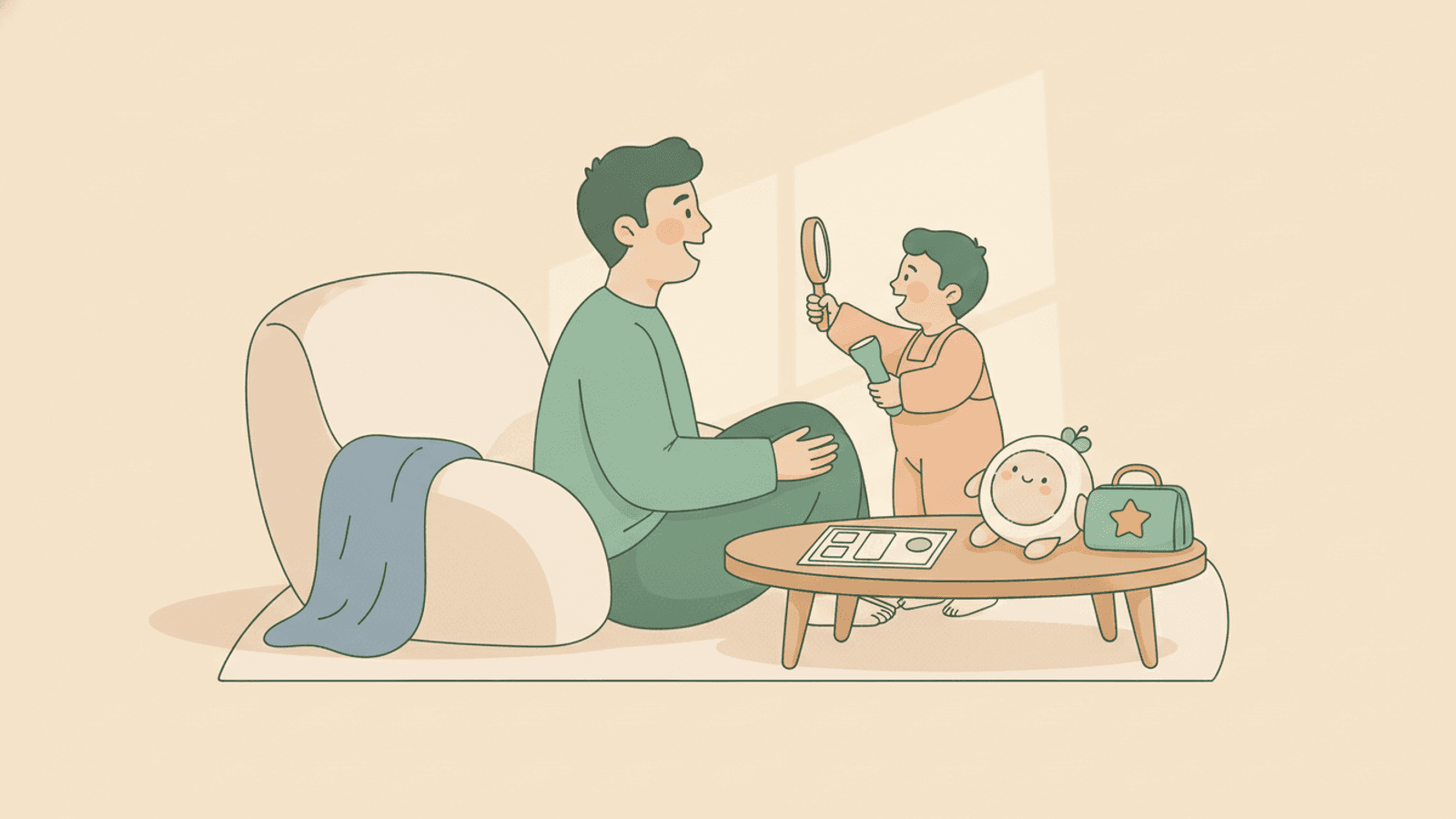
Preparing Your Child for the Doctor or Dentist: A Calm, Practical Guide
"It will be fine" is not preparation. Here is what to tell your child, how far ahead, and what to ask the clinic for before you arrive.
Discover practical tips and guides to bring structure to family life. We explore everything from effective morning routines and smooth bedtime transitions to reducing stress around screen time and household chores. Simplify your day-to-day with proven methods for a more harmonious home.
"It will be fine" is not preparation. Here is what to tell your child, how far ahead, and what to ask the clinic for before you arrive.
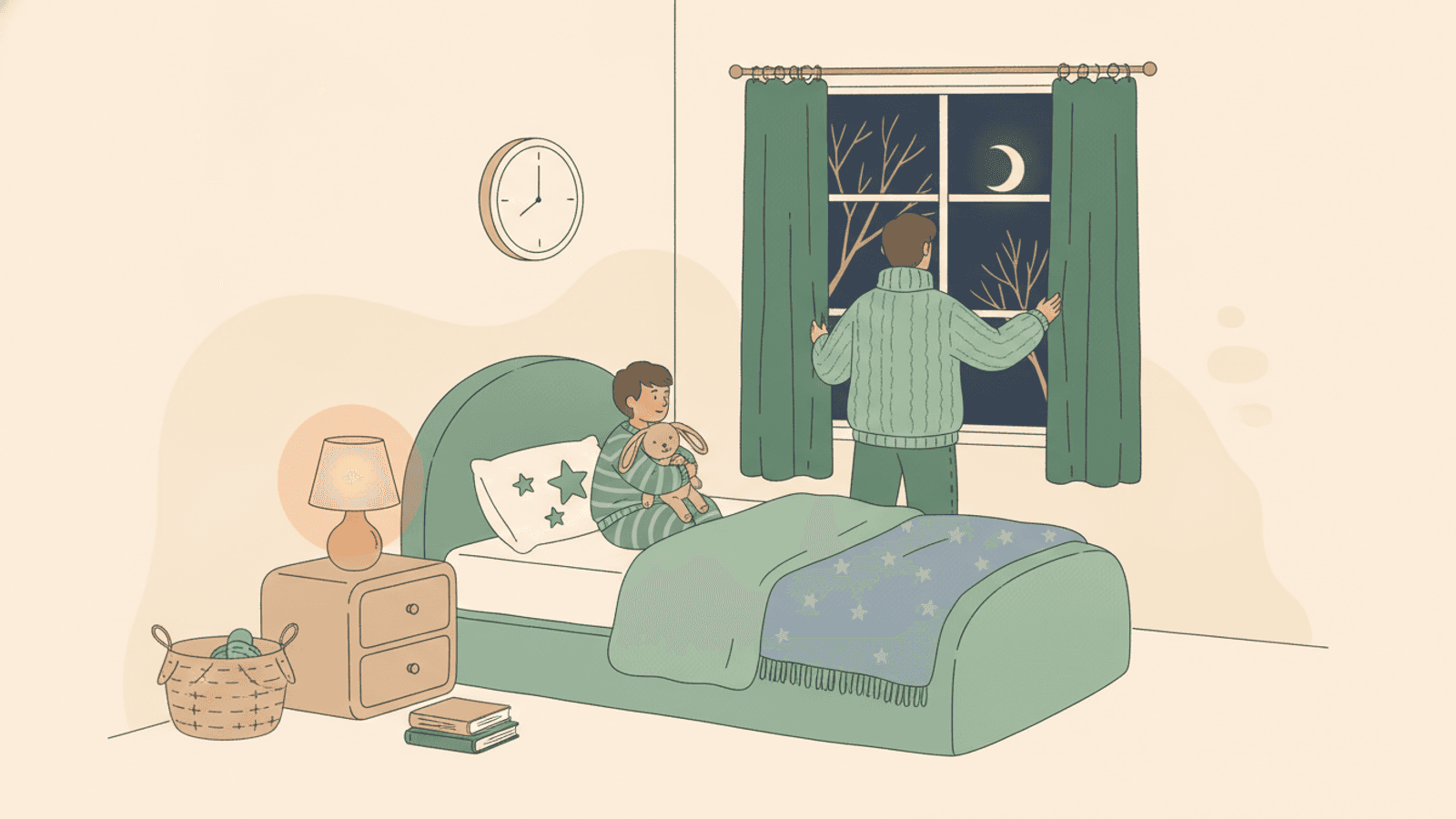
The extra hour is a myth for anyone with small children. Here is how to prepare for the clock change and survive the dark Nordic season.
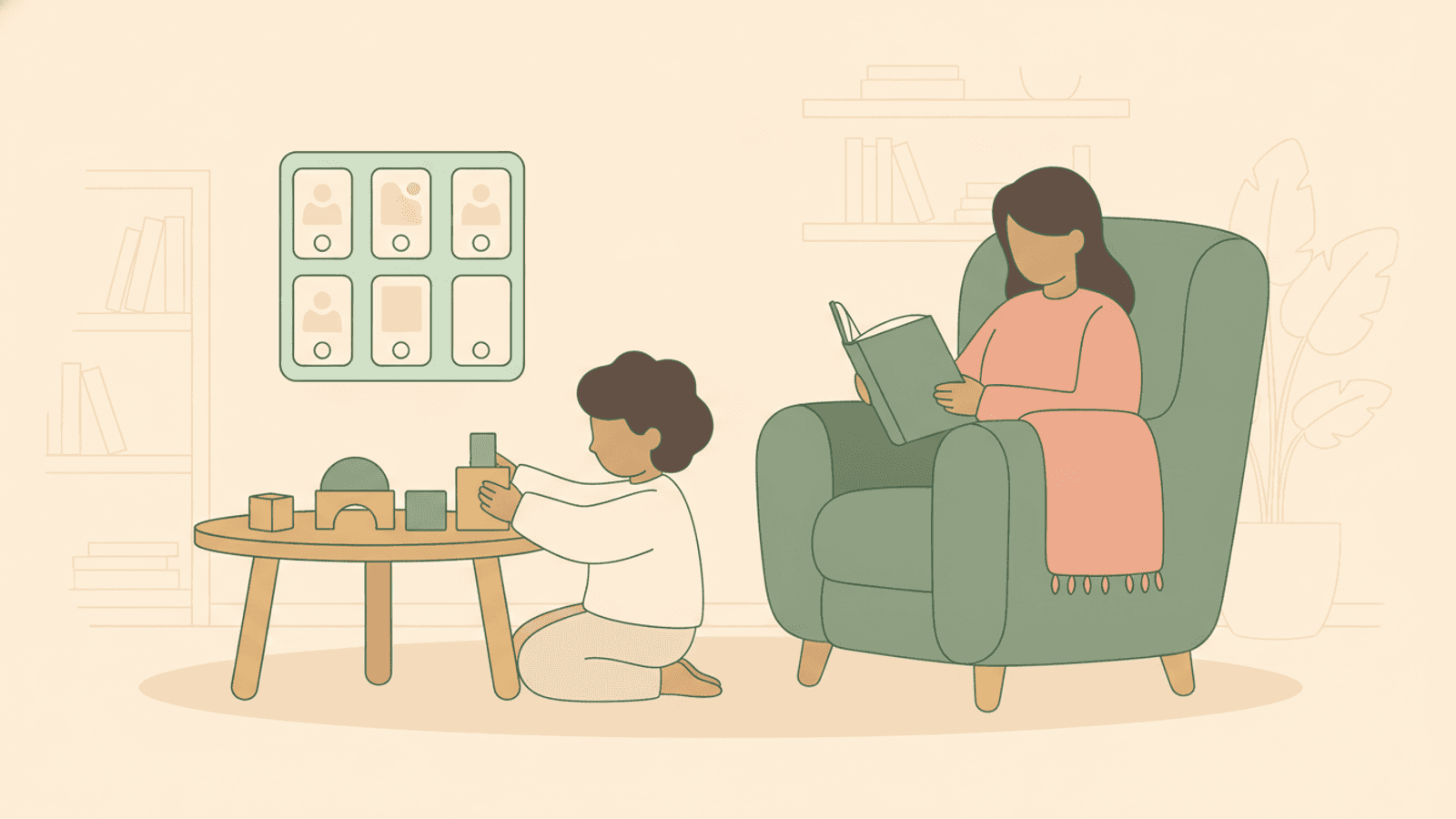
An only child has no sibling rhythm to copy, so structure has to be built on purpose. Here is how to design routines that hand ownership to the child instead of to you.

Constant negotiation over screens is exhausting. Designated screen-free zones and times replace daily battles with clear, predictable boundaries the whole family can follow, including the adults.
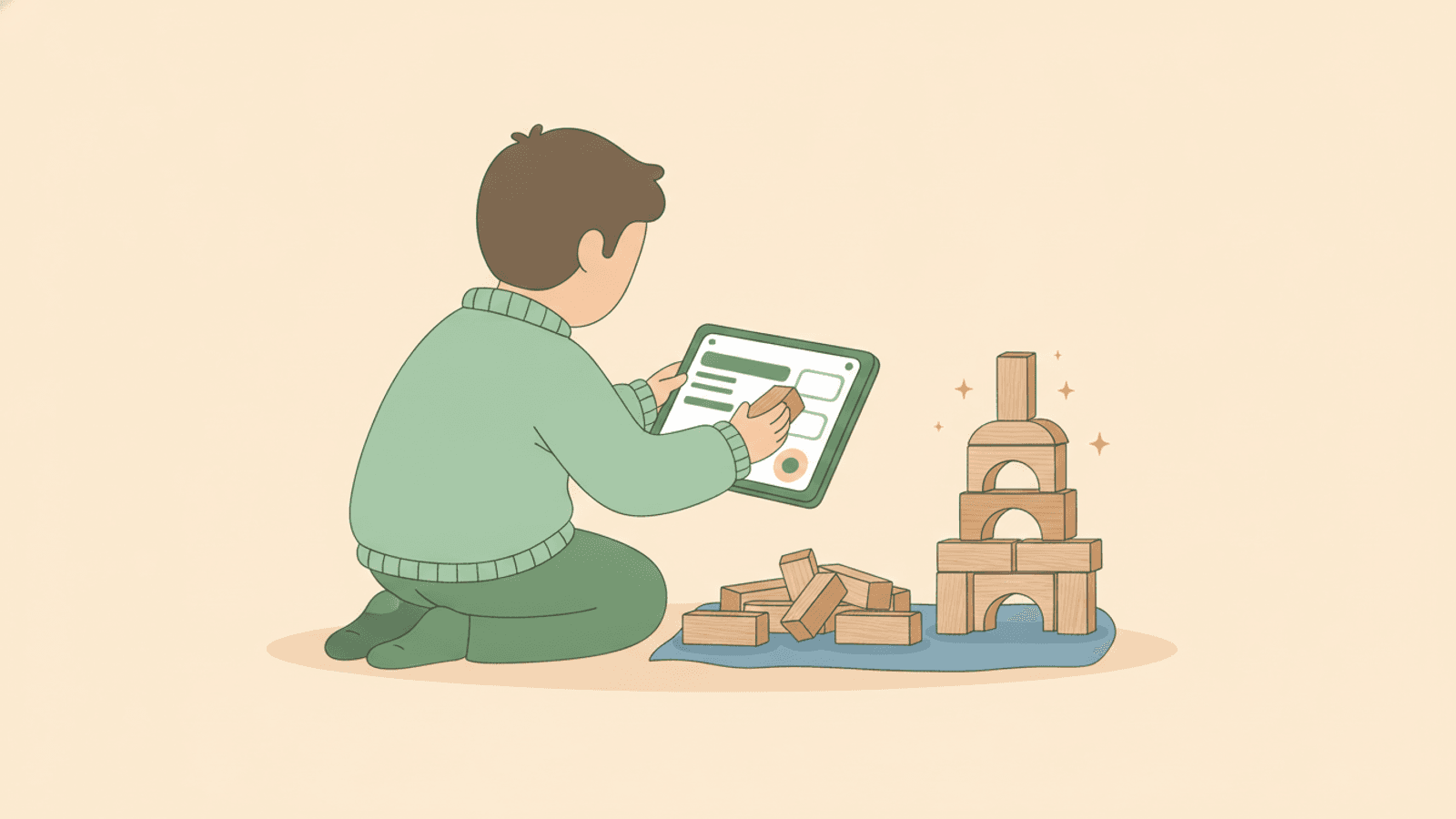
Does the educational label really matter? What counts far more is whether screen time is passive, active or creative, shared with you, and linked to real life.
Handing over a phone in a cafe or clinic isn't a failure, but it shouldn't be automatic either. Here's a balanced, practical way to think about screens while children learn to wait.
Blanket bans rarely last. Here is a calmer way to set family screen time rules together, model them yourself, and use visual reminders and timers to reduce the daily battles, especially for children with ADHD or autism.

Screens push bedtime later and make it harder to fall asleep. Here is how screen time affects children's sleep, and simple evening fixes that actually work.

A warm, practical guide to teaching your child to follow their own schedule, from visual plans they can read alone to ticking off their own steps and gradually handing over control.
Why chores build confidence, which jobs suit which age, and how to make helping a calm, visible routine, including adjustments for children with ADHD or autism.

As tween bodies change, hygiene can turn into a daily battle. Here is how to build a calm, shame-free routine that gives your child ownership, privacy and the reminders they need.

Knowing how to brush kids' teeth properly matters as much as remembering to do it. Here is the technique that actually cleans, a simple by-age guide, and calm ways to make two minutes bearable.

Tying laces is not one skill but a chain of little ones. Break it into steps, practise off the foot in calm moments, and use two-colour laces to take the frustration out of teaching your child to tie their shoes.
A warm, low-pressure guide to potty training step by step, from spotting the signs of readiness to handling accidents without shame and adding gentle visual support.
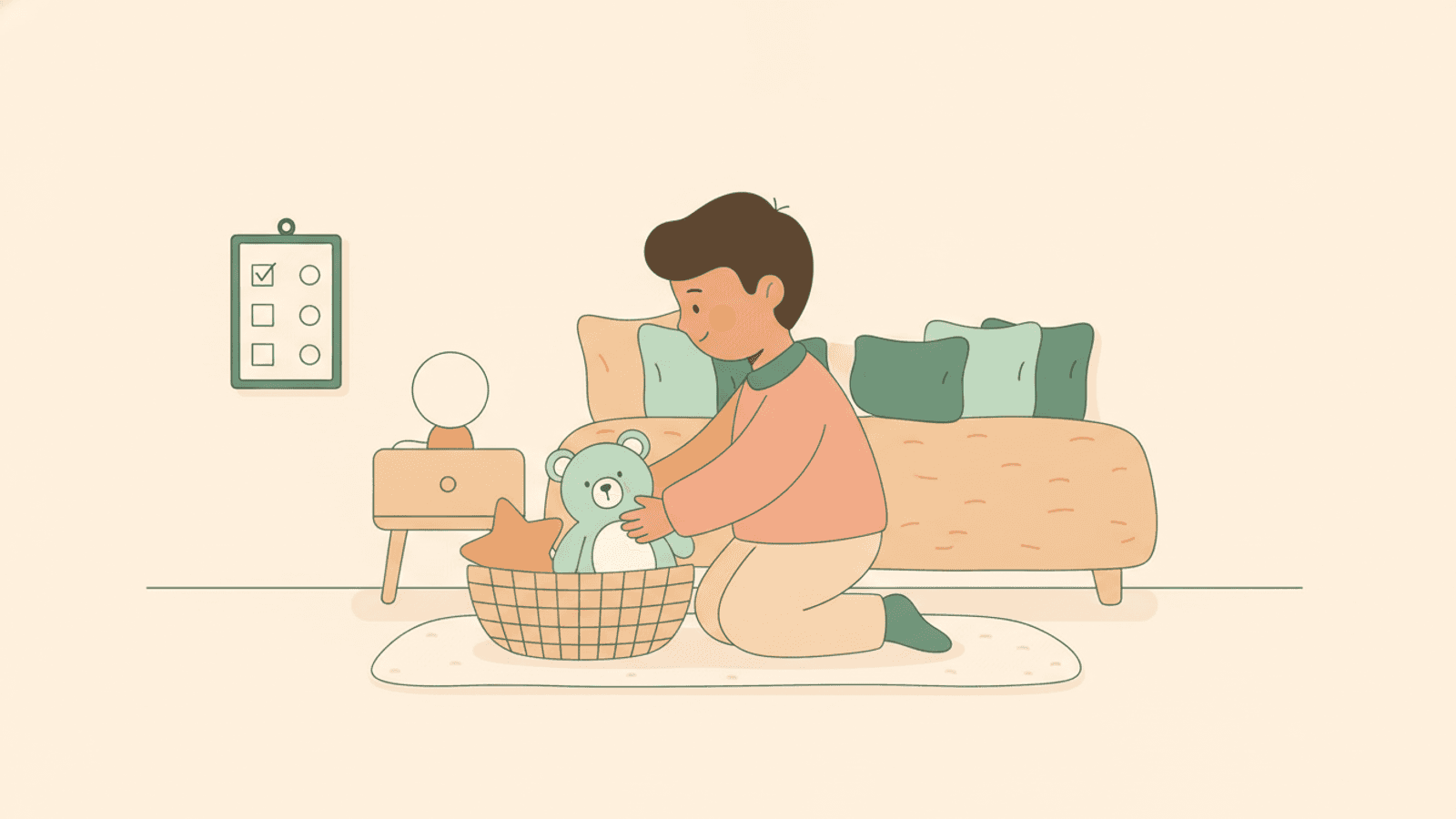
Tidying a whole room feels huge and abstract to a child. Here is how to break it into calm, visual micro-steps, one category at a time, so tidying becomes a routine instead of a battle.

Inviting your child into the kitchen feels like more mess and more time, and at first it is. But cooking together is one of the highest-value things you can do: it builds skills, makes children more willing to eat, and is real connection time.
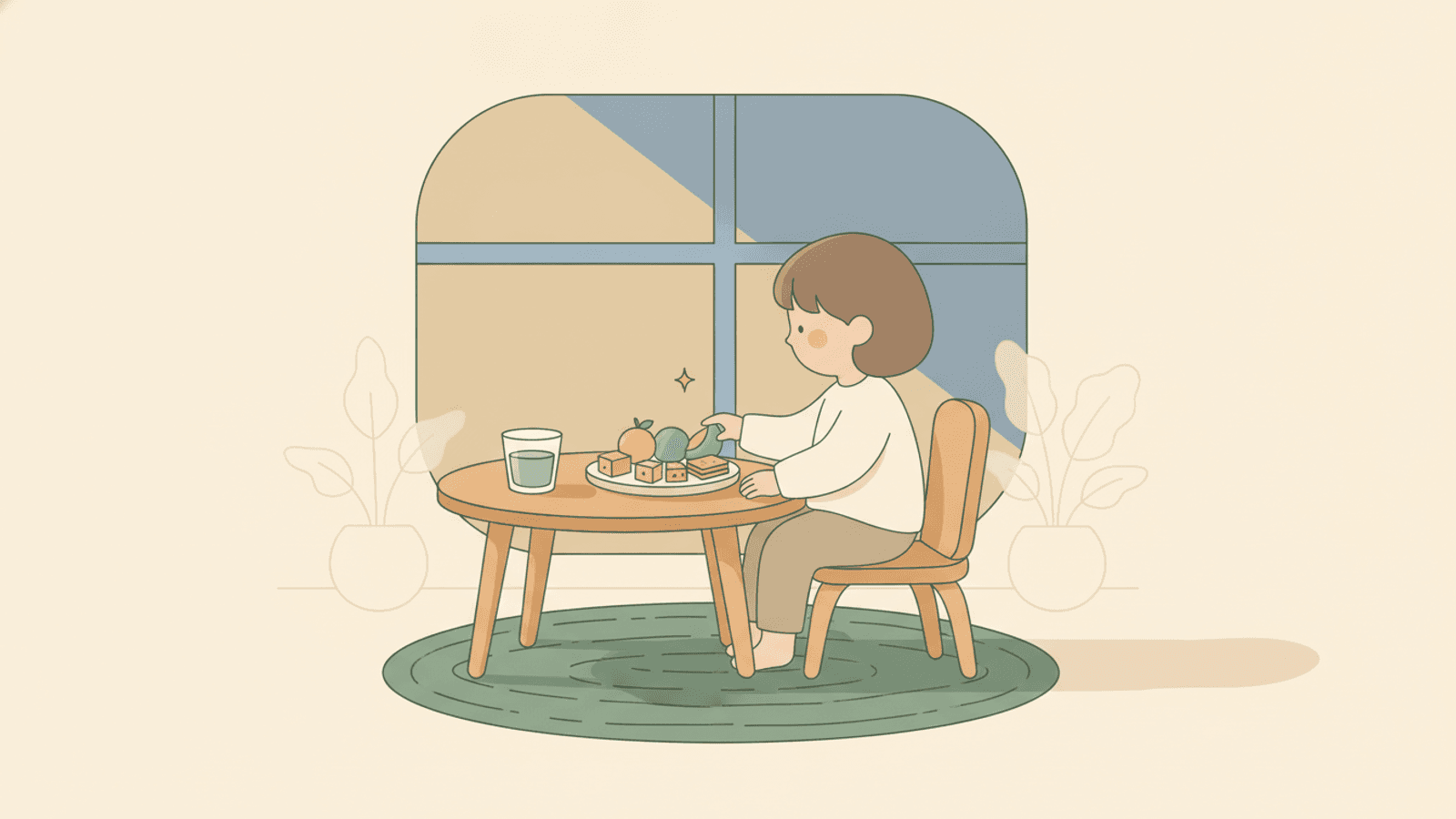
If your child grazes all day and then refuses dinner, the snacks may be the real problem, not the dinner. A little structure around meals and snacks makes everyone hungrier at the right times and calmer in between.
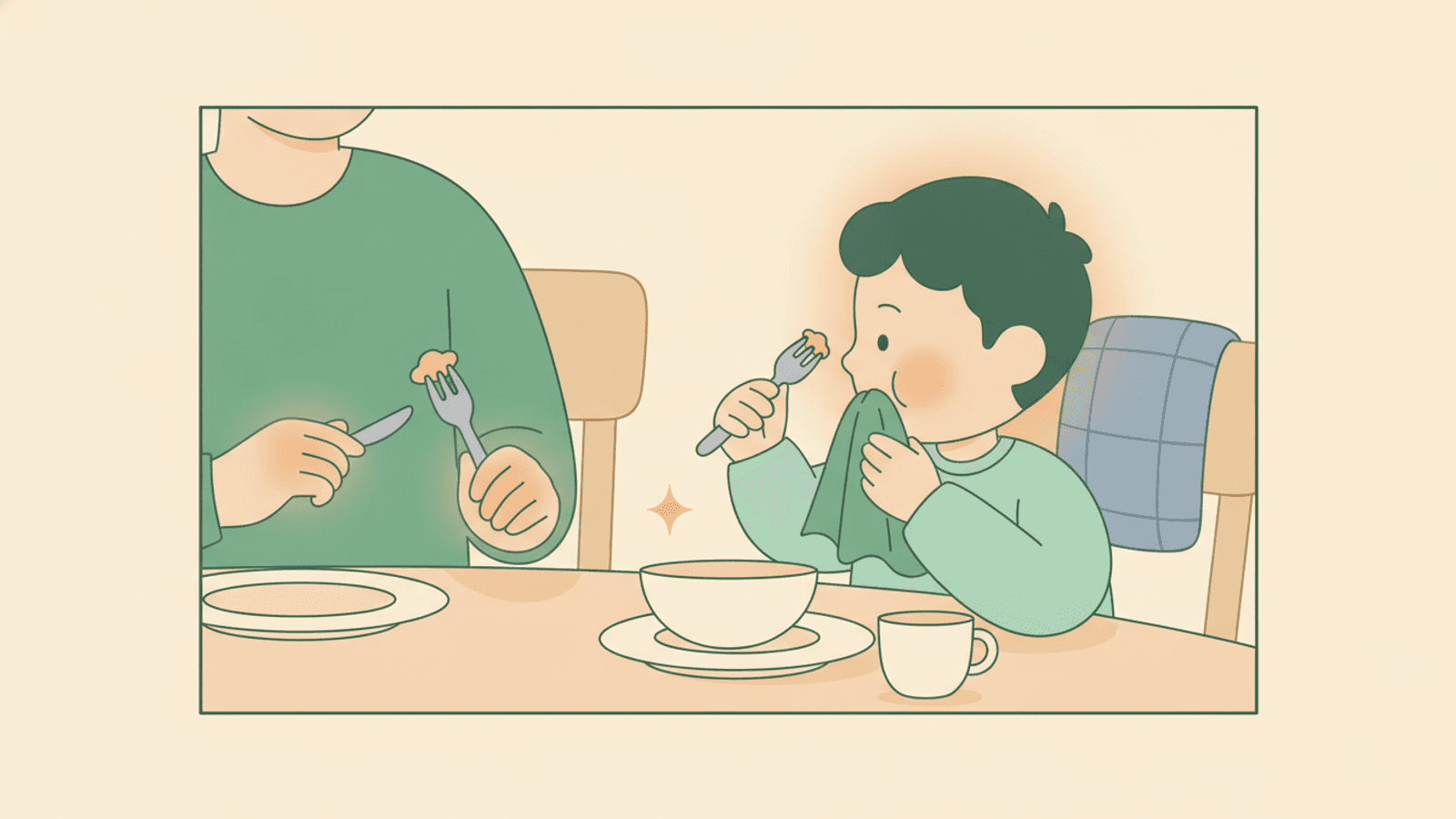
You want a child who can eat politely at someone else's table, but constant correcting makes dinner miserable and rarely works. Manners are learned skills that come gradually. Here is how to teach them without turning every meal into a lesson.

For some children, brushing hair is a daily battle — tears, ducking away, "ow, you're hurting me." Often it genuinely does hurt, or it simply feels overwhelming. Here is how to make the morning tangle far calmer.
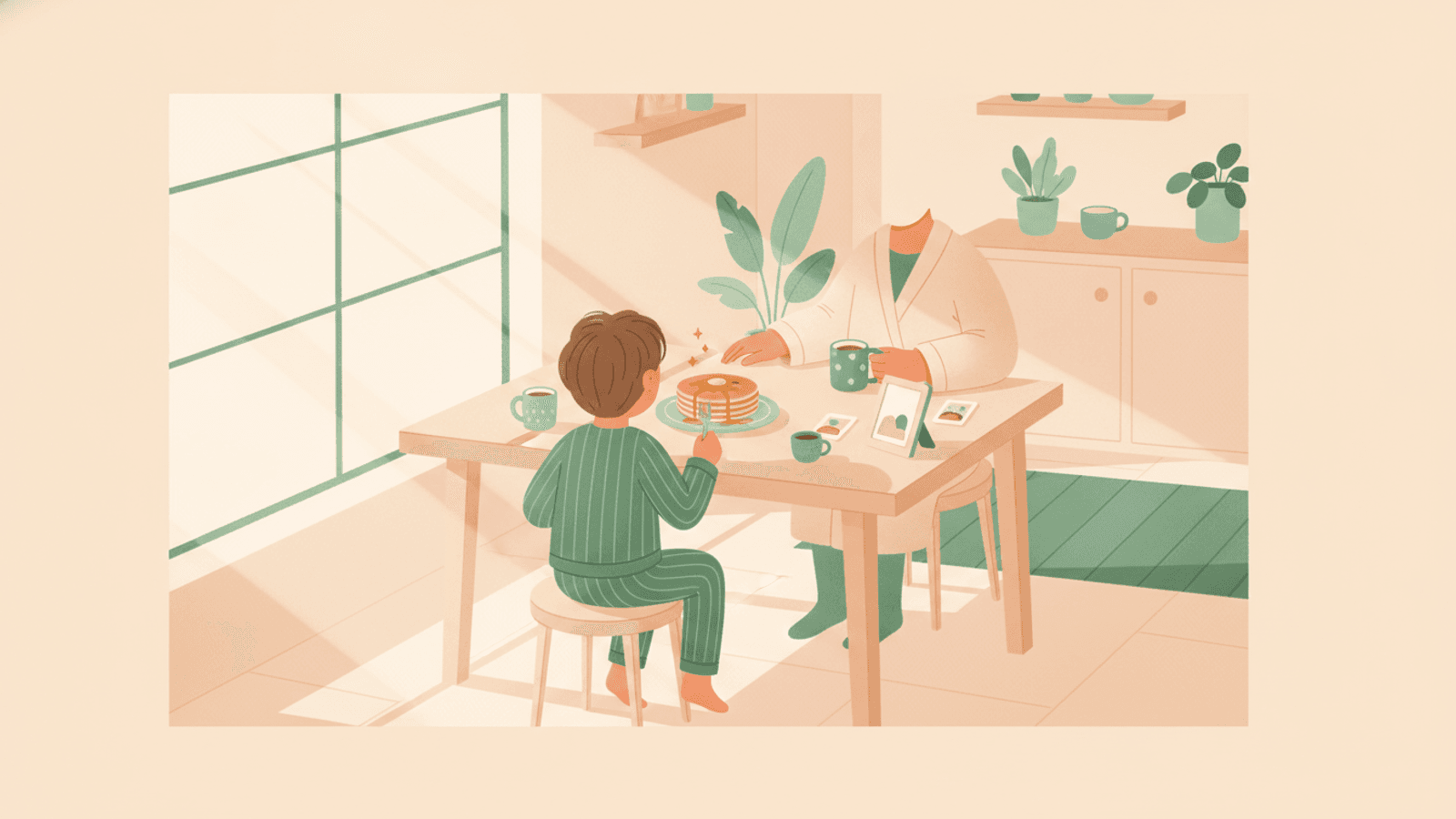
Weekday mornings run on a tight schedule, and then the weekend hits and it is either a free-for-all or you find yourself nagging on a Saturday. Children need rhythm on both, but not the same one. Here is how to run two.
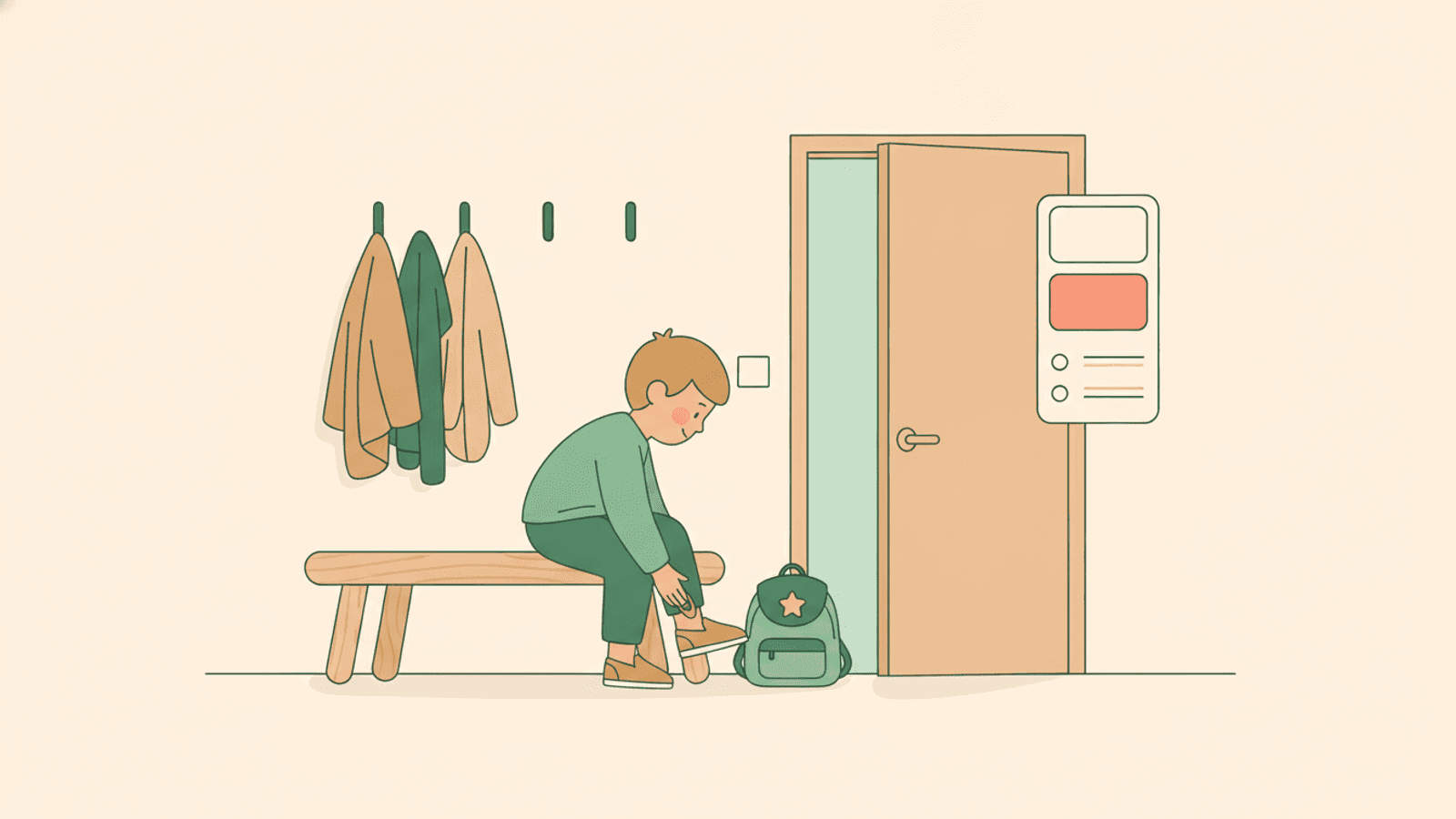
The last ten minutes by the door are where mornings fall apart — a missing shoe, a jacket nowhere to be found, someone suddenly needs the toilet. A dedicated leaving routine fixes most of it. Here is how to build one.
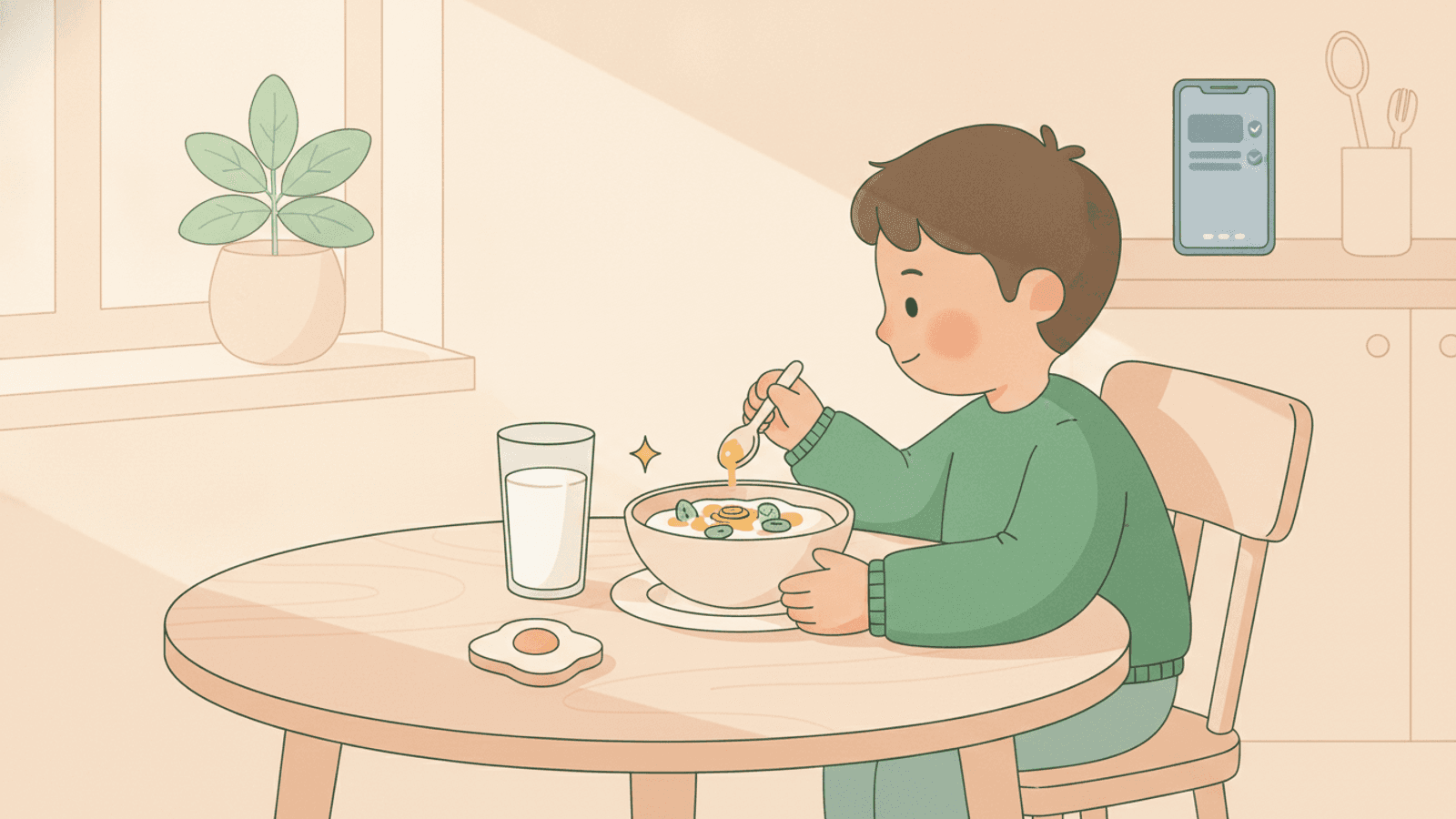
Plenty of children simply aren't hungry first thing in the morning, and pushing only turns breakfast into a battle. Here's why morning appetite is low and low-stress ways to get something in before the day starts.

Sleep doesn't switch on like a light — the brain and body need a runway. A consistent 30-minute wind-down is one of the most effective things you can add to your evening. Here's why it works and a simple sequence to follow.
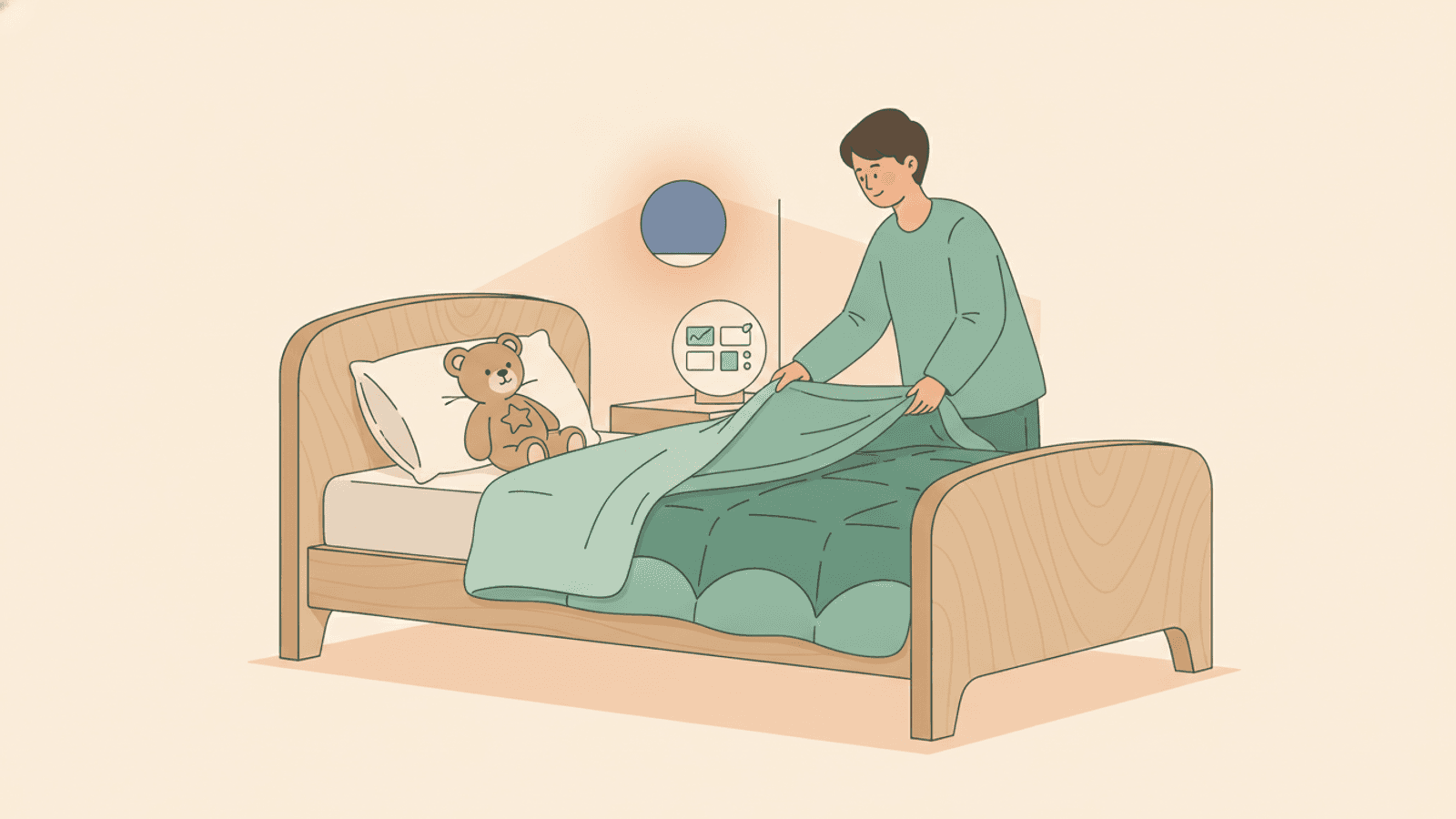
Bedwetting is far more common than most families realise, and almost never the child's fault. While it usually resolves with time, a few evening-routine tweaks and a calm, shame-free approach make the wait much easier for everyone.
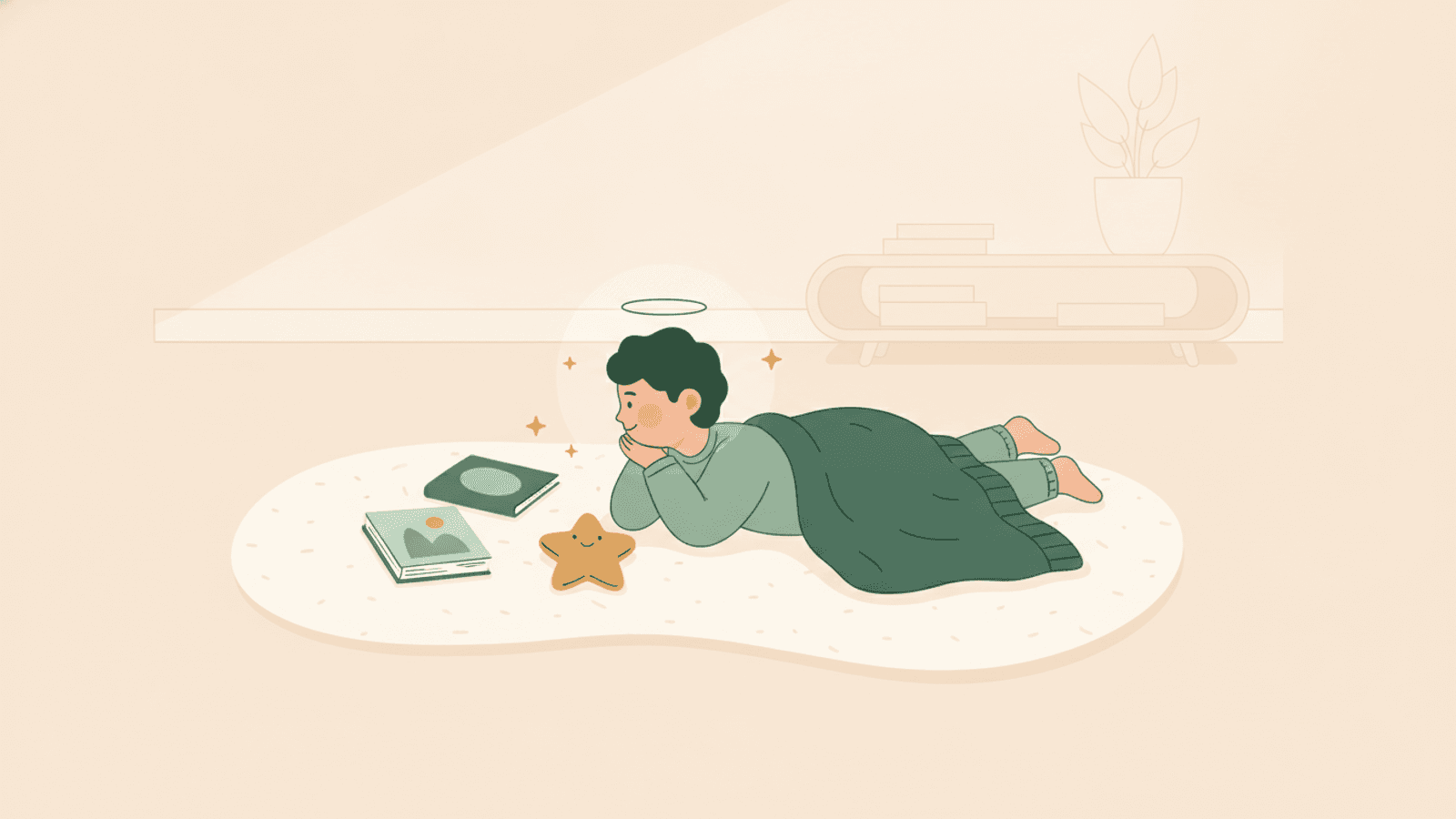
The day your child stops napping is a surprisingly big one — too early and they're a wreck by dinner, too late and bedtime becomes a battle. Here's how to know when your child is ready and how to handle the bumpy in-between.
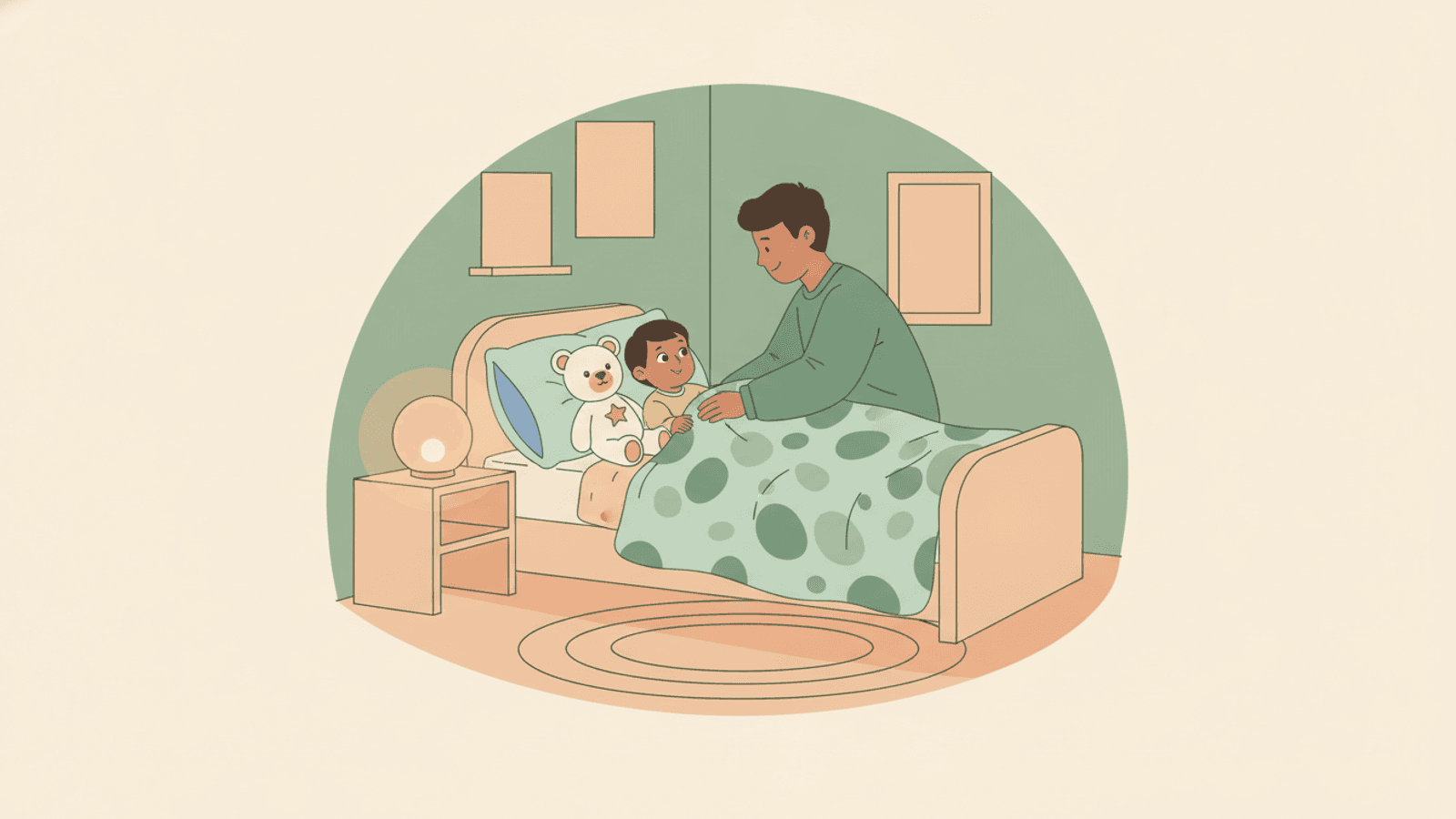
One more story, one more drink, one more question — bedtime stalling can stretch a 20-minute routine into an hour-long negotiation. Here's why children stall and how to bring calm, predictable endings back to the evening.

Two weeks before school starts, most families are still on full vacation rhythm. Then the first Monday arrives and everything falls apart. A day-by-day 7-day reset plan that walks the whole family from summer mode back to school mode — gently.
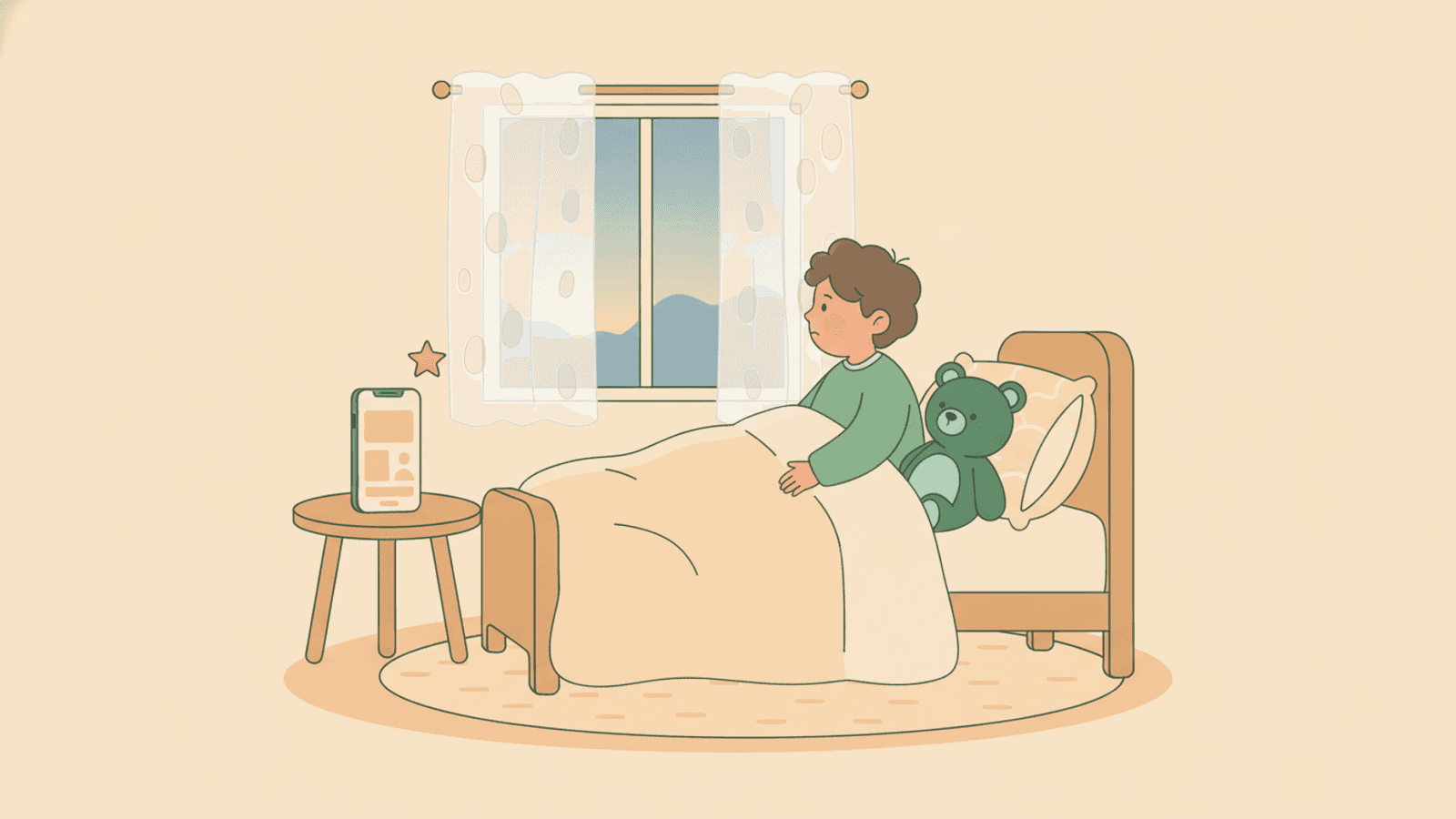
If your child is up and ready to go at 5 AM, you're not alone — and you're not doing anything wrong. Early waking usually has a handful of fixable causes. Here's how to find yours and gently shift mornings later.
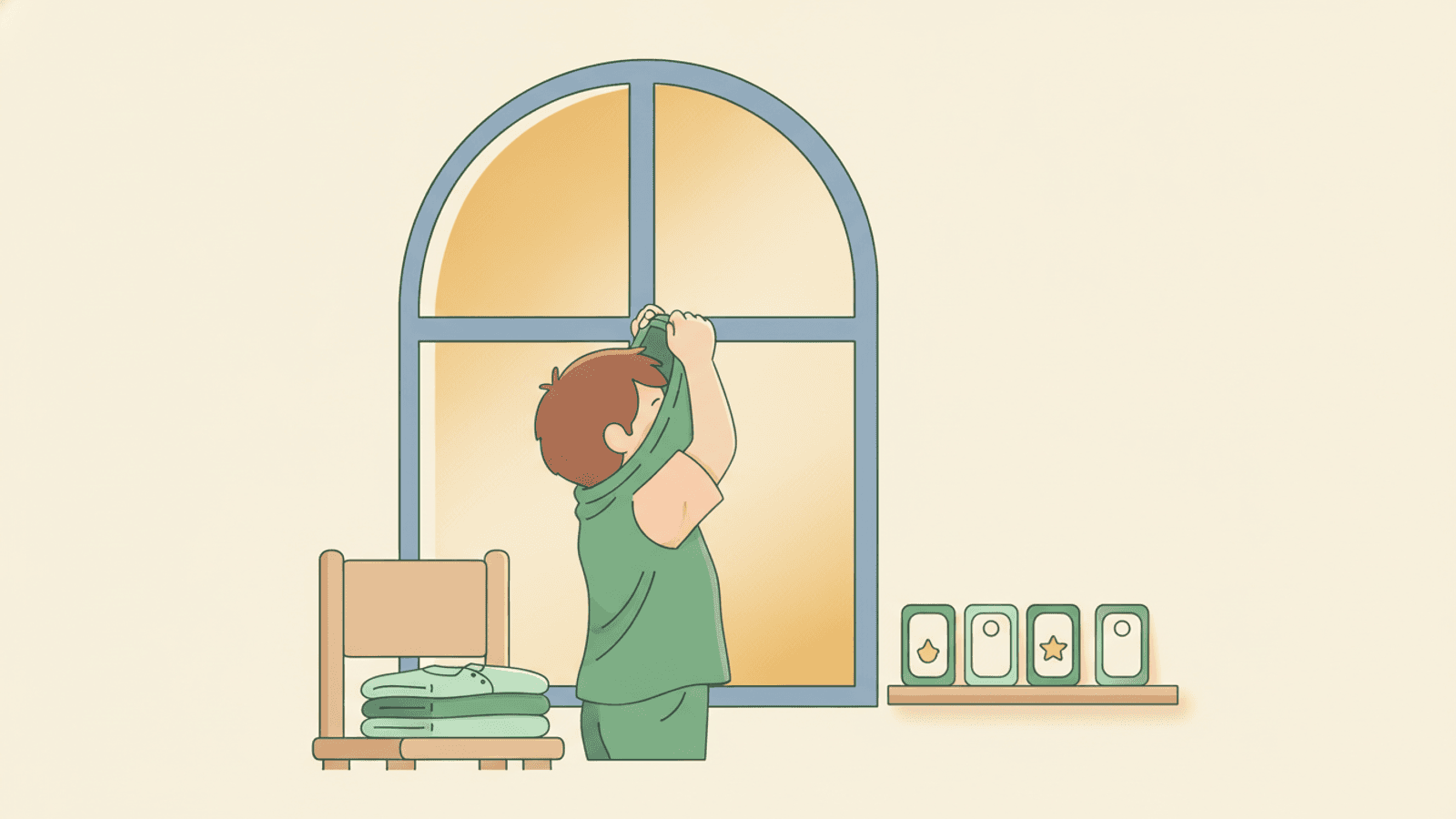
Getting dressed is a daily flashpoint — too slow, the wrong socks, a total standstill. Summer is the perfect low-pressure time to teach a child to dress themselves.
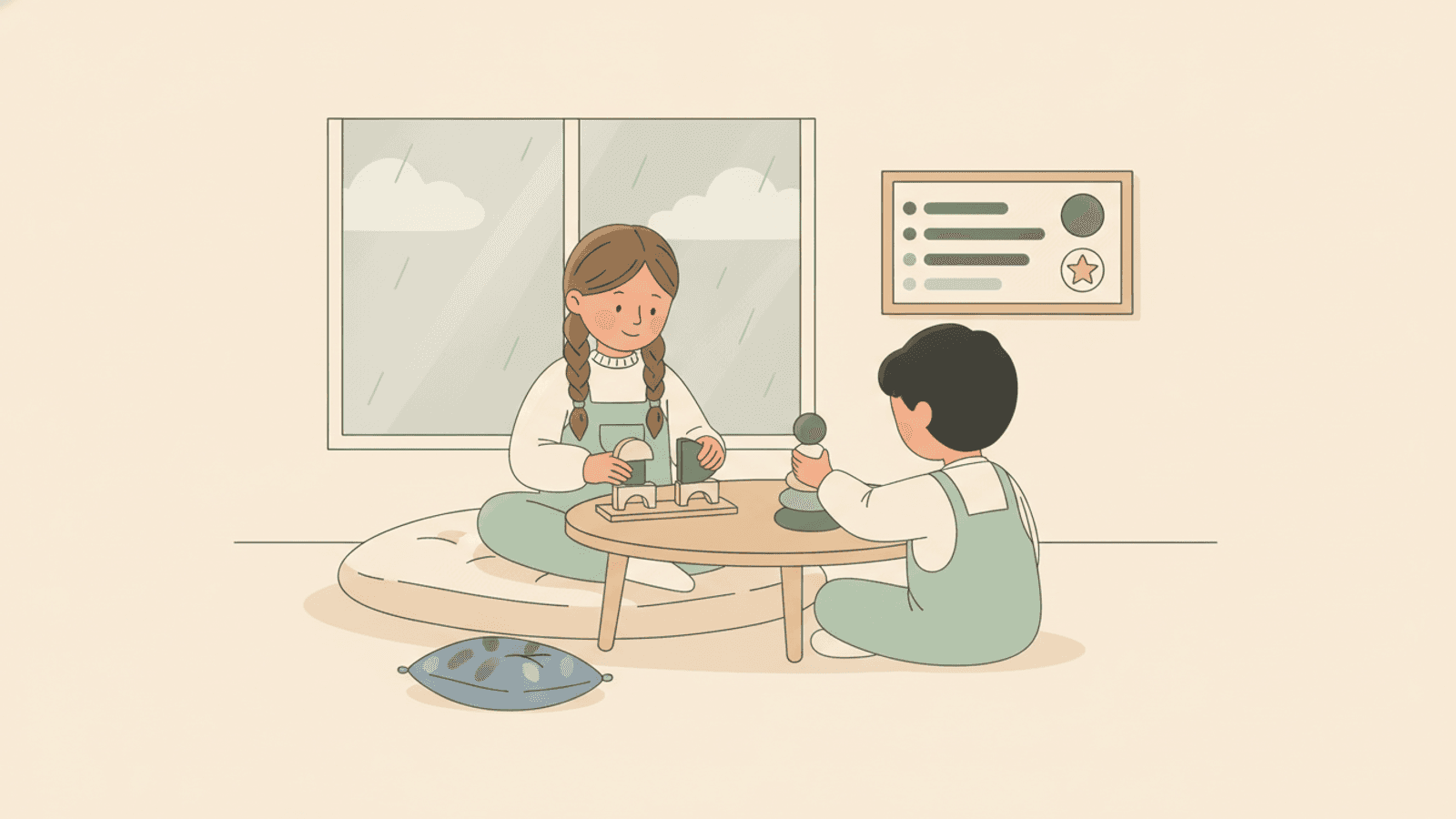
A rained-out summer day with restless kids and nowhere to go is its own special challenge. A loose plan turns a long indoor day from a meltdown factory into something manageable.
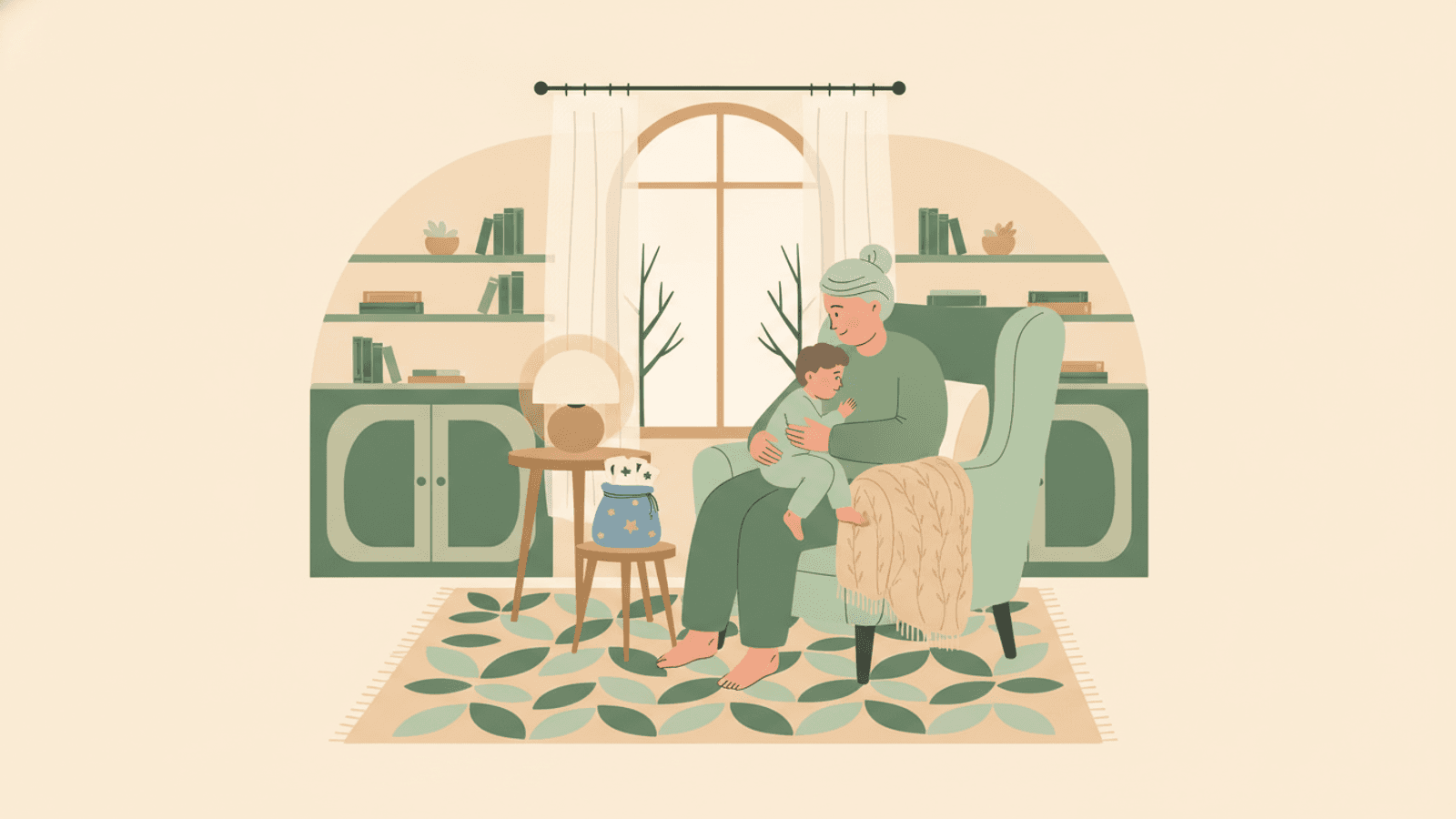
A few days at grandma’s is lovely — and often where the routine quietly collapses. Here’s how to keep enough structure in another home without micromanaging the grandparents.

A holiday removes every routine at once — new beds, new food, long travel days, no schedule. For kids who rely on predictability, that's a recipe for meltdowns. Here's how to keep just enough structure to stay calm, without turning the trip into another school week.

Sunscreen battles, forgotten hats and dehydrated kids are a daily summer fight. Turning sun safety into a short visual routine takes the nagging out of it.
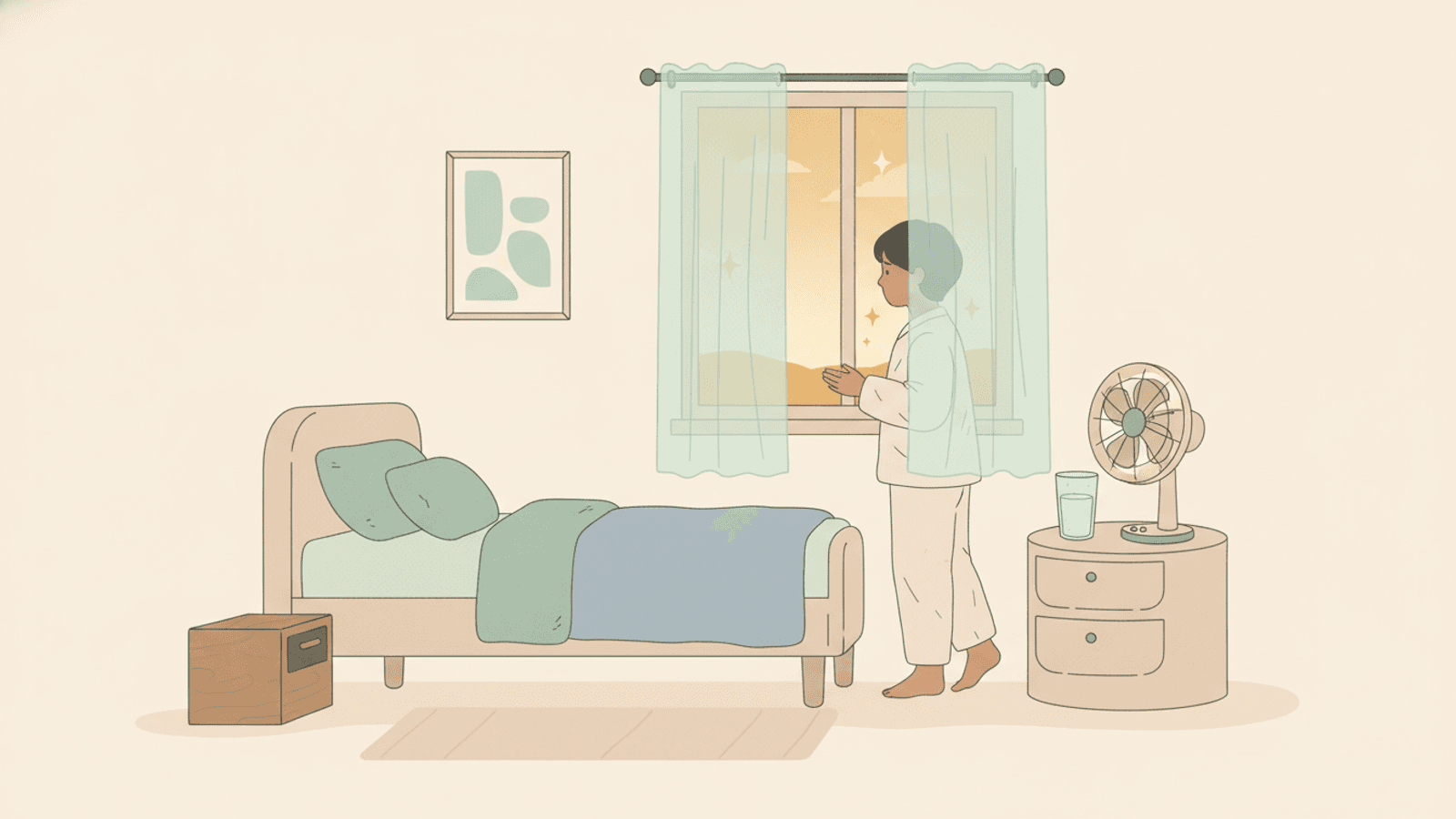
Hot bedrooms and late sun wreck summer sleep — and a tired child means harder days. Here's how to adapt the bedtime routine for heat without losing the structure that makes sleep happen.

A sleep diary is the fastest way to find out what is actually disturbing your child’s nights. Here is what to record, how long to keep it, and how to read the results.
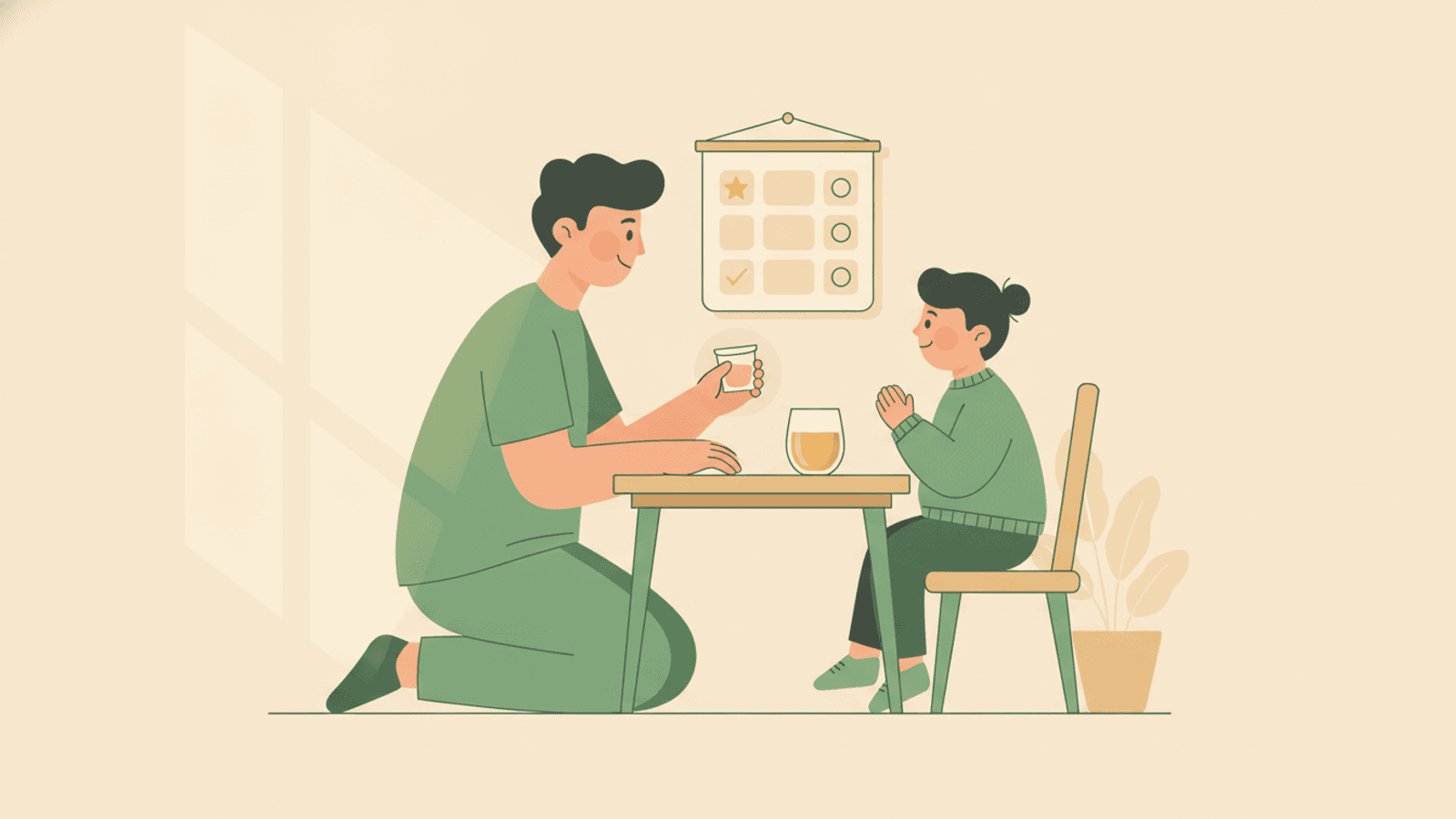
Medicine battles are rarely about the medicine. Here is how a fixed anchor, visual steps and a bit of control for the child turn the daily dose into a non-event.
Every June, parents drop every routine and call it freedom. By mid-July, the meltdowns start. Here's why kids — especially those with ADHD or autism — fall apart without structure, and the three-anchor framework that keeps summer calm without making it feel like school.

It's 9 PM and the sun is still up. Your six-year-old is bouncing off the walls and bedtime has been a 90-minute negotiation for two weeks. Light Nordic spring evenings sabotage melatonin and wreck bedtime — here's the practical fix that doesn't require blackout curtains in every room.

Screen time battles are one of the most common sources of conflict in families today. The moment you say "time to turn off the iPad," a meltdown begins. But what if the app itself told your child when it was time — not you? By building screen time into a visual routine, you replace the power struggle with predictability.

Bedtime is often one of the most challenging parts of the day. The body is tired, but the brain is racing. By creating a predictable evening routine, you help your child wind down, which not only leads to better sleep but also a much smoother morning.
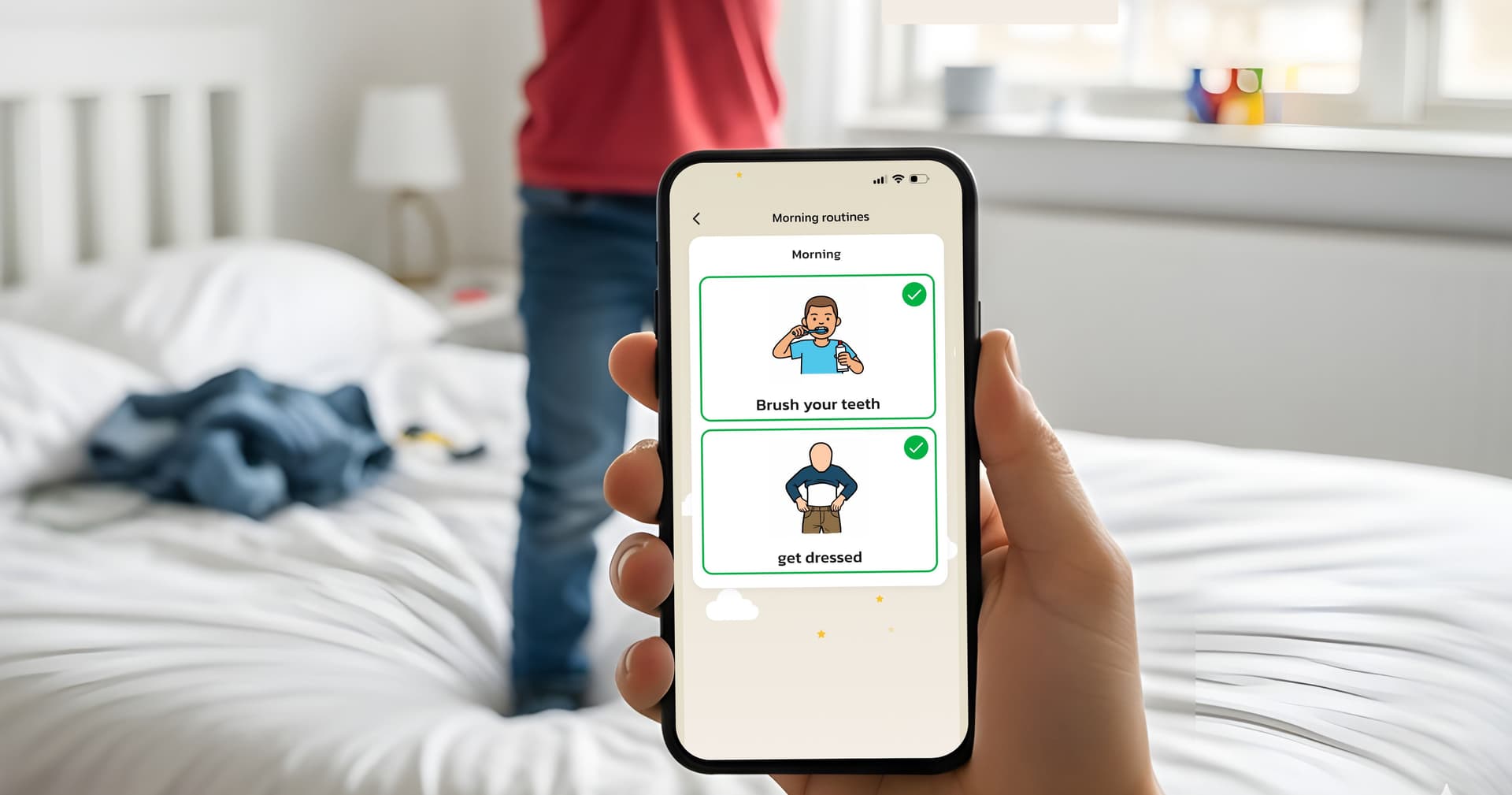
Does this sound familiar? You’ve asked about the socks five times, breakfast is sitting untouched, and the clock is ticking relentlessly toward school drop-off. For many families, mornings are a race against time filled with nagging and conflict. But it doesn’t have to be that way. By working with your child’s brain instead of against it, you can create a morning that runs on autopilot.