Teaching Table Manners, Step by Step (Without Ruining Dinner)
You want a child who can eat politely at someone else's table, but constant correcting makes dinner miserable and rarely works. Manners are learned skills that come gradually. Here is how to teach them without turning every meal into a lesson.
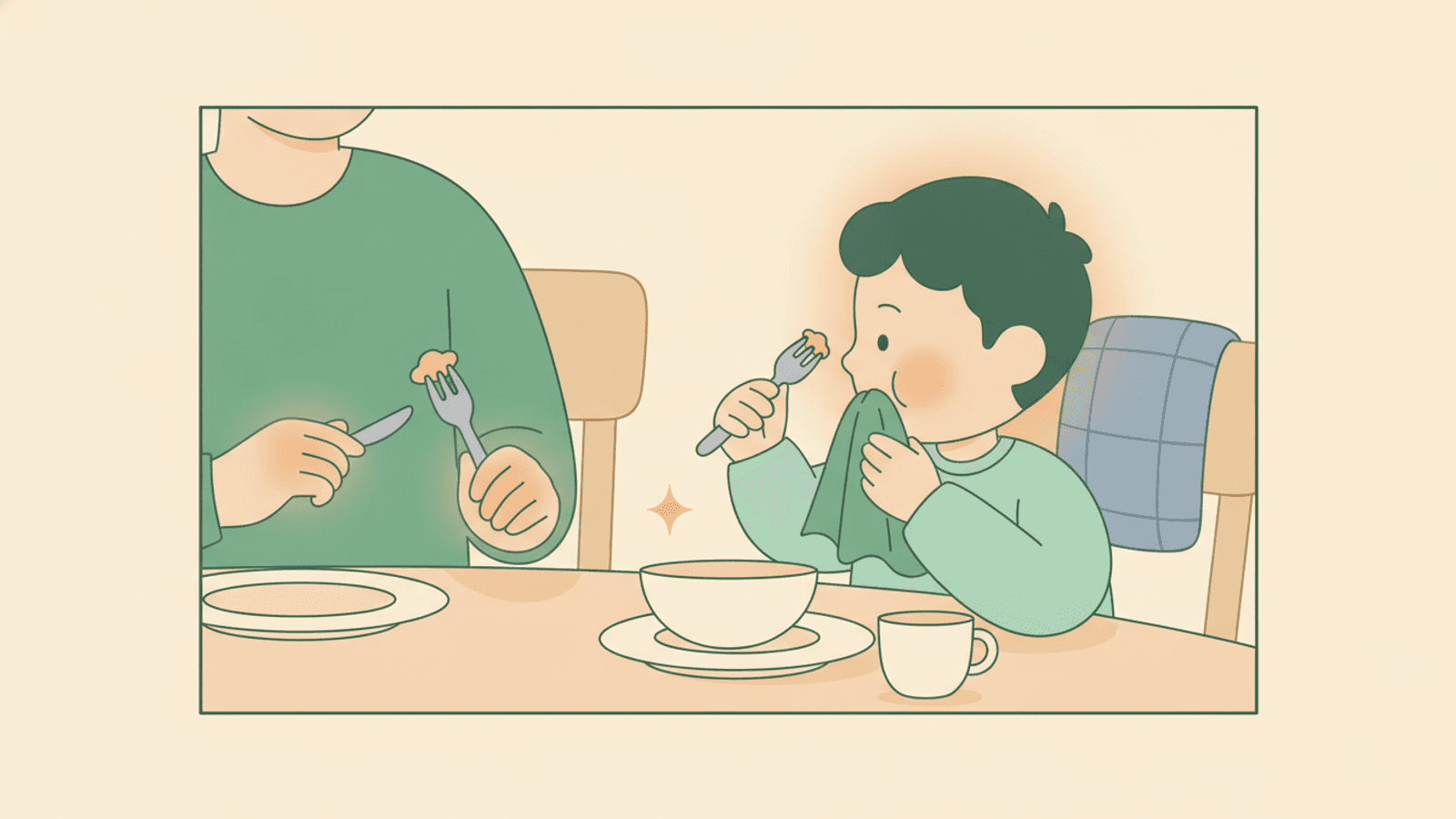
You want a child who can sit and eat politely at someone else’s table — but a stream of “elbows off,” “use your fork,” “don’t talk with your mouth full” makes dinner miserable for everyone and rarely teaches much. Table manners are not a switch a child flicks on; they are a set of skills that come together gradually over years. Here is how to teach them without turning every meal into a lesson.
Manners are skills, not obedience
Good table manners are a stack of skills a child builds over a long time, not something they either have or stubbornly refuse to do. A three-year-old who eats with their hands is not being rude — they are three. Separating “can’t do this yet” from “won’t do this” changes everything about how you respond: you patiently teach the first, and rarely need to discipline the second. Most “bad manners” in young children are simply development.
Age-appropriate expectations
As a rough guide: toddlers can sit briefly, have a go with a utensil and stay at the table for a few minutes. Four- to six-year-olds can mostly use a fork and spoon, use a napkin, ask to leave the table and manage basic please and thank you. Seven- to nine-year-olds can eat tidily, wait for others, pass dishes and hold a conversation. From ten, most can manage full manners and a bit of host awareness. Expecting restaurant manners from a four-year-old sets everyone up to fail.
Teach one or two things at a time
Pick one or two manners to work on, not the whole list at once. “This month we’re working on keeping food on the plate” is a target a child can actually meet. Trying to fix everything in one meal overwhelms them and turns the table into a stream of corrections that they quickly tune out. Master one skill, let it settle, then add the next.
Model more than you correct
- Model the manner yourself, out loud and naturally — “I’ll wait until everyone has their food before I start.”
- Praise the specific behaviour when you catch it — “you used your napkin, nice one” — which works far better than noticing only slip-ups.
- Keep corrections short, calm and occasional — a quiet reminder, never a lecture mid-meal.
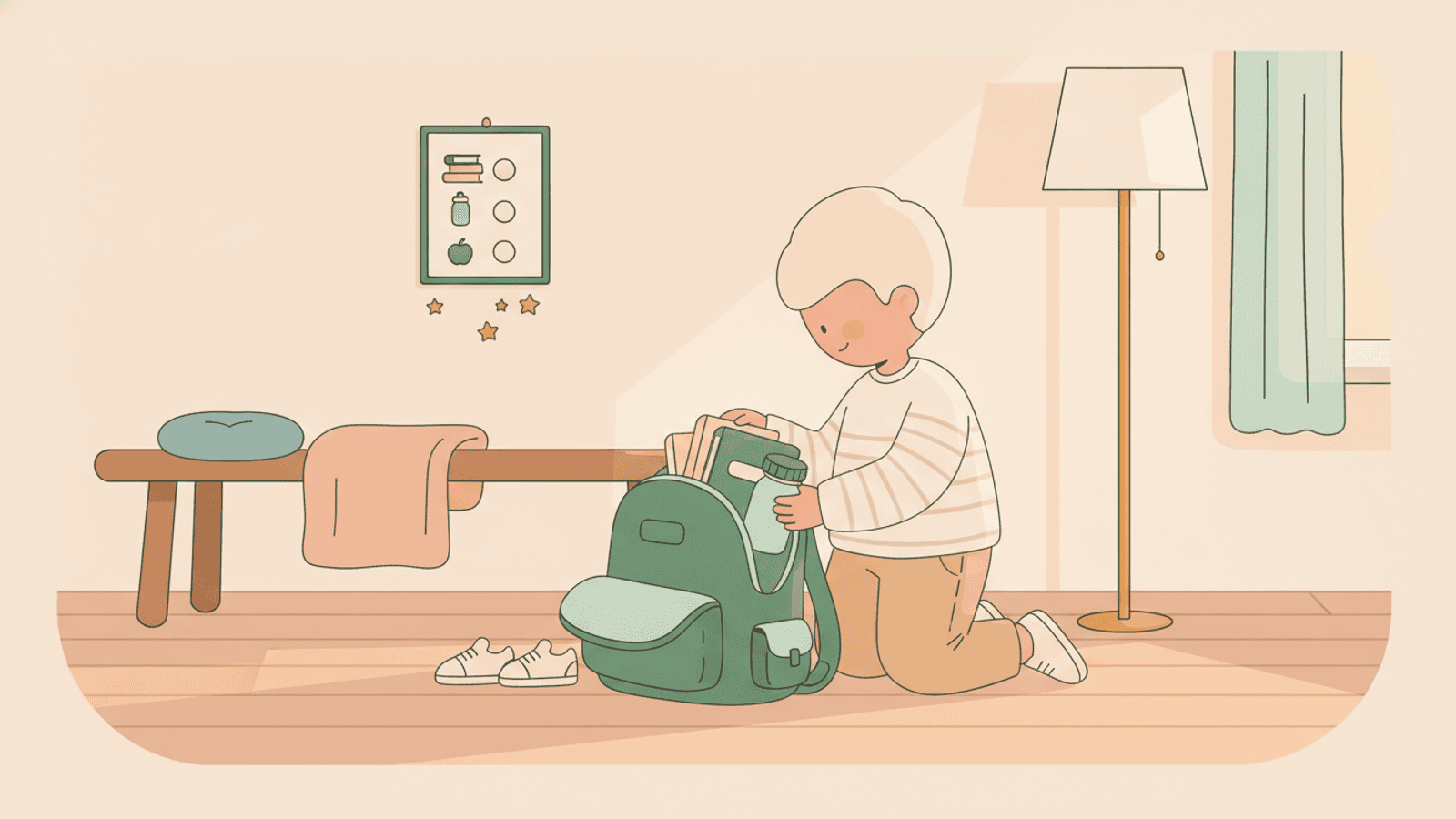
- Use a visual reminder, like a simple place-setting picture, for young children instead of repeating yourself.
Don't trade the atmosphere for manners
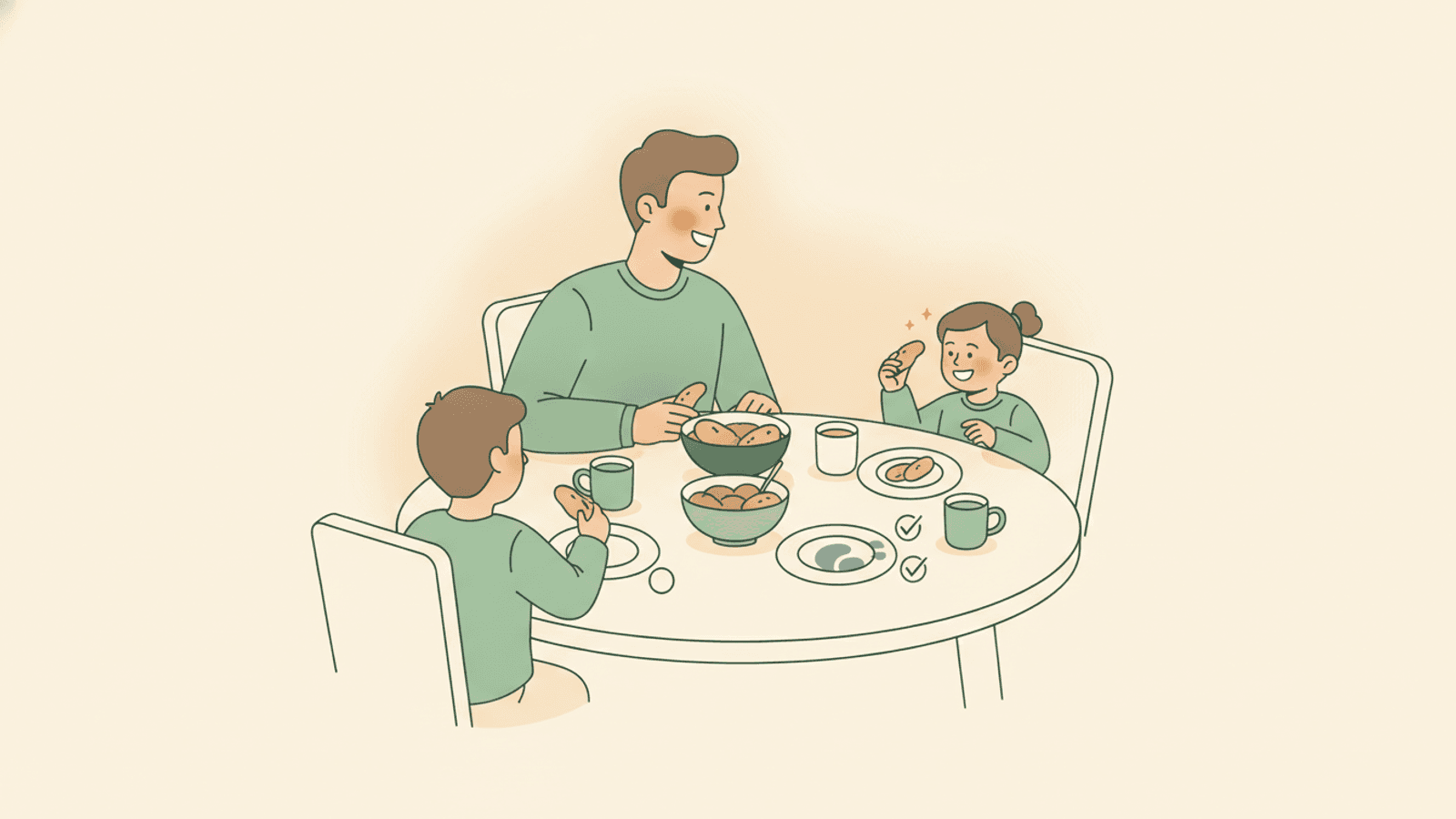
A warm, relaxed table teaches more manners than a tense, heavily-policed one. If manners-policing is making meals miserable, ease right off — children learn how to eat together largely by absorbing how their family does it, over years of ordinary dinners. A pleasant meal where they simply see good manners modelled beats a perfect-but-miserable one every time.
For children with ADHD or autism
Sitting still, controlling impulses and reading social expectations are all genuinely harder, so behaviour that looks “rude” is usually capability, not defiance. Lower the bar to what is actually achievable, allow some movement, and pick the one manner that matters most — often not grabbing, or not interrupting — rather than the whole list. Use visual reminders, praise effort, and save your energy for the manners that affect other people, not the cosmetic ones. This article is general guidance, not medical advice.
Read more
Frequently asked questions
At what age should a child have table manners?
Manners come in gradually: toddlers can sit briefly and try a utensil, four- to six-year-olds manage forks, napkins and basic politeness, and full table manners settle in from around ten. Expecting adult-level manners from a young child is unrealistic.
How do I teach my child table manners without nagging?
Focus on one or two manners at a time, model them yourself out loud, praise the specific behaviour when you see it, and keep corrections short and occasional. Children absorb far more from a calm, modelled example than from constant policing.
My child eats with their hands or makes a mess — is that normal?
For toddlers and preschoolers, yes — eating with hands and making a mess is part of normal development, not bad manners. Gently introduce utensils, keep expectations age-appropriate, and the tidiness comes with time and practice.
Should I correct table manners at every meal?
No. Constant correcting makes meals tense and teaches little, and children tune it out. Pick one focus, give the occasional quiet reminder, and let modelling and praise do most of the work over time.
How do I get my child to stay at the table?
Keep meals short enough for their age, give a wriggler a small role, and let them leave when they are genuinely done rather than forcing a long stay. Staying at the table for a whole adult meal is beyond most young children.