Picky Eating and Food Refusal: When It's a Phase, When It's Something More
Most picky eating is a phase that ends. Some isn't — and the difference matters. A practical guide to telling them apart, the mealtime structure that helps both, and when to talk to a doctor about ARFID or sensory-based food avoidance.
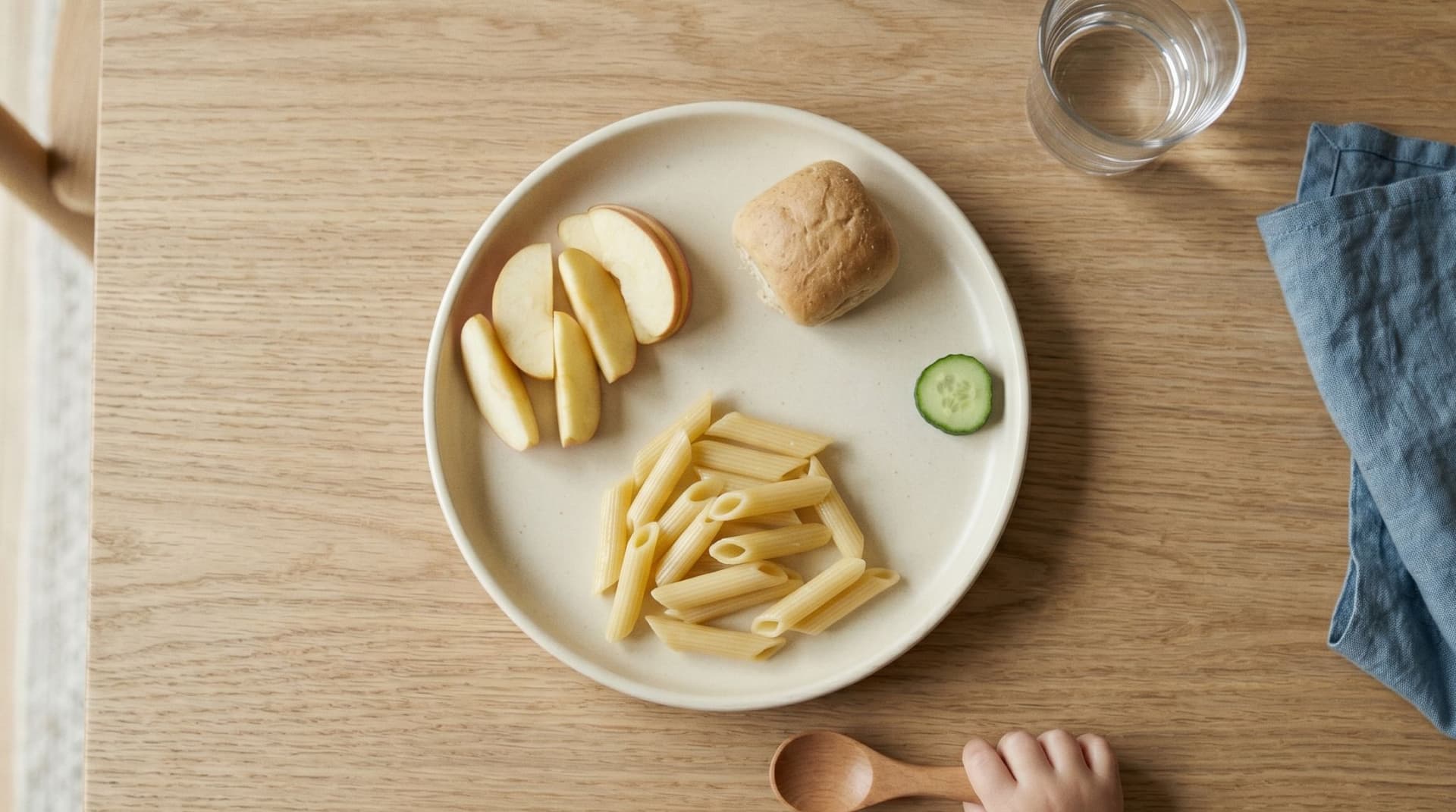
For some families, dinner is a 20-minute event. For others, it's a daily negotiation that drains everyone before plates are even on the table. The wrong texture, the wrong color, the foods touching, the steam coming off the rice — any of it can derail the meal entirely.
Most picky eating ends on its own. Some doesn't. Knowing which kind you're dealing with changes everything you do next.
Normal picky eating vs. something more
Typical picky eating in children aged roughly 2 to 6 has predictable features:
- The child eats some food in each major food group, even if the list is short.
- New foods are rejected on sight, but accepted after repeated, low-pressure exposure (often 10+ times).
- The child grows along their established curve.
- Mealtimes are sometimes tense but functional.
- The list of accepted foods stays stable or slowly expands.
This phase usually ends by age 7 or 8 with patient, low-pressure exposure. Most kids "grow out of it."
Sensory-based food avoidance and ARFID (Avoidant/Restrictive Food Intake Disorder) look different:
- The list of accepted foods is very short (under 20 items is a common threshold).
- The list is shrinking, not expanding — foods get dropped and never come back.
- New foods cause genuine distress: gagging, panic, refusal to sit at the table.
- Specific textures, smells or temperatures are intolerable in ways that go beyond preference.
- The child may be losing weight, growing slowly, or showing nutritional gaps.
- It's interfering with daily life: school lunches, family meals, social events.
ARFID is recognized in the DSM-5 and is more common in autistic children and children with ADHD, though it occurs across the population. It's not an eating disorder driven by body image — it's a sensory and anxiety condition. The Swedish National Food Agency (Livsmedelsverket) recognizes selective eating as a clinical issue when it affects growth or wellbeing.
If you suspect ARFID or significant sensory-based avoidance, this isn't something to wait out. Talk to your pediatrician or child health center (BVC). Early support makes a real difference.
The mealtime structure that helps both groups
Whether you're dealing with typical picky eating or something more, the same family-mealtime structure helps. It's adapted from the work of Ellyn Satter, whose Division of Responsibility model is the gold standard.
Parents decide: what, when and where food is served.
The child decides: whether to eat and how much.
That's it. The boundaries are clear, and there's no negotiation across the line.
In practice, this means:
- Serve meals at predictable times. No grazing in between.
- Always include at least one item you know the child will eat (bread, plain rice, cucumber slices).
- Don't make a separate meal. Don't bargain. Don't bribe.
- Don't comment on how much they eat — positively or negatively.
- End the meal when it's over. Don't extend it to "just try one bite."
This structure removes the power struggle. The child doesn't have to defend their choice to not eat the broccoli because nobody is fighting them on it.
How visual mealtime routines reduce friction
A lot of mealtime stress is transition friction, not food. The shift from playing to sitting still and eating is its own challenge — separate from the food itself.
A short visual sequence around meals helps:
- Hands washed
- Sit at table
- Eat what you choose from what's served
- Plate to counter
- Done
A four- or five-step visual routine on the kitchen counter does for mealtimes what it does for mornings — it makes the structure explicit so the child doesn't have to negotiate the framework each time.
In Routined you can build this as a daily routine with visual support icons. For younger children, photos of their actual plate from a successful meal can work better than generic icons.
The food rotation problem
Many sensory-sensitive eaters get stuck in food rotations — they'll eat plain pasta for three weeks, then suddenly refuse it forever. This is normal and frustrating.
Two strategies help:
Rotate proactively. If a food is on the daily menu, switch it for something similar every few days. Pasta becomes rice. Then becomes potatoes. Same role, different food. Children with food rotation issues often tolerate slow rotation better than constant variety.
Preserve "safe" foods. Whatever your child reliably eats is precious. Don't push variation when they're tired, sick or stressed. The safe-food list is your safety net, and shrinking it isn't worth the win of getting them to try one new thing on a bad day.
What not to do
- Don't sneak vegetables into things. The betrayal, when discovered, sets you back months.
- Don't praise eating. Praising eating makes it a performance and a power play. Just neutralize it.
- Don't compare siblings. "Look how Sara eats her peas" is poison.
- Don't make the child stay at the table after they've finished what they're going to finish. Extended sitting builds aversion.
- Don't reward eating with dessert. This frames vegetables as the price of dessert, which is the opposite of what you want.
The dinner table doesn't have to be a battleground. Most picky eating is a phase that ends with patience and structure. Some isn't, and recognizing that early gets your child the support they need. Either way, your job at the table is the same: serve the food, set the boundaries, stay calm, and trust that the child's job is theirs to do.
Tip: Download our ready-made visual schedule Mealtime routine – set the table and eat (free printable PDF), or browse all ready-made visual schedules.
Frequently asked questions
How do I introduce new foods without pressure?
Put one bite of the new food on the plate alongside foods they already eat. Don't comment on it. Repeat for many meals. Sometimes 15+ exposures are needed before a child even touches it. The job is exposure, not consumption.
What about nutritional gaps?
If your child's list is short, talk to your pediatrician about a multivitamin during the worst phases. Iron, vitamin D and zinc are the most common gaps. A blood test is reasonable if you're worried.
When should I bring this up with our doctor?
If the list of accepted foods is under 20, is shrinking, is causing growth issues, or is making family life unsustainable — that's the conversation. Don't wait for things to "fix themselves" past age 7 if the trend is going the wrong way.
My autistic child only eats four things. Is that ARFID?
It may be. The diagnosis requires a clinician, but the support is similar regardless of label: structured mealtimes, low pressure, sensory-aware introductions, and a feeding specialist if needed.
What about food chaining?
Food chaining — introducing new foods that share characteristics with accepted ones — is a real technique that works for many sensory-sensitive eaters. A pediatric feeding specialist can build a chain plan. For most families, that's a more productive path than fighting at the table.