The Hallway Routine: How to Actually Get Out the Door on Time
The last ten minutes by the door are where mornings fall apart — a missing shoe, a jacket nowhere to be found, someone suddenly needs the toilet. A dedicated leaving routine fixes most of it. Here is how to build one.
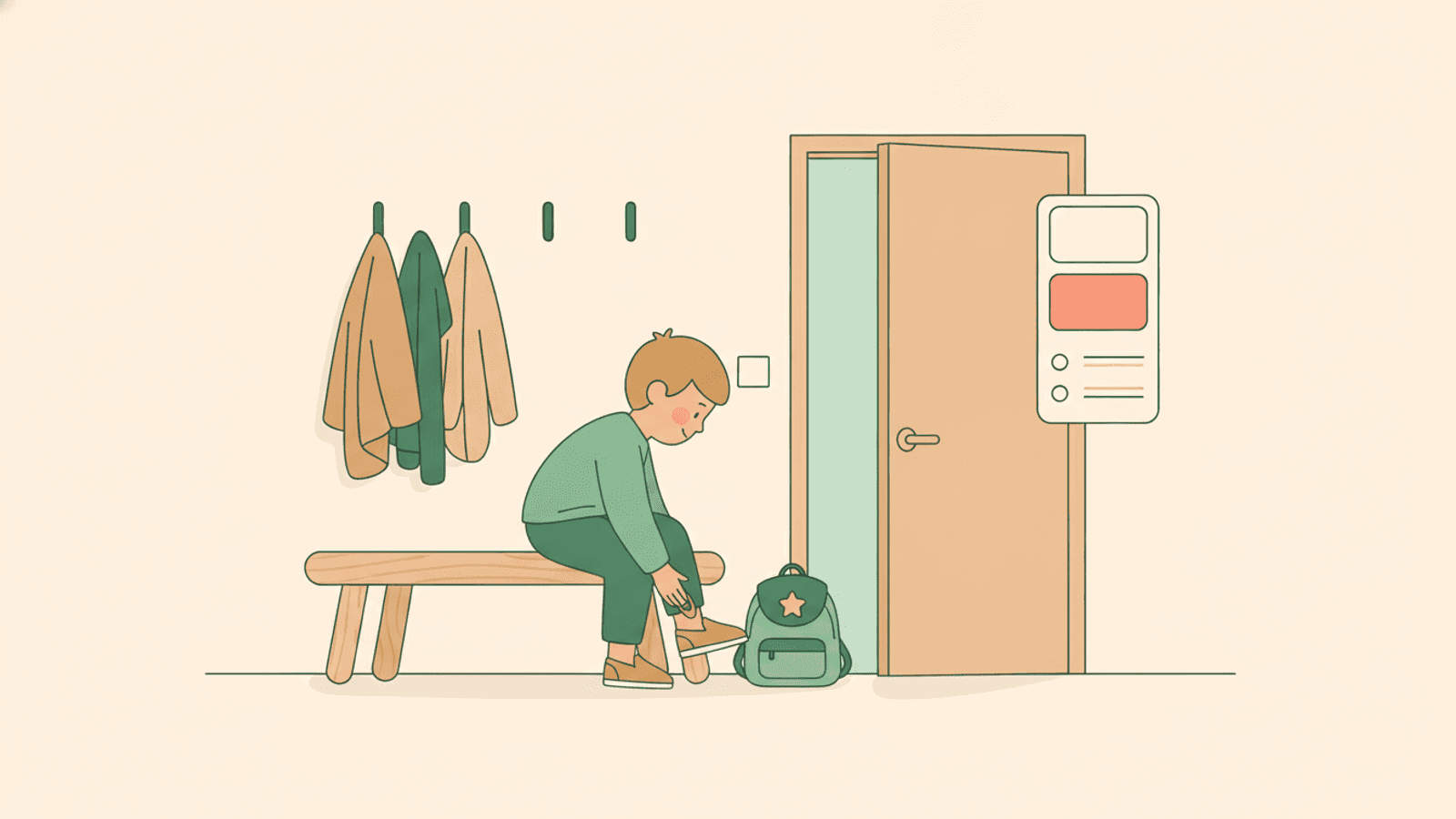
You can have a perfectly calm breakfast and still lose the whole morning in the last ten minutes by the door. One shoe is missing, the jacket is nowhere, the bag is half-packed, and just as you reach for the handle someone announces they need the toilet. The good news: this stretch is the most fixable part of the morning, because a dedicated leaving routine takes almost all of the guesswork out of it.
Why the door is the hardest part
By the time you reach the door, time pressure is at its peak and everyone is rushing — which is exactly when children struggle most. It is also the most transition-heavy moment of the day: stop what you were doing, gather several items, change environment and head out. Young children simply cannot sequence “shoes, coat, bag, door” on their own yet, and under pressure they lose track, cannot find things and tip into a meltdown. It is not defiance; it is a genuinely hard moment.
Build a launch pad
Give the exit one fixed home for everything that leaves the house — shoes, jackets, bags, water bottles and keys, on hooks and in baskets right by the door. Everything goes there the night before, and nothing else lives there. When there is one reliable spot for the leaving gear, the morning hunt simply disappears, and children can find their own things without you.
Prepare the night before
- Pack the bags and put them on the launch pad, ready to grab.
- Lay out tomorrow's clothes, either in the bedroom or by the door.
- Check the next day's calendar — gym kit, swimming, library books, anything special.
- Put anything that must not be forgotten right on top of the shoes, so it is impossible to miss.
A simple out-the-door sequence
- Toilet — always before shoes, to head off the doorway dash.
- Shoes on.
- Coat on.
- Bag on.
- Out the door.
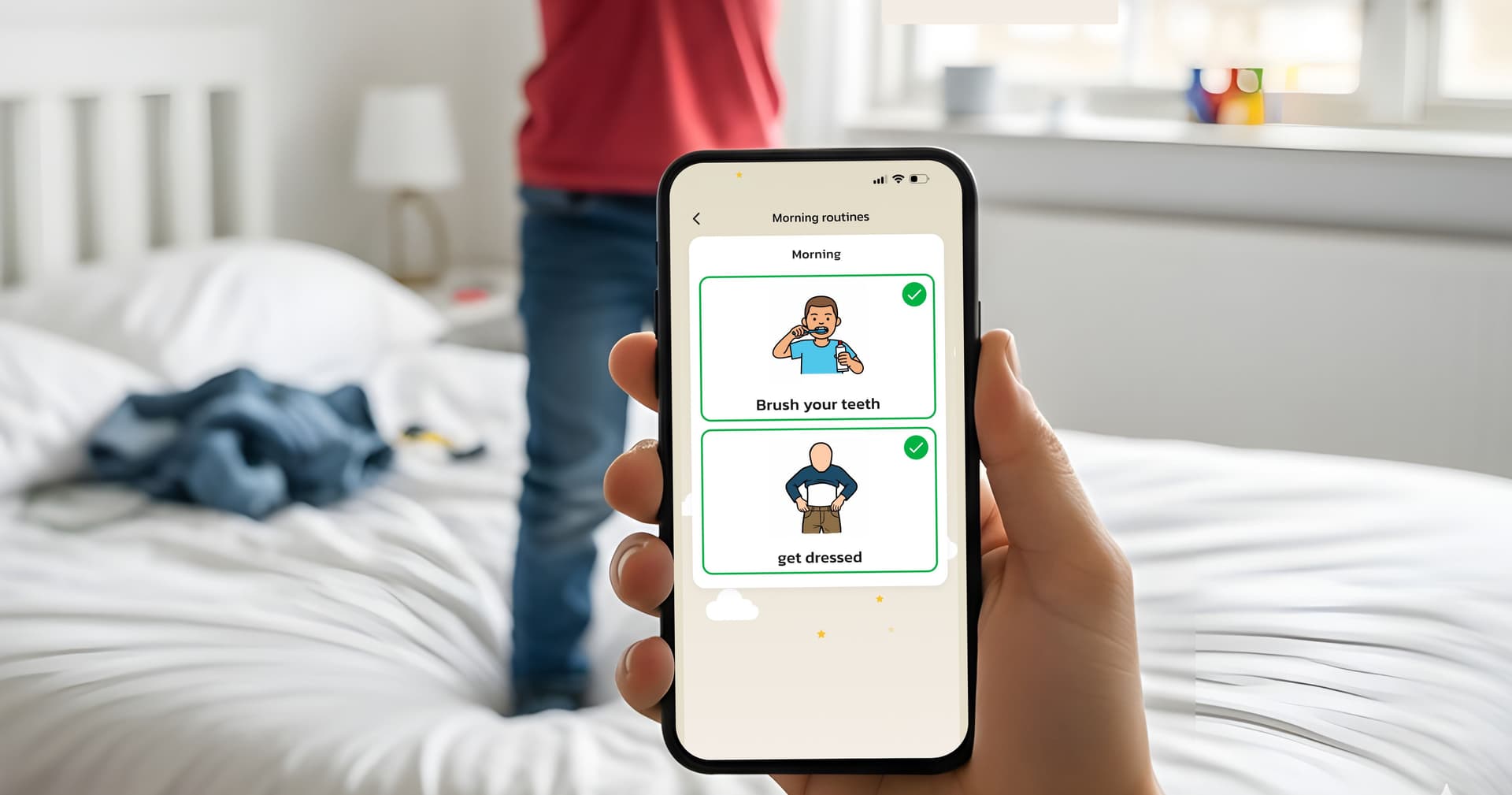
A fixed order means no one has to think about what comes next. A visual door checklist on the wall lets young children — and any child who loses track — run the sequence themselves instead of waiting to be told each step.
Leave a buffer and stay calm
Build five to ten minutes of slack into the plan and aim to be ready before you actually need to leave, so a missing shoe is an annoyance rather than a crisis. Your own calm is contagious in both directions — rushing and snapping makes children slower, not faster. Give a five-minute warning before “shoes on” so the move to the door is expected, not a sudden demand.
For children with ADHD or autism
Time-blindness and hard transitions make leaving genuinely difficult, so lean on the visual sequence, a timer for the final stretch and the launch pad, so nothing depends on memory in a pressured moment. A clear forewarning and the same order every day take a lot of the friction — and the meltdowns — out of the doorway.
Read more
Frequently asked questions
How do I get my child ready to leave the house faster?
Prepare everything the night before, keep all the leaving gear in one fixed spot by the door, and follow the same short sequence every day. Most of the delay comes from hunting for things and deciding what to do next, and a routine removes both.
What is a launch pad for getting out the door?
It is one dedicated spot by the door — hooks and baskets — that holds everything the family needs to leave: shoes, coats, bags, bottles and keys. Everything is placed there the night before, so mornings start with nothing to find.
My child always needs the toilet right as we leave — what do I do?
Make the toilet the first step of the leaving routine, before shoes and coat go on. Building it in as a fixed step heads off the last-second dash that throws the whole departure off.
How much extra time should I build into the morning?
Aim for five to ten minutes of buffer so you are ready before you have to leave. That slack turns a forgotten item into a minor fix instead of the thing that makes everyone late and tense.
Why does my child melt down right when it is time to leave?
Leaving is the most transition-heavy, time-pressured moment of the morning, which is hard for many children and harder still under rushing. A forewarning, a calm pace and a predictable sequence usually reduce the meltdowns a lot.