When Your Child Won't Eat Breakfast: Calm Ways to Start the Day Fed
Plenty of children simply aren't hungry first thing in the morning, and pushing only turns breakfast into a battle. Here's why morning appetite is low and low-stress ways to get something in before the day starts.
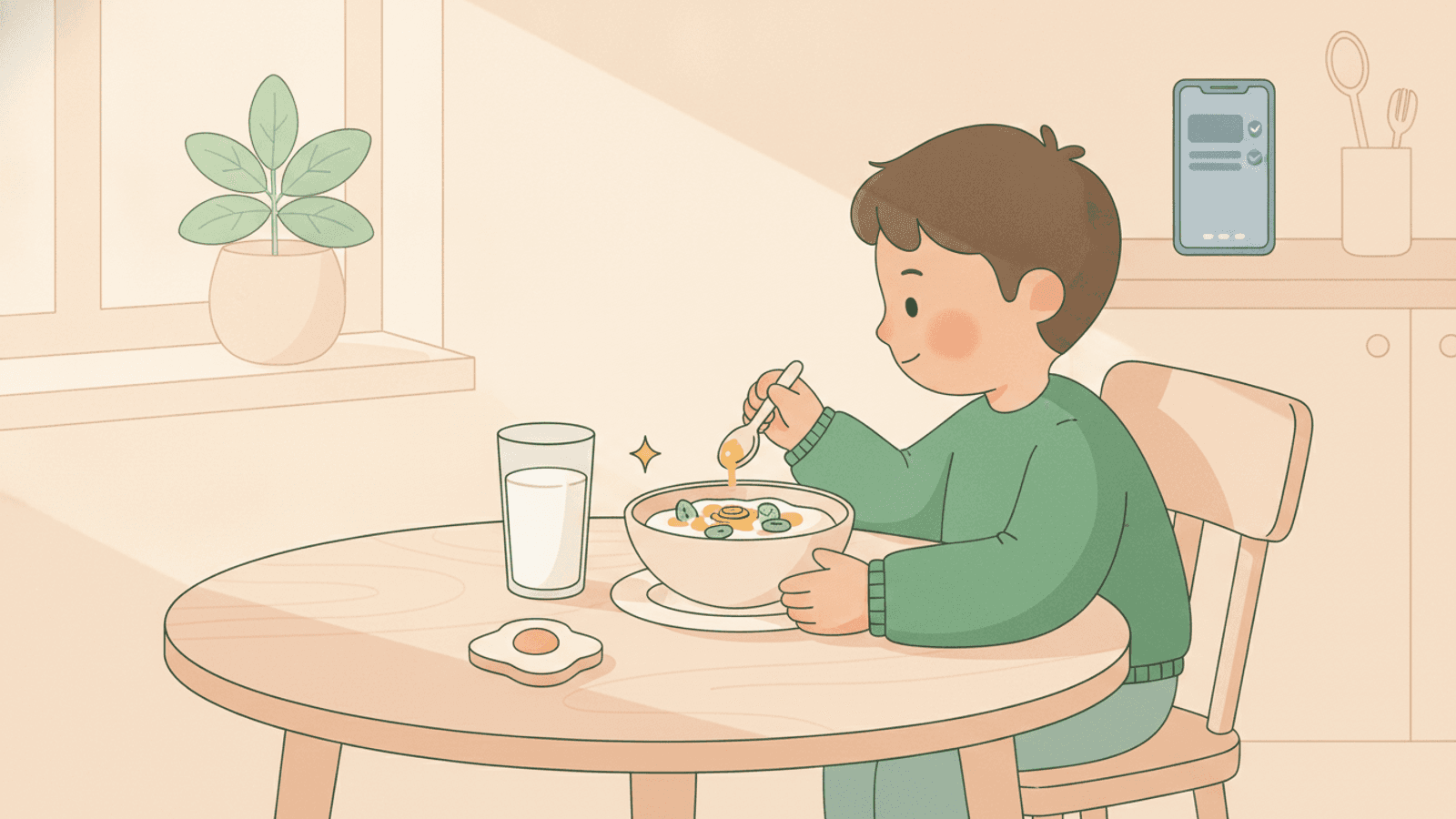
Plenty of children simply aren't hungry the moment they wake up, and trying to push food in only turns breakfast into a daily battle. If you spend your mornings coaxing, reminding and watching cereal go soggy, you are not doing anything wrong — morning appetite is genuinely low for many kids. Here is why, and some low-stress ways to get something in before the day starts.
Why children aren't hungry in the morning
The body takes time to wake up, and appetite is one of the last things to come online. Right after waking, hunger signals are quiet, and a rushed, stressful morning suppresses them further — stress and appetite do not mix. Some children are simply not morning eaters, and for those who woke very early or slept poorly it can be worse. In almost every case this is biology and timing, not defiance.
Lower the pressure first
Pressure backfires. The more you insist, the more breakfast becomes a stressful standoff, and a tense table makes eating even less likely. Offer food calmly and leave it available, rather than hovering or negotiating. A relaxed “this is here if you want it” usually gets more eaten than insisting on a full plate.
Practical ways to get something in
- Wake a little earlier — appetite grows with time awake, so even 15 extra minutes between waking and eating can make a real difference.
- Keep it small and easy — a few bites of something accepted beats a full plate refused. A little fuel is the goal, not a big meal.
- Try drinkable breakfasts — milk, a smoothie or a yoghurt drink can go down when solid food feels like too much first thing.
- Offer non-traditional foods — last night's leftovers, cheese, fruit or toast all count. Breakfast does not have to be “breakfast food.”
- Send a portable option — fruit, a sandwich or a snack for the car or the first break means an empty morning plate is not the end of the story.
Make the morning calmer
A predictable morning routine frees up time and headspace for eating. Lay out bowls, clothes and bags the night before, sit down together even briefly, and keep screens off so breakfast does not get forgotten in front of a tablet. A visual morning routine with breakfast as one clear step helps children who lose track of where they are in the morning.
When to look closer
Skipping breakfast now and then is normal. It is worth talking to a professional if your child is losing weight, eats only a very narrow range of foods across all meals, or refusal comes with real distress — that points to more than a quiet morning appetite. If your child takes medication that affects appetite, raise the timing with your prescriber.
For children with ADHD or autism
Mornings already tax attention and transitions, so a forgotten breakfast is easy. Sensory sensitivities can make certain textures or smells unbearable first thing, so lean on a few safe foods, keep the routine predictable and skip the pressure. This article is general guidance, not medical advice.
Read more
Frequently asked questions
Is it bad if my child skips breakfast?
An occasional skipped breakfast is not harmful, especially if your child eats a good snack or lunch soon after. The aim is regular fuel across the day, not a perfect plate every single morning.
How do I get a child to eat who isn't hungry in the morning?
Wake them a little earlier so appetite has time to build, keep portions small, lower the pressure, and offer easy or drinkable options. Forcing rarely works and usually makes the next morning harder.
What are good easy breakfasts for a reluctant eater?
Small, low-effort options work best: a yoghurt or smoothie, a piece of fruit, toast, cheese, or even last night’s leftovers. A few accepted bites are worth more than a big plate left untouched.
My child only wants the same breakfast every day — is that okay?
Yes. A reliable favourite that your child will actually eat is a win, especially in the morning. You can offer variety at other meals; consistency at breakfast removes one daily negotiation.
Should I be worried about breakfast refusal?
Usually not — morning appetite is naturally low for many children. Look closer if refusal spreads across all meals, comes with weight loss, or causes distress, in which case it is worth speaking to a professional.