Cooking Together: Getting Kids Into the Kitchen (and Why It Pays Off)
Inviting your child into the kitchen feels like more mess and more time, and at first it is. But cooking together is one of the highest-value things you can do: it builds skills, makes children more willing to eat, and is real connection time.
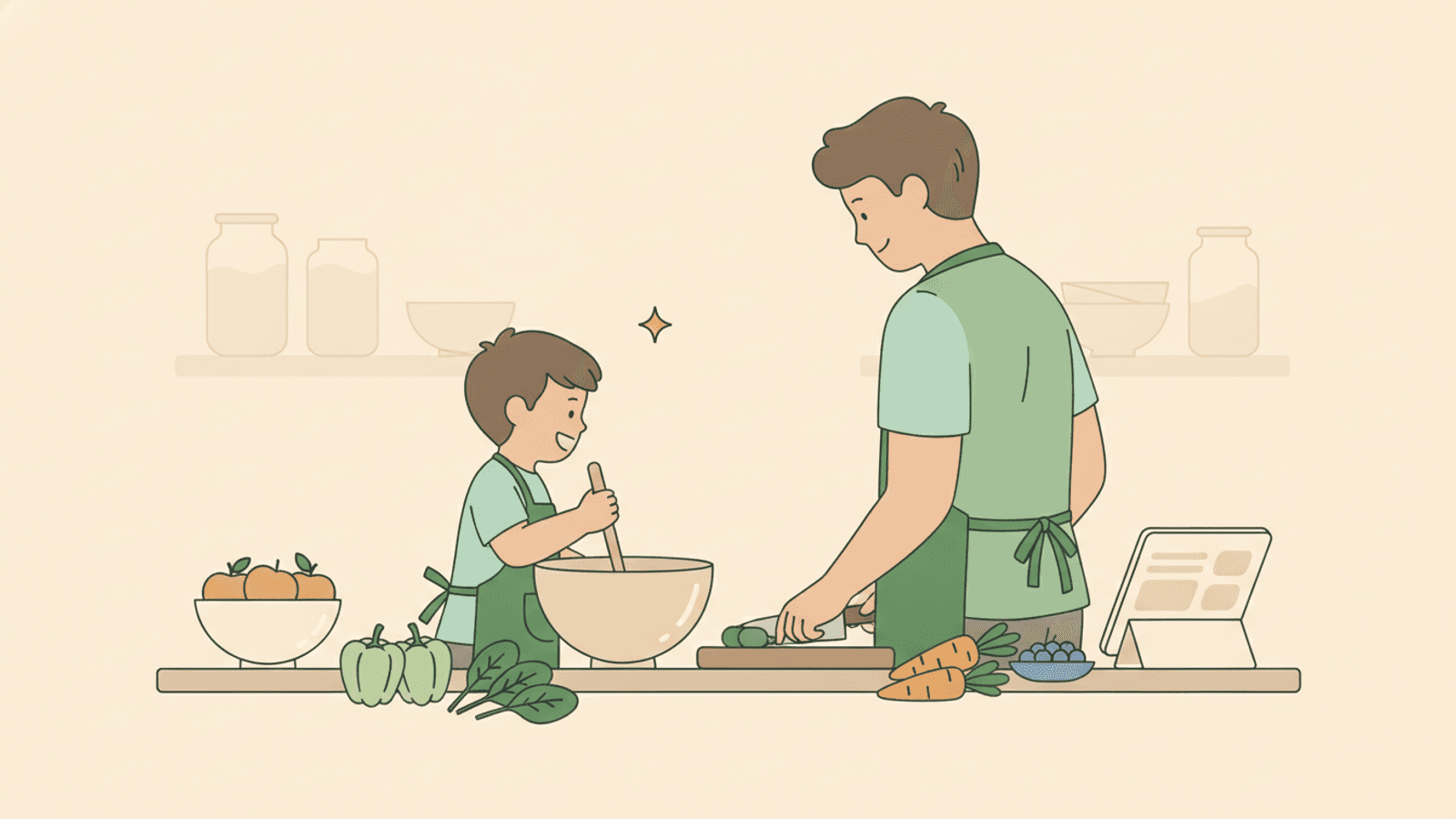
Inviting your child into the kitchen feels, at first, like signing up for more mess, more time and a worse result — and honestly, in the early days, it is all three. But cooking together turns out to be one of the highest-value things you can do with a child. It builds practical skills, makes them noticeably more willing to eat, and is genuine, screen-free connection time. The mess is an investment, not wasted effort.
Why it's worth the mess
Children who help cook are far more likely to actually eat the food, because helping gives them ownership of it. They build real-life skills and confidence, get unhurried connection time with you away from screens, and — over years — grow into genuine independence, until one day you have a teenager who can feed themselves. The slowness and the flour on the floor are the cost of all of that, and it is a good deal.
Age-appropriate kitchen jobs
As a rough guide: two- to three-year-olds can wash vegetables, stir, tear lettuce and sprinkle toppings. Four- to five-year-olds can pour, mash, mix and cut soft things with a child-safe knife. Six- to eight-year-olds can measure, peel, crack eggs and grate with help. Nine- to twelve-year-olds can follow a simple recipe, use the stove with supervision and handle basic knife work. Match the job to the actual child in front of you, not the number on the calendar.
Keep it safe and low-stress
- Teach knife and stove safety explicitly, supervise closely, and start with safe tools like child knives.
- Accept the mess — put on aprons, lay down a cloth, clean up together afterwards, and resist hovering.
- Let them do the parts they can, even imperfectly, and resist the urge to take over and “do it properly.”
- Pick easy, forgiving recipes to start — muffins, pizza, pancakes, smoothies — where small mistakes do not matter.
The picky-eater bonus
Cautious eaters often try foods they have helped prepare. Touching, smelling and handling ingredients is itself a gentle form of exposure — the same principle behind food chaining — and the ownership of having made it lowers the usual alarm around new food. There is no pressure to eat what they cook, but being involved quietly widens what they are willing to consider.
Make it a regular thing
A weekly “you help cook” slot, or a small daily kitchen job like setting the table or washing vegetables, turns cooking from a one-off event into a routine and a real contribution to the family. A visual recipe or job card lets younger children follow along independently. And as they take on more over time, it genuinely lightens your load rather than adding to it.
For children with ADHD or autism
Cooking offers movement, hands-on sensory input and a clear step-by-step sequence, which is often a great fit. But sensory sensitivities to certain textures and smells can be a real barrier, so let your child opt out of the tasks that are unbearable and into the ones they enjoy. Break recipes into visual steps, keep sessions short, and accept that some textures will be a hard no — that is fine. This article is general guidance, not medical advice.
Read more
Frequently asked questions
At what age can children start helping in the kitchen?
Even two- and three-year-olds can help by washing vegetables, stirring and sprinkling. Tasks grow with the child: pouring and mashing in the preschool years, measuring and peeling in early school years, and following recipes and using the stove with supervision later.
What kitchen tasks are safe for young children?
Washing vegetables, stirring, tearing lettuce, sprinkling toppings, mashing and pouring are all safe for young children. Introduce child-safe knives and supervised tasks gradually, and always teach knife and stove safety explicitly before allowing them.
Does cooking together help with picky eating?
Often, yes. Cautious eaters are more likely to try food they helped make, and handling ingredients is a gentle form of exposure. Keep it pressure-free — the goal is involvement, and a willingness to taste tends to follow over time.
How do I cook with my child without it being stressful?
Accept the mess, pick easy forgiving recipes, give age-appropriate jobs, and resist taking over to do it perfectly. Aprons, a wipeable surface and cleaning up together afterwards keep it relaxed rather than a source of tension.
What are easy recipes to cook with kids?
Forgiving recipes where small mistakes do not matter work best to start: muffins, pizza, pancakes, smoothies, simple soups and home-made bread. These give children plenty to do and a satisfying result without much risk.