Kitchen
The kitchen is one of the most sensory-loaded rooms in the house, with frying smells, fan noise, sharp knives and adults moving fast between stove and sink. The visual support below gives your child a place and a role in the bustle.
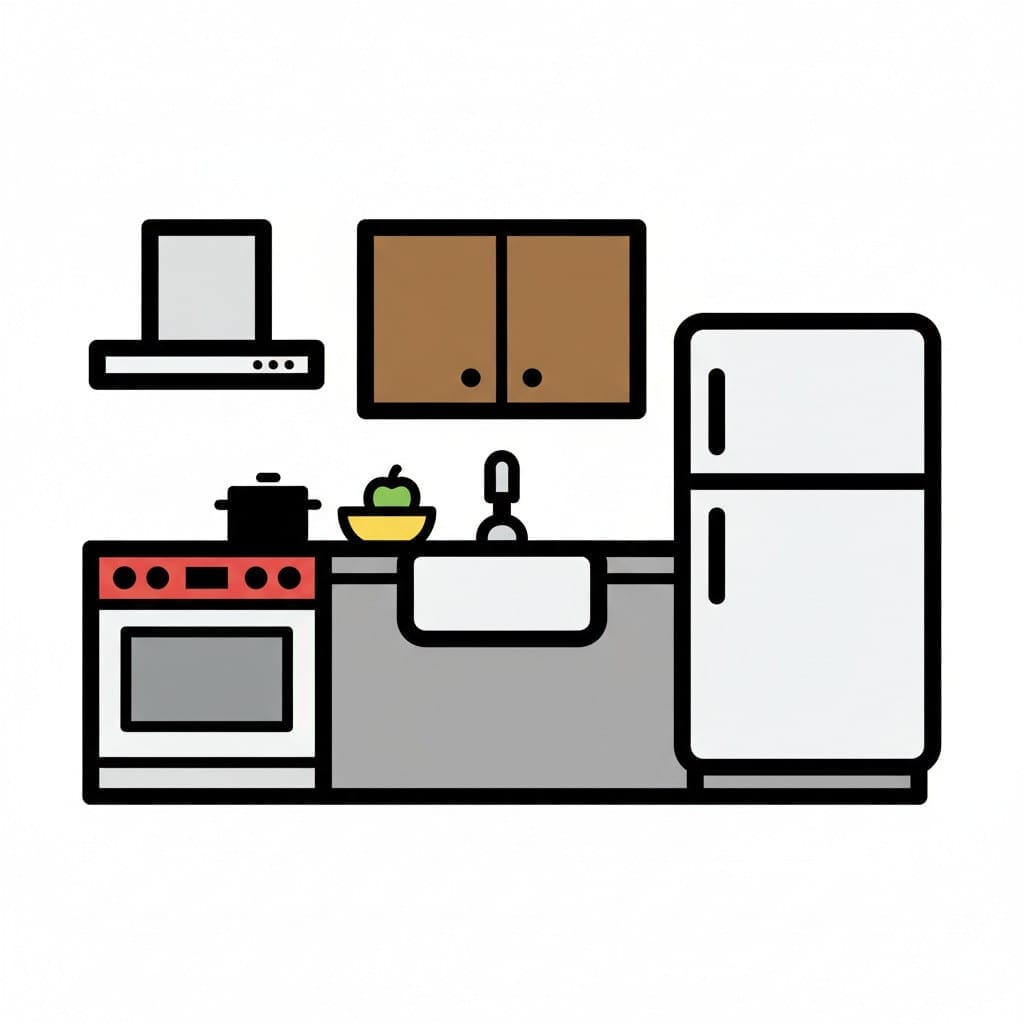
Kitchen
A cartoon image of a kitchen with a stove, sink, and refrigerator.
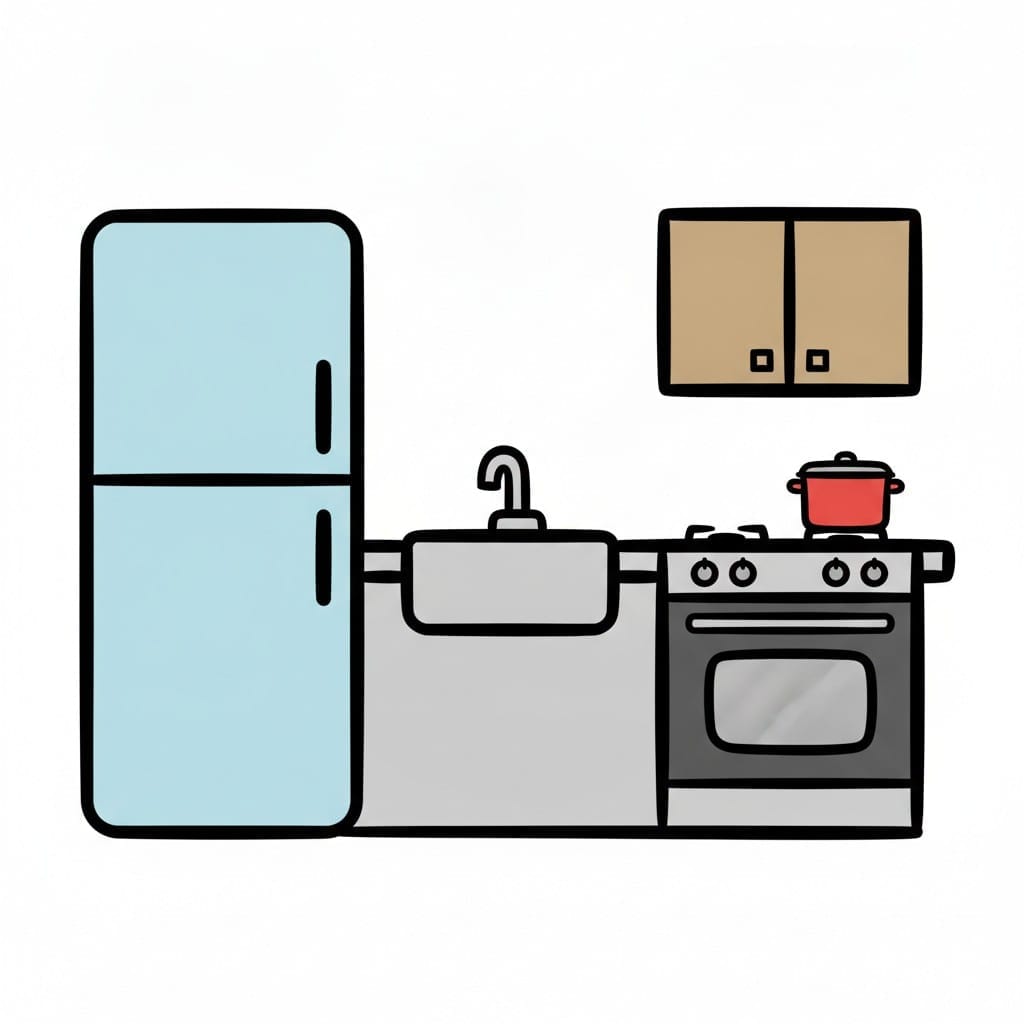
Kitchen with a light blue fridge
A kitchen drawn with a light blue refrigerator, a counter with a sink, a stove holding a red pot and a brown wall cabinet.
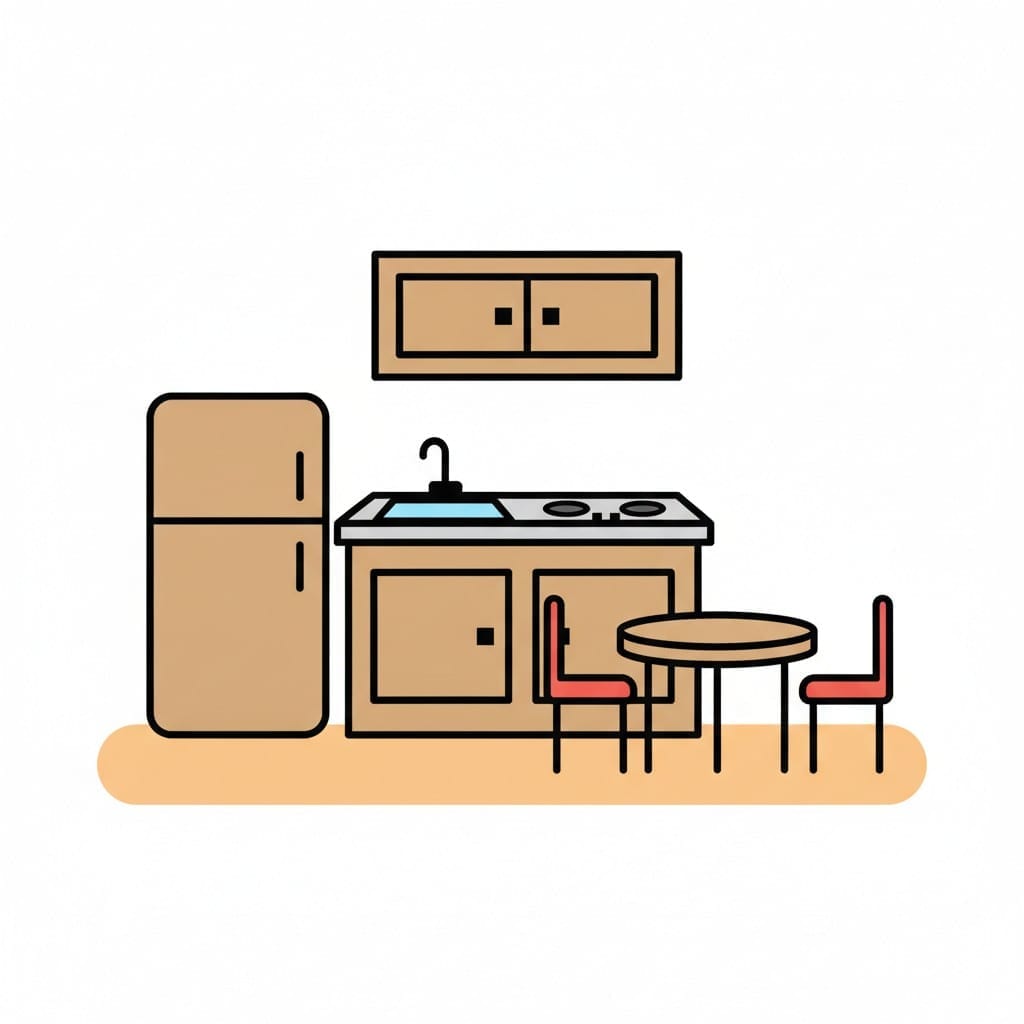
Kitchen with a table and two chairs
Drawn in warm wood tones, this kitchen has a fridge, a counter with a sink and hob, a wall cabinet and a round table with two red chairs.
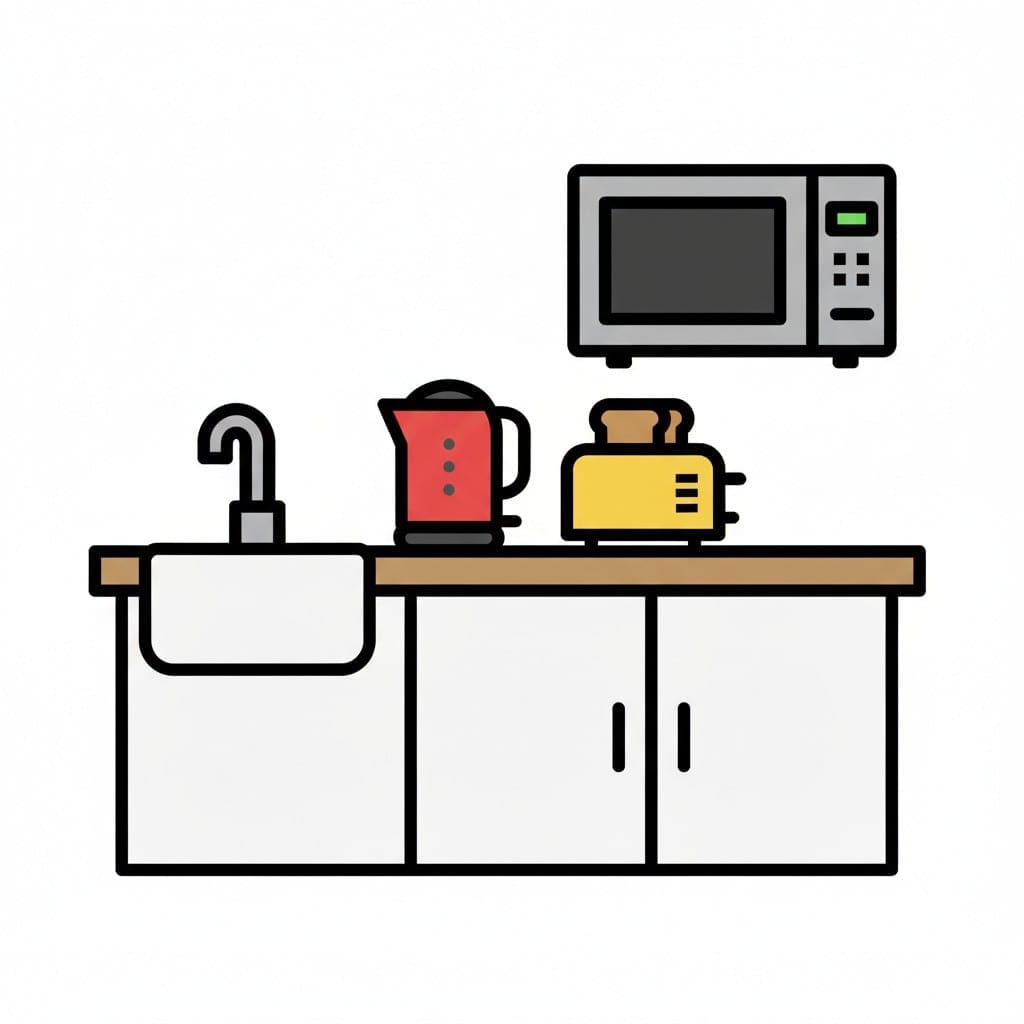
Kitchen counter
A cartoon image of a kitchen counter with a sink, kettle, toaster, and microwave.
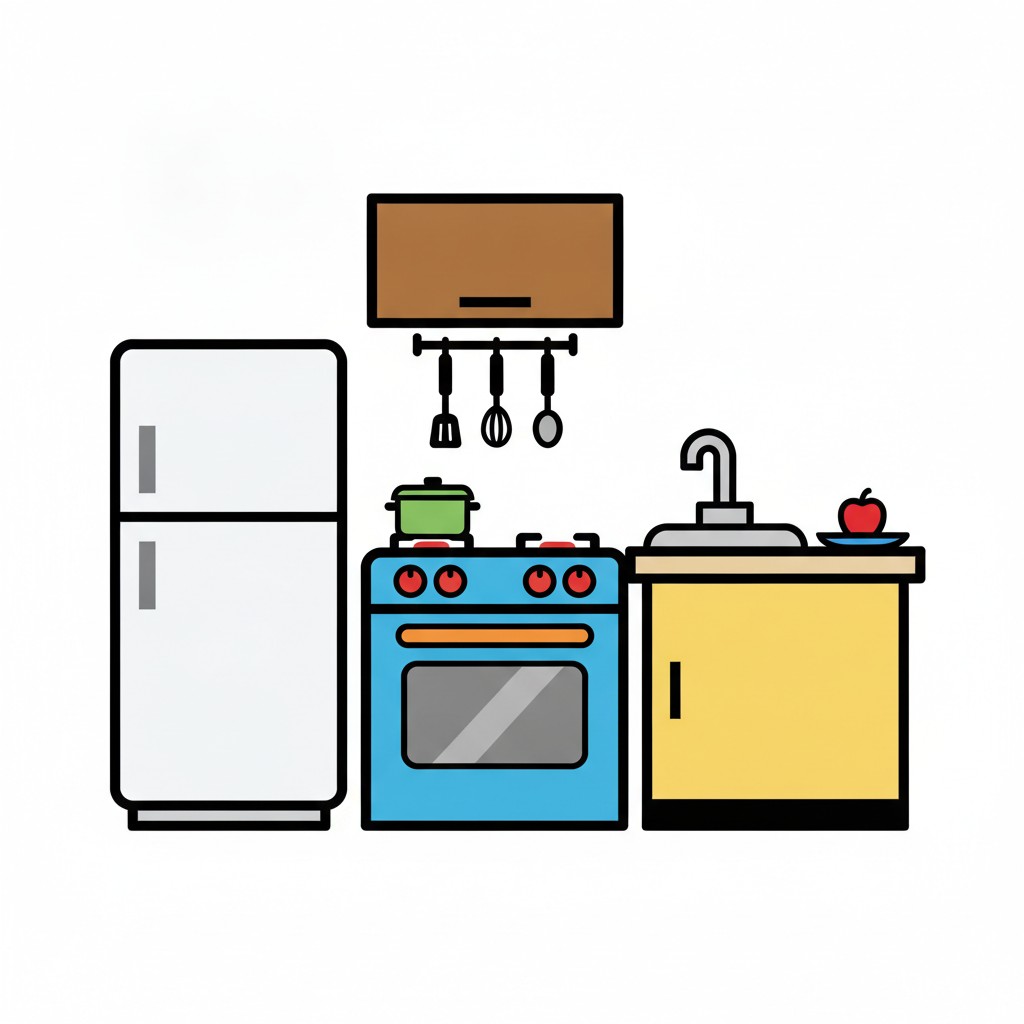
The kitchen
A kitchen with a fridge, a stove, a sink and a wall cupboard.
About this visual support
Most parents underestimate how loud a kitchen actually is. A pan hisses, the extractor fan hums, someone chops onion, a pot bubbles and an adult asks where the scissors went – all at once. For a child who tips into overload easily, the kitchen becomes a room to escape rather than enter.
Visual support rewires the entry point. When the child sees a picture of where to stand, perhaps a step stool at a safe distance from the hob, and a picture of what they may do, they no longer have to read fast-moving adults for cues. A picture of a sharp knife means stop. A picture of a whisk means come and stir. The sequence becomes predictable and the noise less startling.
A concrete suggestion: place three cards at child eye level by the kitchen doorway – one for watch, one for wait, one for help. Entering the kitchen becomes a signal instead of a fight. Families who want to build the routine further can use Routined, which combines pictures with timers and check-offs. The first 14 days are free to try.
Use this image in a schedule
Build your own visual schedule with this image and download it as a print-ready PDF. Completely free.

More similar visual supports
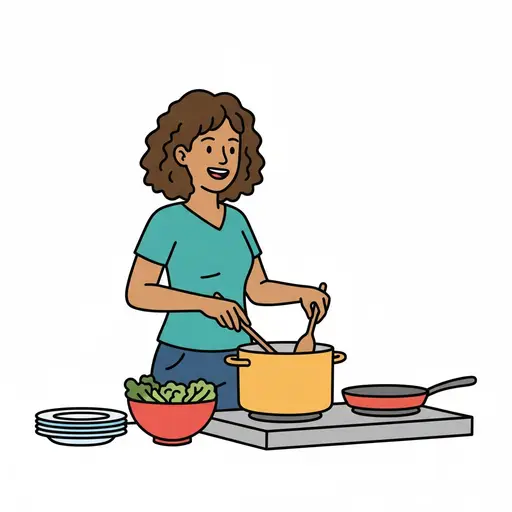
Cook dinner
A person stirs a yellow pot with a salad bowl, a frying pan and plates on the co...
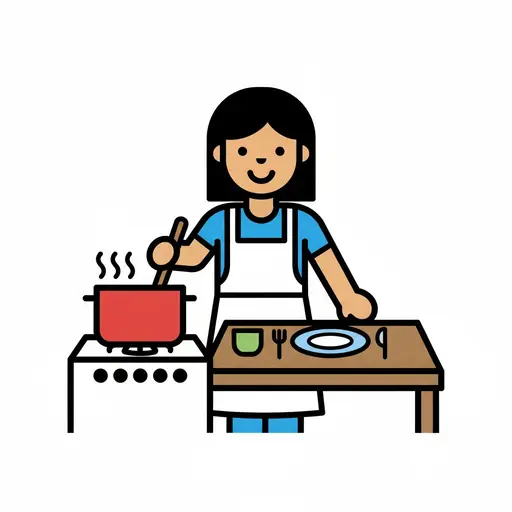
Cook & Set Table
A girl cooks in a pot while setting the table.
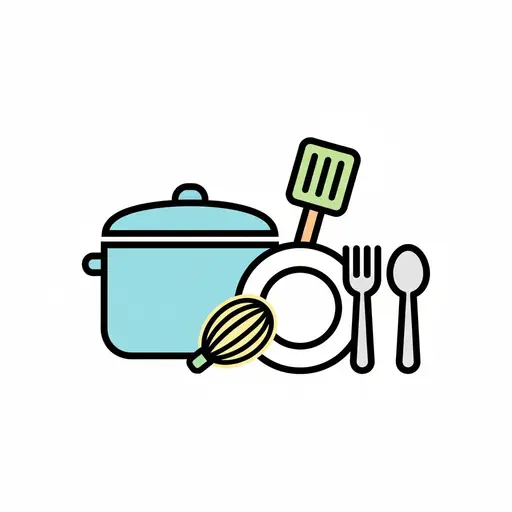
Kitchenware
An illustration showing various kitchen items: a pot, a plate, a whisk, a spatul...
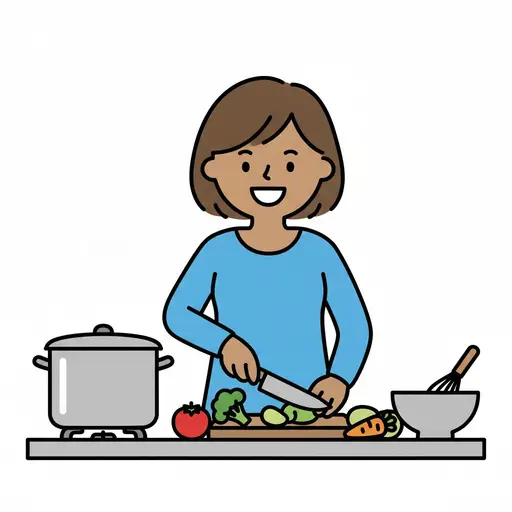
Prepare Meal
A girl cuts vegetables on a counter with a pot and a whisk nearby.
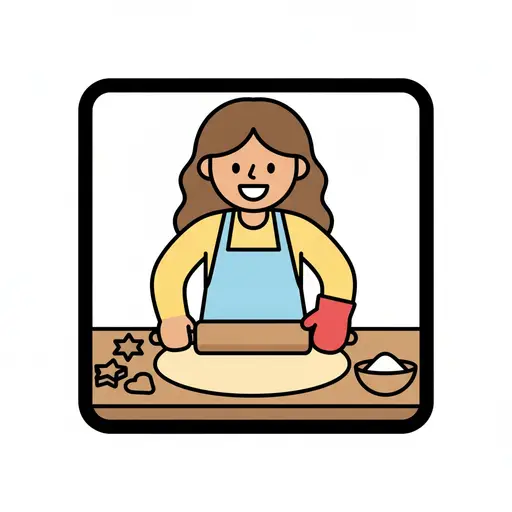
Bake
A child wearing an apron rolling out dough with a rolling pin, with cookie cutte...
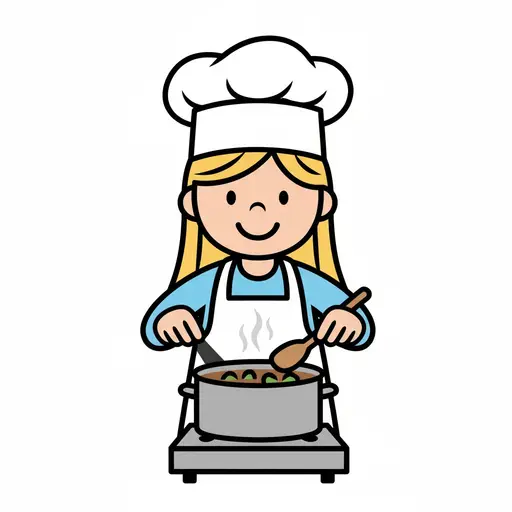
Cook
A girl in a chef hat and apron holds a ladle and a wooden spoon over a steaming ...
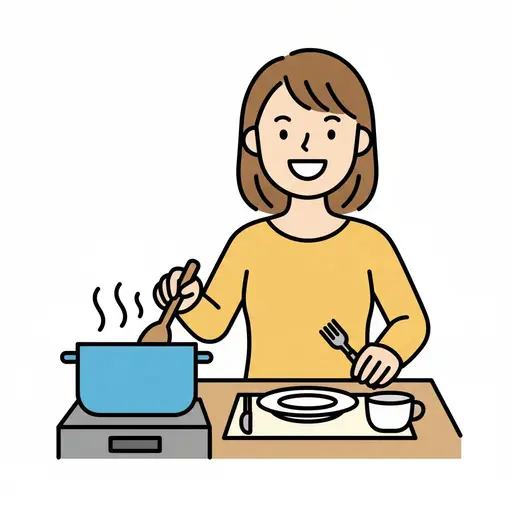
Cook and Set Table
A smiling girl stirs a pot on the stove next to a set table with a plate and cup...
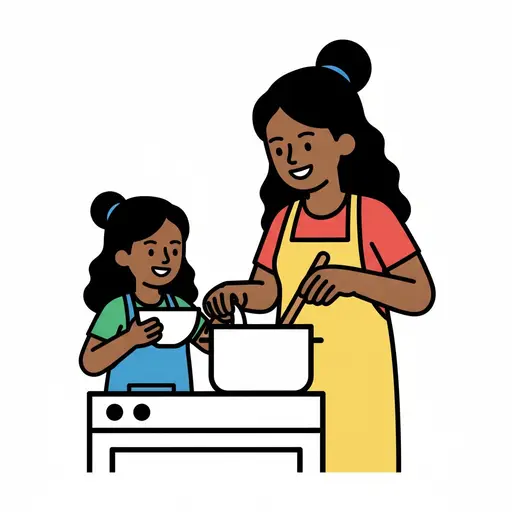
Cook With Mom
A girl helps her mother cook in a pot on the stove.
Take the visual supports with you
In Routined you build schedules from these pictures, add timers and voice instructions, and your child follows the day on their own.


* 14-day free trial, then $2.39 a month or $20.99 a year (US pricing). Cancel anytime.