Kitchenware
Plates in one cupboard, ladles in a drawer, pots at the bottom – the kitchen is full of small rules adults follow on autopilot but children have to learn once. The visual support below covers each utensil.
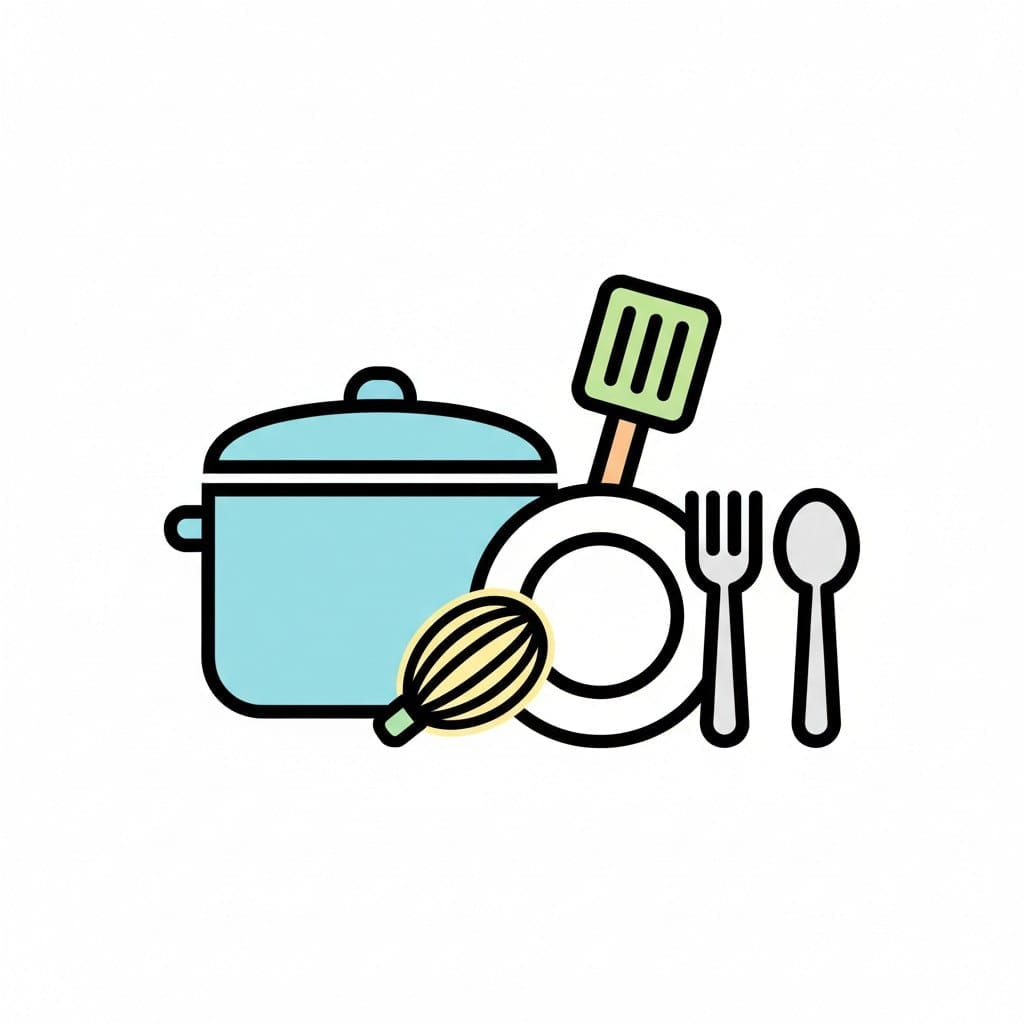
Kitchenware
An illustration showing various kitchen items: a pot, a plate, a whisk, a spatula, a fork, and a spoon.
About this visual support
Kitchen utensils look like a chaotic pile to anyone who did not grow up using them. Ladle, whisk, spatula, slotted spoon – the words are almost identical, the shapes very different, and each item belongs in a specific drawer. Children do not need intuition here, they need a learned pattern: what it is called, what it does, where it lives.
That is where visual support fits in. When every utensil has a card paired with a card of where it belongs, setting and clearing the table becomes a matching exercise instead of a guessing game. A slotted spoon does not sit among the forks, and that becomes obvious when the cards are placed side by side.
A tip that actually survives a real weekday: start with three utensils, not the whole drawer. Plate, fork, knife – three cards on the table, three things to fetch. Once they stick, add the next three. For larger households where several children set the table, Routined keeps the order tied together with fixed pictures and steps, free to try for 14 days.
Use this image in a schedule
Build your own visual schedule with this image and download it as a print-ready PDF. Completely free.

More similar visual supports
Cook dinner
A person stirs a yellow pot with a salad bowl, a frying pan and plates on the co...
Cook & Set Table
A girl cooks in a pot while setting the table.
Kitchen
A kitchen with a fridge, a stove, a sink and a wall cupboard.
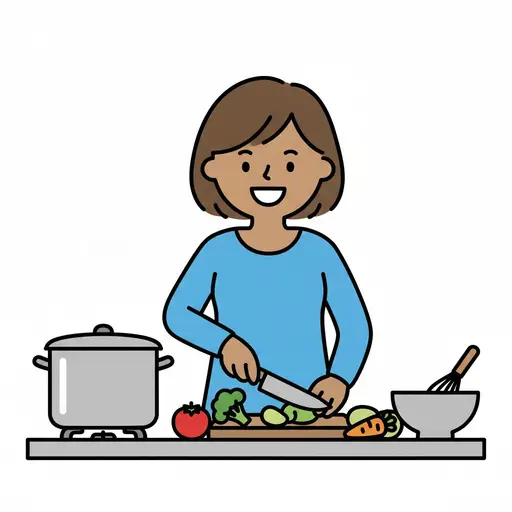
Prepare Meal
A girl cuts vegetables on a counter with a pot and a whisk nearby.
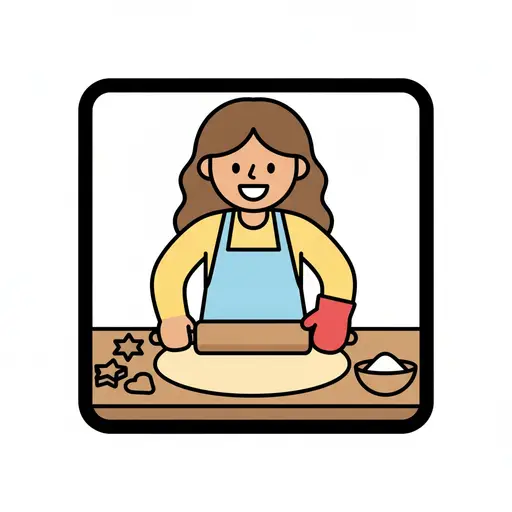
Bake
A child wearing an apron rolling out dough with a rolling pin, with cookie cutte...
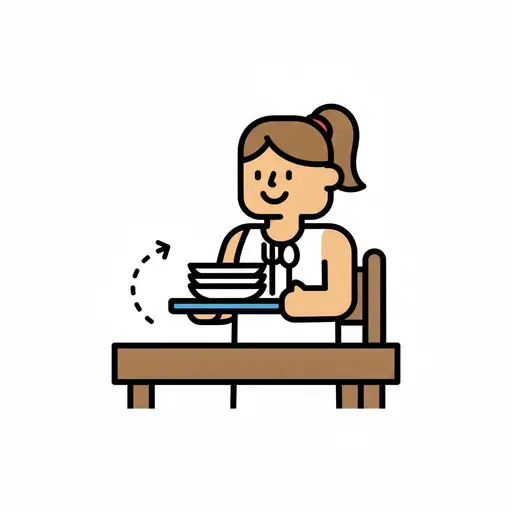
Clear the breakfast table
A girl with a ponytail lifts a tray of stacked bowls and cutlery from the table,...
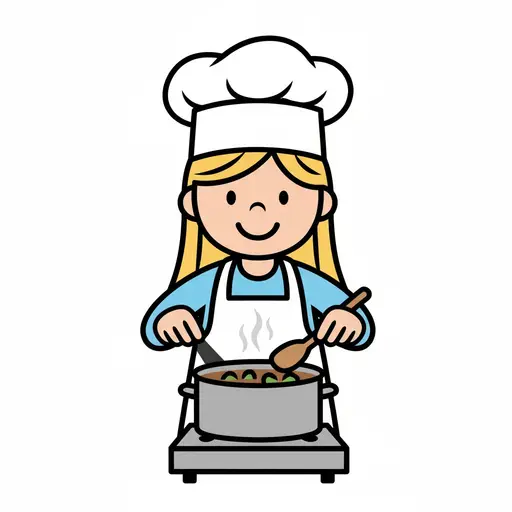
Cook
A girl in a chef hat and apron holds a ladle and a wooden spoon over a steaming ...
Cook and Set Table
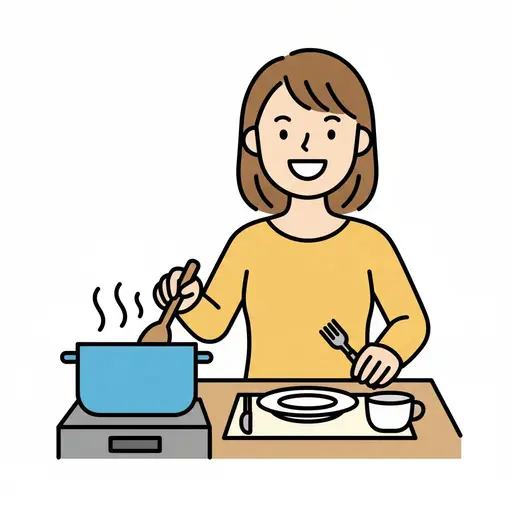
A smiling girl stirs a pot on the stove next to a set table with a plate and cup...
Take the visual supports with you
In Routined you build schedules from these pictures, add timers and voice instructions, and your child follows the day on their own.


* 14-day free trial included for new users.